
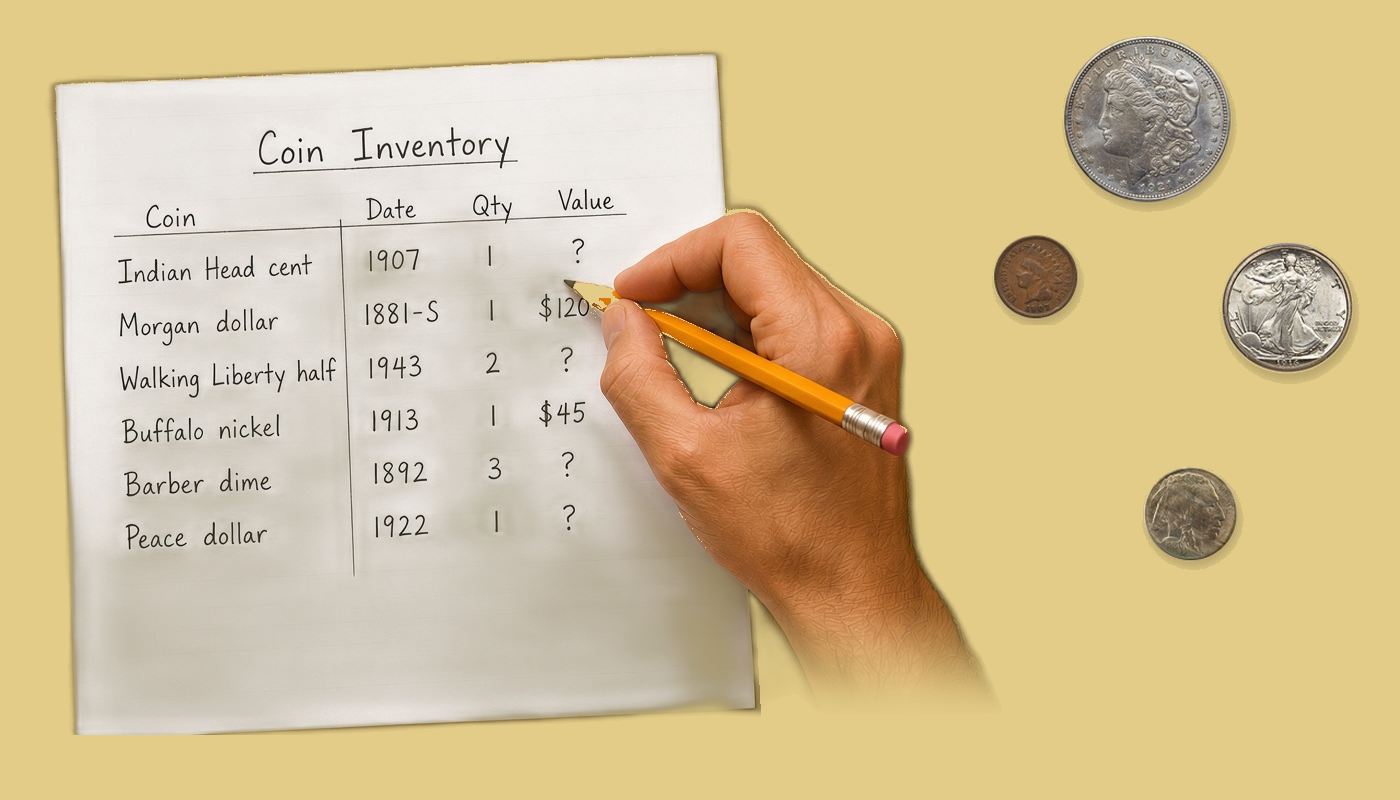

Coin Appraisers in My Area: Two Kinds of Appraisal

When you search for coin appraisers in your area, you are usually after one of two answers. Either you need a written value for insurance or replacement, or you want to know what your coins would actually sell for today. These are two different kinds of appraisal. They produce different numbers, they cost different amounts, and they come from different kinds of appraisers. Choosing the right one first saves time and keeps you from paying for a report you don’t need.
American Rarities provides the second kind, a liquid value appraisal, free and with no obligation to sell. All appraisal requests are reviewed in the order they are received. Some appraisals take minutes, while larger, more complex collections can take a few days. Either way, you’ll get a response from us.
The Two Kinds of Coin Appraisal
Insurance / replacement appraisal
- The question: What would it cost to replace these coins?
- The cost: Usually a paid service.
- What you get: A formal written valuation for your insurer or records.
- The number: Retail replacement cost, usually the higher figure.
- Best for: Insuring a collection you are keeping.
Liquid value appraisal
- The question: What would these coins sell for now?
- The cost: Free from American Rarities, with no obligation.
- What you get: A written offer from a buyer ready to purchase.
- The number: What you would actually be paid.
- Best for: Selling, settling an estate or deciding whether to sell.
Not sure which you need? Ask yourself whether you plan to keep the coins or sell them. Keeping them and insuring them points to the first kind. Selling them, or even just thinking about it, points to the second.

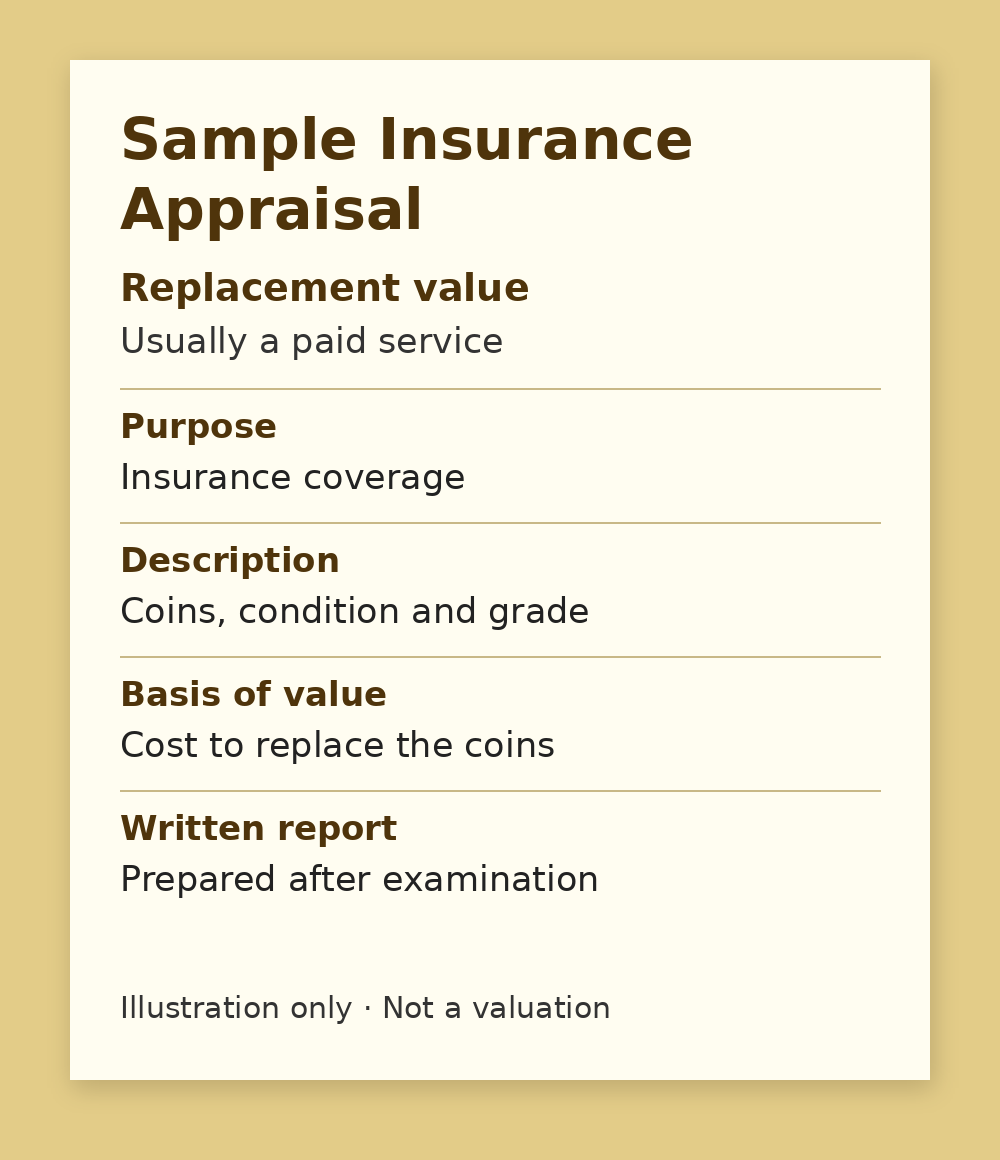
1. Insurance and Replacement Appraisal

A formal insurance or replacement appraisal is a separate paid service that American Rarities can discuss with you. Our estate appraisals page lists the types of appraisal we handle, including insurance and replacement value. Ask about the fee and the scope of the report before any work begins.
An insurance or replacement appraisal answers one question: what would it cost to buy these coins again if they were lost, stolen or damaged? Insurers often want one before they will cover a valuable collection, and it is useful for a household inventory or a claim.
This is the kind of appraisal people usually have to pay for.
What you get:
- An examination of each coin.
- A record of its grade and any certification.
- A formal written replacement valuation for your insurer or records.
Because it is based on what it would cost to replace the coins, the figures are typically higher than what a buyer would pay. That is normal. The number is meant for coverage, not for selling.
You need this kind when you are:
- Insuring a collection you plan to keep
- Updating coverage after values have changed
- Documenting coins for a household inventory or an insurance claim
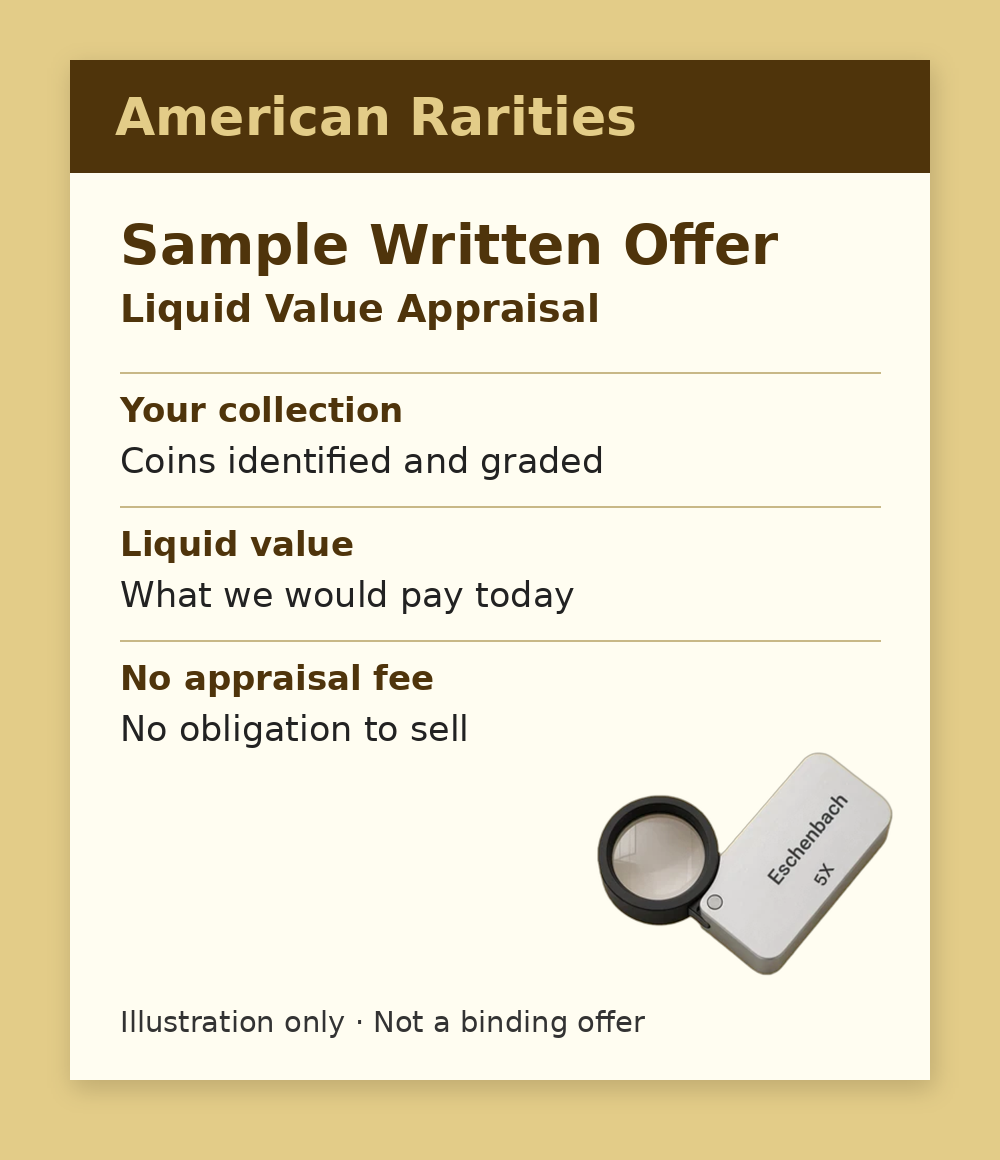
2. Liquid Value Appraisal: What Your Coins Would Sell For Now

A liquid value appraisal tells you what your coins would bring if you sold them today. In practice it is an offer to buy: a buyer who knows the market looks at the coins and tells you what they would pay. It is the most useful number when selling is on the table, because it is a real price rather than a catalog figure.
This is what American Rarities provides, free and with no obligation.
What you get:
- Identification and grading of your coins.
- A written offer showing what we would pay.
- No obligation to sell if you decide to keep your coins.
How it works:
- Send photos and/or a list by the form, by text to 720-600-4740 or by email to staff@americanrarities.com.
- Get a free appraisal and written offer. All appraisal requests are reviewed in the order they are received. Some appraisals take minutes, while larger, more complex collections can take a few days. Either way, you’ll get a response from us.
- Ship fully insured (paid by us), or ask about meeting in person. Once your coins arrive, you are paid by cash, check, ACH or wire.
You need this kind when you are:
- Thinking about selling your coins.
- Dividing or settling an inherited collection.
- Comparing offers from several buyers.

Local Coin Appraisers or Mail-In?
A local appraiser lets you hand your coins over in person, which many people like for a first look. The trade-off is that your choices are limited to whoever is nearby, and a local shop’s offer reflects what that one shop can resell. A photo or mail-in appraisal lets you reach a specialist wherever you live.
American Rarities is based in Boulder, Colorado, and appraises coins nationwide. Most appraisals start with photos, and you can get a free online coin appraisal without leaving home. If you sell, you ship fully insured at our expense. If you would rather meet, ask whether a meeting can be arranged. We can meet you at your bank.
For tips on photos and what to gather first, see how to prepare coins for an expert review.
How to Choose a Coin Appraiser in Your Area
- Ask which kind of appraisal you are getting: an insurance or replacement value, or a liquid value offer.
- For insurance: ask about the fee up front, what the written report will include and whether it meets your insurer’s needs.
- For liquid value: ask whether the number is a real offer to buy, how you would be paid and whether there is any obligation.
- Check credentials you can verify: ratings, ANA membership and grading-service dealer status.
- Get the result in writing, whichever kind it is.
We are glad to answer all of these. American Rarities has bought coins since 1990 and has purchased over $400 million in coins and collections. We hold a 4.7-star Google rating and an A+ BBB rating, we are ANA Life Members, and we are an authorized PCGS, NGC and ANACS dealer. Comparing other local options? See our guide to local coin buyers and appraisals near you.
Coin Appraisers in My Area: Quick Answers
How much does a coin appraisal cost?
It depends on the kind. An insurance or replacement appraisal is usually a paid service, often billed hourly or at a flat rate, because the appraiser prepares a formal written report. A liquid value appraisal from American Rarities is free, with no obligation to sell. Avoid any appraiser who charges a percentage of the appraised value, which rewards inflating the number.
Why is an insurance appraisal higher than an offer to buy?
An insurance appraisal estimates what it would cost to replace your coins at retail. A liquid value appraisal is what a buyer would pay now, at wholesale. The two numbers answer different questions, so they rarely match, and the insurance figure is usually higher. Using a replacement value as a sale price can make fair offers look low.
Can I use your free appraisal for insurance?
No. Our free appraisal is a liquid value appraisal, which is an offer to buy. For insurance or replacement, ask us about a separate paid written appraisal, and check what format your insurer requires. Many homeowners policies cap coverage for coins and currency at a low amount unless the collection is scheduled, so ask your agent.
How do I find a reputable coin appraiser?
Look for long experience, membership in the American Numismatic Association, authorized dealer status with PCGS or NGC, and a strong BBB rating and reviews. Ask what kind of appraisal you will get, whether it will be in writing and how fees are charged. An appraiser who also offers to buy is fine as long as the offer is in writing and you are free to compare it. You are never obligated to sell after our free appraisal.
Do I need to bring my coins to you?
No. Most appraisals start with photos sent by text, email or the form on this page. All appraisal requests are reviewed in the order they are received. Some appraisals take minutes, while larger, more complex collections can take a few days. Either way, you’ll get a response from us. For larger collections, a buyer can also meet you at your home, office or bank.
Free Appraisal for Your Rare Coins and Coin Collections
Email, Text, or Use This Form To Send Us Your Inventory List or Pictures
Email: staff@americanrarities.com Text: 720-600-4740
Appraisal guides and selling pages
Photos, lists and what to expect.
Start with photos for a liquid-value review.
How a full collection appraisal works.
IRS documentation notes for CPAs.
Written appraisals for tax files.
Professional Associations
