Sell Proof Sets Mint Sets Commemorative Coins

U.S. Mint Coin Set Buyer for Proof Sets, Uncirculated Mint Sets and Commemoratives

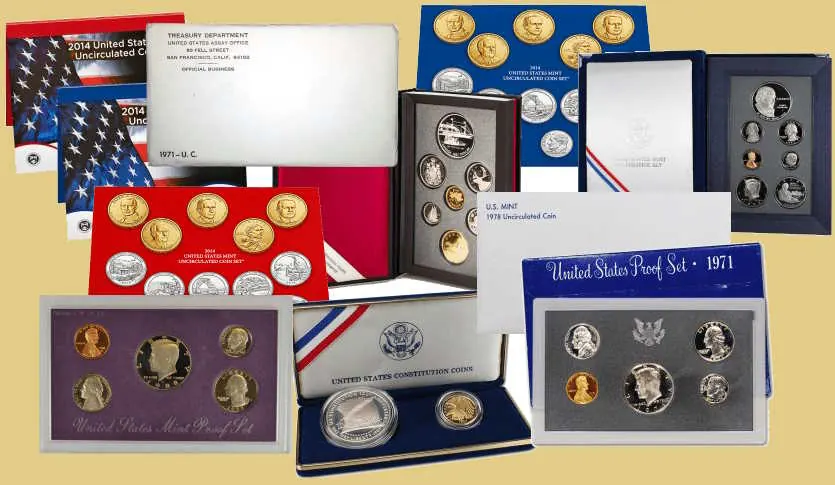
American Rarities buys U.S. Mint proof sets, uncirculated mint sets and commemorative coins, from a single set in its original box to decades of annual Mint purchases. Below you will find what each type of set is, the years and varieties collectors look for, what affects value, and how to sell yours. For a step-by-step overview, see our guide on how to sell proof and mint sets.

We have been buying coins since 1990 and have purchased over $400 million in coins and collections. To start, text a list or photos to 720-600-4740, email staff@americanrarities.com, or use the form below. You will get a free, no-obligation appraisal. All appraisal requests are reviewed in the order they are received. Some appraisals take minutes, while larger, more complex collections can take a few days. Either way, you’ll get a response from us.

4.7-star Google rating•A+ BBB rating•ANA Life Members•Authorized PCGS, NGC & ANACS

Uncirculated Mint Sets

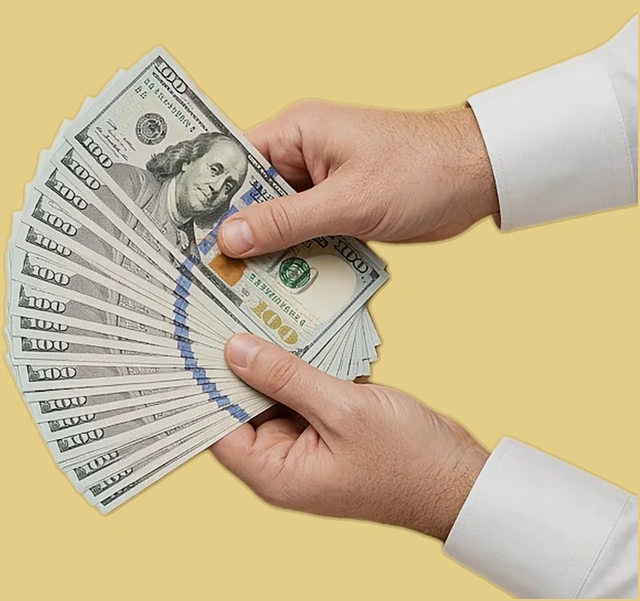
Hands in a white dress shirt fanning a stack of one-hundred-dollar bills, cash offer for proof sets and mint sets

An uncirculated mint set holds one business-strike example of each circulating coin the U.S. Mint made that year, usually from each mint, packaged and sold by the Mint. They aren’t proofs: the coins are regular strikes saved before they ever reached circulation (see the coin set overview).

Key years and what to look for

  • 1947–1958 double sets: the first official mint sets held two of each coin in cardboard holders. None were made in 1950. The cardboard often toned the coins, sometimes in attractive colors and sometimes darkly, so original, intact double sets are the most sought-after mint sets.
  • 1959–1964: single sets, and the last mint sets with 90% silver dimes, quarters and half dollars.
  • 1965–1967 Special Mint Sets: no proof sets or regular mint sets were made. Instead the San Francisco Assay Office struck Special Mint Sets with no mint mark, using polished dies on unpolished planchets. The 1965 sets came in soft pliofilm and the 1966 and 1967 sets in hard plastic holders (NGC).
  • 1970: the 40% silver 1970-D Kennedy half dollar, with a mintage of about 2.1 million, was issued only in mint sets and is the key to the Kennedy series.
  • 1982 and 1983: the Mint issued no official uncirculated sets. The souvenir sets sold at the mints those years are sometimes mistaken for them.
  • 1996: includes the 1996-W dime, struck at West Point and issued only in that year’s mint set.
  • 2005–2010: coins were given a satin finish instead of the usual business-strike finish.

Decorative gold separator bar

U.S. Mint Proof Sets

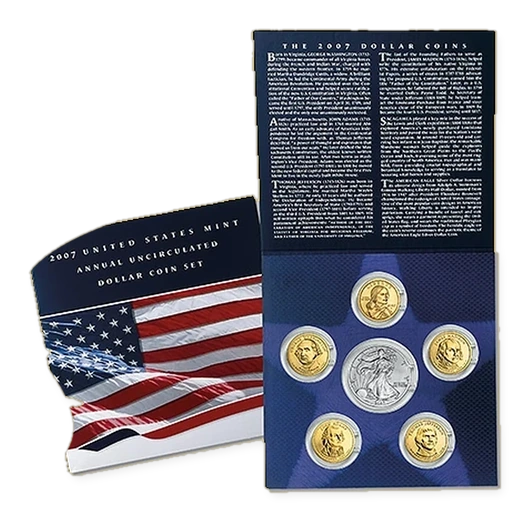
2007 United States Mint Annual Uncirculated Dollar Coin Set in its original folder, transparent cutout

Proof coins are struck from specially polished dies on polished planchets, giving mirror-like fields and sharp detail. Proof sets were sold by the Mint directly to collectors, and each year’s set has its own following.

Key proof set years

  • 1936–1942: the first modern proofs. Collectors ordered the coins one at a time, so complete sets were put together by their owners. Production was small: just 74,400 proof Walking Liberty half dollars were struck over all seven years. 1942 has a five-coin and a six-coin version, the six-coin set adding the wartime silver nickel.
  • 1950–1964: complete sets were sold again from 1950, at first in a small box with the coins in cellophane. In 1955 the Mint switched to a flat plastic “flat pack”, so 1955 sets exist both ways. Flat packs were used through 1964, the last year of 90% silver proof sets.
  • 1968 to today: after the 1965–1967 gap, proof sets returned in 1968, now struck at San Francisco with the S mint mark and sold in hard plastic cases. The 1976 Bicentennial three-coin set was struck in 40% silver.
  • Prestige proof sets (1983–1997, except 1985): the regular proof set plus that year’s proof commemorative coins in a deluxe case.
  • Silver proof sets (1992 onward): sold next to the clad sets, with the dime, quarter and half dollar in 90% silver through 2018 and .999 fine silver from 2019. Silver Premier sets were offered from 1992 to 1998. See our silver proof set values page.

For more on individual years, see U.S. proof set values and U.S. Mint proof set value.
Decorative gold separator bar

U.S. Commemorative Coins: Classic and Modern

Classic commemoratives (1892–1954)

The classic series began with the 1892 Columbian Exposition half dollar and the 1893 Isabella quarter and ended with the Carver-Washington half dollar in 1954. Most are silver half dollars, along with gold dollars, quarter eagles and the 1915 Panama-Pacific $50 gold pieces, in round and octagonal versions. They were usually sold at a premium by sponsoring groups, and many were later spent, handled or cleaned, so original coins with good surfaces bring the strongest interest.

Modern commemoratives (1982 to today)

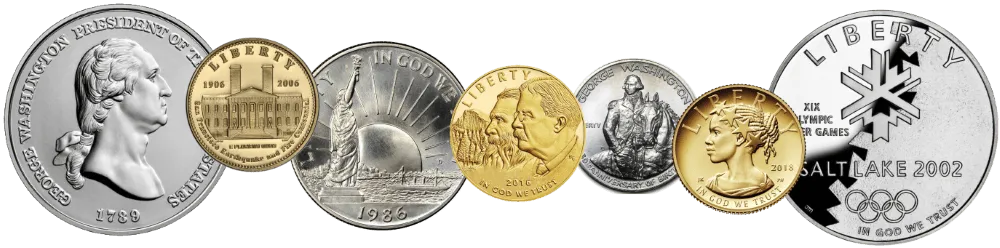
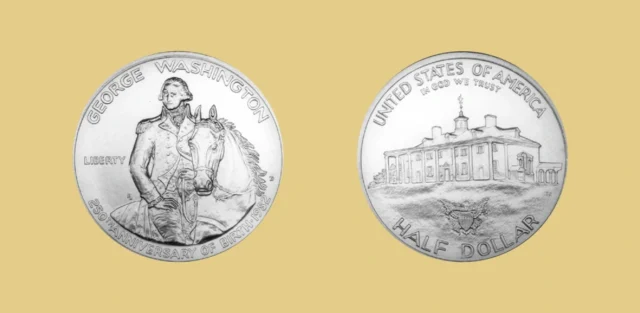
The modern program began with the 1982 George Washington 250th Anniversary half dollar, the first U.S. commemorative since 1954. Since then the Mint has issued clad half dollars, silver dollars and gold $5 and $10 coins, usually in both proof and uncirculated versions, sold in Mint boxes with certificates of authenticity. Low-mintage issues are the keys: the 1997-W Jackie Robinson $5 gold in uncirculated, with a mintage of just 5,174, is the best-known modern key date (Wikipedia).

For more on individual issues, see our commemorative coins value page.

1982 George Washington 250th Anniversary silver commemorative half dollar, obverse and reverse with Mount Vernon
Decorative gold separator bar

How to Spot Valuable Sets: Silver, Key Dates and Varieties

  • Silver or clad? Proof sets before 1965 are 90% silver. From 1992 on, silver proof sets are labeled as silver, and their dime, quarter and half dollar show a plain silver edge instead of the copper stripe of a clad coin.
  • Missing mint marks: a handful of proof coins were struck without their S. The best known is the 1990 proof cent with no S, found in regular and Prestige sets; the Mint reported that 3,555 left the Mint. Others include the 1968, 1970 and 1975 proof dimes, the 1971 proof nickel and the 1983 proof dime.
  • Date and mint mark varieties: the 1960 small date cent, the 1970-S small date cent, the 1964 “accented hair” Kennedy half, and the 1979-S and 1981-S Type II mint marks, which show a clearer S.
  • Mint-set-only coins: the 1970-D Kennedy half dollar and the 1996-W dime.
  • Key commemorative dates: the 1915 Panama-Pacific $50 gold pieces among the classics and the 1997-W Jackie Robinson $5 uncirculated among the moderns.
  • Cameo contrast: proofs with frosted designs against mirror fields, called cameos, can be worth more than ordinary proofs.
Decorative gold separator bar

What Affects the Value of Proof Sets, Mint Sets and Commemoratives

  • Original Mint packaging: complete sets in their original holders, boxes and envelopes, with any certificates, are what most buyers want.
  • Condition: spots, haze, scratches and damaged holders lower value; attractive original toning can help on older sets.
  • Metal content: silver sets and gold commemoratives have a floor value set by silver and gold prices.
  • Year, mintage and varieties: low-mintage years, mint-set-only coins and the varieties above carry premiums.
  • Certification: single coins graded near-perfect by PCGS or NGC can be worth more on their own than inside the set.

We don’t publish prices here because values move with metal prices and collector demand. For a reference point, use current NGC or PCGS price guide values with their as-of date, or send us photos for a free appraisal.

Decorative gold separator bar

For a deeper dive into U.S. and foreign mint coin sets, see our U.S. and foreign mint sets, proof sets, and commemorative coins information page. To learn what makes some proof sets worth more than others, read about coin proof sets value, U.S. proof set values, silver proof set values and commemorative coins value.

Decorative gold separator bar

Why Sell Your Coin Sets to American Rarities?

  • Experience: founded in 1990, with hundreds of years of combined experience across our nationwide buying network.
  • Trusted reputation: an A+ rating with the BBB, a 4.7-star Google rating, and Life Members of the ANA.
  • Industry credentials: a PCGS and NGC authorized dealer and an ANACS submission center.
  • Careful evaluation: XRF testing, digital microscopy and free in-house grading without slabbing.
  • Estates: IRS-compliant appraisals and home visits for larger collections. We also offer free coin appraisals for U.S. and world coins.
Decorative gold separator bar

How to Sell Your Proof Sets, Mint Sets and Commemorative Coins in 5 Steps
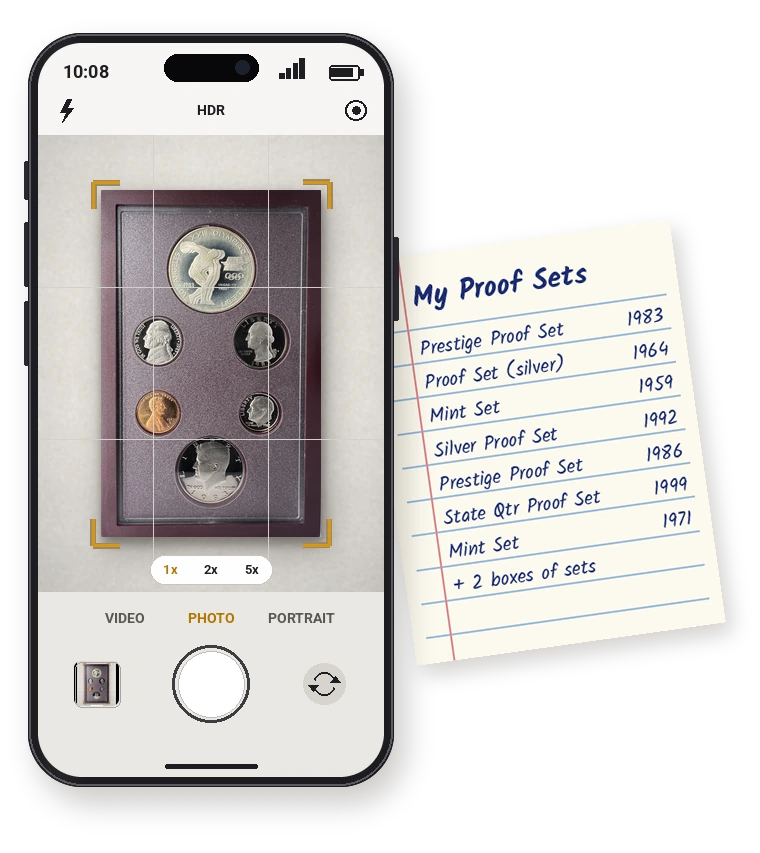
Smartphone camera photographing a 1983 Prestige Proof Set with the Los Angeles Olympic silver dollar beside a handwritten list of proof sets and mint sets
STEP 1

Send photos or a list

Use the form on this page, text 720-600-4740 or email staff@americanrarities.com. A photo of each set in its holder, plus a list of years and types, is plenty to start. Leave sets in their original lenses, boxes and envelopes.

American Rarities written appraisal and offer sheet listing proof sets, mint sets and commemorative coins, with an Eschenbach 5X loupe
STEP 2

Get a free written appraisal and offer

We review each set, its original packaging and any key coins, then send a written, no-obligation offer. All appraisal requests are reviewed in the order they are received. Some appraisals take minutes, while larger, more complex collections can take a few days. Either way, you'll get a response from us.; for a large list we will let you know if it needs longer.

Two insured cartons on a hand truck, one showing a 2019-S proof set lens and the other a 1995-S silver proof set through packing windows
STEP 3

Ship fully insured, at our expense

Pack your sets snugly in a sturdy box and ship them fully insured with no deductible, paid by us (we do not provide shipping materials). Large lots are welcome. If you decline, we return your items fully insured.

Our buyer examines a 2019-S American Memorial Park proof quarter with a loupe while a customer watches, with a 1969 proof set and a 2007 dollar coin set on the table
STEP 4

Or meet a buyer in person

For larger collections, a buyer from our nationwide network can meet you at your home or office, or we can meet you at your bank.
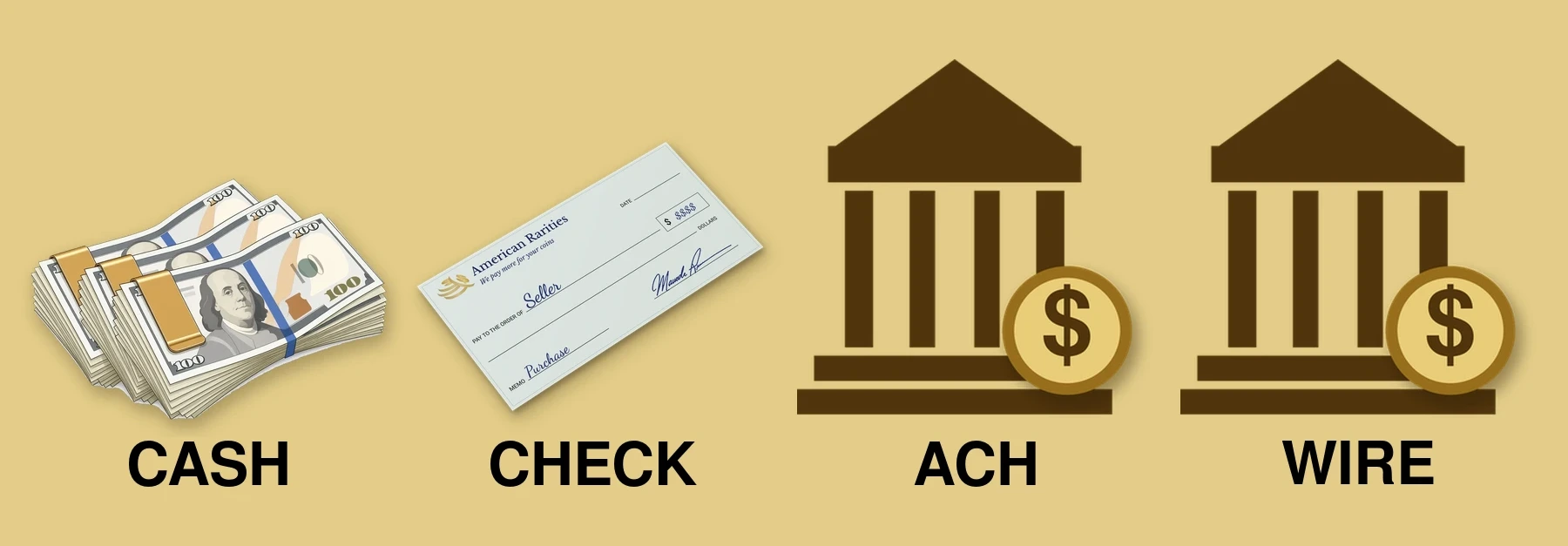
Four ways to get paid, stacked two by two: cash, check, ACH and wire transfer
STEP 5

Get paid immediately

Accept the offer and get paid right away by cash, check, ACH or wire.
Decorative gold separator bar

Proof Sets, Mint Sets and Commemoratives: Quick Answers

Are old proof sets and mint sets worth anything?

Some are, but most modern sets sell for modest amounts, often close to or below their original issue price. Sets worth noticeably more include the 1950 to 1964 silver proof sets, especially 1950 to 1955, the 1947 to 1958 double mint sets, silver proof sets from 1992 onward, low-mintage modern sets and sets containing errors. Clad proof sets from the 1970s and 1980s are common. Original packaging and attractive, untoned or naturally toned coins add value.

Why were no proof sets or mint sets made from 1965 to 1967?

During the coin shortage of the mid-1960s, the Mint stopped making proof sets and regular mint sets to focus on coins for circulation. Instead, it sold Special Mint Sets from 1965 to 1967, with satin-finish coins in plastic holders, and the 1965 to 1967 Kennedy halves in them are 40% silver. Proof sets returned in 1968, struck at San Francisco, and regular mint sets returned in 1968 as well.

Which proof set errors should I look for?

The best-known proof set errors are coins missing the S mint mark. These include the 1968 and 1970 no-S dimes, the 1971 no-S nickel, the 1975 no-S dime, the 1983 no-S dime and the 1990 no-S cent, all of which are rare and valuable. Also look for the 1979-S and 1981-S Type 2 mint marks, which have a clearer, filled S than the common Type 1. Check each coin with a magnifier before selling a set as ordinary.

Are there 1982 or 1983 uncirculated mint sets?

No official uncirculated mint sets were made in 1982 or 1983, after the Mint cut the program for budget reasons. The souvenir sets sold at the Philadelphia and Denver mints those years, with a single mint’s coins and a medal, are a different product and are collected separately. Regular mint sets returned in 1984. Mint sets from 1981 and earlier, and 1984 onward, are the official ones.

Should I take coins out of their original Mint packaging?

No. Keep sets in their original government packaging, called OGP, with the boxes, envelopes and certificates. Collectors pay more for complete original sets, and removing coins exposes them to fingerprints and scratches. Proof sets from 1955 to 1964 came in flat soft-plastic packs, and later sets in hard lenses. Store sets flat, in a cool, dry place, and avoid rubber bands, which can tone coins. Even a damaged box is worth keeping.

Why do coins in my old sets look hazy or toned?

Toning and haze on old sets usually come from the packaging and storage, not damage you caused. The cardboard holders of early double mint sets and the soft plastic of 1955 to 1964 proof packs can tone coins, sometimes in attractive rainbow colors that collectors pay extra for. Dark spots or a cloudy film can lower value, but cleaning makes it worse. Leave the coins as they are and send us photos; we will tell you whether the toning helps or hurts.

Proof Set, Mint Set and Commemorative Guides

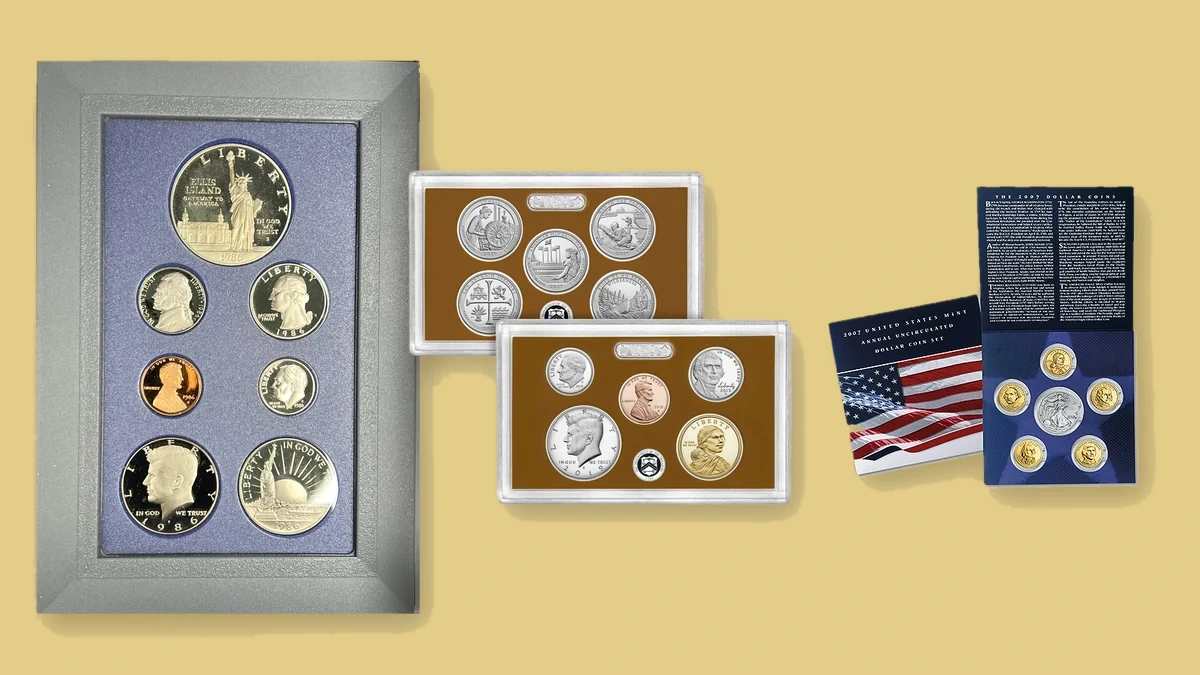
U.S. coin sets on a gold background: a 1986 Prestige Proof Set, a 2019 U.S. Mint Proof Set and a 2007 Annual Uncirculated Dollar Coin SetMint Sets, Proof Sets & Commemoratives GuideHow to tell mint sets, proof sets and commemoratives apart
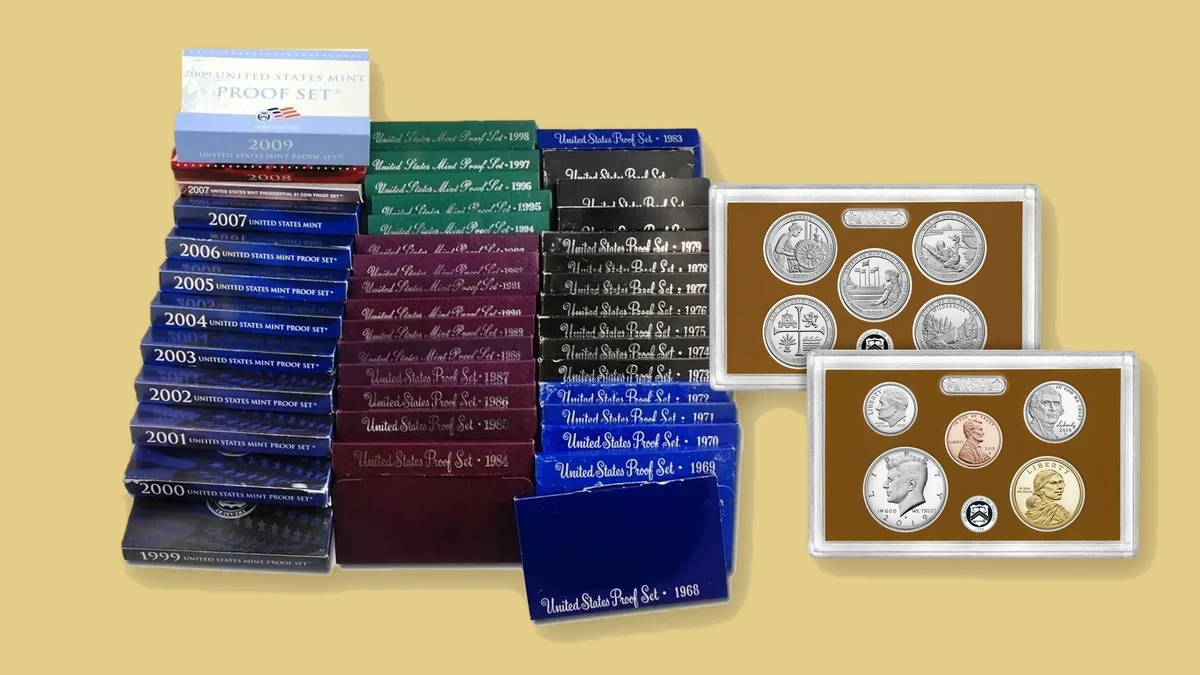
Stack of U.S. proof sets from 1968 to 2009 in original government packaging beside an open 2019 U.S. Mint Proof SetU.S. Proof Set ValuesProof set values by era, scarce years and No-S errors
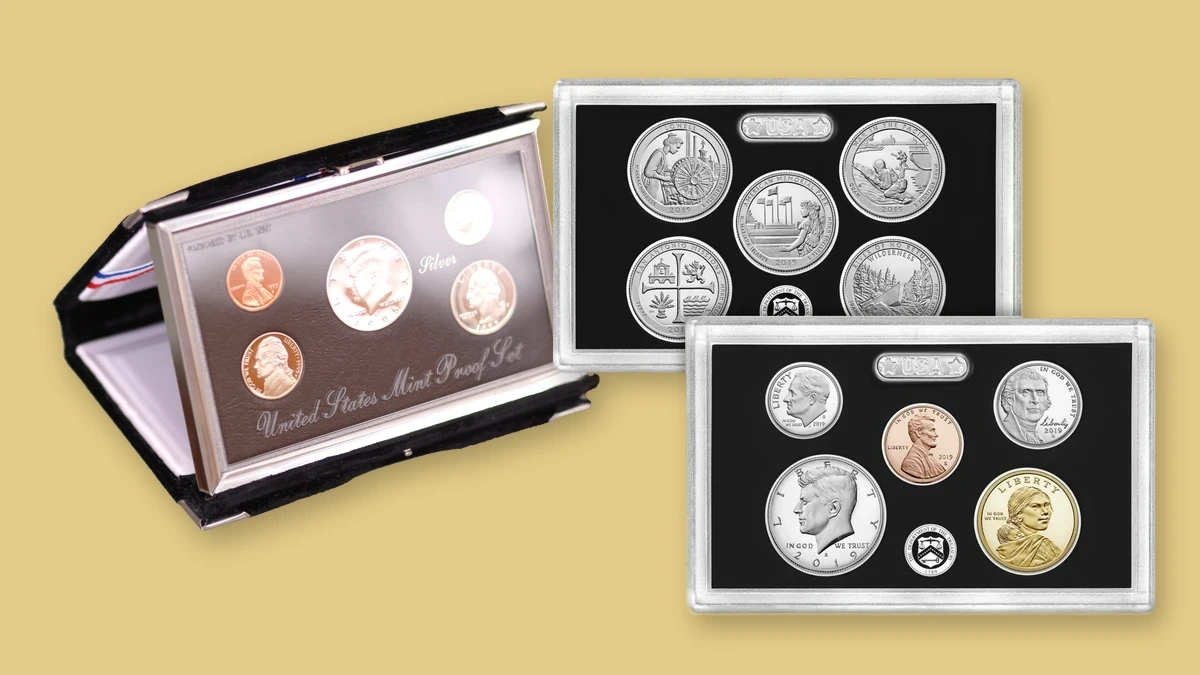
Two United States Mint silver proof sets on a gold background: a 1995 Premier silver proof set and a 2019 silver proof setSilver Proof Set ValuesSilver content and melt value by year
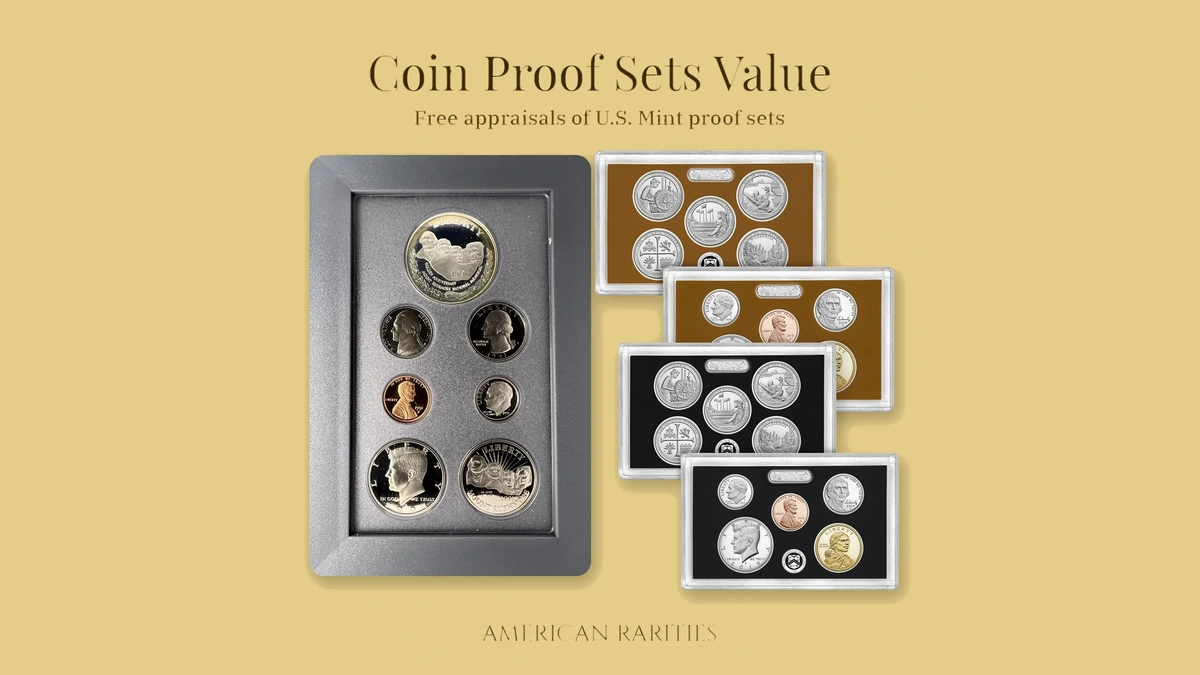
1991 U.S. Mint Prestige proof set with Mount Rushmore commemoratives beside 2019 clad and silver proof setsCoin Proof Sets ValueWhat drives proof set value and how to check yours
1987 United States Constitution coins proof set in its box, an Oregon Trail Memorial half dollar and a 1988 Seoul Olympic silver dollar under the title Commemorative Coins ValueCommemorative Coins ValueClassic and modern commemorative coin values
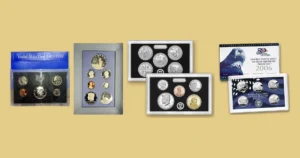
A 1969 proof set, a 1986 Prestige proof set, a 2019 silver proof set and a 2006 State Quarters proof set on a gold backgroundHow to Sell Proof and Mint SetsStep-by-step guide before you sell your sets
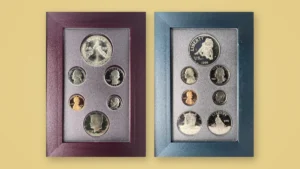
1988 and 1995 U.S. Mint Prestige Proof Sets open side by side on a gold background, showing the proof coins and commemorative silver dollarsU.S. Mint Proof Set ValueWhat affects a proof set’s price and how to check it

Decorative gold separator bar

Ready to Sell Your Proof Sets, Mint Sets or Commemorative Coins?

Email, Text, or Use This Form to Send Your Inventory List or Photos


Upload files of inventory lists and front and back photos of your items.

    We can help build your inventory list. Use the Collection List Maker to photograph your items and we'll build the inventory list for you.

    Decorative gold separator bar

    Professional Associations

    Professional association and grading-service logos including ANA Life Member, PMG, PCGS, NGC, ANACS, CAC, CCE and currency-grading organizations