
How to Make Money With Rare Coins
An honest guide to buying right, certification, key dates, condition, patience and selling to the right buyer, plus ways coin dealers and referrers can earn with American Rarities.
Can You Really Make Money With Rare Coins?
Rare coins combine history, art and precious metal, and some collectors have sold their coins for more than they paid. Others have lost money. The difference usually comes down to how the coins were bought, what was bought, how long they were held and who they were sold to. This guide explains how people try to make money with rare coins, and the risks involved.
The honest answer: no one can promise a profit on rare coins. Coin values can go down as well as up, and every dealer buys below the price it sells at, so there is a buy/sell spread to overcome before a coin shows a gain. Collector demand changes, precious metal prices move, and selling takes time. Rare coins are not a substitute for savings, and this page is general information, not investment advice. Before you buy coins as an investment, talk with a licensed financial professional who knows your situation.
Many of the most satisfied collectors buy coins mainly because they enjoy them and treat any gain as a bonus. If you do want your coins to have the best chance of holding or growing in value, the principles below are where to start. For background, see our rare coin value guide and our article on collectibles as tangible assets.
1. Buy Right and Avoid Overpaying
The most common way collectors lose money is by overpaying on day one. A coin bought far above what a dealer would pay for it may take many years, or never, to catch up.
- Learn before you buy. An old collector saying is “buy the book before the coin.” Know what a coin trades for and what affects its value before spending serious money.
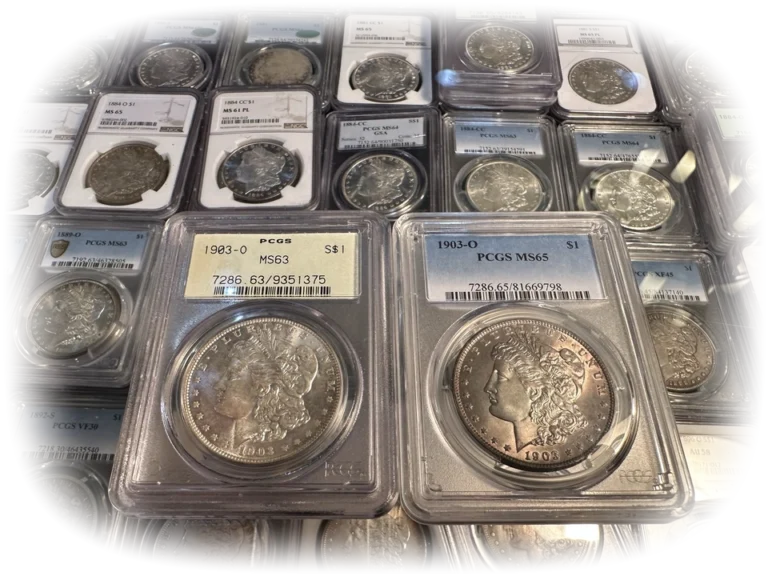
- Check prices from several sources. Compare asking prices with published guides such as the PCGS price guide and the NGC price guide, and with recent auction results. Our coin and paper money price guide and rare coins value list are free starting points.
- Be wary of heavily marketed coins. Coins sold through TV ads, mass mailings or high-pressure phone pitches often carry large markups over what they are worth on the secondary market. “Limited edition” and “first strike” labels do not necessarily make a coin rare.
- Understand the spread. Ask what the seller would pay to buy the coin back. The gap between the buy and sell price is a cost you must recover before you can profit.
- Buy from a reputable dealer. Look for long experience, professional memberships such as the American Numismatic Association, and a clear return policy. See how to find the best rare coin dealer.
2. Buy PCGS and NGC Certified Coins

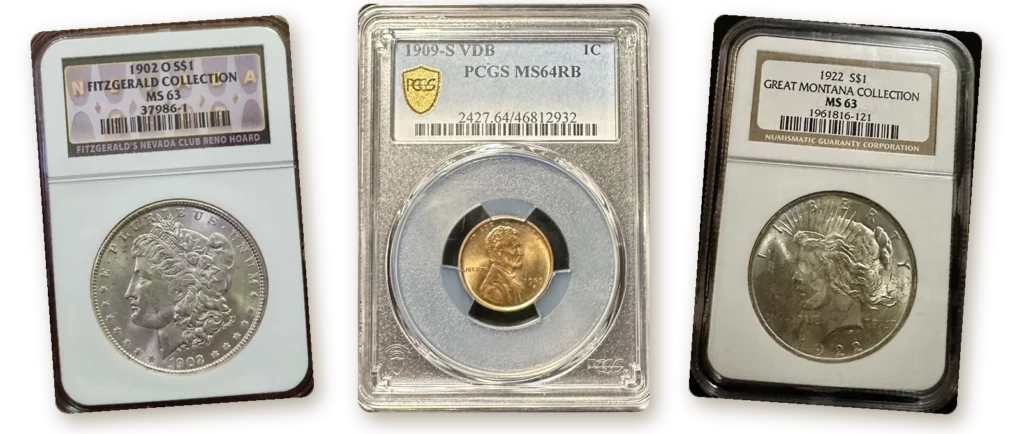
Coins certified by PCGS or NGC have been authenticated and graded by independent experts and sealed in tamper-evident holders. Certification protects you from counterfeits and altered coins, gives buyers and sellers a common language for condition, and generally makes valuable coins easier to sell. For coins worth more than a modest premium, many experienced collectors buy only PCGS or NGC certified examples.
Certification is not a guarantee of profit. Two coins with the same grade can differ in eye appeal and value, and grading standards are applied by people. Counterfeit holders also exist, so buy from trusted sources; see our fake certified coin case study and our guide to fake, counterfeit and altered coins.
American Rarities is a PCGS and NGC authorized dealer and an ANACS submission center, and we can submit your coins to PCGS and NGC. We also offer free in-house grading opinions so you can decide whether a coin is worth certifying. Learn more about rare coin grading services and the differences between PCGS, NGC and ANACS.
3. Focus on Key Dates, Rarity and Genuine Errors

Scarcity drives value. Within most U.S. coin series there are key dates, coins struck in much smaller numbers than the rest, that collectors need to complete a set. Demand for these coins has historically been strong, though their prices still rise and fall.
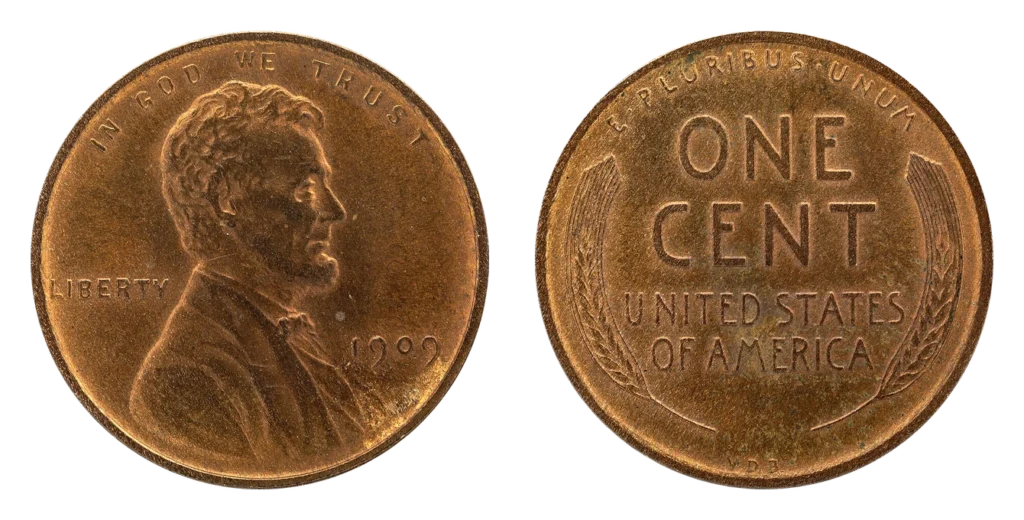
- 1909-S VDB Lincoln cent: only 484,000 struck at San Francisco with designer Victor David Brenner’s initials on the reverse. See Lincoln cent on Wikipedia.
- 1916-D Mercury dime: a mintage of about 264,000 makes it the key to the Mercury dime series.
- 1955 doubled die cent: one of the best-known U.S. mint errors. Read about the 1955 doubled die Lincoln cent and the 1955 doubled die cent on Wikipedia.
Genuine mint errors and die varieties can also carry strong premiums. Learn the difference on our error coins and variety coins page. Because key dates and errors are valuable, they are also the coins most often faked or altered, which is another reason to buy them certified.
4. Condition Is Everything
Condition, or grade, can matter as much as the date. U.S. coins are graded on the 1 to 70 Sheldon scale; see the NGC grading scale for what each grade means. A small step up in grade, especially for uncirculated coins, can multiply a coin’s value, and original surfaces and strong eye appeal add more.
- Never clean your coins. Cleaning leaves hairlines and an unnatural look that collectors avoid and that can reduce value sharply. See why cleaning your coins is not recommended.
- Handle coins by the edges, over a soft surface, and avoid touching their faces.
- Store them properly in inert holders, away from humidity, heat and PVC plastics. Read proper storage for your tangible assets.
5. Be Patient and Count the Costs
Rare coins are generally a long-term holding. The coin market moves in cycles, and collector demand, the economy and precious metal prices all affect values. Coins that are bought and quickly resold often lose money once the buy/sell spread is counted.
- Plan to hold for years, and only with money you will not need in a hurry. Coins are less liquid than many other assets, and selling for full value can take time.
- Count the costs: dealer spreads, grading fees, insurance, safe storage and auction commissions all reduce returns.
- Keep records of what you paid and when, along with invoices and certification numbers. Good records help you, and your heirs, sell well and handle any tax questions with a professional.
6. Sell to the Right Buyer
When it is time to sell, who you sell to can make a large difference in what you receive.
- Get more than one offer on anything valuable, and get offers in writing.
- Match the venue to the coins. Some coins sell best to a dealer for immediate payment; important rarities may do better at public auction. Compare the options in coin shop vs. coin auction and the best place to sell rare coins.
- Do not let a buyer cherry-pick the best coins and leave you with the rest unless the price for those coins is right.
American Rarities has bought and sold rare coins since 1990. In more than 30 years we have purchased over $400 million in coins, currency and precious metals. We are rated 4.7 on Google from 86 reviews, A+ with the BBB, and our team are ANA Life Members. We buy entire collections without cherry-picking and place each coin where it fits best, with dealers, collectors or at auction, and through our relationships we can offer preferential auction fees. Payment is immediate by company check, wire or ACH. We offer nationwide home visits for larger collections, and mail-in shipments are fully covered with no deductible, with free or discounted shipping on selected collections. We also use XRF testing and digital microscopy to evaluate coins.
Start with a free online coin appraisal, or learn how to sell PCGS, NGC and ANACS coins. Need cash without selling? Ask about our coin loans.
Common Mistakes That Cost Coin Collectors Money
- Buying heavily advertised coins at large markups
- Buying raw (uncertified) “rare” coins that turn out to be counterfeit, altered or cleaned
- Cleaning coins, or storing them in damaging holders
- Expecting quick profits, or buying with money needed for other goals
- Ignoring the buy/sell spread and other costs
- Selling to the first buyer without comparing offers
- Assuming past price increases will continue
Other Ways to Earn: Work With American Rarities as a Coin Dealer or Rare Coin Buyer
We are always looking for skilled numismatists who have the acumen to purchase collections with our money (company funds). We are also looking for experienced salespeople who are in the rare coin business, or looking to get into it. We offer a generous profit-sharing arrangement: as we make money, you make money. We buy and sell rare coins nationwide, with a particular emphasis on purchasing entire collections.
Dealers can also learn about our services for coin dealers.
Collection Purchasing Referral Program

If you know someone who has a coin collection and may be interested in selling, you may refer them to us for a referral/finder’s fee. There are two ways to get paid: either based on a percentage of the total profit of the purchase, or a straight percentage of our total amount spent on the collection. No numismatic experience is necessary; our buyers will handle the heavy lifting.
We Purchase Rare Coin Buyer Leads
American Rarities also buys rare coin leads to help us find collections to buy. Confidentiality is guaranteed.
Types of leads we purchase include, but are not limited to:
- Old coin company records
- Client lists
- Company mailing lists
- Old invoice records
- Numismatic client records
For more information about any of these opportunities with American Rarities, email staff@americanrarities.com, text 720-600-4740, or use the form below.
Make Money With Rare Coins: Quick Answers
Which rare coins have historically held value best?
Scarce key dates, genuine mint errors and high-grade PCGS or NGC certified coins with strong collector demand have tended to hold value better than common or heavily marketed coins. Past performance does not predict future results.
How do I avoid overpaying for rare coins?
Learn about a coin first, compare prices with published guides, ask what the seller would pay to buy it back, and be cautious with heavily advertised coins.
How else can I earn money with American Rarities?
We work with experienced coin buyers on a profit-sharing basis, pay finder’s fees for collections you introduce that we buy, and purchase coin buyer leads.
Contact Us
Your Confidentiality is Guaranteed
Email: staff@americanrarities.com | Text: 720-600-4740