Coin Shop vs. Coin Auction: Which Is Better for Selling Your Coins?
Should you take an immediate offer from a reputable coin dealer or consign your coins to an auction house? Here is a fair look at both.
When it is time to sell a coin collection, most people choose between two routes: selling directly to a coin shop or dealer, or consigning to a coin auction. Both can be the right answer. A direct sale gives you speed and certainty. An auction can reach a wide field of bidders, but it comes with fees, a wait for the sale and no guarantee of the final price.
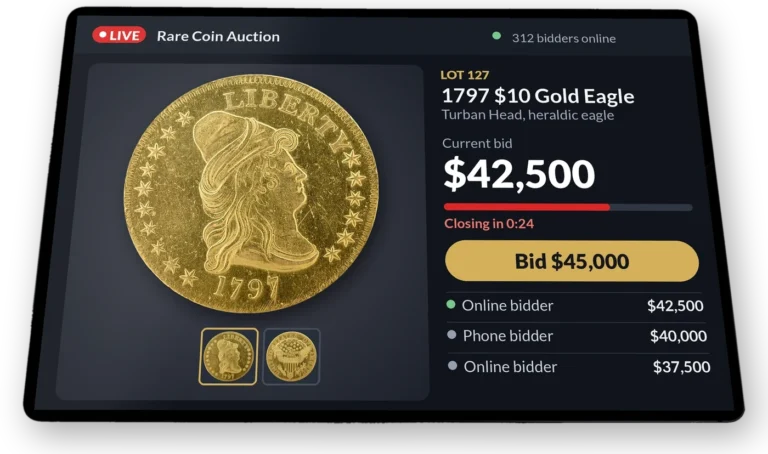
When you consign to an auction, the house usually takes a seller’s commission out of the hammer price (the winning bid). According to PCGS, that commission varies with the type of material and the size of the consignment, and large consignments can often negotiate it down, sometimes to zero. Buyers also pay a buyer’s premium on top of the hammer price, which is now typically 20% at the largest U.S. coin auction houses.
The buyer’s premium is not deducted from your proceeds, but bidders factor it into how much they bid. PCGS gives a simple example: if a coin hammers at $1,000 and the house charges 10% to the seller and 10% to the buyer, the seller nets $900 while the buyer pays $1,100. PCGS also notes that consignment agreements usually charge a fee if a coin fails to meet its reserve and is bought back.
Where a Direct Sale Often Makes More Sense
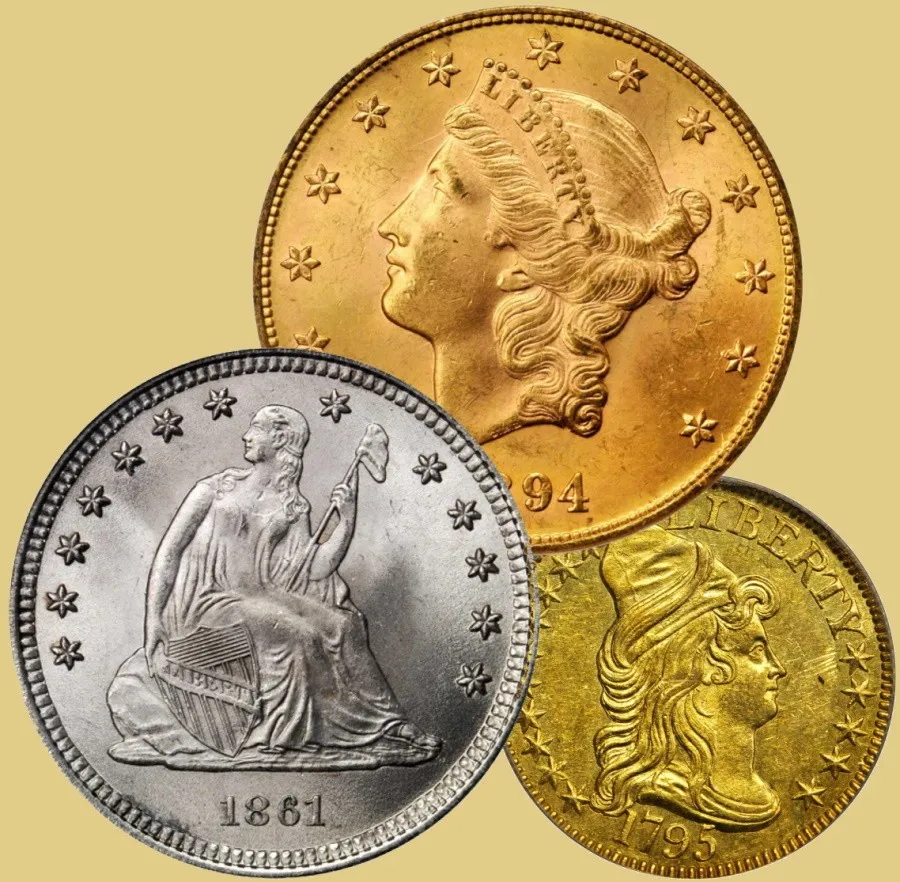
Auctions are at their best for rare, high-value coins that attract competitive bidding.
Most collections, though, are a mix of better coins, common dates, bullion and sets. Material like this is often grouped into lots, and fees, minimums and the wait for the sale can take a bigger bite out of what you net. Prices also move with the precious metals market between the day you consign and the day your coins sell.
Selling directly to a dealer avoids those costs and that waiting period. You know the exact amount before you agree to anything, and you are paid right away. If you are not sure which route fits, a free coin collection appraisal is the best place to start.
The Trade-Offs of Selling at Auction
An auction can bring a strong result for the right coins, especially rare, high-grade pieces with active collector demand. It also comes with real trade-offs:
Fees: Seller’s commissions, buyer’s premiums that bidders factor into their bids, and possible charges for photography, lotting or buy-backs, as described above.
Waiting time: Your coins have to be scheduled into an upcoming sale, cataloged and photographed. You are paid only after the sale closes and settles, so the whole process can take months.
Price risk: No final price is guaranteed. The result depends on who is bidding that day and where the metals and collector markets are at the time.
Reserves and buy-backs: You can protect a coin with a reserve, but if it does not reach the reserve it goes unsold, and you may still owe a fee.
Lotting: Lower-value coins are often grouped into lots, so you have less control over how each coin is presented and sold.
Public record: Auction results are published, which some sellers would prefer to avoid.
The Advantages of a Direct Sale to a Coin Dealer
Speed: A free written appraisal and offer, usually within 24 hours.
Certainty: You know the exact amount before you agree to sell. There are no seller’s commissions and no reserves.
Immediate payment: Once you accept, you are paid immediately by company check, wire or ACH.
One offer for everything: We buy whole collections, including U.S. and world rare coins, paper money and all gold and silver bullion, including bars.
Expert evaluation at no cost: We grade your coins for free, confirm metal content with XRF testing and examine coins with digital microscopy. Please don’t clean your coins first; read why in the #1 mistake that can destroy your coin collection’s value.
Privacy: A direct sale is a private transaction, not a published auction result.
Direct purchase or managed auction: you don’t have to choose blindly.
At American Rarities, we offer both. For most coins, we make a direct offer with immediate payment. When a coin would likely do better in front of auction bidders, we can manage the consignment for you through our auction house partnerships, with preferential auction fees. We can also submit coins to PCGS, NGC or ANACS for grading before sale when certification would add value; we grade coins for free ourselves but do not encapsulate them.
American Rarities was founded in 1990, and we have purchased over $400 million in coins, collections and bullion. We are ANA Life Members, BBB A+ rated and a PCGS and NGC authorized dealer and ANACS submission center, and our customers rate us 4.7 on Google from 86 reviews. We offer nationwide home visits for larger collections, mail-in service that is fully covered with no deductible, and IRS-compliant appraisals for estates.
Send us photos or an inventory list by email, by text to 720-600-4740, or with the form below. We’ll give you a free, no-obligation appraisal and tell you honestly whether a direct sale or an auction is likely to serve you better. See also coin appraisal near me and how to sell a large coin collection.
Coin Shop vs Coin Auction: Quick Answers
Is it better to sell coins to a coin shop or at auction?
Both can be right. A dealer gives you speed and a certain price. An auction reaches many bidders but comes with fees, a wait and no guaranteed result.
How do coin auction fees work?
The auction house usually takes a seller’s commission from the hammer price, and buyers pay a premium on top, now typically 20% at the largest U.S. coin auction houses, which bidders factor into their bids.
What happens if my coin does not meet its reserve?
It goes unsold, and consignment agreements usually charge a fee when a coin fails to meet its reserve and is bought back.
Get a Free Appraisal and Compare Your Options
Email, Text, or Use This Form To Send Us Your Inventory List or Pictures