
Famous U.S. Coin Rarities—and Why Authentication Matters
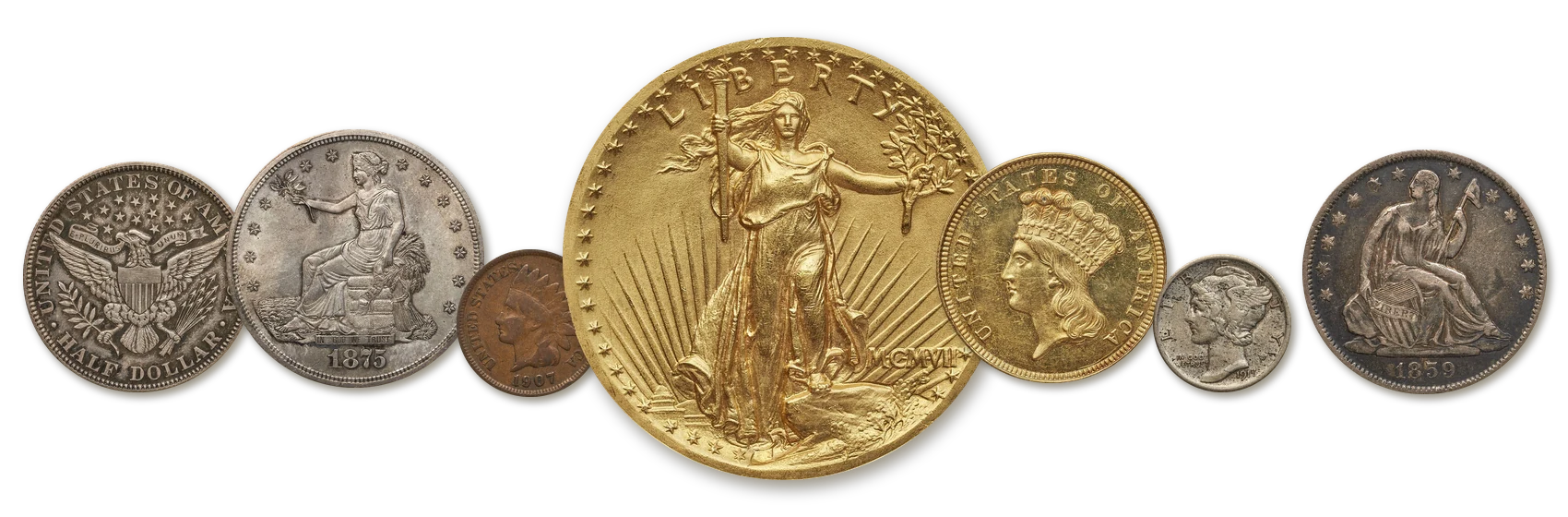
A few U.S. coins are famous for their rarity and their stories. Most coins that look like them are something else: a common date, a later issue or a replica. This page gives context on the famous rarities and shows why authentication is the first step if you think you have one.

Famous Rarities at a Glance
| Coin | Why it is famous | What to know |
|---|---|---|
| 1794 Flowing Hair silver dollar | The first U.S. silver dollar | Few survive, especially in high grades |
| 1804 silver dollar | Called the “King of American Coins”; actually struck decades after 1804 for diplomatic presentation sets | Only a handful exist, and replicas are common |
| 1913 Liberty Head nickel | Only five are known, made outside normal production | Altered-date coins exist |
| 1894-S Barber dime | Only 24 were struck at San Francisco | Check the mint mark under magnification |
| 1879 and 1880 $4 Stellas | Gold pattern coins, never issued for circulation | Patterns need specialist authentication |
| 1907 High Relief Saint-Gaudens $20 | Sculptural high-relief design, struck in 1907 only | Distinguish it from the later, flatter design |
| 1933 Saint-Gaudens $20 | Struck but almost all melted before release | Ownership is legally restricted; any example needs careful verification |
Record sale results for coins like these are exceptional. They reflect one specific coin on one date. Read the stories behind the records in the most expensive coins ever sold.
Patterns and Unusual Issues
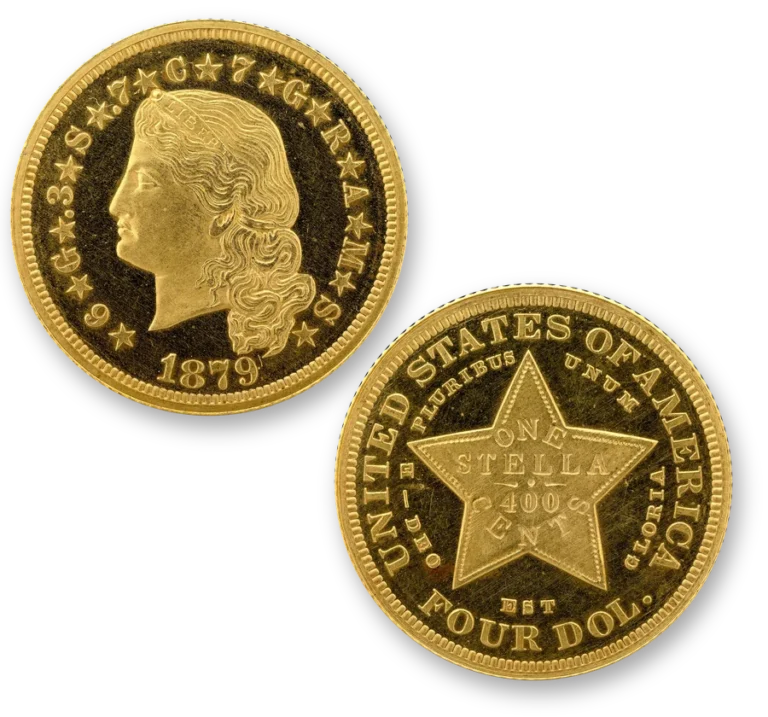
Pattern coins, like the $4 Stella shown here, were made to test designs and were never intended for circulation. Their small mintages and unusual designs make them highly collectible, and they need specialist attention to authenticate.
Why Authentication Comes First
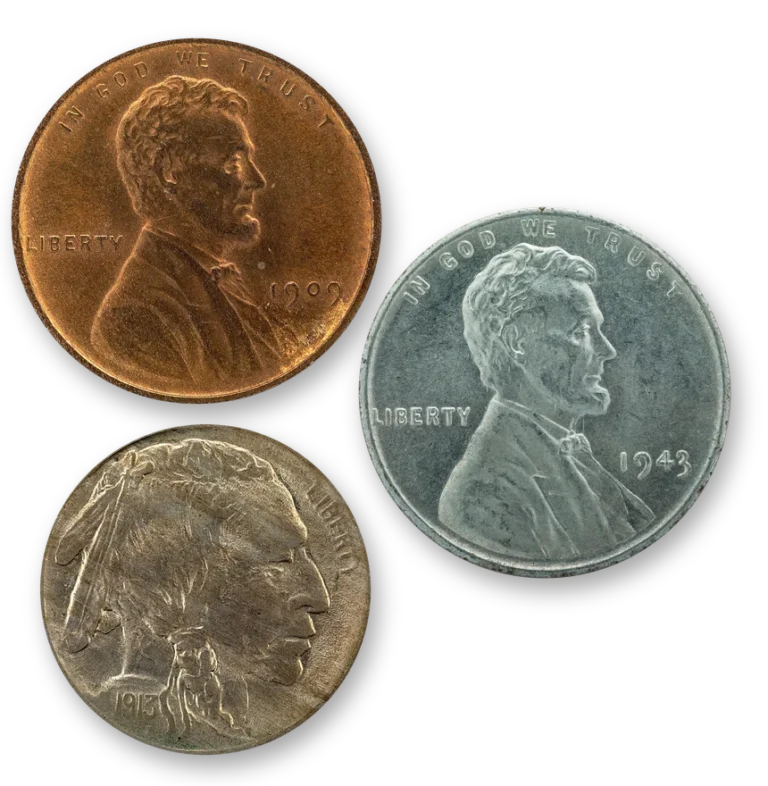
Famous dates attract counterfeits and altered coins. Some common examples:
- Altered dates or added mint marks on common coins
- Plated or altered coins posing as the rare 1943 copper cent; see 1943 steel and copper cents
- Replicas of early dollars, some stamped with the word “copy” and some unmarked
- Counterfeit gold coins of correct size
Please don’t clean, scratch or test the coin yourself. Keep it in a soft holder and photograph both sides.
PCGS, NGC and ANACS: Authentication First
When a famous date or variety is in question, the greatest contribution of PCGS, NGC and ANACS to numismatics is often authentication, not just the grade printed on the label.
These services examine coins for counterfeits, altered dates, added mintmarks and other manipulations. In many cases their determination of authenticity is the ultimate arbiter for dealers and collectors. Coins that pass are encapsulated in a sealed holder; each service backs genuine coins under its own guarantee terms, which vary by company and product.
A slab is not a cash offer, and grading opinions can still differ from one service to another. For a scarce coin, though, third-party authentication is usually the first step before comparing sale records or talking with a buyer. American Rarities is an authorized PCGS, NGC and ANACS dealer and can help you decide whether submission makes sense.
Think You Have One?
- Check identification details such as the date, mint mark and type.
- Get an expert review. Text photos to 720-600-4740, email staff@americanrarities.com or use the form below. Free All appraisal requests are reviewed in the order they are received. Some appraisals take minutes, while larger, more complex collections can take a few days. Either way, you’ll get a response from us.
- Compare evidence. If it is genuine, compare dated sale records for its grade.
For everyday series, use U.S. series value guides or learn to read price guides. If you’re ready to sell a scarce coin, see how we work with rare-coin sellers.
Your Coin Value Research Path
Work through these pages in order, from a rough value to a free written offer.
Approximate values and melt values for common U.S. coins and paper money in one place.
Red Book, Blue Book, Greysheet, PCGS and NGC entries, grades and designations.
Famous U.S. Coin Rarities: Quick Answers
Is my 1804 dollar real?
Almost certainly it is a replica; only 15 genuine 1804 silver dollars are known, and their whereabouts are tracked by collectors. Millions of copies have been made as souvenirs, store promotions and outright fakes, and many are made of base metal. A genuine coin weighs about 26.96 grams and is never found in a drawer or pocket change. Replicas still have a story, though, and some carry a small value. Send photos and we will tell you what you have, free.
Is a 1943 copper cent valuable?
A genuine 1943 copper cent is extremely valuable, but fewer than two dozen are known, so most are something else. In 1943 the Mint made cents of zinc-coated steel. Test yours with a magnet: a steel cent sticks, a bronze one does not. Genuine bronze 1943 cents weigh about 3.11 grams, while steel cents weigh about 2.7 grams. Most “copper” 1943 cents are copper-plated steel cents or 1948 cents with an altered date, so authentication is essential.
Is my 1913 Liberty Head nickel real?
Almost certainly not; only five genuine 1913 Liberty Head nickels exist, and all are accounted for in museums or famous collections. The coins were made outside normal Mint production, which is why so few exist. Most 1913 Liberty nickels found today are altered 1903 or 1912 nickels with a changed date, or modern copies. Regular 1913 nickels are the Buffalo design, and the 1913 Type 2 Buffalo from San Francisco is a scarce and valuable date in its own right.
What is the most valuable U.S. coin?
The most valuable U.S. coin sold at auction is a 1933 Saint-Gaudens double eagle, which brought about $18.9 million in 2021. Other record holders include a 1794 Flowing Hair silver dollar, which sold for about $10 million in 2013, along with 1804 dollars, 1913 Liberty nickels and Brasher doubloons. These records reflect single exceptional coins. Other examples of the same date can sell for far less depending on grade, history and legal status.
Why are record prices so high?
Record prices reflect one exceptional coin, its grade, its provenance and the competition among bidders on one date. They do not set values for other coins, even of the same date. A record coin is usually the finest known, with a famous ownership history, and two wealthy collectors determined to win can push the price far above any guide. A typical example of a rare date in average condition sells for a small fraction of the record.
Can rare coins still be found in pocket change?
Yes, though the famous great rarities never turn up in change. Coins worth well over face that do appear include the 1969-S, 1972 and 1995 doubled die cents, the 1992 and 1998 to 2000 cents with a close or wide AM, the 2004-D Wisconsin quarter with an extra leaf, silver dimes, quarters and half dollars dated 1964 or earlier, and wheat cents. Mint errors such as off-center strikes also surface. Check dates, mint marks and doubling under magnification.
Personalized Rare Coin Values Provided Free
Email, Text, or Use This Form To Send Us Your Inventory List or Pictures
Email: staff@americanrarities.com Text: 720-600-4740
Guides to Selling Your Coins
Understand rarity, condition and the steps to a documented sale.
Avoid cleaning, incomplete research and other costly selling mistakes.
Compare buyers, credentials and the details of a proposed sale.
Guides and selling pages
A selling page for slabbed coins from the major authentication services.
How altered dates, added mintmarks and counterfeits show up on famous rarities.
What authentication involves and when a third-party opinion is worth seeking.
A gallery of real counterfeits examined side by side with genuine pieces.
Grade columns, retail estimates and wholesale references — and why a published figure is not an offer.
Professional Associations
