
Sell National Currency Notes

Are you looking to sell your National Currency Notes?

At American Rarities, we buy National Bank Notes from all three charter periods, from a single note from your hometown bank to complete state and town collections. Our currency specialists bring hundreds of years of combined experience, we have purchased over $400 million in coins and currency, and we have a 4.7-star Google rating. We buy nationwide, and our complimentary appraisal is usually done within 24 hours, though larger collections may take longer. If so, we’ll let you know.

Not sure what you have yet? Our National Currency Notes guide shows you how to identify and value your notes. When you are ready to sell, this page explains what we look for, how we price your notes and how the process works.

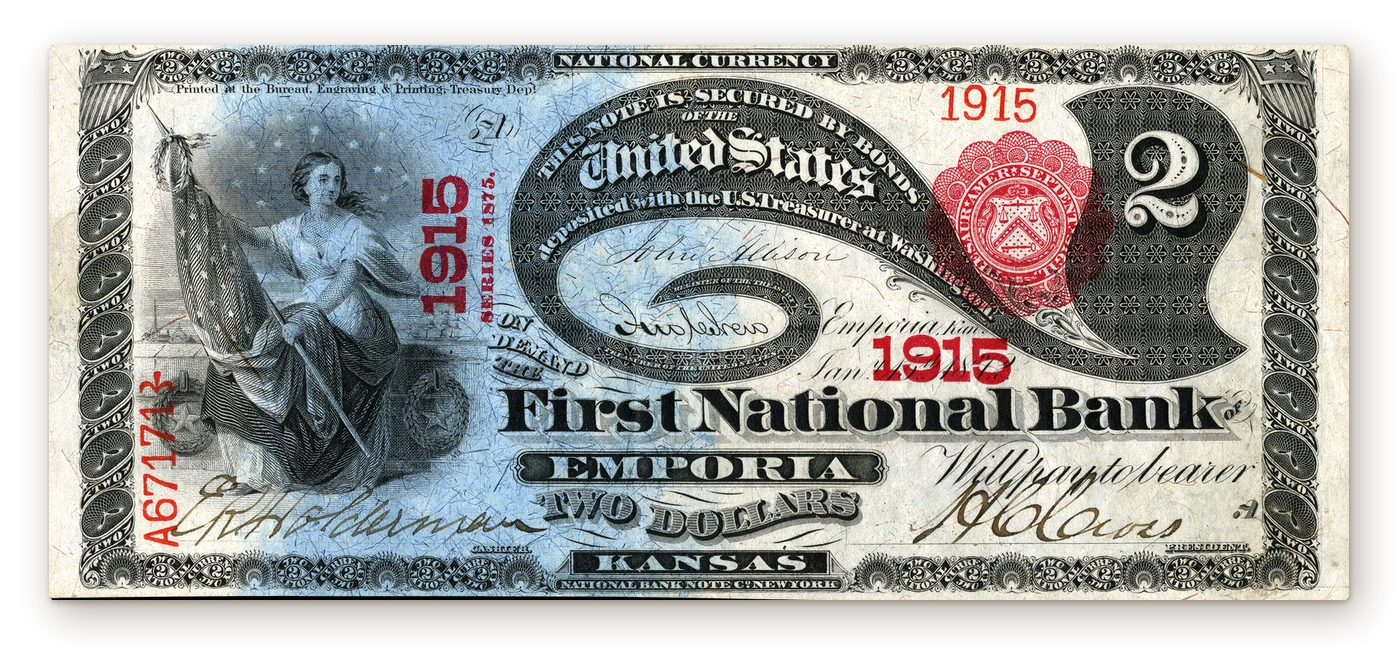
Face and back of a Series 1875 $2 "Lazy Deuce" National Bank Note from the First National Bank of Emporia, Kansas, charter 1915

What Are National Currency Notes?

National Bank Notes, also known as National Currency Notes, were issued by federally chartered banks between 1863 and 1935 in the United States. These notes were printed by the U.S. Treasury and are backed by the issuing bank’s assets. Each note features the issuing bank’s name, charter number, and a unique serial number, making them a fascinating piece of American financial history.

These notes were circulated across the country and bear unique designs, including depictions of historical figures, significant buildings, and notable events. As collectible pieces of American history, National Currency Notes can be highly valuable depending on their rarity, condition, and bank of origin.

Decorative gold separator bar

Why Sell Your National Currency Notes to American Rarities?

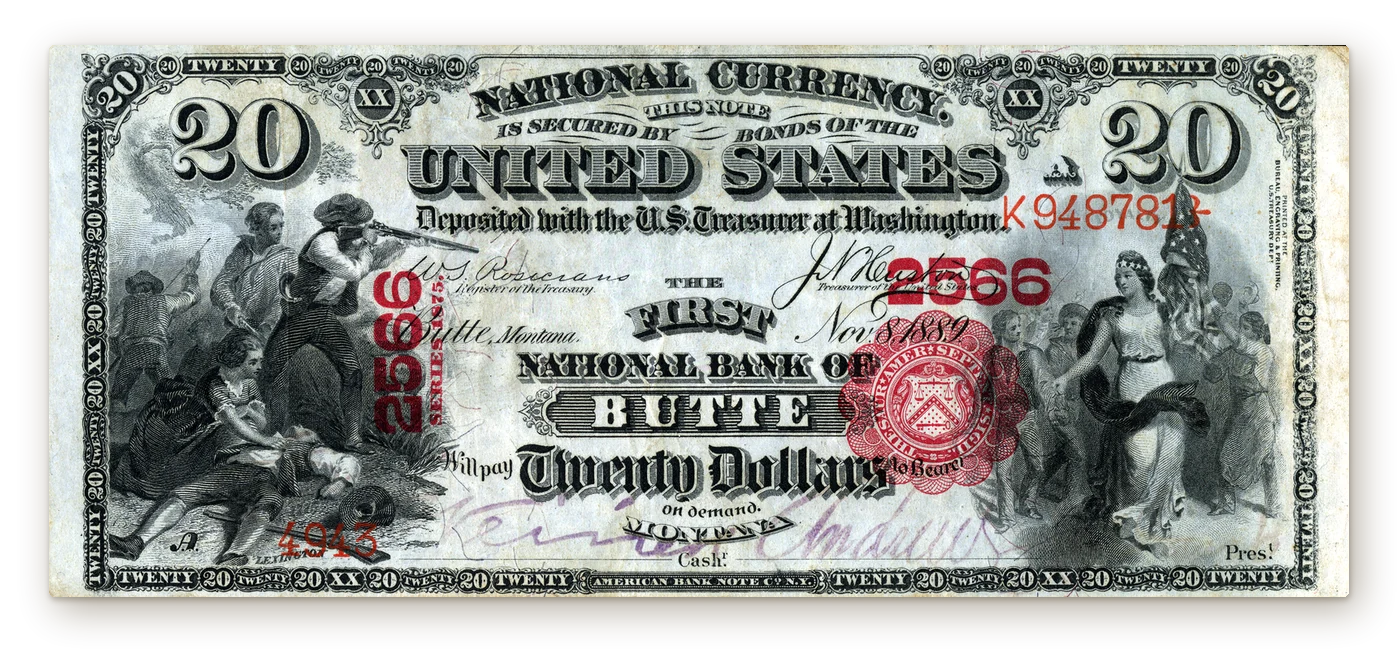
Face and back of a Series 1875 $20 National Bank Note from the First National Bank of Butte, Montana Territory, charter 2566
  • Strong Offers: We make strong offers based on current market values for your rare National Bank Notes, and we always price each note at its full collectible value. We have established relationships with collectors and dealers nationwide, so you receive a fair and competitive offer.
  • Expert Appraisal: Our currency specialists have hundreds of years of combined experience evaluating rare and collectible National Bank Notes. Whether you have a single note or an extensive collection, we help you identify the details that affect value, such as condition, rarity and historical significance. Grading opinions and appraisals are always free.
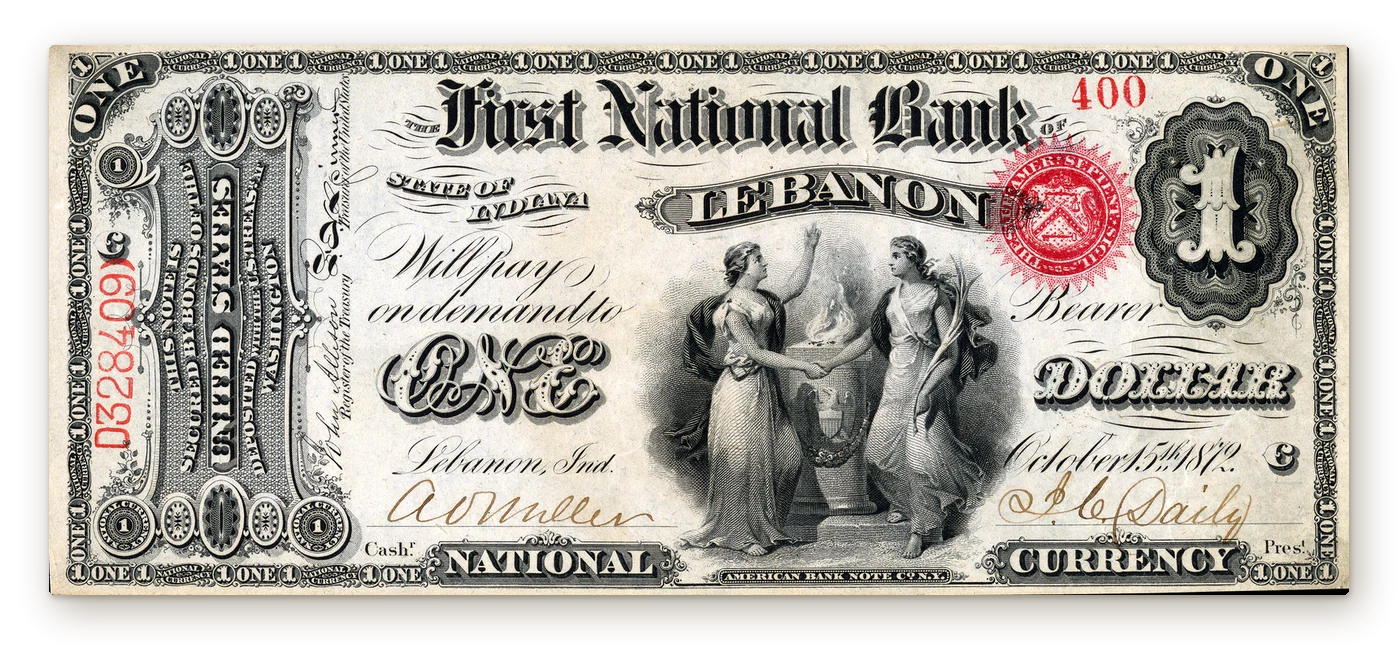
Face and back of an Original Series $1 National Bank Note from the First National Bank of Lebanon, Illinois, charter 2057
  • No Hidden Fees: We believe in transparent transactions. You won’t encounter any hidden fees when selling your National Currency Notes with us.
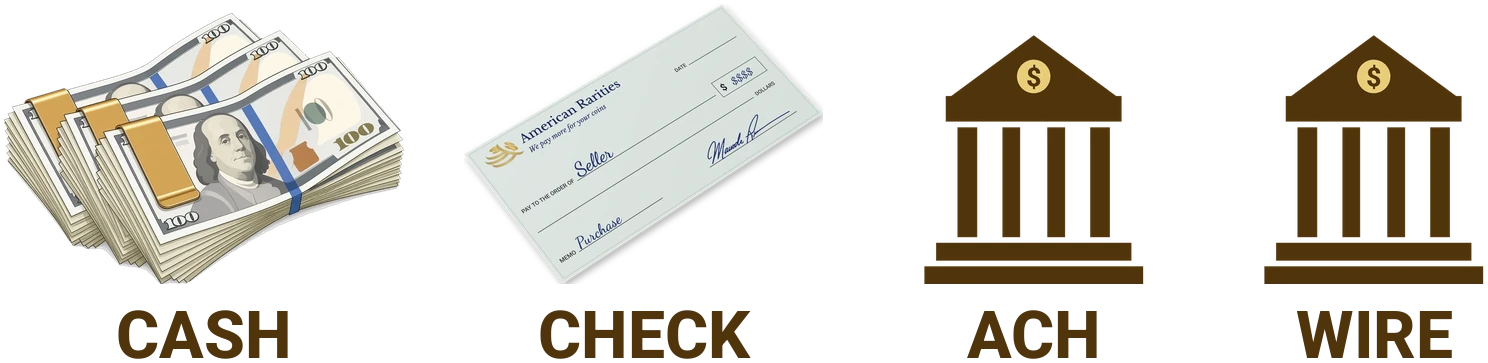
  • Fast & Secure Transactions: Ship your notes fully insured at our expense or meet with us in person. Your complimentary appraisal is usually done within 24 hours, though larger collections may take longer. If so, we'll let you know. We pay immediately by cash, check, ACH or wire once your notes arrive and are verified.
  • Trusted Since 1990: American Rarities has been buying since 1990. We are ANA Life Members, rated A+ by the BBB, an authorized PCGS and NGC dealer and an ANACS submission center.
Types of National Currency Notes We Buy

We are actively seeking a wide range of National Currency Notes, including but not limited to:

  • First Charter Period Notes (1863–1882): These are the earliest series of National Bank Notes, often featuring intricate engravings and designs. Notes from this period are highly sought after by collectors due to their age and historical significance.
  • Second Charter Period Notes (1882–1908): These notes typically feature the iconic blue or brown treasury seals and are known for their distinct size and artwork.
  • Third Charter Period Notes (1908–1935): Often bearing the name of the issuing bank and the city of origin, these notes are more modern but still highly collectible.
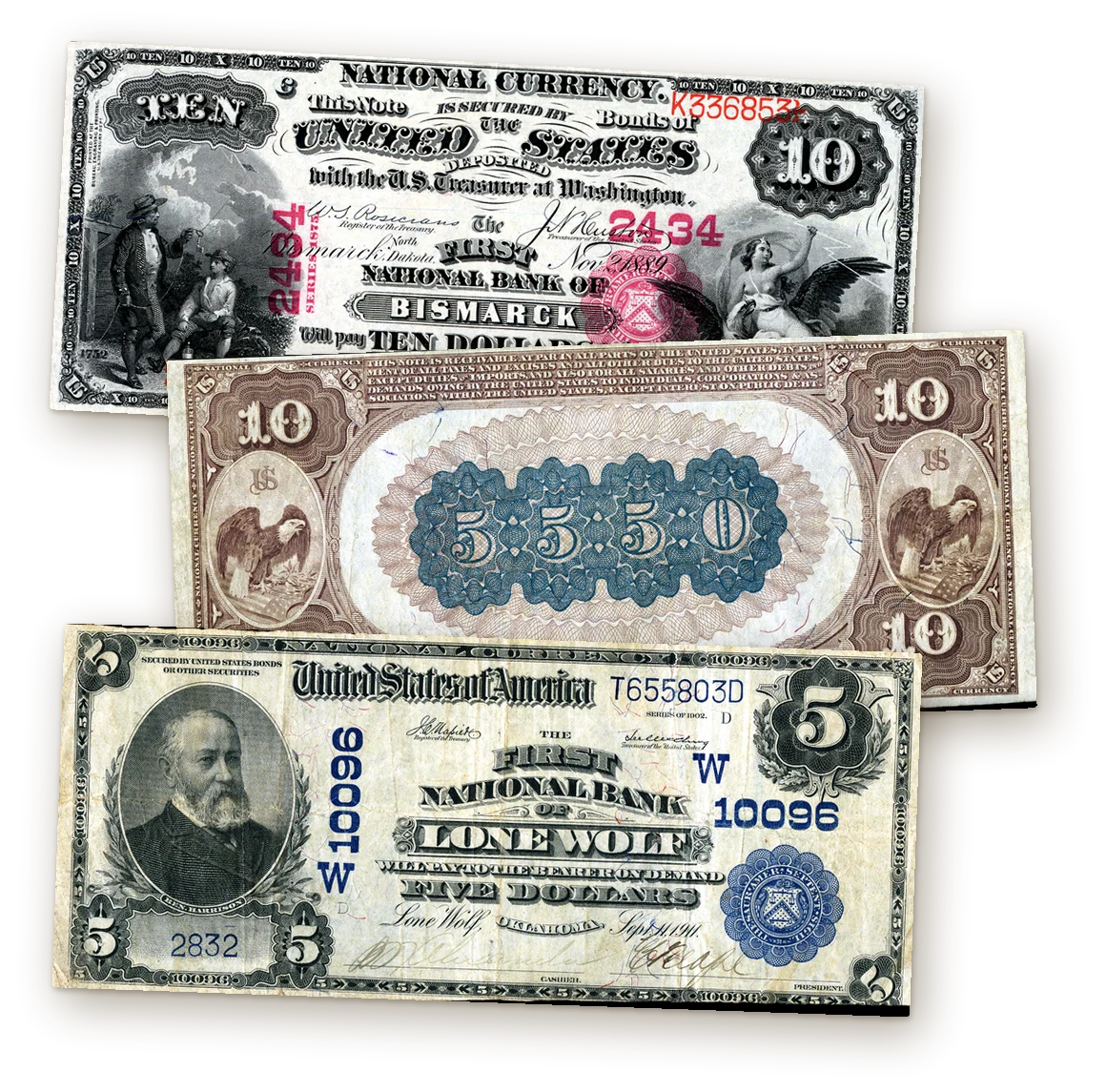
Three National Bank Notes in a row: a Series 1875 $10 from Bismarck, Dakota Territory, the back of a Series 1882 $10 Brown Back from Honolulu, Hawaii, and a Series 1902 $5 Plain Back from Lone Wolf, Oklahoma

Selling Certified National Bank Notes

We buy certified National Bank Notes graded by PMG and PCGS Banknote, from a single holdered note to complete graded state and town sets. Because certified notes have already been authenticated and graded, clear photos of the front and back of each holder are usually all we need to start your appraisal. Let us know the grade, any designations such as EPQ or PPQ, and the certification number.

Have raw notes that might be worth grading? We give free grading opinions and can tell you which notes may be worth sending in. Learn more about our coin and currency grading services.
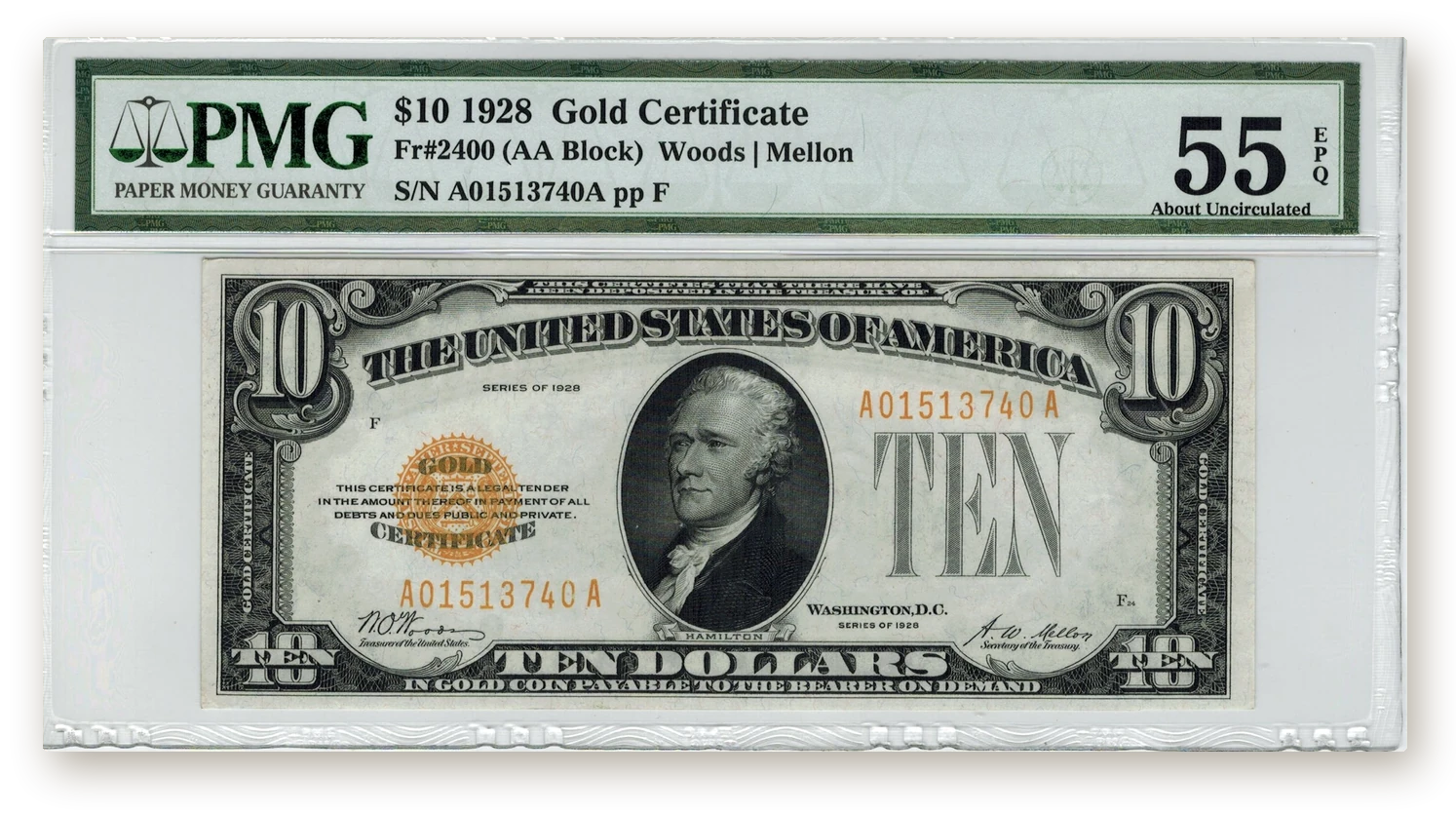
Real photo of a PMG holder, front and back: a Series 1928 ten dollar Gold Certificate graded 55 EPQ About Uncirculated, showing the grade, EPQ designation and certification number we ask for

A real PMG holder, front and back (1928 $10 Gold Certificate, PMG 55 EPQ). Clear photos like these are all we need to start.

What Makes a National Bank Note Valuable?

Two National Bank Notes with the same design can be worth very different amounts. These are the main things we look at when we appraise your notes:

What we checkWhy it matters
Bank and townNotes from small towns and from banks that issued only a few notes are much scarcer than notes from large city banks.
State or territoryNotes issued in territories before statehood, such as Arizona, New Mexico, Dakota or Indian Territory, are in strong demand with collectors.
Charter period and seriesOriginal Series and Series 1875 notes, Brown Backs and Red Seals are usually scarcer than the later Plain Backs and the small size Series 1929 notes.
Large or small sizeLarge size notes, issued up to 1929, generally bring more than small size Series 1929 notes from the same bank.
Serial numberLow serial numbers, and especially note number 1, can add a real premium.
ConditionFolds, tears, stains, pinholes and trimming lower the value, while crisp, original paper brings more.

Because every bank and town is different, there is no single price list for National Bank Notes. We look at each note on its own, and if something is out of the ordinary, such as higher quality, scarce or a variety, we will always price it at its full collectible value.

Decorative gold separator bar

How to Sell Your National Currency Notes

Selling your National Currency Notes to American Rarities is simple. For a general walk-through that covers every type of U.S. note, see our step-by-step guide on how to sell paper currency. For National Bank Notes, here is how it works:

  1. 1

    Send Photos and/or a List

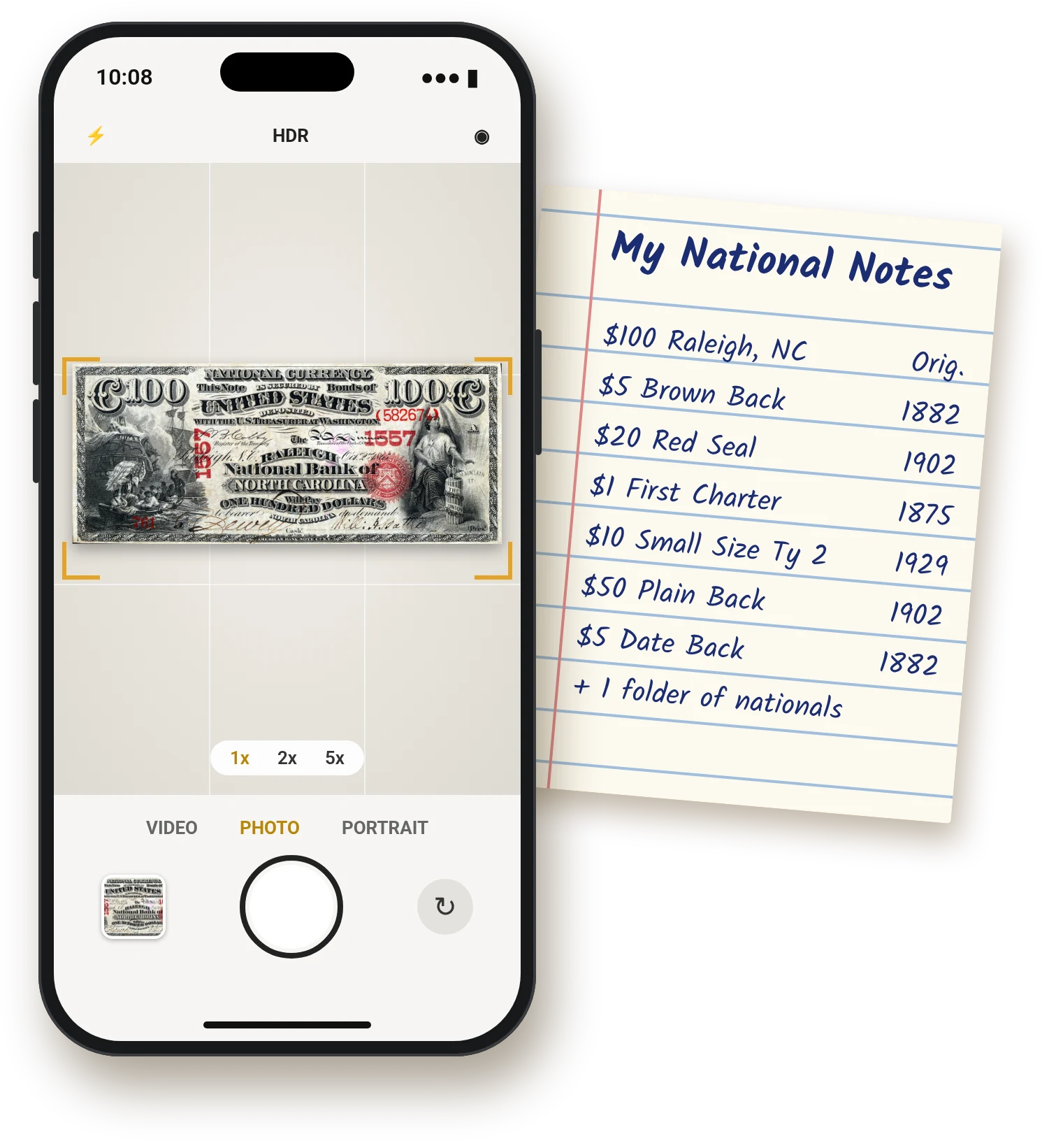
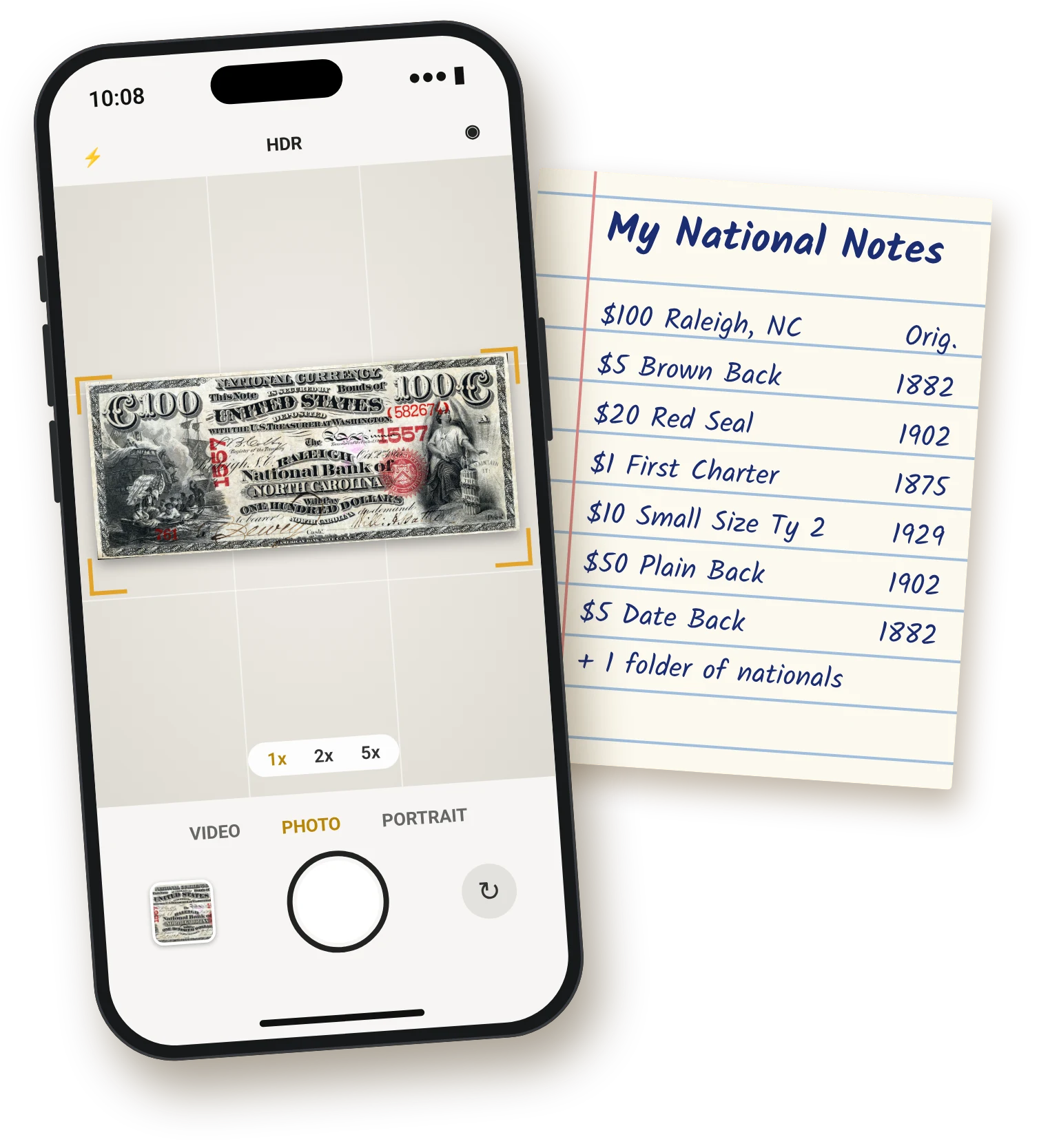
    Phone camera taking a photo of an Original Series $100 National Bank Note from Raleigh, North Carolina, with a handwritten inventory list of National notes behind it

    The best way to get our complimentary appraisal and offer service started would be to share your collection with us in the way of an inventory list and/or pictures. Use the form on this page, text photos to 720-600-4740 or email staff@americanrarities.com. Front and back photos of each note help us the most.

  2. 2

    Free Appraisal and Written Offer

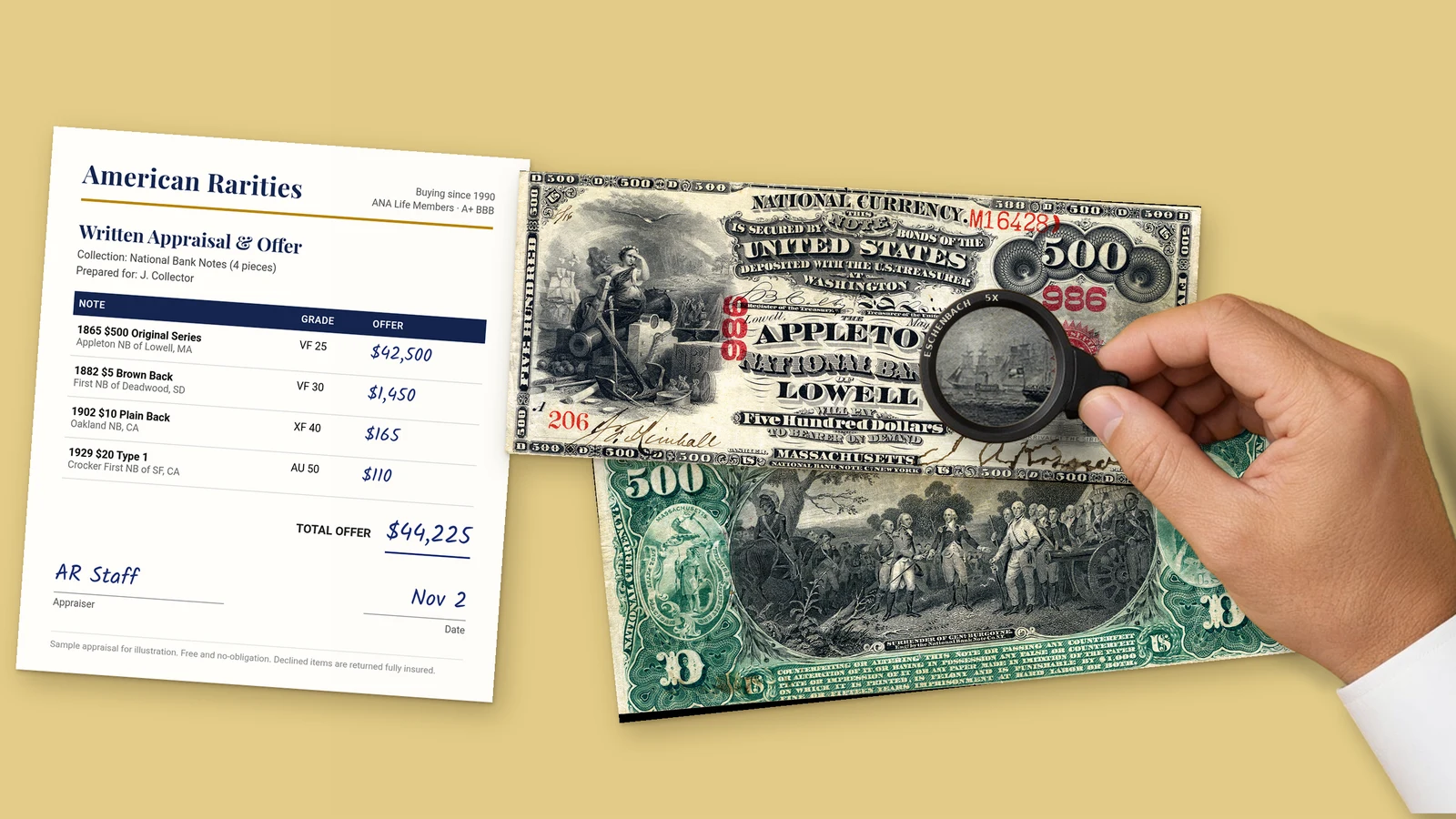
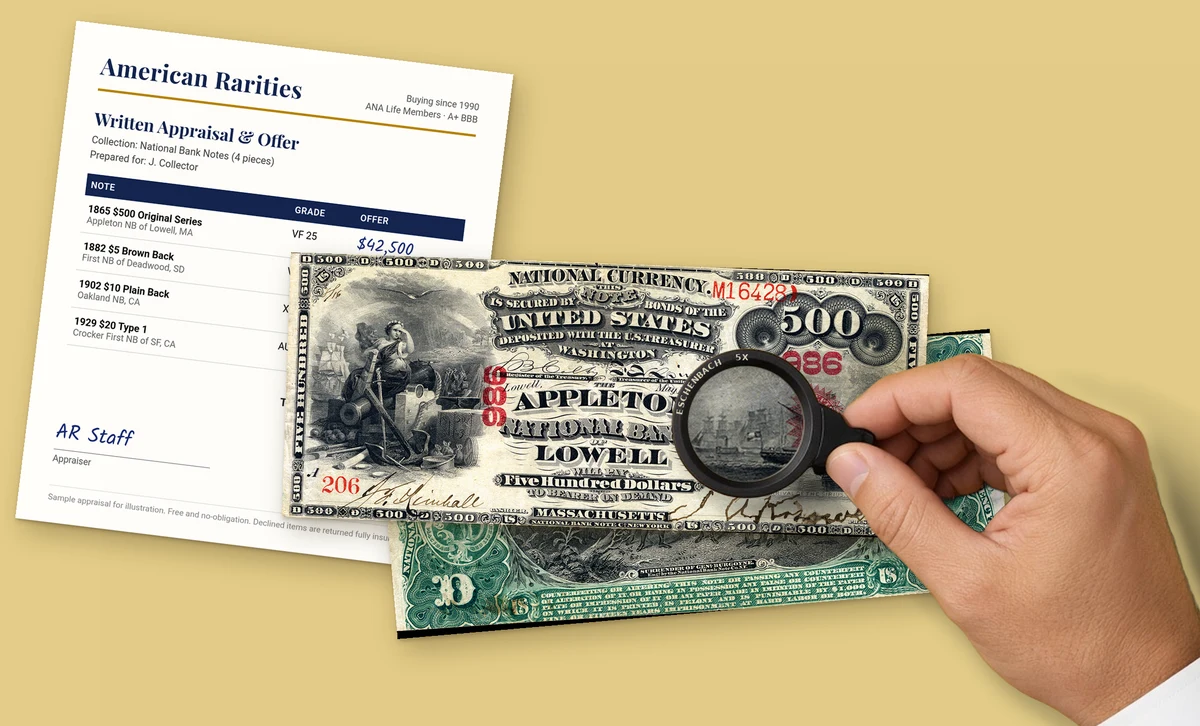
    Hand holding a loupe over an Original Series $500 National Bank Note from Lowell, Massachusetts, beside a written American Rarities appraisal and offer sheet

    Our currency specialists review the bank, charter number, series, serial number and condition of each note, then send you a written offer. Your complimentary appraisal is usually done within 24 hours, though larger collections may take longer. If so, we'll let you know. There is no obligation to sell.

  3. 3

    Ship or Visit in Person

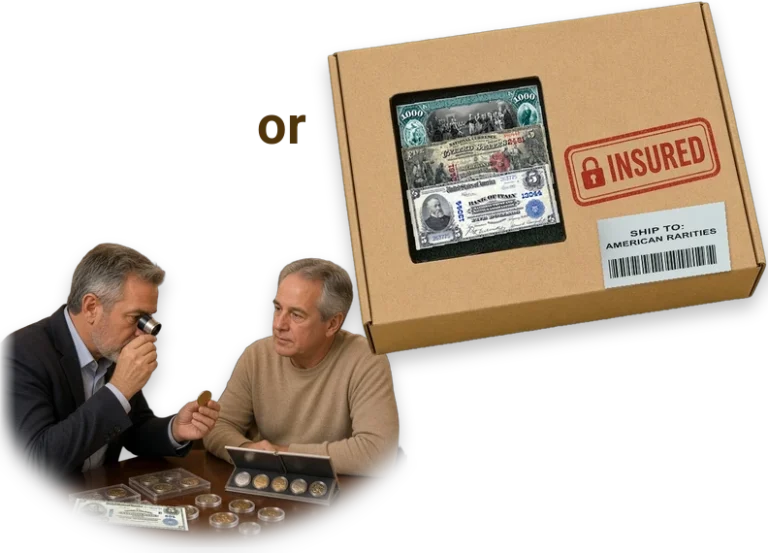
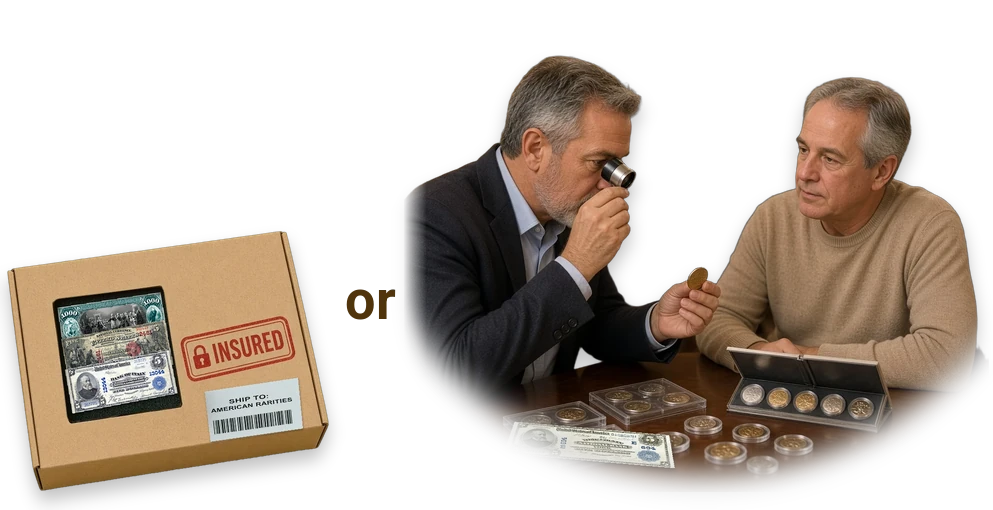
    Shipping carton labeled Insured and Ship to American Rarities with National Bank Notes in its window, the word or, and an American Rarities buyer examining a collection with a customer at a table

    If you accept, we send you instructions to ship your notes fully insured at our expense. If you live nearby or have a large collection, we can arrange to meet in person, and we can meet you at your bank. If you decline, we return your notes fully insured.

  4. 4

    Get Paid

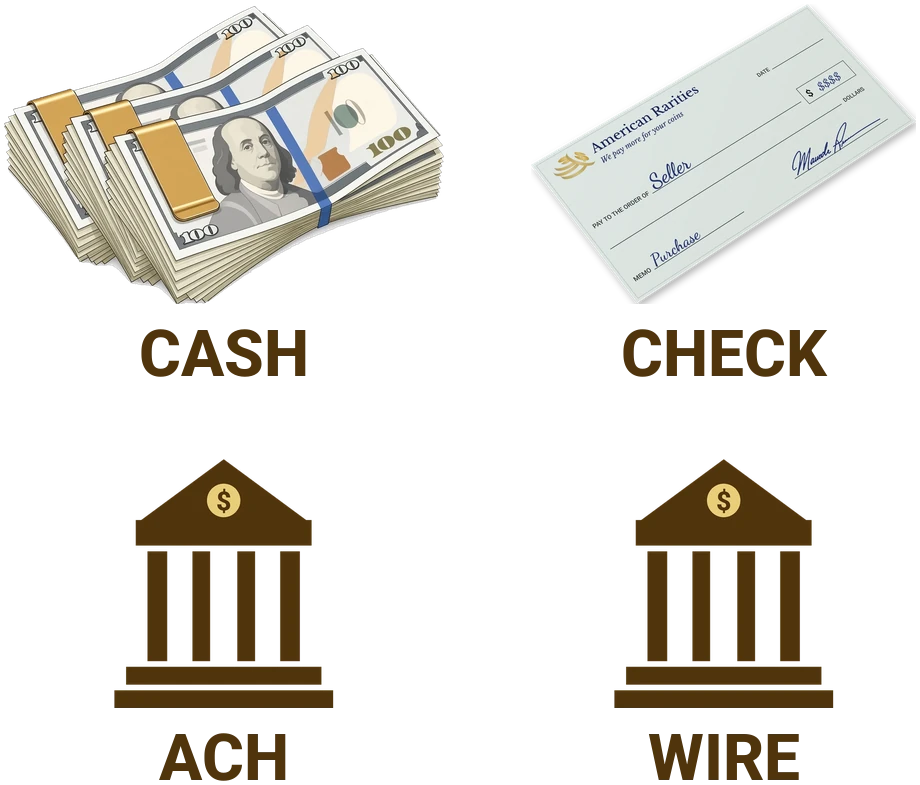
    Cash, an American Rarities check, and two bank icons labeled ACH and Wire, showing the ways we pay for National Bank Notes

    We pay you immediately once your notes arrive and are verified, or when we meet in person. Choose any of our four ways to get paid: cash, check, ACH transfer or bank wire.
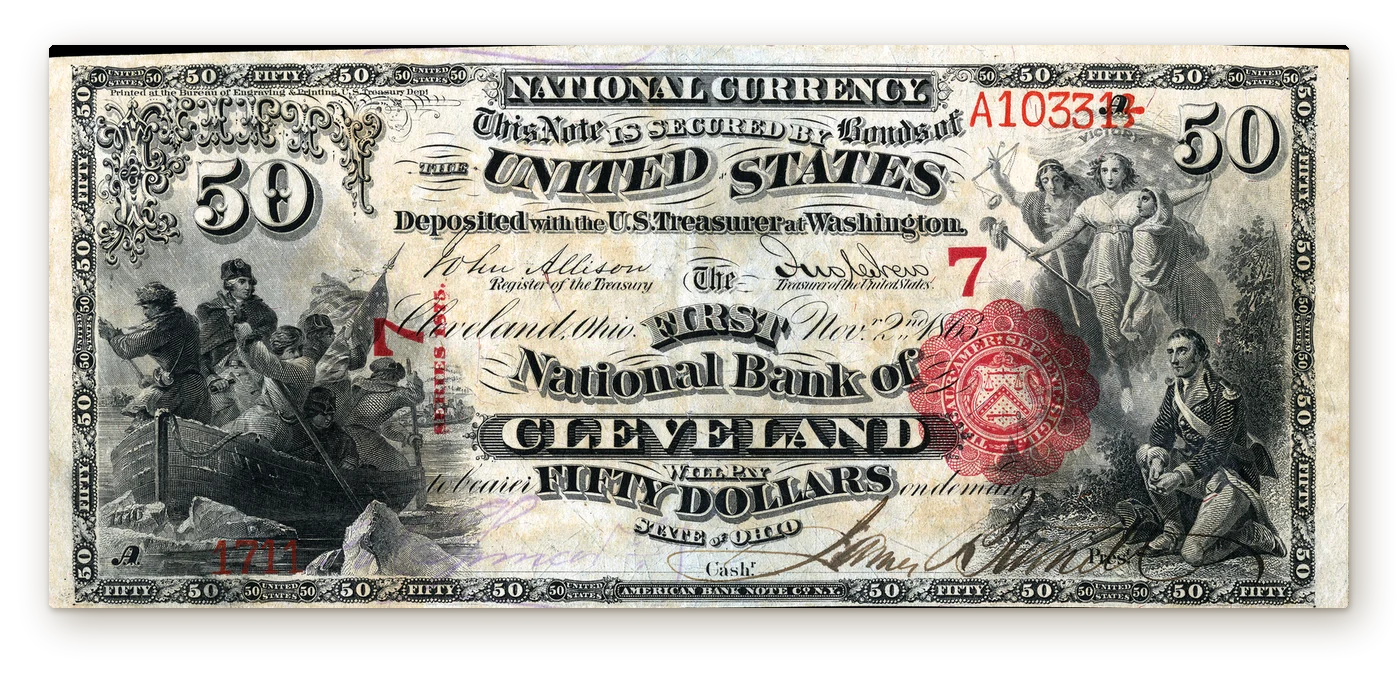
Face and back of a Series 1875 $50 National Bank Note from the First National Bank of Cleveland, Ohio, charter 7

Get Started Today

At American Rarities, we are passionate about preserving pieces of America’s monetary history, and collectors are actively looking for National Bank Notes from every state. If you are considering selling your National Currency Notes, our team brings hundreds of years of combined experience to every appraisal.

Use the form below, text photos to 720-600-4740 or email staff@americanrarities.com for a complimentary appraisal, usually done within 24 hours, though larger collections may take longer. If so, we’ll let you know.

For help identifying your notes first, read our guide on how to identify and value National Currency Notes.

Selling other types of U.S. notes too? Learn more on our sell paper currency page.

Decorative gold separator bar

National Currency Notes: Frequently Asked Questions

How much are National Bank Notes worth?

It depends on the bank, town, state, charter period, serial number and condition. Common small size notes in circulated condition may bring a modest premium, while notes from rare banks, territories and notes in high grades can be worth much more. Our complimentary appraisal is usually done within 24 hours, though larger collections may take longer. If so, we’ll let you know.

Where do I find the charter number on my note?

The charter number is the number the federal government gave the issuing bank. It is printed on the face of the note, usually more than once. Our National Currency Notes guide shows where to find it on each type.

Do I need to get my notes graded before I sell?

No. We buy both certified and raw notes, including notes graded by PMG and PCGS Banknote. We give free grading opinions, and as an authorized PCGS and NGC dealer we can help you with submissions when grading would add value.

Do you buy other types of U.S. paper money?

Yes. We buy all types of U.S. paper money, including Legal Tender Notes, Silver and Gold Certificates, Federal Reserve Notes, fractional currency and star notes. Our U.S. paper currency information page explains the main types and how to identify them.

How and when will I be paid?

Once your notes arrive and are verified, we pay you immediately by cash, check, ACH or wire. We buy National Bank Notes nationwide.

What is the best way to get started?

The best way to get our complimentary appraisal and offer service started would be to share your collection with us in the way of an inventory list and/or pictures. Use the form on this page, text 720-600-4740 or email staff@americanrarities.com.

Decorative gold separator bar

Paper Money Guides

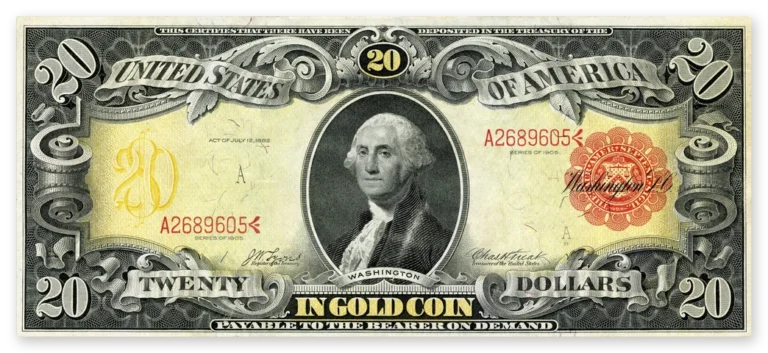
A Series 1905 $20 gold certificate with George Washington and gold and red coloring, known as the Technicolor noteSell Your U.S. Paper CurrencyFree appraisal and a cash offer for your notes
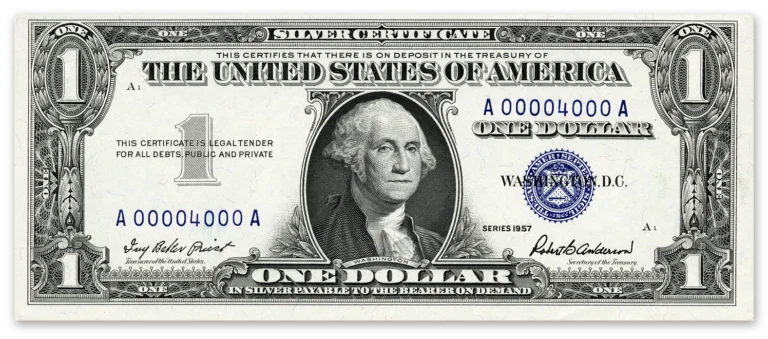
A Series 1957 $1 silver certificate with George Washington's portrait, a blue Treasury seal and blue serial numbersHow to Sell Paper CurrencyFive steps to take before you sell
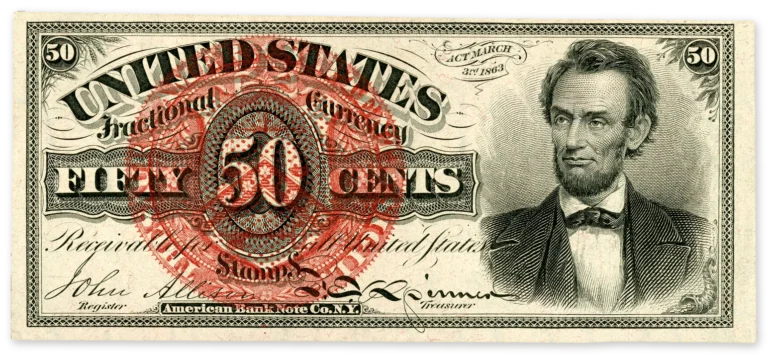
A Fourth Issue 50-cent U.S. Fractional currency note with Abraham Lincoln's portrait and a red Treasury sealU.S. Paper Currency InformationHistory, types and how to identify U.S. notes
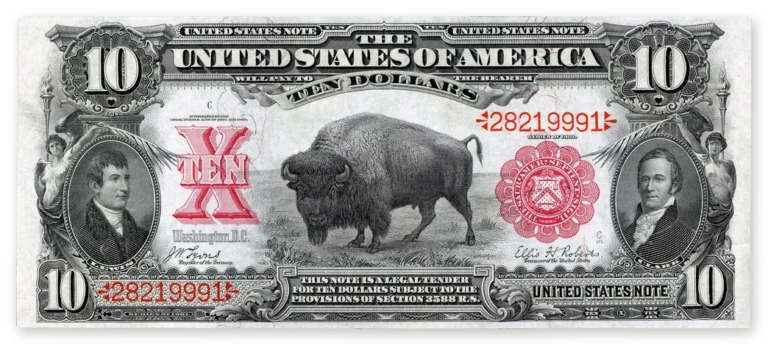
A Series 1901 $10 Legal Tender large-size note with an American bison at center between portraits of Lewis and ClarkCollecting Paper MoneyNote types, grading, condition and care
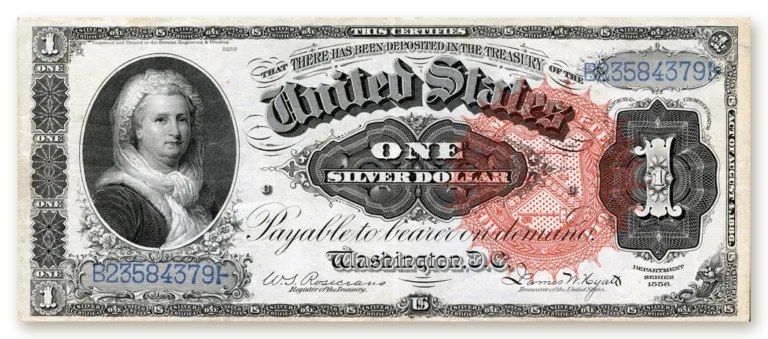
Face of a Series 1886 one dollar silver certificate large-size note with a portrait of Martha WashingtonPaper Money Price GuideApproximate values for common U.S. notes
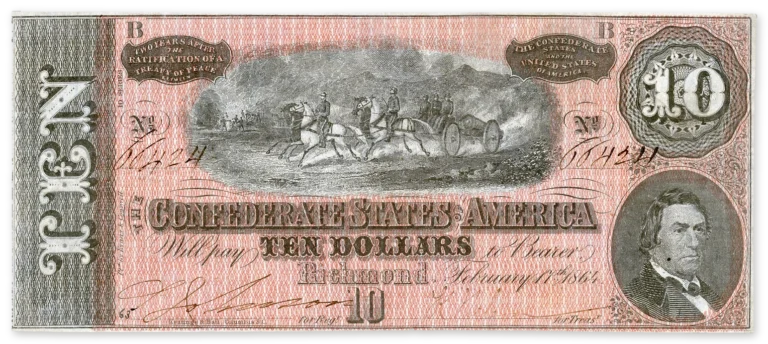
A genuine 1864 Confederate States of America $10 note, type T-68, with a horse-drawn artillery vignette and R.M.T. HunterPaper Currency GradingHow PMG and PCGS Banknote grade notes
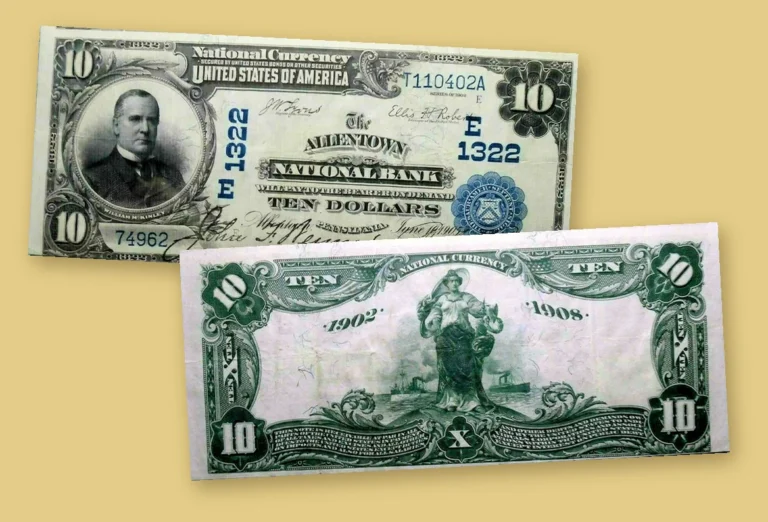
Third Charter Series 1902 Date Back $10 National Bank Note, Allentown National Bank charter 1322, with 1902-1908 dated backNational Currency Notes GuideIdentify and value National Bank Notes
Mexican Revolution banknote: Gobierno Provisional de México 20 pesos of 1914 with an eagle vignetteSell Mexican Paper MoneyBank, Revolution and Banco de México notes

Decorative gold separator bar

Find Out Your National Currency Notes Value Today

Email, Text, or Use This Form To Send Us Your Inventory List or Pictures


Upload clear photos of fronts and backs and we'll reply with a free appraisal.

    Decorative gold separator bar

    Professional Associations

    Professional association and grading-service logos including ANA Life Member, PMG, PCGS, NGC, ANACS, CAC, CCE and currency-grading organizations