U.S. Gold Coin Information

How to collect, buy, and sell U.S. Gold Coins

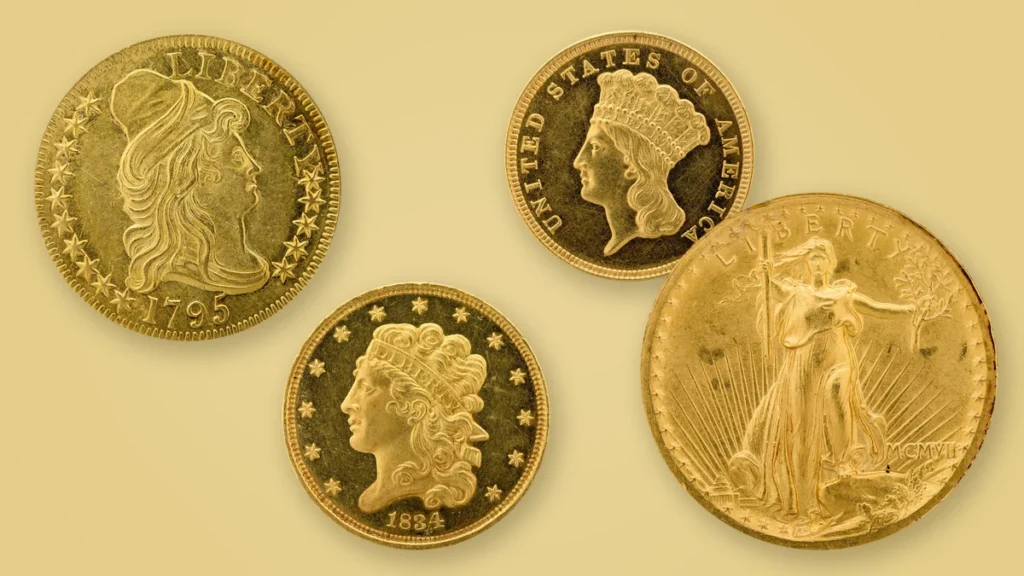
U.S. gold coin history: 1795 half eagle, 1834 Classic Head half eagle, 1854 three dollar gold piece and 1907 high relief Saint-Gaudens double eagle on a gold background

U.S. gold coin history: 1795 half eagle, 1834 Classic Head half eagle, 1854 $3 gold piece and 1907 high relief double eagle. Photos: Smithsonian National Museum of American History, National Numismatic Collection (public domain).

This page brings together the basic U.S. gold coin information every collector and seller needs: a short history of American gold coinage from 1795 to 1933, the main gold coin types and the years they were made, where to find the mint mark, and the private and territorial gold struck outside the U.S. Mint. The United States struck gold coins for circulation from 1795 until 1933, in denominations from the tiny one dollar gold piece to the twenty dollar double eagle, and since 1986 the U.S. Mint has made gold bullion and commemorative coins.

Want to know what your coins are worth? Our US Gold Coins Value guide explains melt value, rarity and grade, and when you are ready to sell, see Sell U.S. Gold Coins. American Rarities has bought and appraised rare U.S. coins since 1990. For a free, no-obligation appraisal, use the form on this page or text 720-600-4740.

Interested in selling your U.S. gold coins go to our free Appraisal and Purchasing page.

Decorative gold separator bar

A Short History of U.S. Gold Coins

The U.S. Mint struck its first gold coins in 1795, three years after the Coinage Act of 1792 created a decimal system of eagles, half eagles and quarter eagles. Early gold coins were often worth more as metal than their face value, so many were exported or melted, which is one reason early U.S. gold is so scarce today. In 1834 Congress reduced the weight of gold coins so they would circulate, and the gold discoveries in Georgia, North Carolina and then California brought new branch mints and new denominations. For the next century, gold coins were everyday money for large payments, until the gold recall of 1933 ended gold circulation in the United States.

YearMilestone in U.S. gold coinage
1792The Coinage Act of 1792 creates the U.S. Mint and authorizes the gold eagle ($10), half eagle ($5) and quarter eagle ($2.50).
1795The first U.S. gold coins, half eagles and then eagles, are struck at the Philadelphia Mint.
1796The first quarter eagles are struck.
1834Congress lowers the gold content of U.S. coins, and the new Classic Head design marks the change.
1837The standard for U.S. gold coins is set at 90% gold (.900 fine), where it stays until 1933.
1838Branch mints at Charlotte (C), Dahlonega (D) and New Orleans (O) begin striking gold.
1849-1850After the California Gold Rush, Congress authorizes the gold dollar (first struck in 1849) and the $20 double eagle (regular issues from 1850).
1854The $3 gold piece is introduced, and the San Francisco Mint (S) opens.
1866The motto IN GOD WE TRUST is added to the $5, $10 and $20 gold coins.
1870The Carson City Mint (CC) in Nevada begins striking gold.
1889The gold dollar and the $3 gold piece are discontinued.
1906The Denver Mint (D) begins striking coins.
1907-1908New designs by Augustus Saint-Gaudens for the $20 and $10, then Bela Lyon Pratt’s Indian Head $2.50 and $5.
1933The last U.S. gold coins for circulation are dated 1933. Executive Order 6102 requires most gold coins to be turned in, and the Gold Reserve Act of 1934 ends gold coinage.
1986The American Gold Eagle bullion coin is introduced, and gold returns to U.S. coinage.

Many of the most important U.S. gold coins, including examples of every major type, are preserved in the Smithsonian’s National Numismatic Collection. For mintage figures and population data by date, PCGS CoinFacts and the NGC Coin Explorer are good free references.

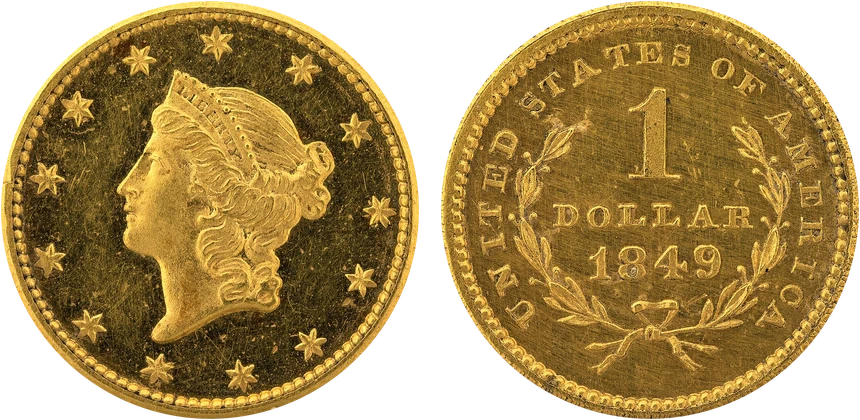
1849 Type 1 Liberty Head gold dollar, obverse with Liberty wearing a coronet and 13 stars, reverse with 1 DOLLAR and 1849 inside a wreath
The 1849 gold dollar, the smallest U.S. coin, was a product of the California Gold Rush.
Decorative gold separator bar

How to collect Gold Coins

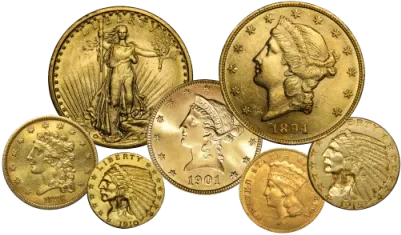
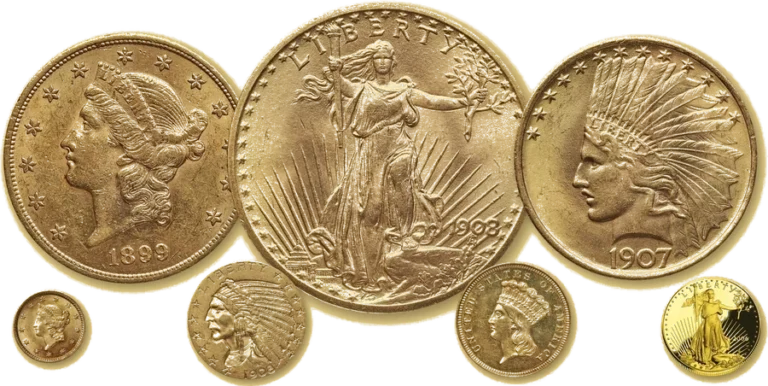
Gold coin collectors are always on the lookout for new material for their collections. Coin types of most common interest are Indian gold coins and Liberty Head gold coins of all denominations, gold eagles and gold double eagles, Classic Head gold coins, Saint Gaudens gold double eagles, and more. So instead of trying to collect them all, or all of one particular gold coin type, you may opt to collect one of each type otherwise known as a type set collection.

Group of U.S. gold coins for collectors: Saint-Gaudens and Liberty Head double eagles, Liberty Head and Classic Head gold, Indian Head quarter and half eagles and a gold dollar
US Gold Coin Information

Buying and Selling Gold Coins

Adding to your gold coin collection can be a bit of a hunt. Of course the logical direction to take would be to purchase gold coins from reputable U.S. gold coin dealers. However, those of us looking for a better price may want to check out other selling channels like CraigsList, eBay, and other on-line sources.

Selling your gold coins can be best achieved by consulting with a reputable U.S. gold coin dealer. Only a dealer will have the wherewithal ie. capital as well as the interest in purchasing all your gold coins. While selling your coins piecemeal sounds like a good idea for attaining the best prices, it rarely is. See Mistakes to Avoid When Selling Rare Coins for a complete explanation.

Decorative gold separator bar

U.S. Gold Coin Mint Marks

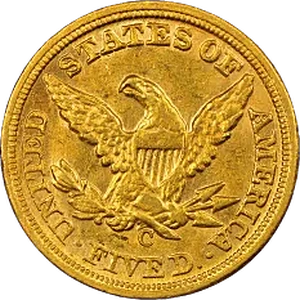
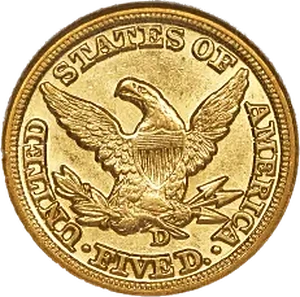
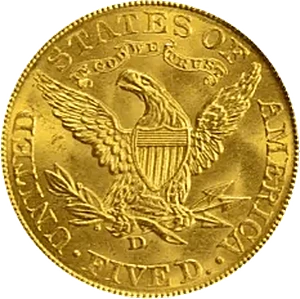
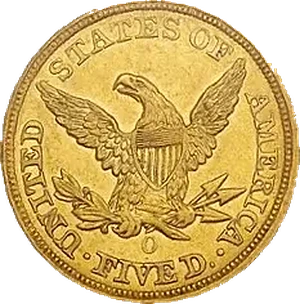
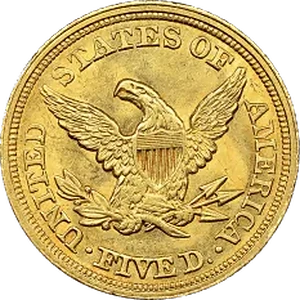
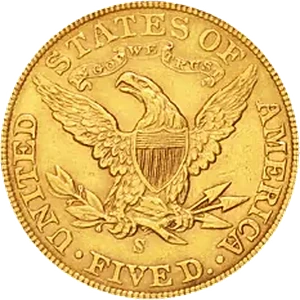
On most U.S. gold coins struck before 1908, the mint mark is a small letter on the reverse, below the eagle on Liberty Head coins and below the wreath on gold dollars and $3 pieces. On Saint-Gaudens double eagles it is on the obverse, above the date, and on Indian Head quarter eagles, half eagles and eagles it is on the reverse, near the arrowheads. Coins struck at Philadelphia carry no mint mark. The letter D can mean Dahlonega (on coins dated 1838 to 1861) or Denver (1906 and later). Carson City gold, marked CC, was struck from 1870 to 1893.

Of general interest to gold coin collectors are proof American gold coins, NGC and PCGS certified U.S. gold coins, and branch mint coinage from the Carson City, New Orleans, Dahlonega and the Charlotte mint.

Gold Coins by Type and Date Range

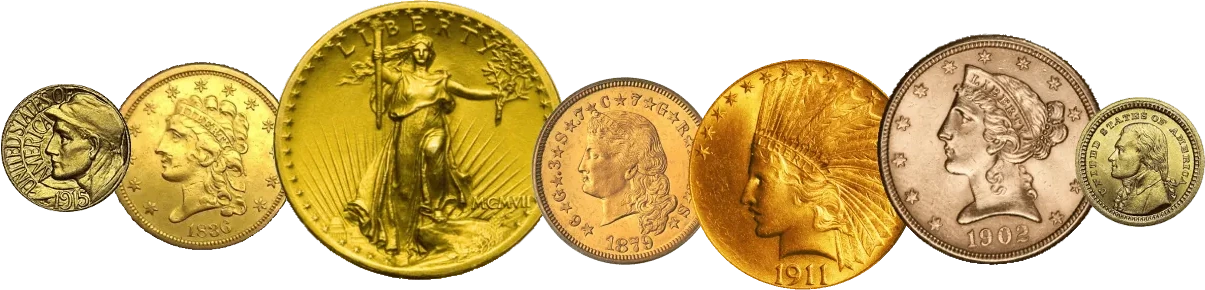
Row of U.S. gold coin types: 1915 Panama-Pacific gold dollar, Classic Head quarter eagle, 1907 high relief Saint-Gaudens double eagle, 1879 Stella, 1911 Indian Head eagle, 1902 Liberty half eagle and Louisiana Purchase gold dollar
U.S. gold coin types, from commemorative gold dollars to the 1907 high relief double eagle
$1.00 Gold Dollars, Type I, Type II, and Type III 1849-1889
$2.50 Capped Bust Gold Coins 1796-1834
$2.50 Classic Head Quarter Eagles 1834-1839
$2.50 Liberty Head Quarter Eagles 1840-1907
$2.50 Indian Head Quarter Eagles 1908-1929
$3.00 Three Dollar Indian Princess 1854-1889
$4.00 Four Dollar Stella 1879-1880
$5.00 Capped Bust and Capped Head Half Eagles 1795-1834
$5.00 Classic Head Half Eagles 1834-1838
$5.00 Liberty Head Half Eagles (Motto and No-Motto) 1839-1908
$5.00 Indian Head Half Eagles 1908-1929
$10.00 Capped Bust Gold Eagles 1795-1804
$10.00 Liberty Head Gold Eagles (Motto and No-Motto) 1838-1907
$10.00 Indian Head Gold Eagles (Motto and No-Motto) 1907-1933
$20.00 Liberty Head Gold Double Eagles Type I, Type II, and Type III 1849-1907
$20.00 St. Gaudens Gold Double Eagles (Motto and No-Motto) 1907-1933
Decorative gold separator bar

Esoteric U.S. Gold Coins

Some few gold coin collectors who are privileged to have a thicker wallet than the rest of us step out of the box by purchasing some of the more esoteric numismatic gold coins such as California fractional gold coins (sometimes known as California small denomination gold), private and territorial gold coins, Bechtler gold coins and U.S. Pattern or Judd Pattern gold coins.

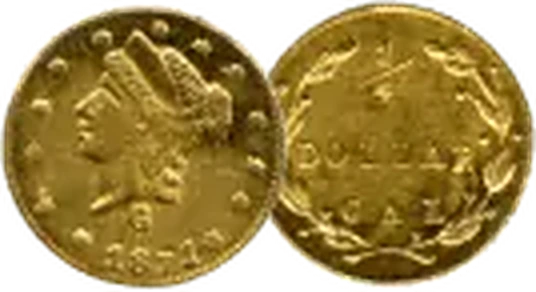
California fractional gold round quarter dollar, obverse with a Liberty head and stars and reverse with 1/4 DOLLAR CAL. in a wreath
California fractional gold quarter dollar
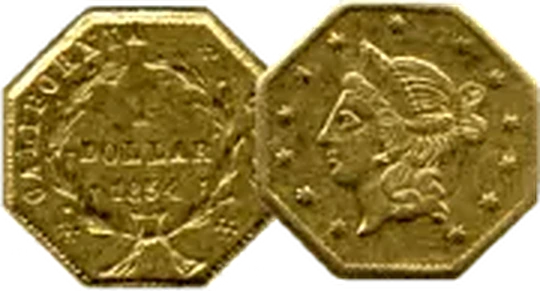
California fractional gold octagonal dollar, reverse with CALIFORNIA and 1 DOLLAR in a wreath and obverse with a Liberty head and stars
California fractional gold octagonal dollar

We have a special interest in the history of numismatic gold coinage, and are always looking for collections of private mint or territorial gold coins and medals. We purchase gold coins from Moffat & Co, the United States Assay Office, Moffat-Humbert, Baldwin & Co, Kellogg & Co, and Clark, Gruber & Co, to name a few.

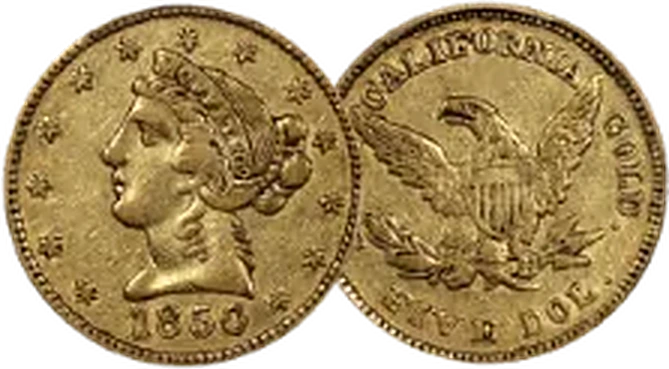
Moffat and Co. five dollar California territorial gold piece, obverse with a Liberty head and stars and reverse with an eagle and CALIFORNIA GOLD FIVE DOL.
Moffat & Co. $5 gold piece, California territorial gold
Quick Answers: U.S. Gold Coin Information

What was the first U.S. gold coin?

The first U.S. gold coins were half eagles ($5), struck at the Philadelphia Mint in 1795, followed by eagles ($10) later that year and quarter eagles ($2.50) in 1796. All three denominations were authorized by the Coinage Act of 1792.

Why did the United States stop making gold coins in 1933?

During the Great Depression, Executive Order 6102 of April 1933 required most gold coins to be turned in to the Federal Reserve, and the Gold Reserve Act of 1934 ended gold coinage. Gold coins dated 1933 were the last made for circulation. Gold returned to U.S. coins with the American Gold Eagle bullion coin in 1986.

Where is the mint mark on U.S. gold coins?

On Liberty Head gold it is on the reverse below the eagle, on gold dollars and $3 pieces it is below the wreath, on Saint-Gaudens $20s it is above the date, and on Indian Head $2.50, $5 and $10 coins it is on the reverse near the arrowheads. Philadelphia coins have no mint mark.

Decorative gold separator bar

More Free Tools and Guides

Decorative gold separator bar

Free Appraisal for Your U.S. Gold Coins

Email, Text, or Use This Form To Send Us Your Inventory List or Pictures

Email: staff@americanrarities.com | Text: 720-600-4740


Upload clear photos of fronts and backs and we'll reply with a free appraisal.

    Decorative gold separator bar

    Gold Guides

    Saint-Gaudens and Liberty double eagles, an Indian Head eagle and smaller U.S. gold coinsSell U.S. Gold CoinsFree appraisal and an offer for your gold coins
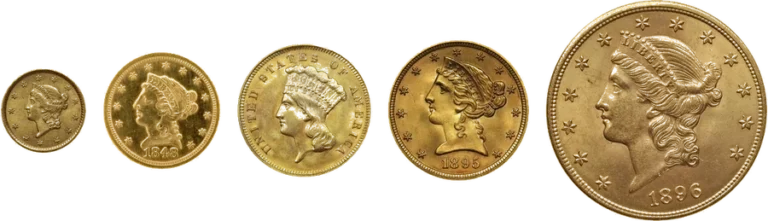
    Five U.S. gold coin types shown at true relative size, from a gold dollar to a double eagleHow to Sell Gold CoinsA step-by-step guide for sellers
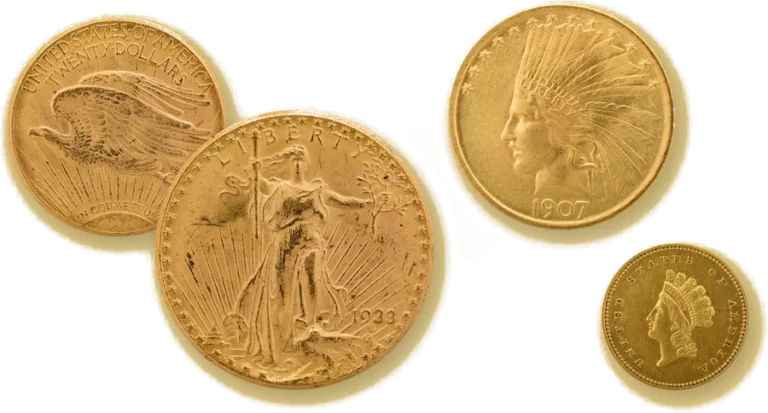
    1933 Saint-Gaudens double eagle, 1907 Indian Head eagle and 1854 gold dollarU.S. Gold Coins ValueWhat makes a gold coin worth more than its gold
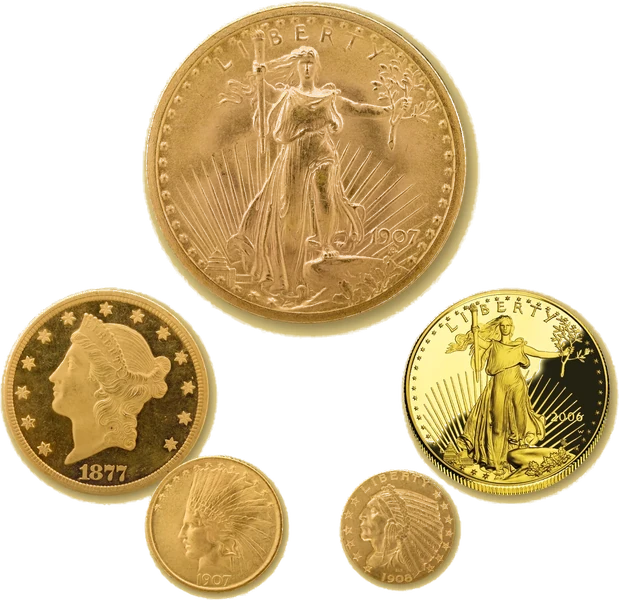
    Rare U.S. gold coins and a gold bullion coin arranged in a circleGold Coin DealerRare and bullion gold coins we buy and sell
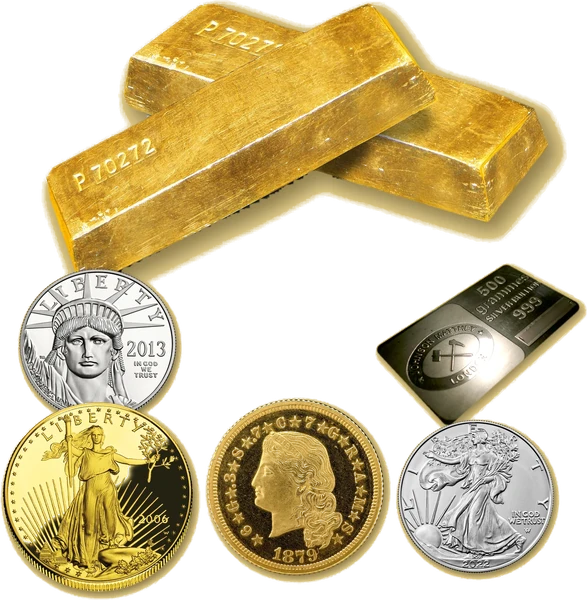
    Gold bars with gold, silver and platinum Eagle bullion coins and a gold StellaGold Coin and Bullion BuyersSell gold coins, bars and bullion near you
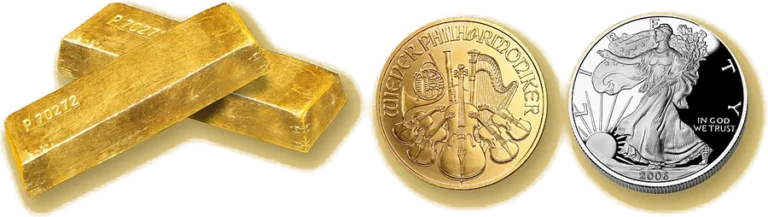
    Gold bars, a gold Vienna Philharmonic and an American Silver EagleSell Gold BullionGold bars, rounds and bullion coins
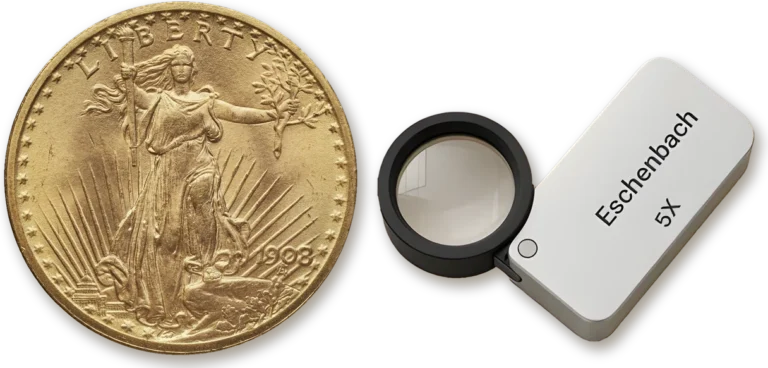
    1908 Saint-Gaudens $20 gold double eagle beside an Eschenbach 5X loupe, ready for a counterfeit checkFake $20 Gold Coin Case StudyHow we spot a counterfeit double eagle

    More: Gold Coin and Bullion Buyers • Sell Gold Bullion • Fake $20 Gold Coin Case Study

    Decorative gold separator bar

    Professional Associations

    American Rarities professional association logos