Antique Coin Buyers Near Me: Selling Old and Early U.S. Coins

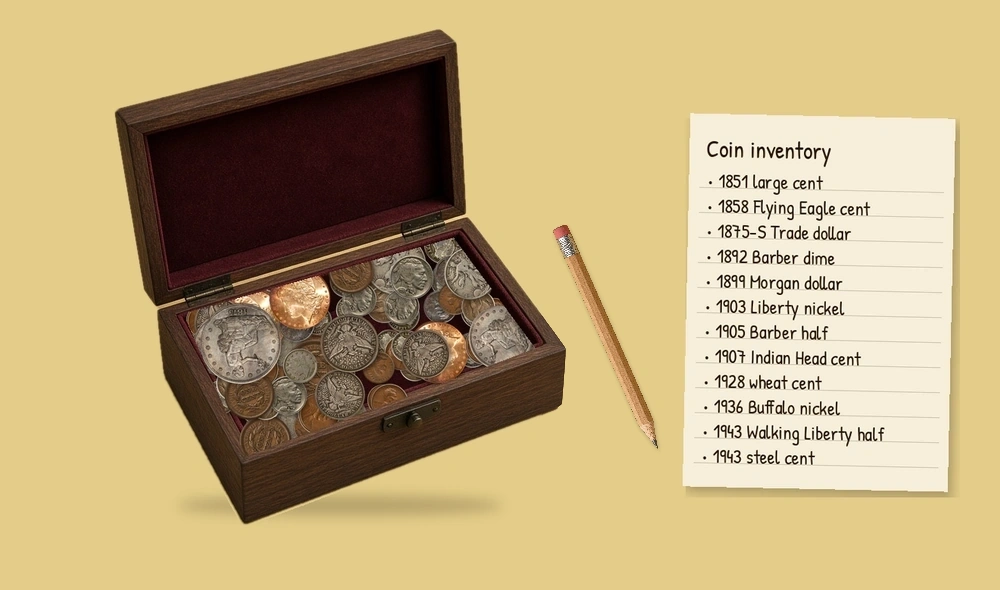
If you have antique coins to sell—large cents, early U.S. type coins, Barber silver, Morgan or Trade dollars, or a box of old family coins—the best first step is to keep everything together just as you found it. Albums, envelopes with handwritten notes, certified coins and old receipts all carry information about where the coins came from, and that information can matter when it is time to sell.
American Rarities has bought antique and old U.S. coins since 1990. We review each coin and the collection as a whole—identifying type, date, mint mark and condition—and then make a free written offer. This page covers the first steps; when you are ready, we can review the whole collection.
Preserve Antique Coins Before You Sell
- Do not clean anything. Cleaning can permanently lower a coin’s value, and old toning is often original.
- Keep coins in their holders. Leave albums, flips, envelopes, mint packaging and certified slabs as they are.
- Keep the paperwork with the coins. Receipts, notes, price tags and old inventory lists help identify and document the collection.
- Do not split up antique coins before review. Splitting a collection before it is reviewed makes it harder to understand what it is worth as a whole.
Decide Which Antique Coins You Want to Sell
Before antique coins are sold, decide which pieces you want to keep and which you want valued for sale. If the coins are jointly owned or part of an estate, confirm who is authorized to decide and write down everyone’s questions. Does anyone want to keep certain coins? Is the plan to sell everything, divide the collection or sell part of it? We cannot give legal or tax advice, but a clear decision-maker and a shared list of questions make every next step easier.
Inventory Antique Coins With Their Albums and Records
You do not need to identify every coin. Just record what is in each container, with the records that came with it, so nothing gets separated. Here is a simple format you can copy:
| Container | What is inside | Records with it | Notes |
|---|---|---|---|
| Album 1 | |||
| Envelope box | |||
| Certified coins | |||
| Paper money | |||
| Foreign coins |
Include paper money and foreign coins too. Clear photos of album pages and of the front and back of any certified coin are a great start for a review.
Get a Written Offer for Your Antique Coin Collection
We review antique coin collections as a whole and make a free written offer on everything we can buy: U.S. and world coins, U.S. paper money, and gold and silver bullion. Our appraisal is free. All appraisal requests are reviewed in the order they are received. Some appraisals take minutes, while larger, more complex collections can take a few days. Either way, you’ll get a response from us. You are under no obligation to sell. You can compare our offer with keeping, dividing or selling part of the collection; there is no assurance of any particular outcome, and the decision is yours.
Mail-in shipments are fully insured at our expense; we do not supply shipping materials, so please use a sturdy box. For larger collections, we can arrange to meet you at your home, office or bank. When you accept an offer, we pay immediately by cash, check, ACH or wire. For a privacy-focused sale, see our discreet family collection review.
When Antique Coins Need a Separate Formal Valuation
Our free liquid value appraisal is an offer to buy your antique coins, not an insurance, replacement or formal estate valuation. If an executor, attorney or accountant needs a written valuation for the estate, that is a separate, paid discussion. Learn how to choose an estate appraisal scope, or see our estate appraisal and liquidation services. Our guide on how to sell inherited coins covers more of the process.
Found only a jar of loose old coins? Start with loose old coins instead.
Selling Antique Coins: Quick Answers
Which antique coins are most valuable?
Early U.S. coins are often the most valuable: large cents and half cents, Draped Bust and Capped Bust silver, Seated Liberty coins, Trade dollars and early gold. Within any series, scarce dates, branch mint marks and coins in better condition bring the most. Original surfaces and old toning add appeal, so condition matters as much as age.
Should I clean antique coins before selling them?
No. Cleaning can permanently lower their value, and old toning is often original and prized by collectors. Leave them exactly as you found them, handle them by the edges and keep them in their envelopes, albums or holders, along with any handwritten notes, which can carry useful information.
Do I need to identify every coin first?
No. A container-by-container inventory and clear photos are enough to start. We identify the type, date, mint mark and condition of each coin during our review. Photograph the front and back of anything that looks especially old, silver or gold, and a group photo is fine for the rest.
Will you buy the whole collection?
Yes. We make a free written offer on everything we can buy, including U.S. and world coins, U.S. paper money and gold and silver bullion. Mail-in shipments are fully insured at our expense, though we do not provide shipping materials, so please use your own sturdy box. If you decline, we return your items fully insured.
Is your free appraisal an estate valuation?
No. It is a liquid value appraisal (an offer to buy). A formal estate valuation, which documents fair market value for taxes or heirs, is a separate, paid discussion. Many families start with the free appraisal to learn what they have, then decide whether a formal report is needed.

Free Appraisal for Your Coins and Coin Collections
Email, Text, or Use This Form To Send Us Your Inventory List or Pictures
Email: staff@americanrarities.com Text: 720-600-4740
Antique coin guides and selling pages
Old family coins, step by step.
What to do first, before sorting.
Leave old surfaces as they are.
Ten steps to a realistic range.
Early and antique U.S. coins reviewed.
Professional Associations