This page serves as a key resource for collectors, focusing on the historic and highly collectible category of National Currency Notes. It acts as a central hub for articles and guides that explain the history of these unique banknotes, which were issued by individual national banks across the United States from 1863 to 1935.
By providing detailed information on this specialized area of notaphily, American Rarities demonstrates its comprehensive knowledge of U.S. financial history. This strategy builds significant trust with serious collectors, positioning the company as an expert and reliable partner for the appraisal and sale of these fascinating “hometown” notes.
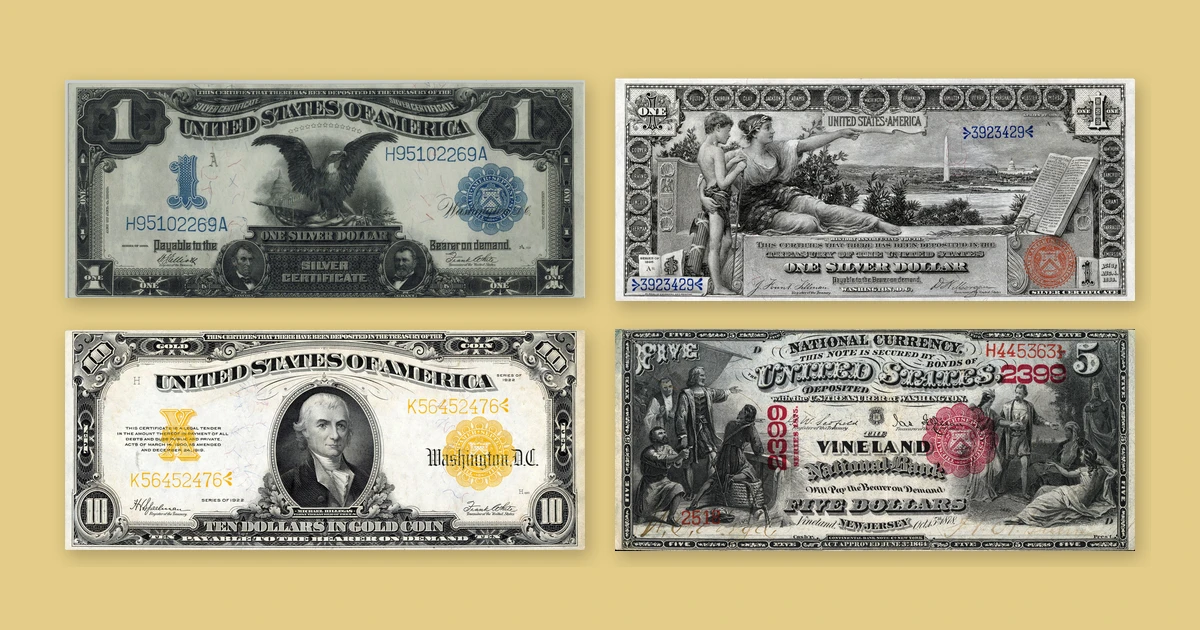
How to Sell Paper Currency, a guide from American Rarities. 1899 $1 Black Eagle silver certificate: photo by Bruxton via Wikimedia Commons, CC0 (public domain). 1896 $1 Educational silver certificate: National Numismatic Collection, National Museum of American History (Smithsonian), image by Godot13 via Wikimedia Commons, licensed CC BY-SA 4.0 (public-domain note design). 1922 $10 gold certificate: National Numismatic Collection, National Museum of American History (Smithsonian), image by Godot13 via Wikimedia Commons, licensed CC BY-SA 4.0 (public-domain note design). 1875 $5 National Bank Note, Vineland National Bank, New Jersey: image by Godot13 via Wikimedia Commons, licensed CC BY-SA 3.0 (public-domain note design). Backgrounds removed and notes arranged by American Rarities.
How to sell paper currency without losing value: identify large-size notes, National Bank Notes and certificates, check serial numbers and errors, protect condition, understand PMG and PCGS Banknote grading, spot replicas and compare where to sell paper money.
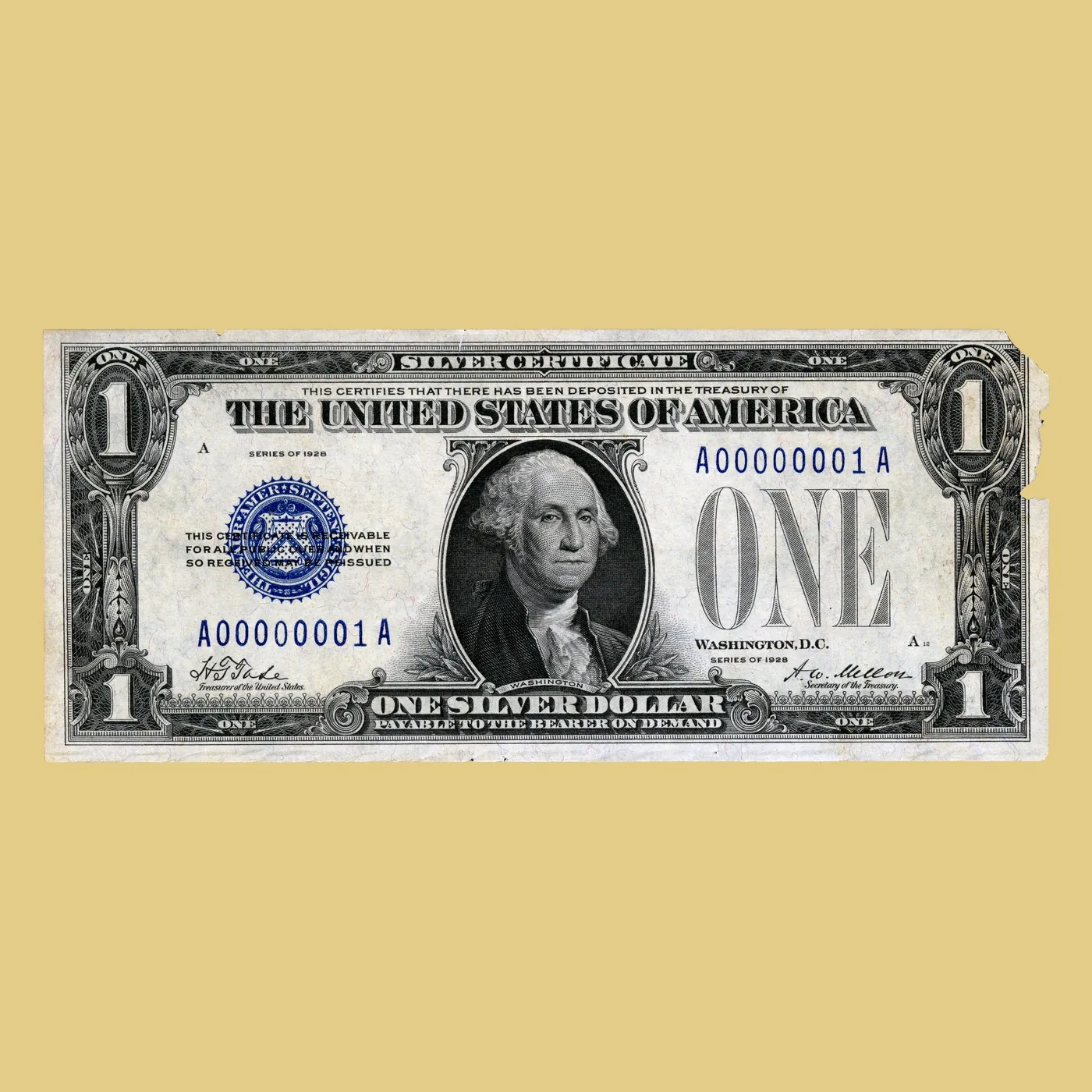
The full Series 1928 $1 silver certificate with serial number A00000001A, the first small-size $1 note.
The Art of Collecting Paper Money: A Strategic Guide to Value and Liquidation in 2026The world of numismatics is often associated with coins, but for a dedicated collector in the…