Articles Tagged: Star Notes
This page serves as a key resource for collectors, focusing on the popular and accessible category of star notes. It acts as a central hub for articles and guides that explain what a star note is—a replacement for a misprinted bill—how to identify them, and what factors, such as the run size, can make them rare and valuable.
By providing clear, educational content on this interesting aspect of paper money collecting, American Rarities positions itself as a knowledgeable and trustworthy authority. This strategy attracts a wide range of collectors who may have found a star note in circulation, encouraging them to seek a professional appraisal to determine its true value.
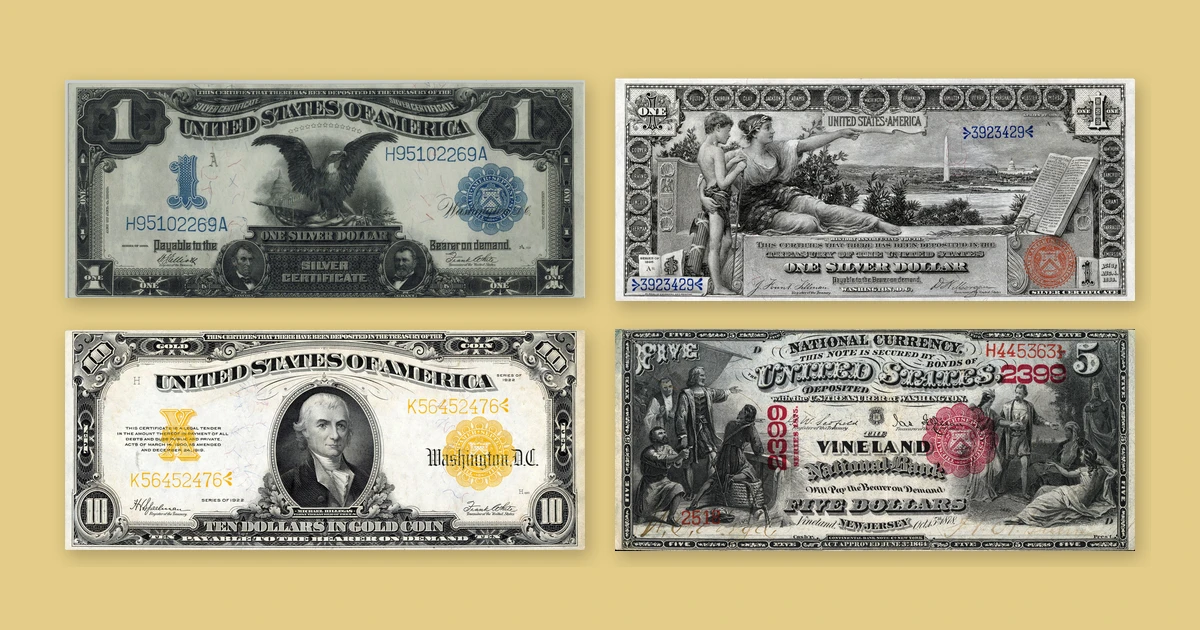
How to Sell Paper Currency, a guide from American Rarities. 1899 $1 Black Eagle silver certificate: photo by Bruxton via Wikimedia Commons, CC0 (public domain). 1896 $1 Educational silver certificate: National Numismatic Collection, National Museum of American History (Smithsonian), image by Godot13 via Wikimedia Commons, licensed CC BY-SA 4.0 (public-domain note design). 1922 $10 gold certificate: National Numismatic Collection, National Museum of American History (Smithsonian), image by Godot13 via Wikimedia Commons, licensed CC BY-SA 4.0 (public-domain note design). 1875 $5 National Bank Note, Vineland National Bank, New Jersey: image by Godot13 via Wikimedia Commons, licensed CC BY-SA 3.0 (public-domain note design). Backgrounds removed and notes arranged by American Rarities.
How to sell paper currency without losing value: identify large-size notes, National Bank Notes and certificates, check serial numbers and errors, protect condition, understand PMG and PCGS Banknote grading, spot replicas and compare where to sell paper money.