

Reputable Coin Dealers: How to Recognize One Before You Buy or Sell

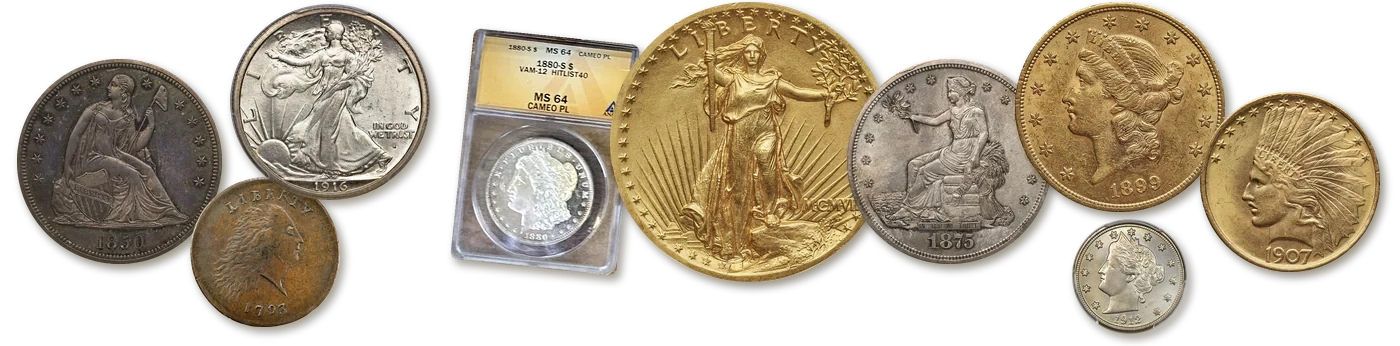
Coins handled by a reputable coin dealer: 1850 Seated Liberty dollar, 1793 chain cent, 1916 Walking Liberty half, ANACS certified 1880-S Morgan dollar, 1907 High Relief Saint-Gaudens $20, 1875-S trade dollar, 1899 Liberty $20, Liberty nickel and 1907 Indian Head $10

A reputable coin dealer is one whose credentials you can verify, who puts clear offers in writing, explains how each coin was graded and valued, never pressures you, and pays promptly and safely. In practice that means looking for third-party affiliations such as PCGS and NGC authorized dealer status and an ANACS submission center, membership in the American Numismatic Association (ANA), a solid Better Business Bureau (BBB) rating, real customer reviews, and a long track record. This guide shows you the signs to look for, the red flags that should make you walk away, and the questions to ask any dealer before you hand over your coins.

It also matters more than ever. Local coin shops are fewer and farther apart, and many sellers, especially people who have inherited a collection, do not know what their coins are worth. American Rarities has bought and sold U.S. rare coins, world coins, paper currency and bullion since 1990, and has completed over $400 million in numismatic transactions. Our A+ BBB rating and American Numismatic Association membership (#6360) are public, so you can check them yourself.

Decorative gold separator bar

7 Signs of a Reputable Coin Dealer

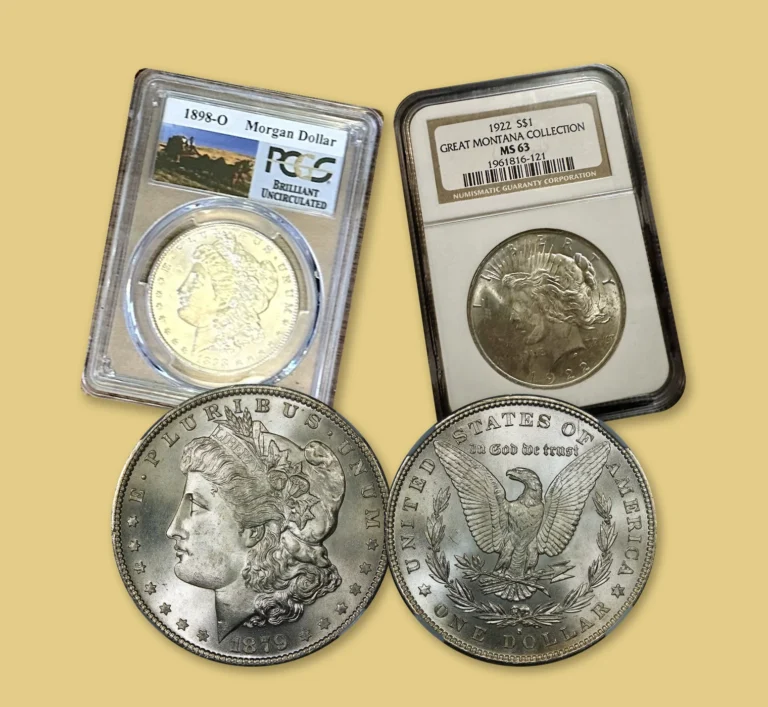
Signs of a reputable coin dealer: PCGS-certified 1898-O Morgan dollar, NGC-certified 1922 Peace dollar, and the obverse and reverse of a genuine Morgan silver dollar
  1. Verifiable credentials. Look for PCGS and NGC authorized dealer status, an ANACS submission center, ANA membership and a BBB profile, and check each one on the organization’s own website rather than trusting a logo.
  2. A long, public track record. Years in business, a real business address and a steady history of customer reviews tell you far more than advertising does.
  3. Real expertise and the right tools. A reputable dealer can grade coins accurately, recognize varieties and errors, and authenticate pieces with tools such as XRF metal testing and digital microscopy.
  4. Transparent, written offers. You should receive an offer you can review, with the dealer willing to explain the grade and value behind each item or group.
  5. No pressure and no obligation. Good dealers expect you to compare offers and take your time. A free evaluation should not commit you to sell.
  6. Safe shipping and fast, traceable payment. If you sell by mail, the shipment should be fully insured, and payment should be immediate by check, wire or ACH once your items are verified.
  7. Easy to reach in writing. You should be able to email or text the dealer and get answers you can keep for your records.

Third-party graders such as PCGS, NGC and ANACS authenticate and grade coins independently, and the American Numismatic Association publishes collector education and a code of ethics for its members. Wikipedia’s coin grading article is a good primer on how grades affect value.

Decorative gold separator bar

Red Flags: When to Walk Away From a Coin Dealer

  • Pressure to decide on the spot, or an offer that is only good “right now.”
  • Refusing to put an offer in writing, or giving one lump-sum number for a valuable collection without explaining it.
  • Vague answers about grade, or grading your coins far higher when selling to you than when buying from you.
  • No verifiable credentials, no business address, or reviews that cannot be found anywhere independent.
  • Telling you to clean your coins or that cleaning will not matter. Cleaning almost always lowers value.
  • Asking you to ship without insurance, or delaying payment after your coins arrive.
  • Unsolicited sales pitches promising quick profits or “investment grade” coins at prices well above the market.

If you are unsure whether a coin itself is genuine, see our guide to counterfeit and altered coins and our coin authentication service.

Questions to Ask Any Coin Dealer Before You Sell

  1. Are you a PCGS and NGC authorized dealer, and are you an ANA member? Where can I verify it?
  2. Will you give me an offer I can review, and explain how you graded and valued my coins?
  3. Is the evaluation free, and am I under any obligation to sell?
  4. How do you authenticate coins, and what happens if a piece is questionable?
  5. If I ship to you, is the package fully insured, and how and when will I be paid?

A reputable dealer will answer every one of these clearly and in writing. For a longer checklist, read how to find the best rare coin dealer.

Decorative gold separator bar
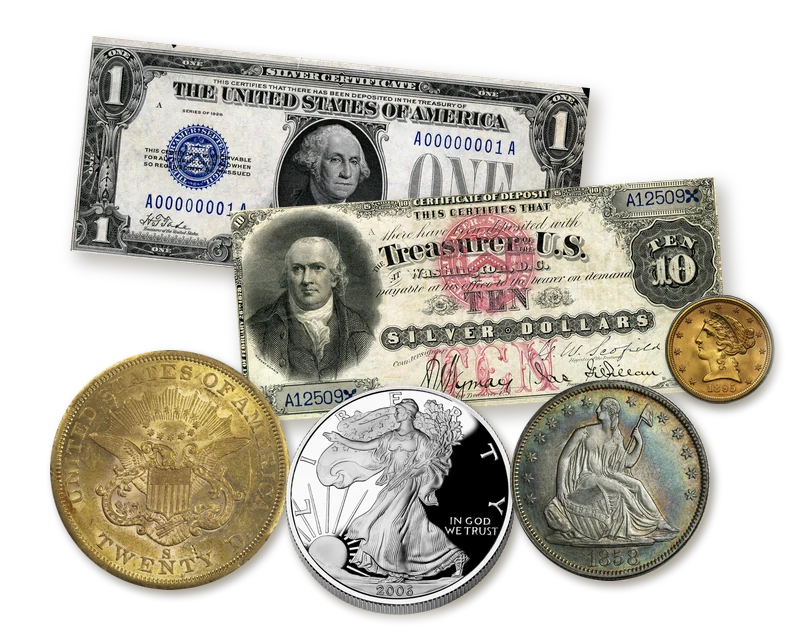
What a reputable coin dealer buys: 1928 one dollar silver certificate, 1878 ten dollar silver certificate, 1856-S double eagle, proof Silver Eagle, 1858 Seated Liberty half and 1895 half eagle

How American Rarities Measures Up

We built our business on the same standards we recommend you look for. Here is how we meet each one:

  • Credentials: ANA Life Members, A+ rated by the BBB, a PCGS and NGC authorized dealer, and an ANACS submission center.
  • Track record: founded in 1990, more than 30 years in business, hundreds of years of combined experience on our team, and a 4.7-star rating from 86 Google reviews.
  • Expertise and tools: XRF testing and digital microscopy for authentication, and free in-house grading without slabbing.
  • Written, no-obligation appraisals: free evaluations, usually within 24 hours, though larger collections may take longer. If so, we’ll let you know.IRS-compliant appraisals for estates and tax purposes.
  • Nationwide reach: a nationwide buying network of dealers and buyers around the country, with a presence in California, Colorado, Arizona, Minnesota, Texas, Florida, Pennsylvania, Wyoming and New Jersey, plus home visits for larger collections.
  • Safe selling: fully insured mail-in with no deductible, free or discounted shipping on selected collections, and immediate payment by check, wire or ACH.
  • Everything numismatic: U.S. and world coins, paper money, certified coins and all bullion, including bars.
Decorative gold separator bar

How Selling to a Reputable Coin Dealer Works

  1. Send us a list or photos. Email staff@americanrarities.com, text photos to 720-600-4740, or use the free appraisal form below.
  2. Get a free, written evaluation. One of our numismatists reviews your items and replies, usually within 24 hours, though larger collections may take longer. If so, we’ll let you know. For larger collections we can arrange a home visit.
  3. Decide with no pressure. Take the time you need. There is never an obligation to sell.
  4. Ship safely or meet in person. If you sell by mail, we provide fully insured shipping instructions with no deductible.
  5. Get paid immediately. Once your items arrive and are verified, we pay right away by check, wire or ACH.

Learn more about our numismatic services, how to sell PCGS, NGC and ANACS coins, a coin collection appraisal, our coin collection buyers, and estate appraisals and liquidation. If you prefer to work with someone in your area, see a rare coin buyer near you.

Reputable Coin Dealers: Quick Answers

How do I know if a coin dealer is reputable?

Check credentials you can verify, such as PCGS and NGC authorized dealer status, ANA membership and a BBB rating, and read independent reviews.

What are the red flags of a dishonest coin dealer?

Pressure to sell now, refusing to explain an offer, inconsistent grading, no verifiable address, advice to clean your coins, uninsured shipping and slow payment.

What credentials should a reputable coin dealer have?

PCGS and NGC authorized dealer status, ANACS submission center status, American Numismatic Association membership and a strong BBB rating. Each can be confirmed on the organization’s own website.

Decorative gold separator bar

Free Appraisal for Your Coins and Coin Collections

Email, Text, or Use This Form To Send Us Your Inventory List or Pictures


Upload clear photos of fronts and backs and we'll reply with a free appraisal.

    Decorative gold separator bar

    Professional Associations

    Professional association and grading-service logos including ANA Life Member, PMG, PCGS, NGC, ANACS, CAC, CCE and currency-grading organizations