U.S. Silver Dollar Values
What Are U.S. Silver Dollars Worth?
Values by Type, Date, Mint Mark and Grade

Condition, grade, certification and eye appeal: four of the biggest drivers of silver dollar values.
What is a U.S. silver dollar worth? Every pre-1936 silver dollar is worth at least the value of its silver, but many are worth far more. Date and mint mark, condition, strike, toning, varieties and certification can make two coins of the same type worth very different amounts. This page explains what drives U.S. silver dollar values, how much silver each type contains and how to check what your coins are worth. To identify your coins first, see our U.S. silver dollar information guide to every type.
Ready to sell? Learn about selling silver dollars to American Rarities, or about what a 90% silver dollar bag is worth. For a free, no-obligation appraisal, use the form on this page or text 720-600-4740.

Most silver dollars fall into one of three groups: common dates worth a modest premium over their silver, better dates and Carson City coins worth tens to hundreds of dollars over melt, and key dates, early dollars and top-grade coins worth thousands. The price guide table and the sections below show where your coins are likely to fit.

Silver Dollar Price Guide: Values by Type

Use this table to see where your coins fit before you look up an individual date. Melt values change with the silver price, and collector premiums sit on top of the silver.
| Type | Years | Pure silver | What sets the price |
|---|---|---|---|
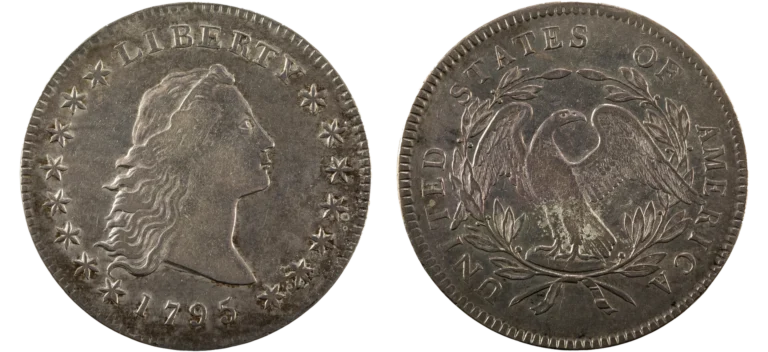
| Flowing Hair | 1794–1795 | 0.7734 oz | The first U.S. silver dollar. Every genuine coin is valuable, even well worn. |
| Draped Bust | 1795–1804 | 0.7734 oz | Small eagle and heraldic eagle reverses; the famous 1804 dollars were struck decades later. |
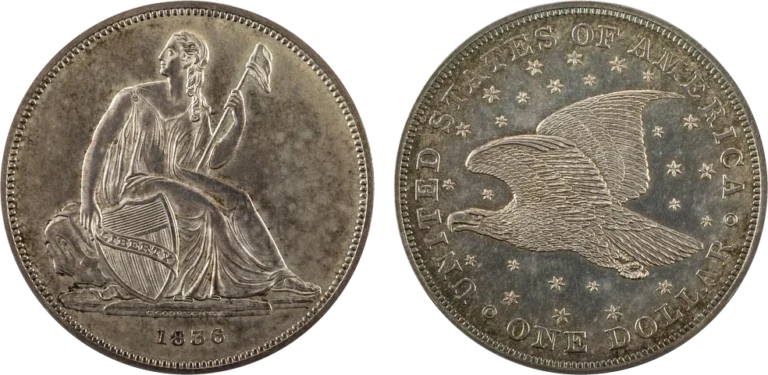
| Gobrecht | 1836–1839 | 0.7734 oz | A short, pattern-like series that led to the Seated Liberty design; all are scarce. |
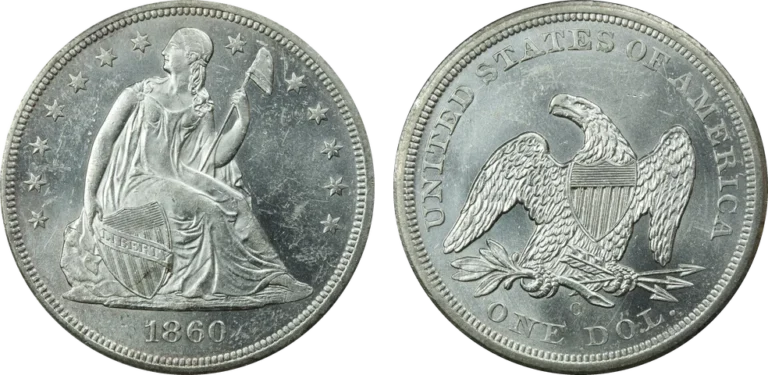
| Seated Liberty | 1840–1873 | 0.7734 oz | Low mintages and heavy melting make many dates scarce; CC and S issues bring the most. |
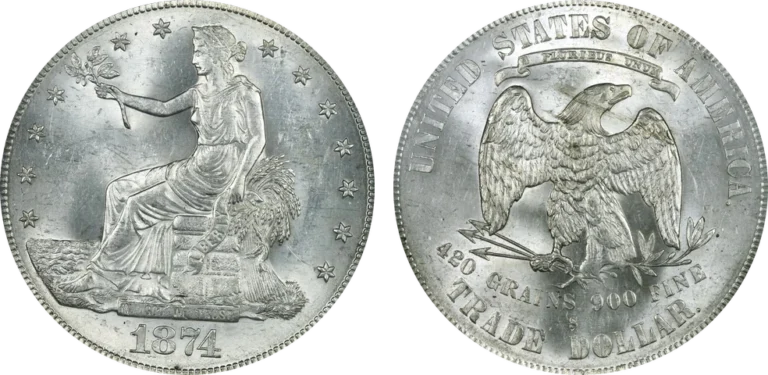
| Trade | 1873–1885 | 0.7874 oz | Made for trade in Asia; business strikes 1873–1878, proofs only from 1879 to 1885. Chopmarks lower value. |
| Morgan | 1878–1904, 1921 | 0.7734 oz | Common dates trade a little above melt; CC, key dates, prooflike and gem coins bring premiums. |
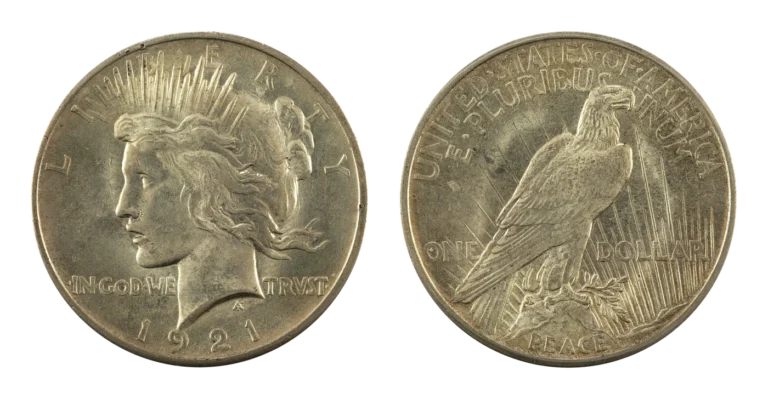
| Peace | 1921–1928, 1934–1935 | 0.7734 oz | The last 90% silver dollar made for circulation; 1921 high relief, 1928 and 1934-S lead the series. |
| Eisenhower (40% silver) | 1971–1976-S | 0.3161 oz | Sold by the Mint in collector packs and proof sets; usually a little above melt, more in top grades. |
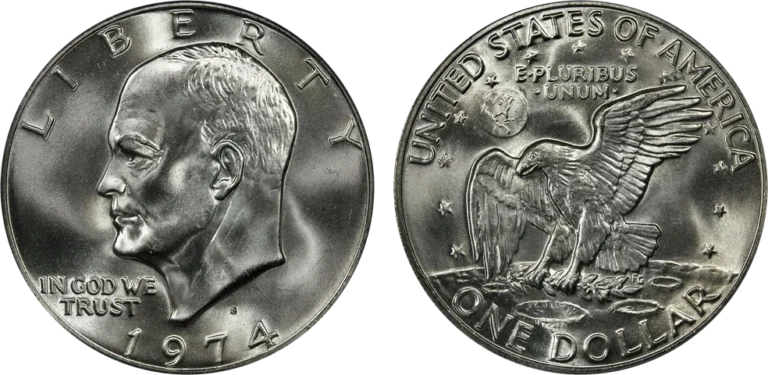
Copper-nickel Eisenhower dollars (no S mint mark on business strikes) and all later small dollars contain no silver. For date-by-date Morgan values, see our Morgan silver dollar price guide. Learn more from the U.S. Mint’s history of silver dollar coinage or the American Numismatic Association.
What Drives U.S. Silver Dollar Values

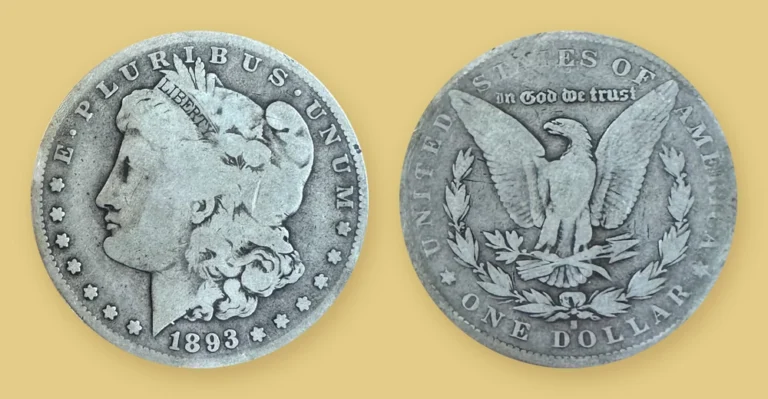
- Date and mint mark: some dates and mints were struck in small numbers, and a few mint marks, especially CC for Carson City, carry a premium in almost any grade. The 1893-S Morgan dollar, with a mintage of only 100,000, is the best-known key date.
- Survivors, not just mintage: what matters is how many coins survive today. Millions of silver dollars were melted under the Pittman Act of 1918, while the Treasury releases of the early 1960s turned former rarities such as the 1903-O and 1904-O Morgan dollars into common coins in mint state.
- Grade: coins are graded on a 1 to 70 scale. Circulated coins grade from Poor (1) to About Uncirculated (58), and uncirculated or Mint State coins from MS60 to MS70. Some dates are common worn but rare in high grades, known to collectors as condition rarities.
- Strike and surfaces: a full, sharp strike adds value, and Morgan dollars with mirror-like fields are designated prooflike (PL) or deep mirror prooflike (DMPL), which can bring strong premiums.
- Toning and eye appeal: attractive, natural toning, such as rainbow or rim toning, can add a premium, while dark, spotted or uneven toning can lower value.
- Varieties: die varieties, known as VAMs for Morgan and Peace dollars, can be worth much more than a normal coin of the same date. See our guide to rare Morgan silver dollars for examples.
- Certification: coins graded and encapsulated by PCGS or NGC are easier to buy and sell because the grade and authenticity have been checked. Learn more about selling certified coins.
- Problems: cleaning, scratches, rim damage and other problems lower value. Grading services label these coins with a details grade instead of a numeric one.
- Provenance: original government packaging, such as the GSA holders used for Carson City dollars, and coins from well-known hoards can bring more.
Silver Content: The Value Floor for Every Silver Dollar
The silver in a silver dollar sets a floor under its value. To work out the melt value of a coin, multiply its actual silver weight by the current silver spot price, shown live in the box below. For a Morgan or Peace dollar, that is 0.7734 troy ounces times the spot price. Common circulated dates usually sell for a modest premium above melt, while scarce dates and high grades trade on collector demand.
Live Silver Spot Price (USD per troy ounce)
| Silver dollar | Silver fineness | Silver content (troy oz) |
|---|---|---|
| Flowing Hair and Draped Bust (1794-1803) | 89.24% | 0.7735 oz |
| Gobrecht (1836-1839) | 89.24% to 90% | 0.7734 to 0.7735 oz |
| Seated Liberty (1840-1873) | 90% | 0.7734 oz |
| Trade (1873-1885) | 90% | 0.7874 oz |
| Morgan (1878-1921) | 90% | 0.7734 oz |
| Peace (1921-1935) | 90% | 0.7734 oz |
| Eisenhower, San Francisco collector coins (1971-1976) | 40% | 0.3161 oz |
| Eisenhower, made for circulation (1971-1978) | Copper-nickel clad | None |
| U.S. Mint Morgan and Peace dollars (2021 and later) | 99.9% | 0.858 oz |
We do not list prices on this page because silver dollar values change with the silver market and with collector demand. For current retail guide values, see the PCGS Price Guide and the NGC Price Guide, or our silver dollar price guide and Morgan silver dollar price guide.
Common Dates vs. Key Dates

Most circulated Morgan and Peace dollars are common dates, and their price starts with the silver they contain plus a modest collector premium. That premium grows with grade: an uncirculated common date is worth noticeably more than a worn one, and a gem MS65 or better can be worth several times more.
Key dates are different. The 1893-S, 1889-CC, 1895 and 1884-S Morgans, and the 1928 and 1934-S Peace dollars, are valued on their own, and grade makes a very large difference. Because key dates and Carson City coins are often counterfeited or altered, certification by PCGS or NGC matters most for these coins. Early dollars, Seated Liberty and Trade dollars are scarce enough that almost every genuine example is valued individually.
How Silver Dollar Prices Are Set

Silver dollar prices are set by trading between dealers and collectors. Dealers follow wholesale sources such as the Coin Dealer Newsletter and Certified Coin Exchange, along with recent auction records. Published price guides show retail estimates, so they usually run higher than what a coin sells for between dealers.
Prices also move. In recent years the spread between grades has narrowed for many common dates, while the best-looking coins in each grade, with strong strikes, original luster or attractive toning, bring a premium over average coins. Prices for common dates follow the silver price more closely, and key dates follow collector demand. See our U.S. silver dollar information page for the history of each type.
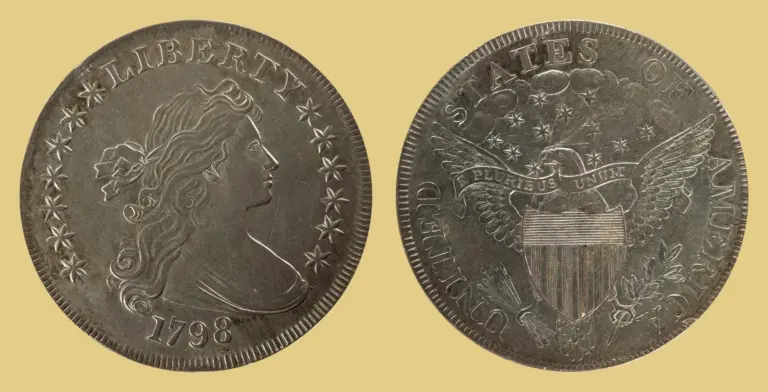
Some early silver dollars rank among the most valuable coins in the world. Read about the 1794 Flowing Hair and 1804 dollars in our article on the most expensive coin ever sold, and learn how to spot key dates, VAMs and condition rarities in our guide to rare Morgan silver dollars.
How to Check What Your Silver Dollar Is Worth in 4 Steps
- Identify the type, date and mint mark. Our silver dollar information page shows every type and where to find the mint mark.
- Look at the condition, without cleaning the coin. Hold it by the edges under good light and use a magnifier to check for wear on the high points, scratches, rim damage and signs of cleaning.
- Check the melt value and guide values. Work out the silver value from the table above, then compare your date, mint and grade with the PCGS or NGC price guide. Remember that guide values are retail estimates, not offers.
- Get a free expert appraisal. Send clear photos of both sides with the form on this page or by text to 720-600-4740. American Rarities is a PCGS and NGC authorized dealer, offers free in-house grading, and can review large collections in person with home visits.
More Free Tools and Guides
- Silver Dollar Price Guide: what silver dollars are worth, type by type
- Morgan Silver Dollar Price Guide: Morgan dollar values by date and grade
- Rare Morgan Silver Dollars: key dates, VAMs and condition rarities
- Free Online Coin Appraisal: send photos and get an expert opinion
- Coin Value Finder: look up what your coins may be worth
- Coin Grading, Varieties and Error Coins: find out your coin’s grade and variety
- Coin Collection Appraisal: appraisals for complete collections and estates
Quick Answers: U.S. Silver Dollar Values
Does cleaning a silver dollar lower its value?
Yes. Cleaning, polishing or dipping a silver dollar leaves fine hairline scratches and removes the original luster that collectors pay for. Grading services give cleaned coins a details grade instead of a numeric grade, and they usually sell for much less than original coins. Leave your silver dollars as they are and handle them by the edges.
Why can two silver dollars with the same date be worth very different amounts?
The mint mark, the grade, the quality of the strike, prooflike surfaces, toning, die varieties and certification all affect value. For example, a Morgan dollar of a common date in worn condition may be worth little more than its silver, while the same date in a high Mint State grade with deep mirror surfaces can be worth many times more.
Do silver dollar values go up and down with the price of silver?
Common, circulated silver dollars follow the silver price closely, because their silver content of about 0.77 troy ounces sets a floor under their value. Key dates, high grades and certified coins depend mostly on collector demand, so their values move much less with the price of silver.
Is a silver dollar worth more than its silver value?
Almost always. Even a worn Morgan or Peace dollar brings a little more than melt, and scarce dates, Carson City coins and high grades can be worth far more.
What makes a silver dollar valuable?
Date and mint mark, condition or grade, eye appeal and rarity. Early dollars, Seated Liberty and Trade dollars, proofs and key dates bring the strongest prices.
Which dollars contain silver?
All U.S. silver dollars dated 1935 and earlier are 90% silver. Eisenhower dollars with an S mint mark sold to collectors from 1971 to 1976 are 40% silver. Circulating Eisenhower dollars and later small dollars contain no silver.
How can I find out what my silver dollars are worth?
Send photos or a list for a free written appraisal from American Rarities, with no obligation to sell.
Find Out Your Silver Dollars Value With A Free Appraisal & Offer
Email, Text, or Use This Form To Send Us Your Inventory List or Pictures
Email: staff@americanrarities.com | Text: 720-600-4740
Professional Associations