
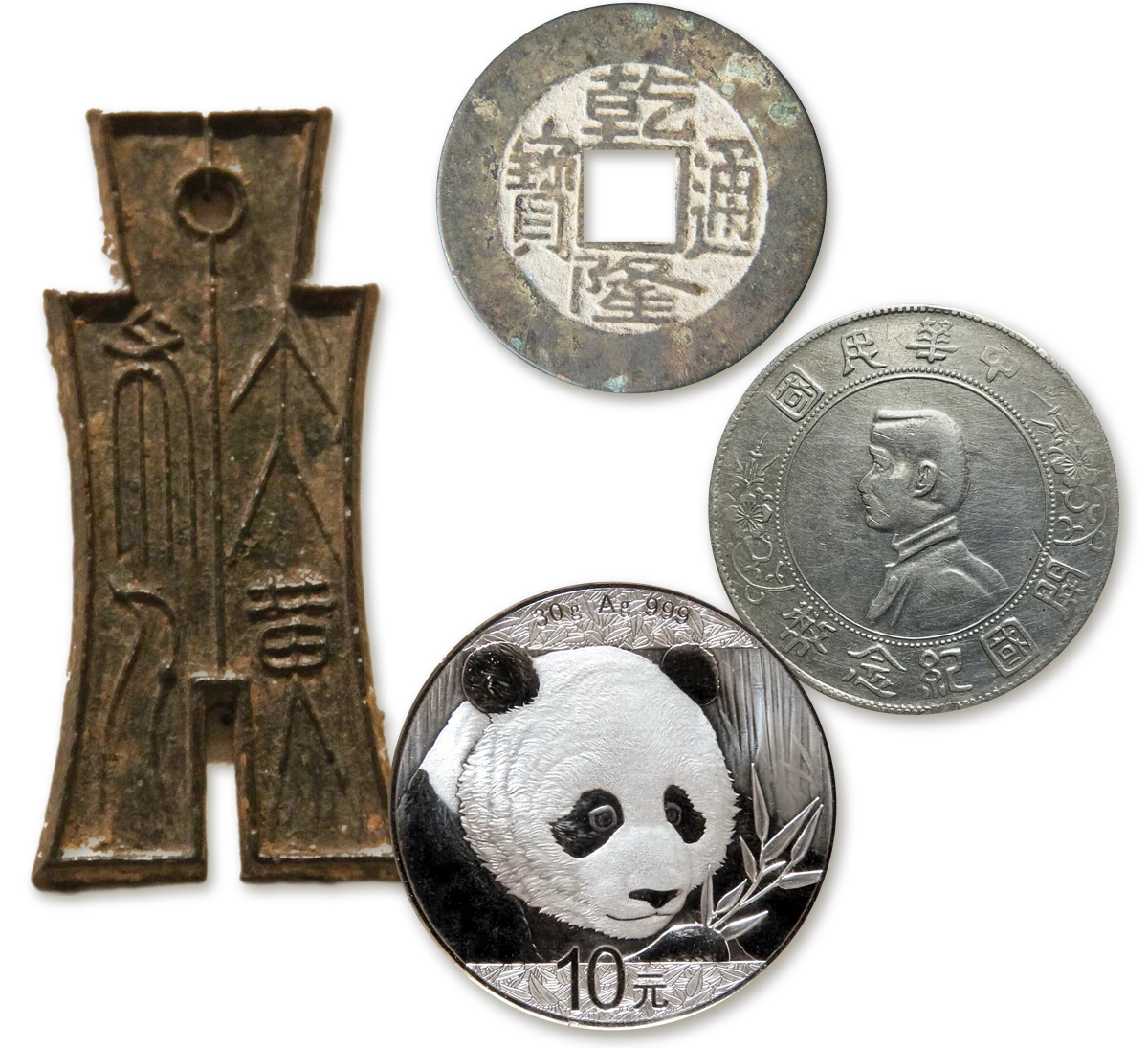
Few countries have a coin history as long as China’s. Bronze money shaped like farm tools was in use more than 2,500 years ago. The round coin with a square hole followed and stayed in use for about two thousand years. Machine-struck silver dragon dollars came at the end of the Qing dynasty, Republic-era silver dollars followed, and today’s Gold and Silver Pandas are collected around the world.
This guide walks through each era, shows what genuine examples look like and explains what makes some Chinese coins valuable. It also covers counterfeits, a serious problem with Chinese coins, and how to get a free appraisal if you are thinking of selling.
American Rarities has bought rare coins since 1990 and has purchased over $400 million in rare coins. We buy Chinese coins of every era, along with world coins and bullion, from collectors, families and estates across the United States.

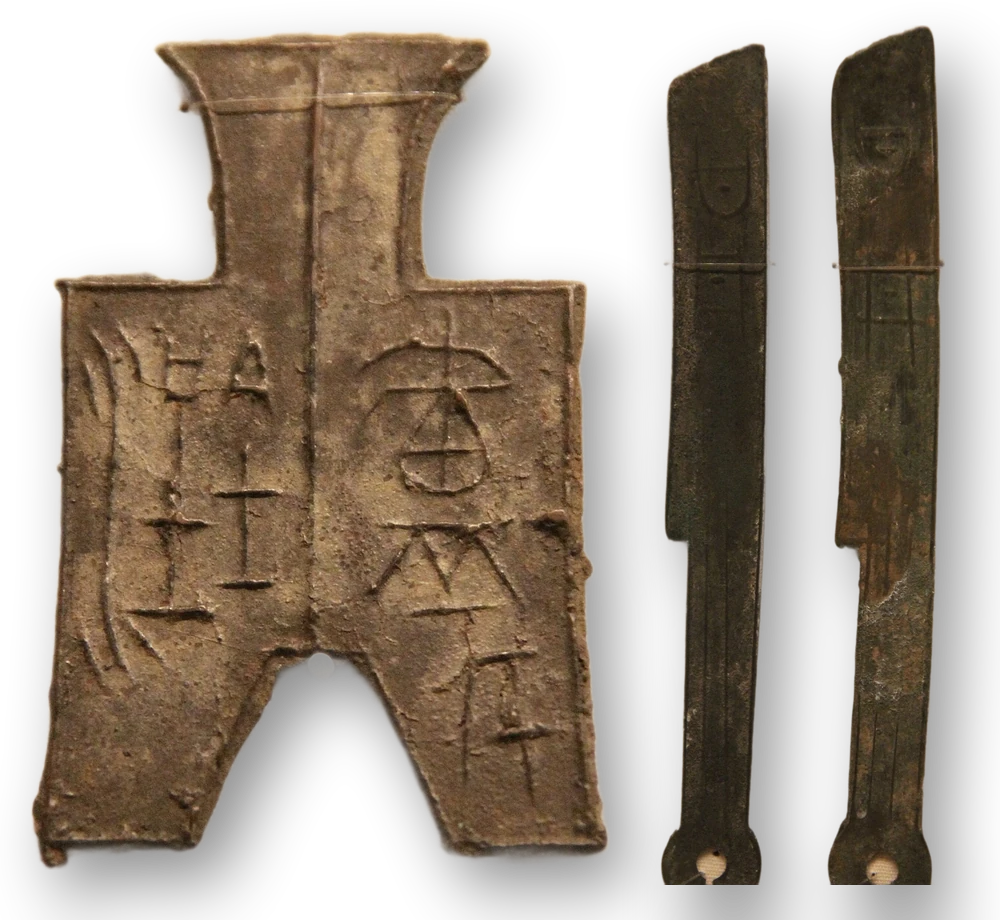
Long before round coins, people in China traded with bronze pieces cast in the shape of tools. Spade money (bu) is shaped like a hoe or spade and was used mainly in the central states. Knife money (dao) is shaped like a small knife, often with a ring at the end of the handle, and was used mainly in the north and east, including the state of Qi.
Both forms were cast during the Zhou dynasty and reached their peak during the Warring States period (475 to 221 BC), when each state issued its own money. Many pieces carry the name of the city or state that made them. Condition, the type and the inscription all affect value, and rare city names or unusual shapes bring a premium.
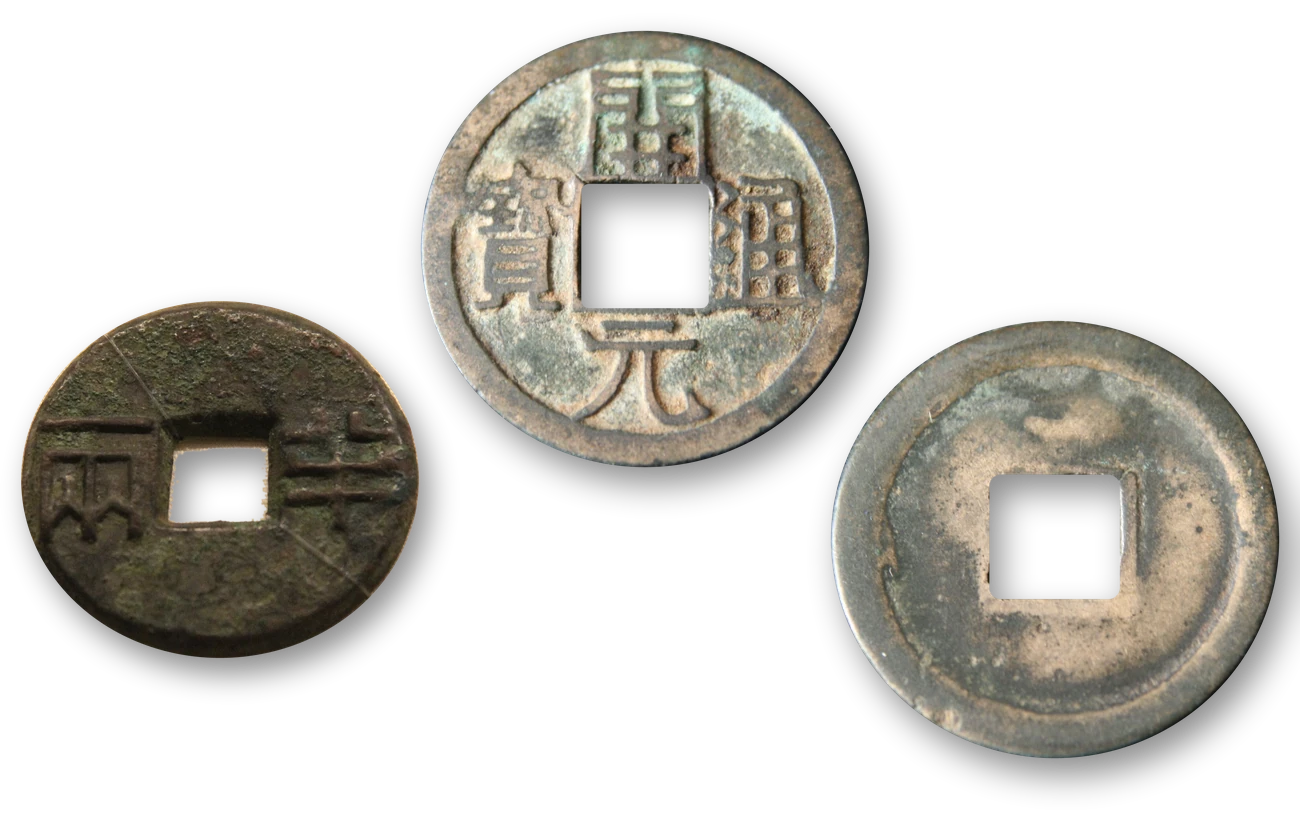
After the Qin state unified China in 221 BC, it standardized the money around the Ban Liang, a round bronze coin with a square hole. The design was practical: coins could be strung together on a cord in hundreds or thousands. It became the pattern for Chinese cash coins for roughly the next two thousand years.
In 621, under the first Tang emperor, China began casting the Kaiyuan Tongbao. It was the first cash coin inscribed tongbao (通寶), a term that later dynasties kept using on their coins. Cash coins were still being made at the end of the Qing dynasty in the early 1900s.
Most cash coins are common, but rare reigns, large denominations, mint marks, unusual inscriptions and charm coins can be worth a great deal. To learn more about older Chinese money, see our guides to Chinese coin currency and Chinese old coins value.

By the 1800s, foreign silver dollars such as the Spanish and Mexican 8 reales were circulating widely in China. In 1889 the new Guangdong mint began striking China’s own machine-made silver dollars, and other provinces soon followed. Because these coins show a coiled dragon, collectors know them as dragon dollars.
Provincial dollars from mints such as Guangdong, Hubei, Jilin (Kirin), Beiyang and Sichuan are denominated in weights: 7 mace and 2 candareens for the dollar. Late in the dynasty the central government issued national coins, including the 1911 dollar of year 3 of the Xuantong emperor shown here. Rare provinces, scarce dates, pattern coins and high grades are what collectors pay the most for.
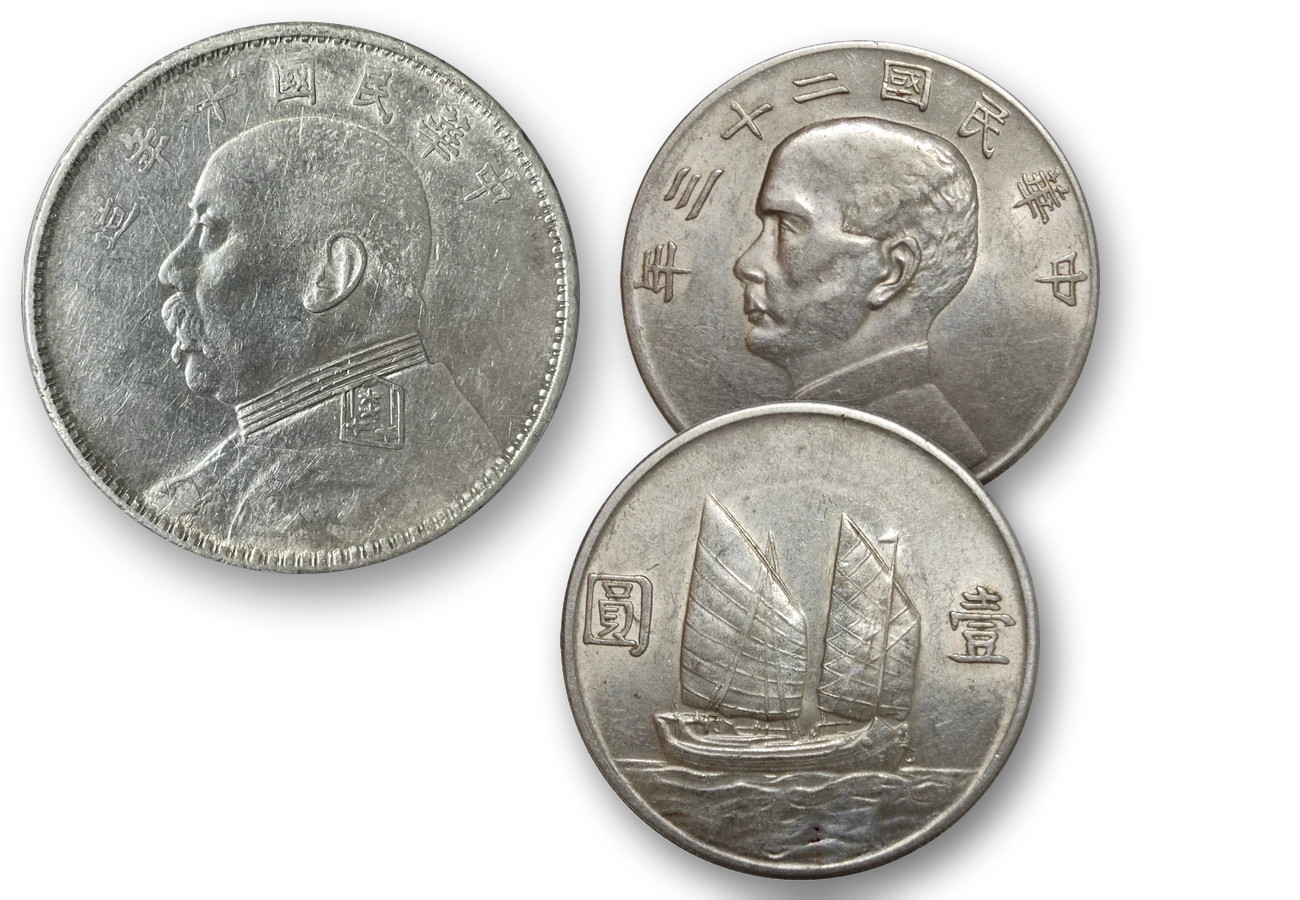
After the Qing dynasty fell in 1912, the new Republic of China needed a national coin. Beginning in 1914, it struck the Yuan Shikai dollar, with a portrait of the president in military uniform. In the U.S. it is nicknamed the “fat man” dollar. In Chinese it is known as Yuan Datou, “Yuan big head.” It was struck in very large numbers, mostly dated year 3, 8, 9 and 10 (1914, 1919, 1920 and 1921).
The Sun Yat-sen dollar of 1932 to 1934 shows a sailing junk on the back, so it is known as the junk dollar. The 1932 (year 21) version with birds and a rising sun over the junk was withdrawn soon after it was issued and is scarce today. For more about these and other rarities, see our guides to Chinese rare coins and rare China coins value.

The People’s Republic of China introduced the Gold Panda in 1982 and the Silver Panda the following year. The panda design changes most years, which makes date sets popular. Coins dated before 2016 are struck in troy ounce weights, and those from 2016 on are struck in grams.
China also issues Lunar zodiac coins, proof sets, commemoratives and other gold and silver coins in limited mintages. Original packaging and certificates help the value of proof issues. See our guide to Chinese modern coins for more on Pandas and other modern issues.
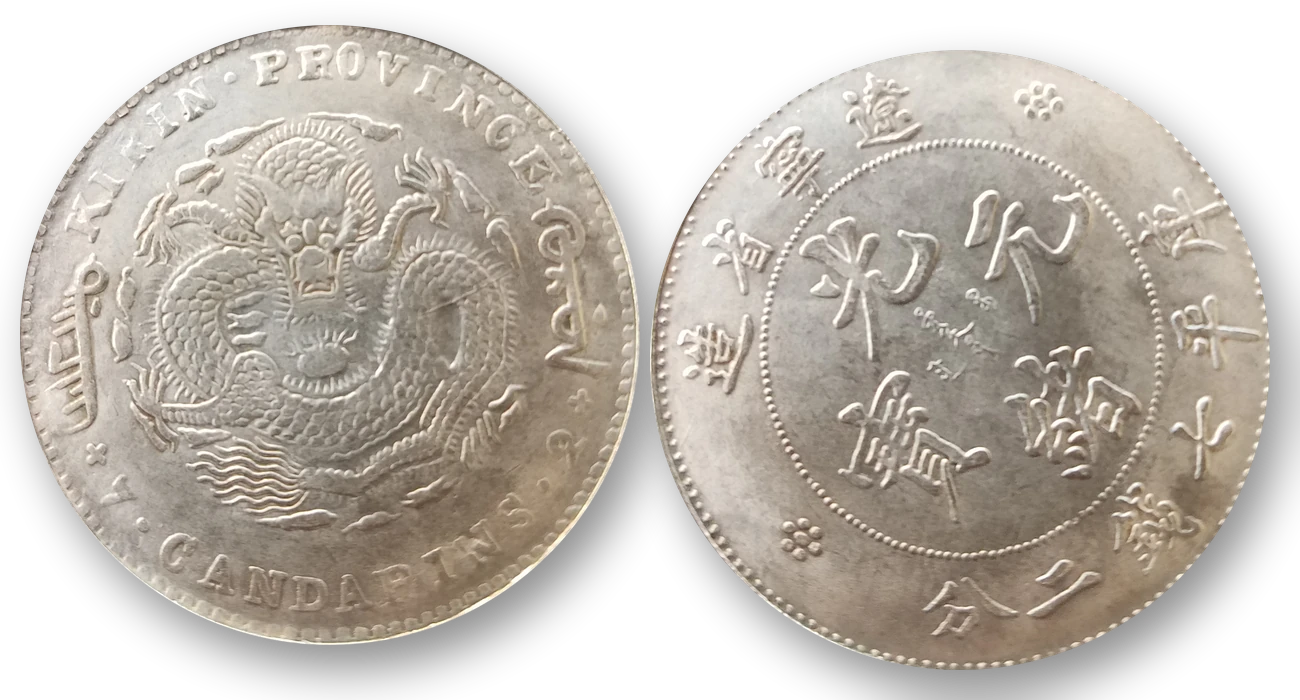
Chinese coins are among the most counterfeited coins in the world. Fake dragon dollars, Yuan Shikai dollars, junk dollars, cash coins and Pandas are made in large numbers, and some are good enough to fool experienced buyers. The Kirin Province dragon dollar shown here is a fake we examined.
We test coins with XRF (X-ray fluorescence) metal analysis and examine them under a digital microscope. As an NGC and PCGS authorized dealer, we can also submit your coins to PCGS or NGC for authentication and grading. See more pictures of fake coins we have caught.
