
Sell Mexican Revolutionary Coinage
Coins of the Mexican Revolution: Villa, Zapata, Durango and Oaxaca Issues, 1913–1917
Looking to sell Mexican Revolutionary coinage? Esta página también está disponible en español.
American Rarities buys the emergency and provisional coins struck by the armies, states and towns of the Mexican Revolution, from Francisco Villa’s Chihuahua pesos and the Durango “Muera Huerta” pesos to Emiliano Zapata’s Guerrero issues and the 1915 coinage of Oaxaca.
These coins were made in a hurry, often in mining camps and makeshift mints, and the varieties are many. Values depend on the issuer, the variety, the metal, the condition and above all on whether the coin is genuine. Our buyers know this series and can tell you what you have.
Get a free, no-obligation appraisal by email, text or the form on this page. We have been buying rare coins since 1990.
On this page:
What Is Mexican Revolutionary Coinage?
The Mexican Revolution began in 1910 with Francisco I. Madero’s uprising against Porfirio Díaz and lasted, by most accounts, until about 1920. Most of its coinage, however, dates from 1913 to 1916.
After Victoriano Huerta seized power in February 1913, the rival armies fighting him and each other needed money to pay troops and buy supplies, and silver coins were trusted far more than the paper money of the day.
So generals, state governments and local commanders struck their own coins. Some were made to full weight in good silver. Others were token coins in copper, brass or other base metals. Many were struck from silver taken from nearby mines, and some contain a little gold, which a few issues state on the coin itself.
Revolutionary coinage is a separate chapter from the coins of Mexico’s fight for independence a century earlier. For the coins of 1810 to 1821, see our pages on Mexican War of Independence coins and the Mexican Independence SUD copper coins of José María Morelos. For the notes the factions printed, see Mexican paper money.
Villa and the North: Chihuahua and Parral Coins

The first Revolutionary coins came from the north. The American Numismatic Society’s 1921 study of the series records that the earliest were struck in Sinaloa in June and July 1913, using silver from the El Rosario mine, as copies of the old Mexican peso.
In Chihuahua, coins were struck at Hidalgo del Parral in 1913, including silver pesos and copper 2 centavos. The copper is said to have come from the trolley wire of a local railway.
Under Francisco “Pancho” Villa, the state struck copper centavos and, in 1915, the silver Ejército del Norte (Army of the North) pesos, struck in the millions from bullion largely taken from the Chihuahua smelter. Silver coins let Villa pay his troops in hard money while his rivals paid in depreciating paper.
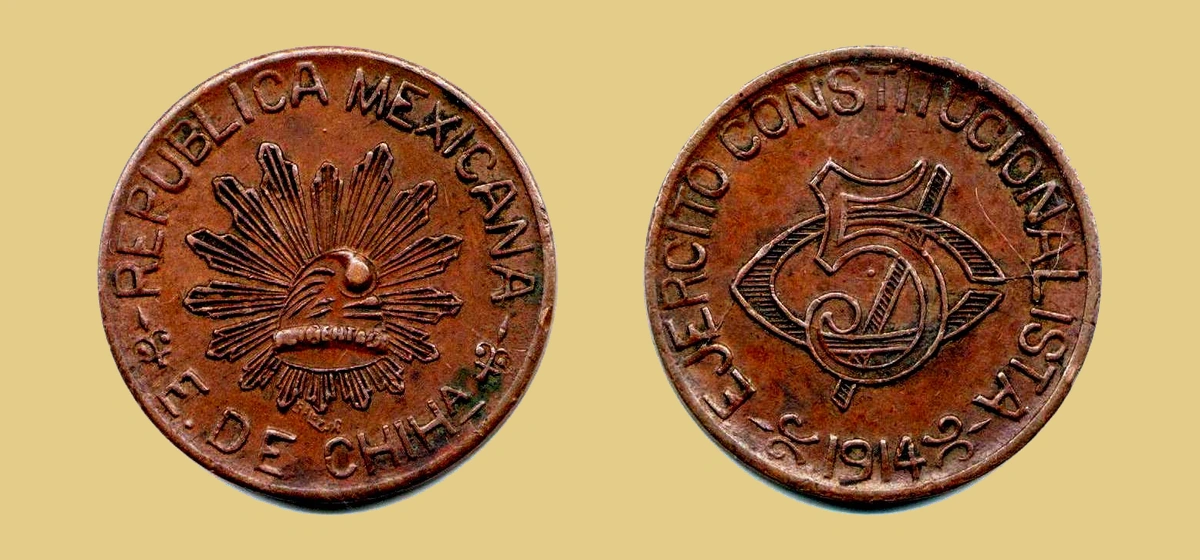
Villa’s forces also struck copper coins in Aguascalientes in 1915, and other northern and western issues are known from Sinaloa, Jalisco and Zacatecas. Chihuahua coins we buy include:
- Hidalgo del Parral pesos, 50 centavos and 2 centavos of 1913.
- Chihuahua copper 5 and 10 centavos of 1914 and 1915.
- Ejército del Norte silver pesos of 1915.
Durango “Muera Huerta” Pesos of 1914
Few coins anywhere carry a threat like the Durango pesos of 1914. Struck at Cuencamé, between Torreón and Durango, under Generals Calixto Contreras and Severino Ceniceros, these crude silver pesos read MUERA HUERTA, “Death to Huerta”.
The obverse shows the Mexican eagle with the legend EJERCITO CONSTITUCIONALISTA, and the reverse a radiate liberty cap with ESTADOS UNIDOS MEXICANOS and UN PESO 1914.
Many die varieties are known. The variety with three stars on each side of the date, six in all, is the rarest, and the Banco de México chose it for a commemorative 100 pesos coin.
Villa later obtained the dies and struck heavier pieces in Chihuahua, and rare copper strikes exist. Durango also issued copper and other base-metal centavos in 1914.
“Muera Huerta” pesos are popular, so many have been faked. Weight, edge, metal and die details all matter when we examine one.
Zapata Coins of Guerrero and Morelos
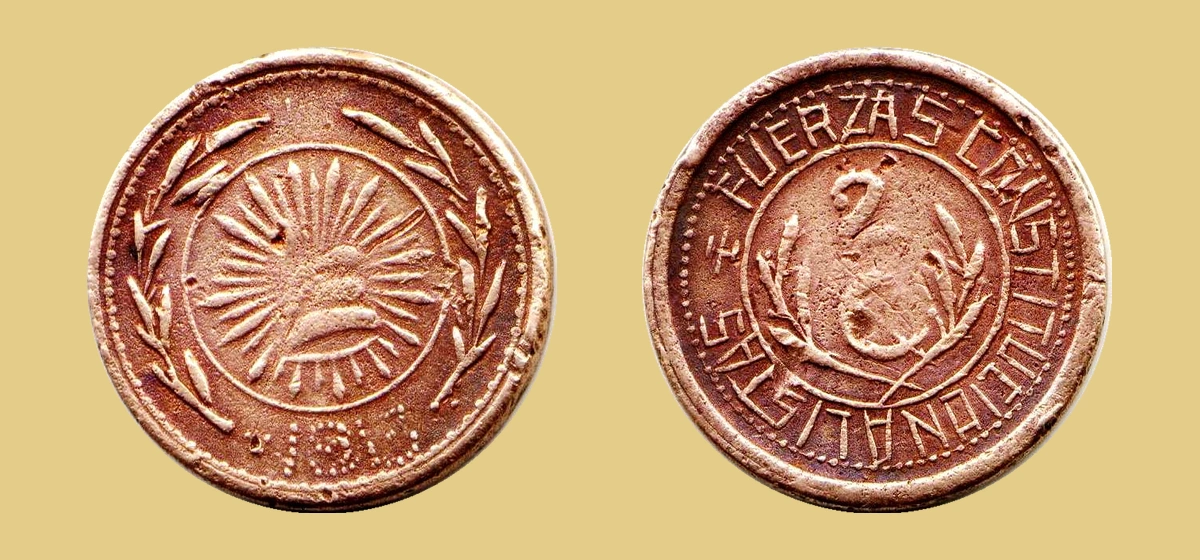
In the south, the forces of Emiliano Zapata began striking coins in 1914. Most were made in the state of Guerrero, at Taxco, Atlixtac and the mining camp of Campo Morado, whose coins carry the marks “Co. Mo.” or “C.M.”. Smaller issues came from the state of Morelos.
The first Zapatista coins were silver 2 pesos and 1 peso pieces of 1914. Some state their gold content, such as the 1914 Guerrero 2 pesos marked ORO: 0,595, with a reverse showing a smoking volcano and the motto “Reforma, Libertad, Justicia y Ley”.
In 1915 the 2 pesos was made smaller, fractional coins were added and many types moved from silver to copper. Later pieces from Guerrero are dated as late as 1917.
Zapata coins we buy include:
- Guerrero 2 pesos and 1 peso of 1914 and 1915.
- Campo Morado pesos, 2 pesos and fractional coins.
- Taxco and Atlixtac issues in silver and copper.
- Morelos issues, such as the 20 centavos of the Estado Libre de Morelos.
Oaxaca’s Provisional Coinage, 1915–1916

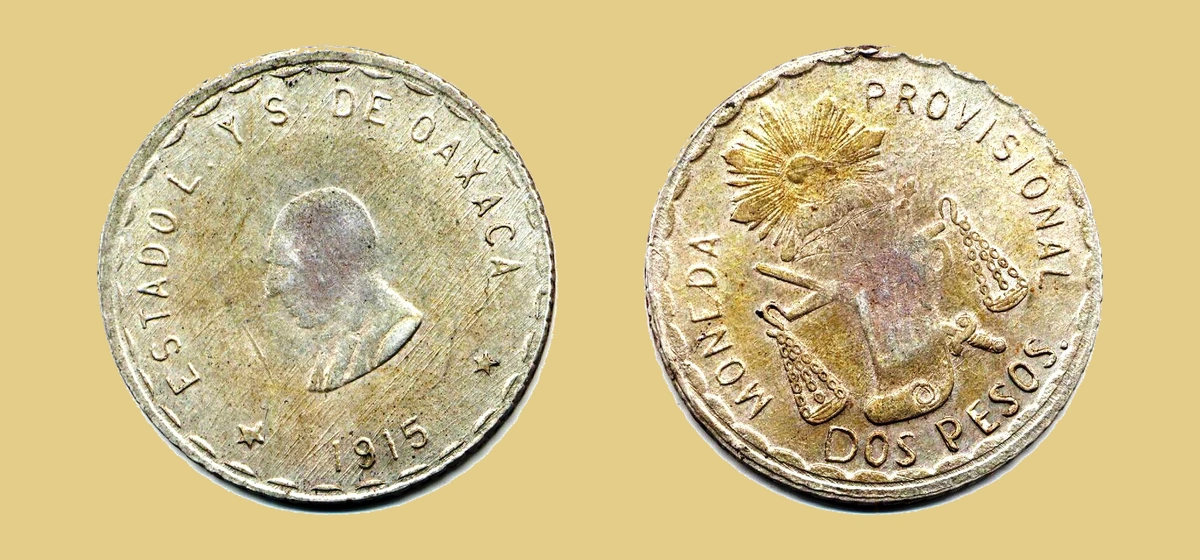
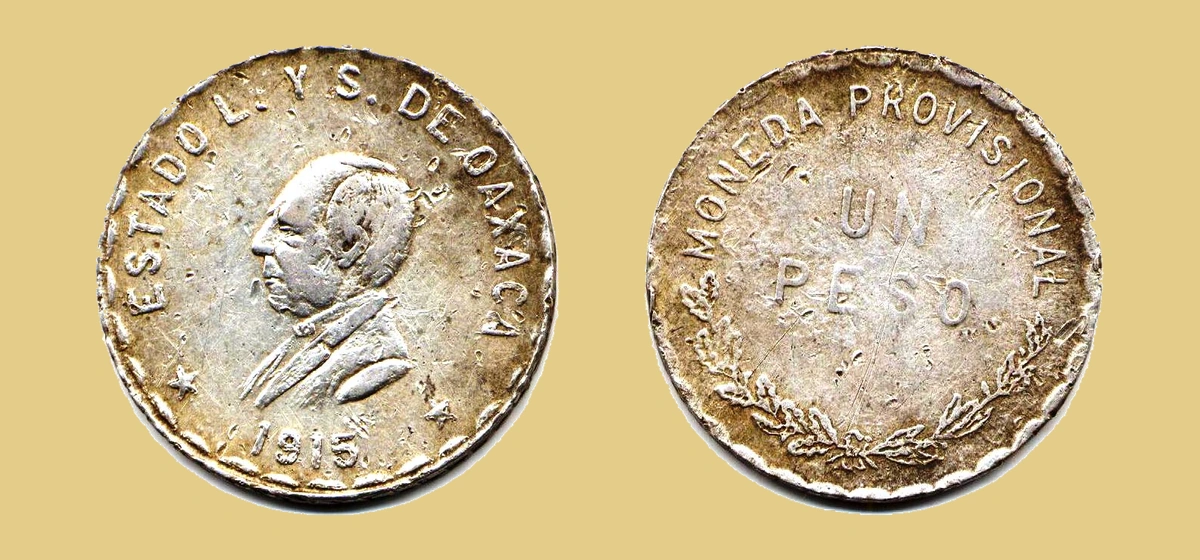
In 1915 the state of Oaxaca declared itself sovereign and struck a large provisional coinage in Oaxaca City. Most of the coins show a bust of Benito Juárez, a native of Oaxaca, with the legend ESTADO L. Y S. DE OAXACA (Free and Sovereign State of Oaxaca). The 2 pesos at the top of this page is one of them.
The series was the most complete of the Revolution:
- Gold: 60, 20, 10 and 5 pesos, the smaller ones in base gold.
- Silver: 5, 2 and 1 pesos and 50 and 20 centavos.
- Copper: centavo denominations, including small rectangular pieces.
The gold 60 pesos, dated 1916, is the most famous. According to the 1921 study, only 21 were struck before Carranza’s forces took the state government on March 3, 1916. Those forces melted all the coins they could find and destroyed the dies and records, which is why Oaxaca issues are scarce today.
Fakes, Grading and What Affects Value
We do not publish prices for Revolutionary coins, because values depend on the exact coin. These are the main things that affect value:
- Authenticity. This is the first question for any Revolutionary coin. Copies, casts and fantasy pieces exist for many types, some made as souvenirs and some to deceive. Learn more about fake, counterfeit and altered coins.
- Issuer and variety. Some types were struck by the millions, while others are known in only a few pieces. Small die differences can change the value a lot.
- Metal. Gold and silver pieces usually bring more than copper, but some copper varieties are rare.
- Condition. Many of these coins were crudely struck, so collectors judge them against others of the same type.
- Certification. Coins graded by PCGS or NGC are easier to sell. See the NGC grading scale to learn how coins are graded.
You do not need to grade your coins before selling. We offer free in-house grading without slabbing and use XRF testing and digital microscopy to check metal and details. As a PCGS and NGC authorized dealer, we can tell you whether a coin is worth certifying.
Tip: do not clean or polish your coins. Send us photos of them as they are.
How to Sell Your Mexican Revolutionary Coins
Selling your Mexican Revolutionary coins to American Rarities is simple, and you do not need to clean or certify them first:
- Step 1
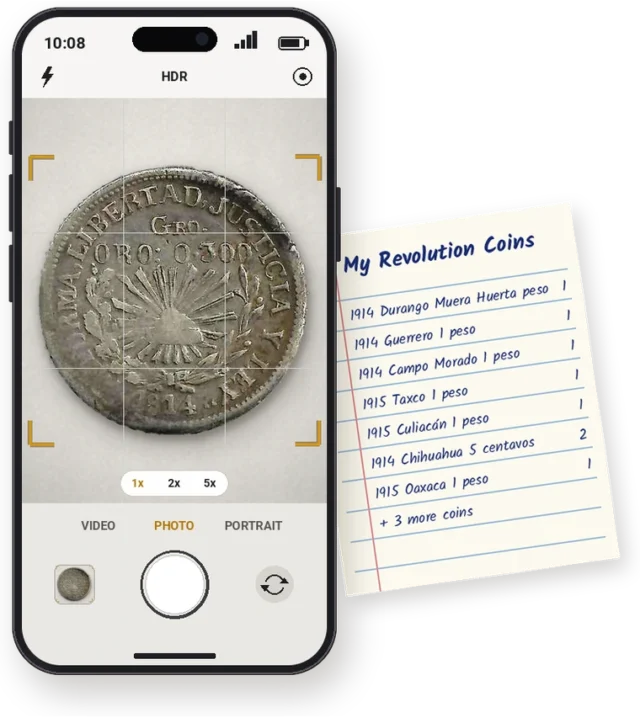
Send Photos or an Inventory List
Photograph both sides of each coin in good light, without flash, and email the pictures to staff@americanrarities.com, text them to 720-600-4740, or use the form on this page.
For a larger group, a simple list is a fine start: for example a 1914 Durango “Muera Huerta” peso, a 1914 Guerrero 1 peso or a 1915 Oaxaca 1 peso. Note the date, the place and the denomination you can read.
- Step 2
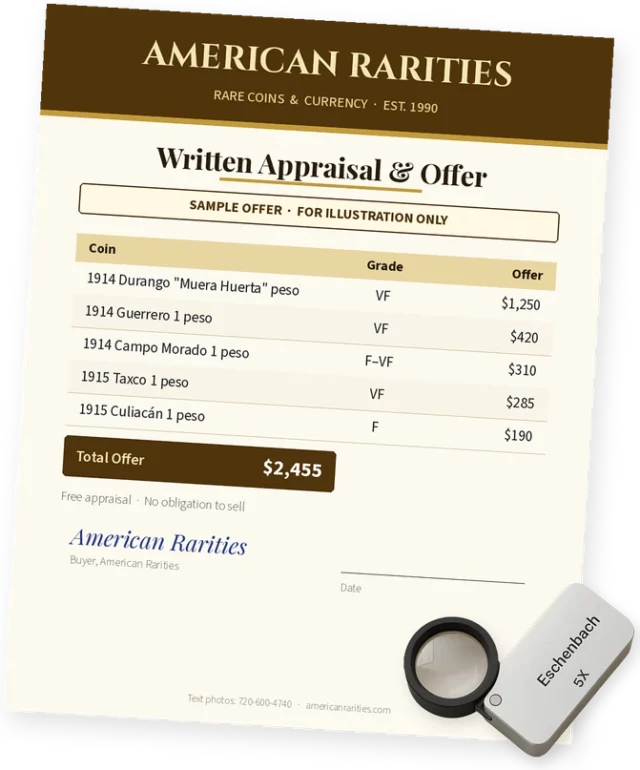
Free Appraisal and Written Offer
A numismatist who knows this series checks each coin against the known varieties, because copies, casts and fantasy pieces are common.
You get a free appraisal and, if you want to sell, a written offer. All appraisal requests are reviewed in the order they are received. Some appraisals take minutes, while larger, more complex collections can take a few days. Either way, you’ll get a response from us. There is no obligation, and we also give free in-house grading without slabbing.
- Step 3
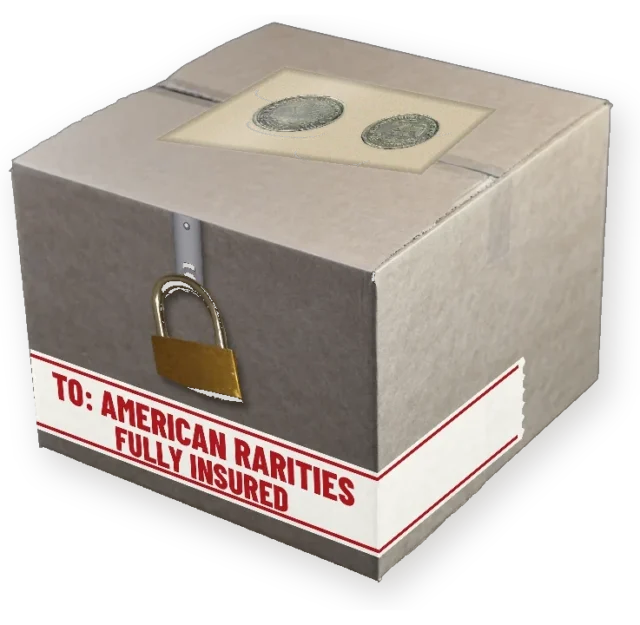
Ship Fully Insured (Paid by Us)
If you accept, ship your coins in a sturdy box addressed to American Rarities, fully insured at our expense with no deductible. We do not provide shipping materials.
If you decline after we review your coins, we return your items fully insured.
- Step 4
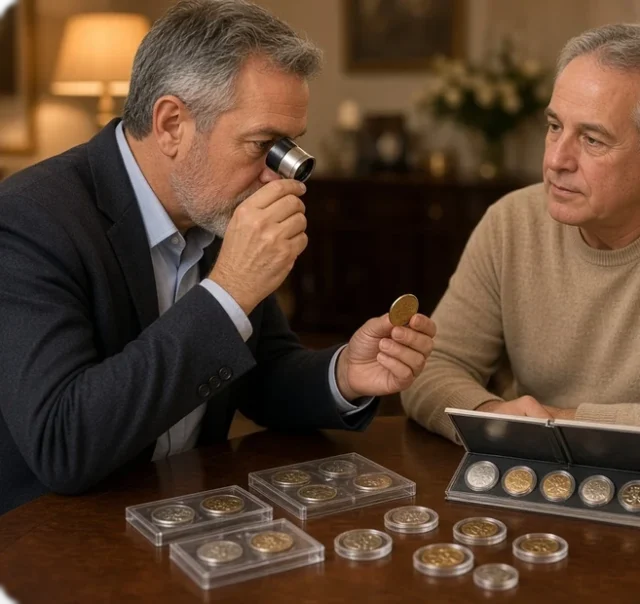
Or Meet a Buyer in Person
For large or valuable Revolutionary collections, a buyer from our nationwide buying network can meet you at your home, or we can meet you at your bank, to look over the coins with you and answer questions about Villa, Zapata, Durango or Oaxaca issues.
- Step 5
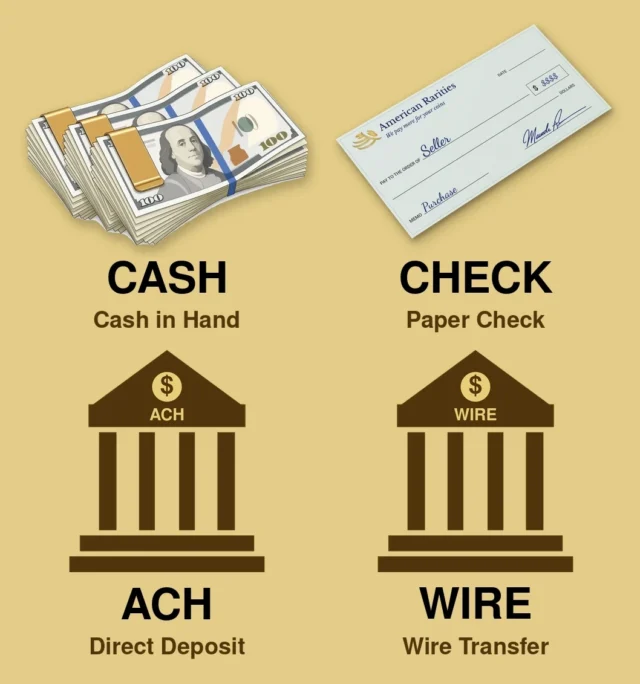
Get Paid Immediately
Once we confirm your coins, we pay you immediately by cash, check, ACH or wire, whichever you prefer.
Why sell to us? American Rarities was founded in 1990 and has purchased over $400 million in rare coins, paper money and precious metals. Our team members are ANA Life Members, we have a BBB A+ rating and a 4.7-star Google rating, and we are a PCGS and NGC authorized dealer and an ANACS submission center.
For estates, we provide IRS-compliant appraisals. All appraisal requests are reviewed in the order they are received. Some appraisals take minutes, while larger, more complex collections can take a few days. Either way, you’ll get a response from us. See our estate appraisals and liquidation services.
Have other Mexican coins? We also buy Mexico gold pesos, Mexico Caballito pesos, Mexico gold escudos and other foreign coins.

Mexican Revolutionary Coinage: Quick Answers
Which Mexican Revolutionary coins are the most valuable?
Rare varieties and gold issues, such as the 1915 and 1916 Oaxaca gold and scarce Durango “Muera Huerta” pesos, are among the most valuable. Common types are worth much less. Value depends on the issuer, the variety, the metal and the condition, and above all on whether the coin is genuine, so an expert identification matters.
Did Pancho Villa make his own coins?
Yes. Forces under Francisco Villa struck silver pesos in Chihuahua, including issues from Hidalgo del Parral and the Chihuahua mint, during 1913 to 1915, and Villa’s army also issued paper money. These are among the most widely collected Revolutionary coins, and genuine examples in good condition are in steady demand. Many copies exist, so authentication is important.
What does “Muera Huerta” mean on a coin?
“Death to Huerta.” It appears on silver pesos struck in 1914 at Cuencamé, Durango, by forces fighting General Victoriano Huerta, who had seized the presidency in 1913. The coins were struck in a hurry from crude dies, so several varieties exist, and some are much scarcer than others.
What metals were Revolutionary coins made of?
Silver, copper, brass and gold, depending on the issuer and what was available. Many states and armies struck copper and brass coins for small change, silver pesos for larger payments and, in Oaxaca and Guerrero, some gold. Silver content and weight varied widely, so coins of the same denomination can differ in metal and value.
Are there fake Mexican Revolutionary coins?
Yes. Copies, casts and fantasy pieces exist for many types, and some were made to sell to tourists and collectors decades ago. We check weight, metal and die details, using XRF analysis and digital microscopy, before making an offer. Send clear photos of both sides for a free opinion.
Explore related pages: Mexican War of Independence coins, Mexican Independence SUD copper coins, Mexican paper money, Mexico gold pesos, Mexico Caballito pesos and Mexico gold escudos.
Find Out Your Mexican Revolutionary Coinage Value With A Free Appraisal & Offer
Email, Text, or Use This Form To Send Us Your Inventory List or Pictures
Email: staff@americanrarities.com Text: 720-600-4740
Professional Associations