Leer esta página en español

Sell Mexican War of Independence Coins (1810–1821)

Royalist Provisional Mints, Insurgent Issues and Counterstamped Coins

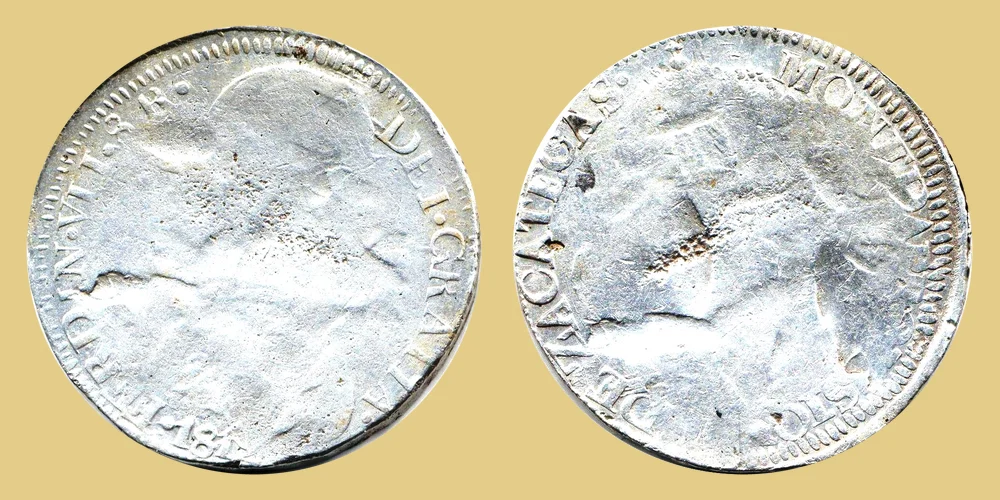
Mexican War of Independence 1811 Zacatecas provisional 2 reales showing the hills of La Bufa over L.V.O. and the crowned arms of Ferdinand VII

Looking to sell Mexican War of Independence coins? Esta página también está disponible en español.

American Rarities buys the silver and copper coins struck in New Spain between 1810 and 1821, from the provisional royal mints of Zacatecas, Durango, Chihuahua and Guadalajara to the coins of the insurgent armies and the counterstamped pieces of both sides.

These crude, often heavy coins were made in mining towns cut off by the Mexican War of Independence. Their mints, dates and varieties matter a great deal, and our buyers know how to identify them and how to spot copies.

Get a free, no-obligation appraisal by email, text or the form on this page. We have been buying rare coins since 1990.

On this page:

Decorative gold separator bar

Coins of the Mexican War of Independence, 1810–1821

The war began on 16 September 1810, when the priest Miguel Hidalgo launched a revolt in the town of Dolores. It ended in 1821, when the Army of the Three Guarantees entered Mexico City and Mexico became independent from Spain.

Before the war, nearly all of New Spain’s coins came from one place: the royal mint in Mexico City. Silver from the northern mines had to travel there to be coined.

When fighting cut the roads, mine owners and royal officials could not get their silver to the capital, and towns ran short of coin.

The answer was a wave of new, temporary mints close to the mines. At the same time, the insurgents made coins of their own to pay their troops.

The result is one of the most varied and interesting series in Mexican coinage. Both sides also stamped marks on coins already in circulation.

Almost all of these coins are reales, the same denominations as earlier colonial coins: silver ½, 1, 2, 4 and 8 reales, plus a few copper pieces. The 8 reales, the famous Spanish dollar or peso, is the coin collectors look for most.

Decorative gold separator bar

Royalist Provisional Mint Coins We Buy

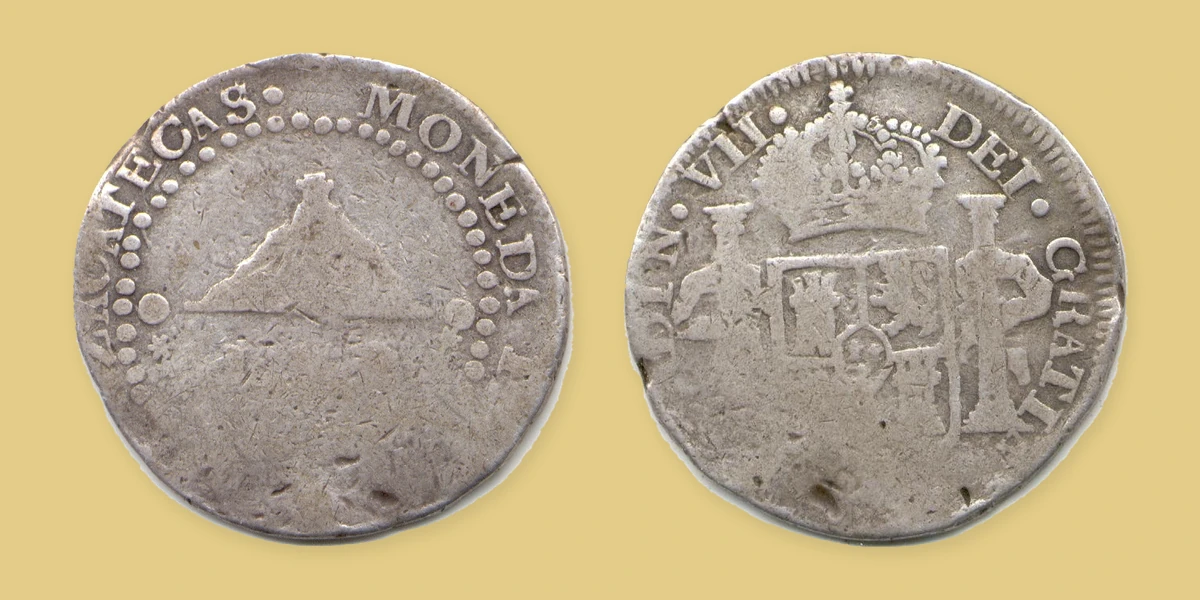
1812 Zacatecas provisional 8 reales of Ferdinand VII from the Mexican War of Independence, showing the king’s bust and the legend MONEDA PROVISIONAL DE ZACATECAS
A Zacatecas provisional 8 reales of 1812, struck in the name of Ferdinand VII. Public domain, via Wikimedia Commons.

Most coins of the war were struck by royalist authorities at provisional mints.

They carry the name of the Spanish king, Ferdinand VII, and generally follow the style of the Mexico City coins, but they were made with local dies and simpler equipment, so they are often crude, off-center or weakly struck. Royalist coins were made at mints including:

  • Zacatecas. The busiest of the wartime mints. Insurgents who took the city in October 1810 struck its first coins, with the hills of La Bufa and the letters L.V.O. Royalists retook Zacatecas in February 1811, kept a revised version of that design for a few months and then moved to coins with the king’s bust. The mint kept working through the end of the war.
  • Durango. Silver reales of Ferdinand VII, plus small copper coins.
  • Chihuahua. Coins for the far north, including 8 reales of the 1810s.
  • Guadalajara. Silver reales and some gold, struck for western New Spain.
  • Other mints. Guanajuato, Sombrerete, Real del Catorce, San Luis Potosí, Valladolid (today Morelia), Oaxaca, Nueva Vizcaya and even San Fernando de Béxar, today San Antonio, Texas.
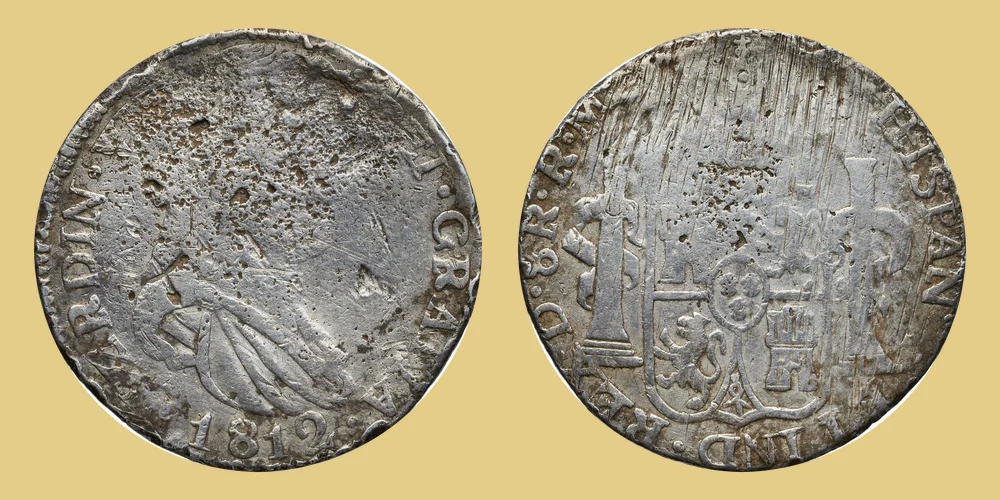
1812 Durango 8 reales of Ferdinand VII from a royalist provisional mint during the Mexican War of Independence, showing the bust and the crowned arms between pillars
A Durango 8 reales of 1812 from the royalist provisional mint. Bibliothèque nationale de France, public domain, via Wikimedia Commons.

Each mint used its own mint mark and assayer’s initials, and some struck only a few dates. Dates, mints and varieties are what separate a common provisional 8 reales from a scarce one.

If you have one of these coins, a clear photo of the date and the letters near it is the best place to start.
Decorative gold separator bar

Insurgent Coins of the War of Independence

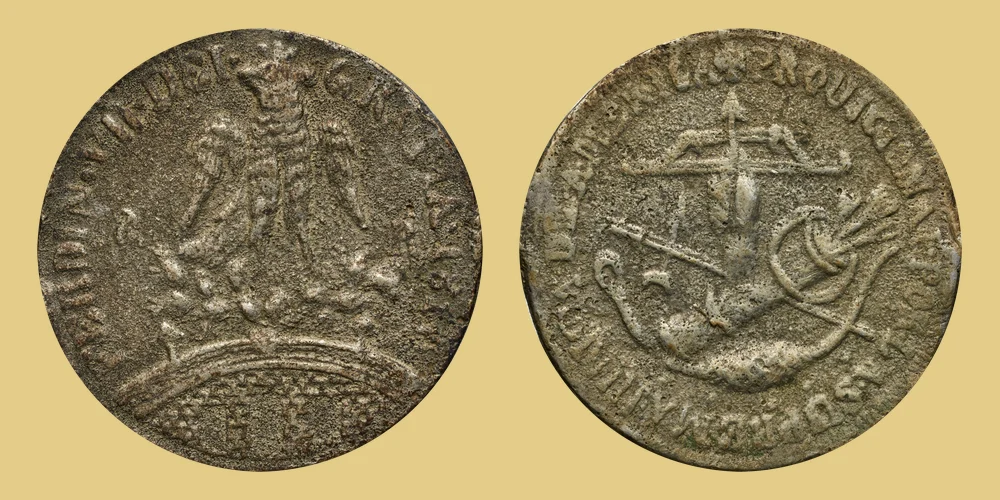
Insurgent 8 reales of the Mexican War of Independence attributed to Tlalpujahua, with an eagle on a bridge and a bow, arrow and quiver design
An insurgent 8 reales attributed to Tlalpujahua, issued in the name of the national congress. Bibliothèque nationale de France, public domain, via Wikimedia Commons.

The insurgents had no access to the royal mints for most of the war, so they made coins wherever they could. Most insurgent coins fall into a few groups:

  • Supreme National Junta and Congress issues. The Junta formed at Zitácuaro in 1811 under Ignacio López Rayón, and the later insurgent congress, issued coins in their own names. Many still carried the name of Ferdinand VII. The 8 reales shown here, with an eagle on a bridge and a bow, arrow and quiver, is one of them.
  • Morelos SUD coins. The army of José María Morelos struck mostly copper coins marked SUD, Spanish for “south,” from 1811 to 1814. They are our specialty: see our page to sell Mexican Independence SUD copper coins.
  • Cast and local issues. Some insurgent coins were cast in molds rather than struck, and others were made in towns held only briefly, such as the first coins of Zacatecas in 1810–1811.

Insurgent coins were made in small numbers under hard conditions and many were later melted, so most are scarce today. They are also the coins most often copied.

Decorative gold separator bar

Counterstamped Coins of the War

Both royalists and insurgents stamped marks on coins already in circulation. A counterstamp could approve a coin for use in a region, mark it as checked for weight and silver, or claim it for one side of the war.

Examples include insurgent marks tied to Morelos and the royalist L.C.M. mark attributed to La Comandancia Militar.

A genuine counterstamp of the period can add a lot of interest to an ordinary coin. Fake counterstamps are also common, because it is easy to punch a mark into a real old coin. We examine the mark, the host coin and how the two fit together before we make an offer.

Coins from Mexico’s later history are a different story. For the Zapata, Villa and state emergency coins of 1910 to 1920, see our page to sell Mexican Revolutionary coinage.

Genuine or Copy? How We Identify War of Independence Coins

Because these coins were crude to begin with, copies can be hard for a non-specialist to spot. Here is what our buyers check:

  • Struck or cast. Most genuine pieces were struck. Many modern copies are cast, which leaves a grainy surface, soft details and seams on the edge.
  • Design, mint mark and date. Letters, mint marks and assayer’s initials should match a known die for that mint and year.
  • Weight, size and metal. We use XRF analysis to test the metal without harming the coin, and digital microscopy to look for casting bubbles, tooling and other alterations.
  • Counterstamps. The mark should look old and worn in the same way as the coin around it.

Read more about fake, counterfeit and altered coins.

Decorative gold separator bar

What Affects the Value of Mexican War of Independence Coins?

We do not publish prices for War of Independence coins, because values depend on the exact coin. These are the main things that affect value:

  • Mint and date. Some provisional mints worked for a short time or struck few coins, and some dates are much scarcer than others.
  • Denomination. 8 reales are the most collected. Smaller silver and copper coins of scarce mints can also be valuable.
  • Royalist, insurgent or counterstamped. Insurgent issues and genuine counterstamps are often in higher demand than common royalist coins.
  • Strike and condition. A readable date, mint mark and legend makes a big difference on crude coins. Original, uncleaned surfaces are preferred.
  • Authenticity and certification. Genuine coins certified by PCGS or NGC are easier to sell. See the NGC grading scale for how coins are graded.

Published guide values from PCGS and NGC change over time. If you want a number, ask us, and we will give you a free appraisal based on your actual coin and today’s market.

Decorative gold separator bar

How to Sell Your Mexican War of Independence Coins

Selling your Mexican War of Independence coins to American Rarities is simple:

1STEP
Smartphone with a light camera screen showing an 1812 Supreme National Congress copper 2 reales, overlapping a handwritten inventory list of Mexican War of Independence coins

Send photos or an inventory list

Photograph both sides of each coin in good light, without flash, so the date, mint mark and assayer’s initials show. Email the pictures to staff@americanrarities.com, text them to 720-600-4740, or use the form on this page. An inventory list is a fine start too, with or without photos: for example an 1811 Zacatecas 2 reales, an 1812 Durango 8 reales or an 1812 Congress copper 2 reales. Please don’t clean the coins; original surfaces are worth more.

2STEP
American Rarities written appraisal and offer sheet listing sample Mexican War of Independence coins, with a small Eschenbach 5X folding loupe

Get a free appraisal and written offer

A numismatist checks the mint, date and assayer, whether each piece is struck or cast, and any counterstamp, and tells you if anything is a copy. We All appraisal requests are reviewed in the order they are received. Some appraisals take minutes, while larger, more complex collections can take a few days. Either way, you’ll get a response from us. with an appraisal and, if you want to sell, a written offer. There is no obligation, and we also give a free grading opinion without slabbing.

3STEP
A padlocked shipping carton addressed to American Rarities, marked fully insured, with a packing window of packing paper and no coins on the box

Ship fully insured (paid by us)

If you accept, ship your coins in a sturdy box, each piece in a flip or envelope so nothing rubs. We pay the shipping and full insurance, with no deductible. We do not provide shipping materials. If you decide not to sell, we return your coins fully insured.

4STEP
An American Rarities buyer examining a coin with a loupe while meeting a customer at a table of coins

Or meet a buyer in person

For larger collections, estates or high-value pieces, a buyer from our nationwide buying network can meet you at your home or at your bank and go through the coins with you, so nothing has to be mailed.
5STEP
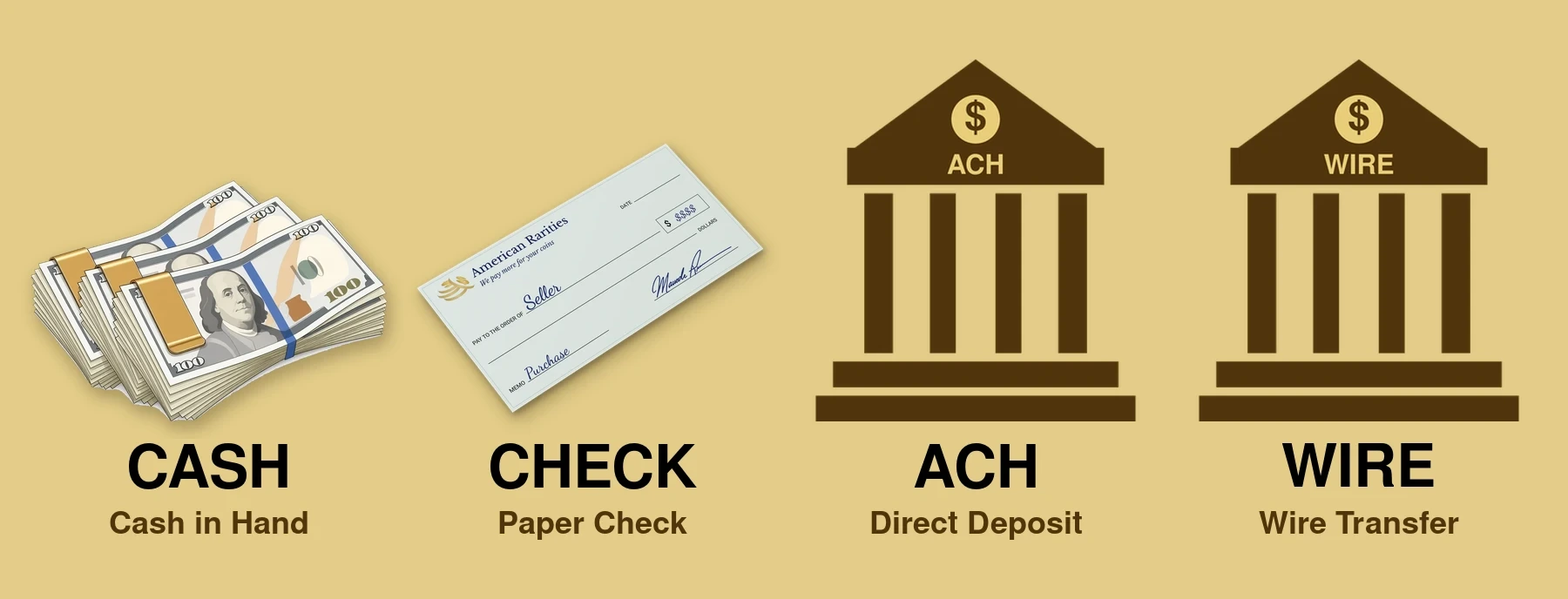
Four ways to get paid for Mexican War of Independence coins: cash, check, ACH and wire transfer

Get paid immediately

As soon as your coins arrive and are verified, or right at the end of an in-person meeting, we pay you immediately by cash, check, ACH or wire.

Why sell to us? American Rarities was founded in 1990 and has purchased over $400 million in rare coins, paper money and precious metals. Our team members are ANA Life Members, we have a BBB A+ rating and a 4.7-star Google rating, and we are a PCGS, NGC and ANACS authorized dealer.

For estates, we provide IRS-compliant appraisals. All appraisal requests are reviewed in the order they are received. Some appraisals take minutes, while larger, more complex collections can take a few days. Either way, you’ll get a response from us. See our estate appraisals and liquidation services.

Have Mexican banknotes from the same family collection? We buy those too: see sell Mexican paper money.

Decorative gold separator bar

Mexican War of Independence Coins: Quick Answers

Why were there so many mints during the war?

Fighting cut the roads from the silver mines to Mexico City, so royal officials opened temporary mints near the mines, at places such as Zacatecas, Durango, Chihuahua and Guadalajara, and the insurgents made coins to pay their armies.

Many of these mints used crude, locally made dies, which is why the coins vary so much.

What is the difference between royalist and insurgent coins?

Royalist coins were struck by Spanish authorities in the name of Ferdinand VII, many at the provisional mints. Insurgent coins were made by the independence forces, including the copper SUD coins of Morelos’s army and issues of the Supreme National Junta.

Both sides also counterstamped existing coins, and those countermarks are collected as well.

How much are my Mexican War of Independence coins worth?

It depends on the mint, date, denomination, condition and authenticity. Common royalist 8 reales are the most available; insurgent issues, scarce mints and rare countermarks bring more.

Because many copies and casts exist, authenticity is checked first. Send clear photos of both sides for a free, no-obligation appraisal.

How can I tell if my coin is a copy?

Many copies are cast rather than struck, with grainy surfaces, soft details and seams on the edge, and some are the wrong weight or metal.

Genuine provisional coins are often crude, so crudeness alone does not mean a fake. We check weight, metal and die details with XRF analysis and digital microscopy before making an offer.

Decorative gold separator bar

Find Out Your Mexican War of Independence Coins Value Today

Email, Text, or Use This Form To Send Us Your Inventory List or Pictures


Upload files of inventory lists and front and back photos of your items.

    We can help build your inventory list. Use the Collection List Maker to photograph your items and we'll build the inventory list for you.

    Decorative gold separator bar

    Professional Associations

    Professional association and grading-service logos including ANA Life Member, PMG, PCGS, NGC, ANACS, CAC, CCE and currency-grading organizations