This page serves as a crucial resource for individuals and families who are managing an inherited estate. It acts as a central hub for articles, guides, and services that explain how to handle, appraise, and sell valuable tangible assets like rare coins, bullion, and collectibles that are part of an inheritance.
By providing expert guidance on this sensitive and often challenging topic, American Rarities positions itself as a trustworthy and professional partner. This strategy builds a high level of confidence, encouraging executors, attorneys, and family members to seek their specialized services for a respectful, efficient, and profitable liquidation of estate assets.
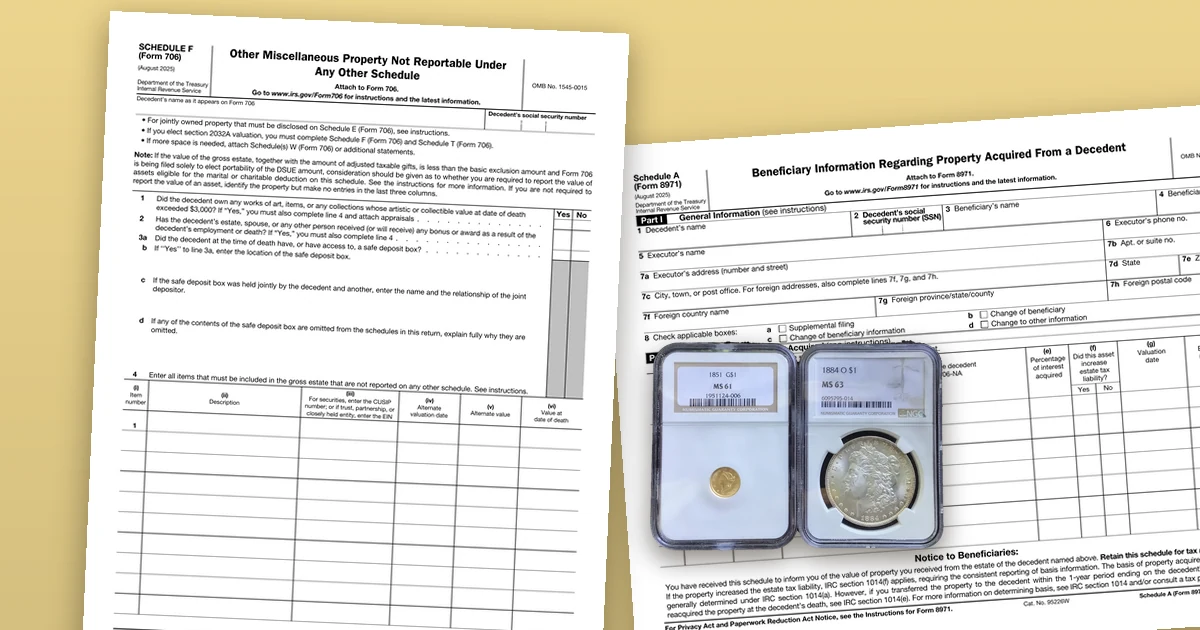
Coin Appraisal for Estate Tax: An IRS Documentation Checklist for CPAs, from American Rarities. IRS form images: Schedule F (Form 706) and Schedule A (Form 8971), August 2025 revisions, from
irs.gov; U.S. government works, public domain. NGC-certified 1851 gold dollar and 1884-O Morgan dollar: photo by BrayLockBoy,
CC BY-SA 4.0, via Wikimedia Commons (
File:NGC Slabbed 1851-P Gold and 1884-O Morgan Dollar side by side.jpg); background removed and shadow added by American Rarities, shared under the same license.
A checklist for CPAs and tax preparers on coin appraisal for estate tax: Form 706 and Schedule F requirements, the expert appraisal under oath, fair market value and the alternate valuation date, bullion versus collectible coins, step-up in basis and Form 8971 consistency, valuation penalties and the records that hold up on examination.
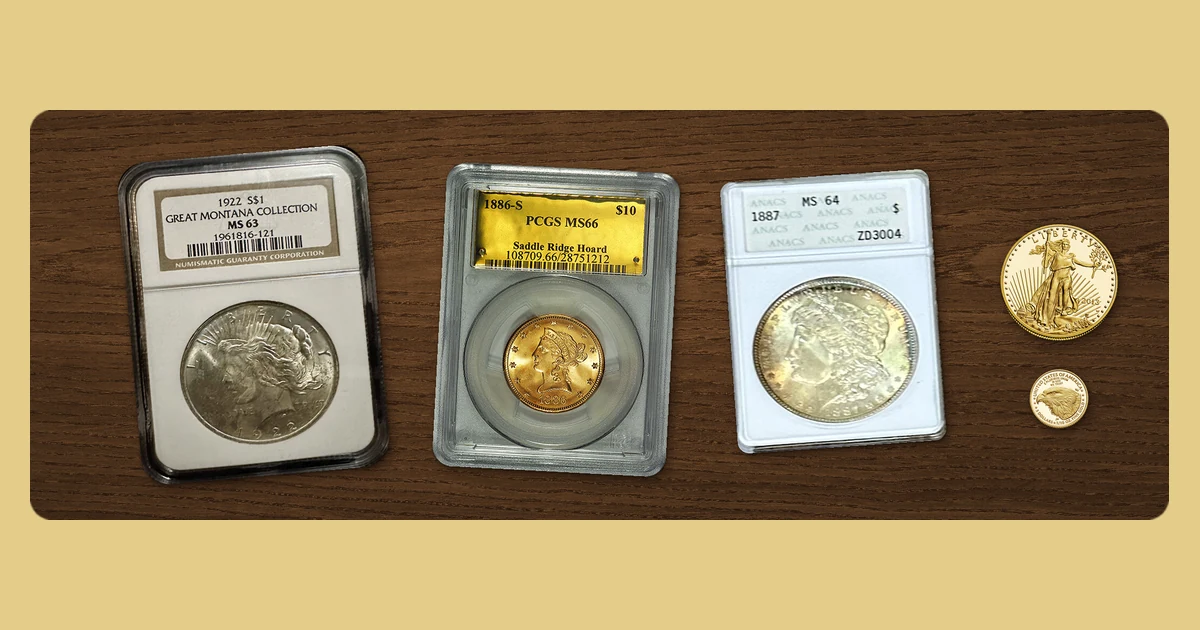
A Guide for CPAs and Tax Pros on Step-Up in Basis and Date-of-Death Values, from American Rarities. PCGS 1886-S $10 holder (Saddle Ridge Hoard): photo courtesy of Kagin’s, Inc.,
CC BY-SA 3.0, via Wikimedia Commons (
File:Saddle Ridge Hoard 1886-S 10 dollar slab.gif). NGC 1922 Peace dollar holder: photo by Bruxton,
CC0, via Wikimedia Commons (
File:1922 Peace dollar from the Great Montana Collection graded and slabbed by NGC.jpg). ANACS 1887 Morgan dollar holder: cropped from a photo by Bruxton,
CC BY-SA 4.0, via Wikimedia Commons (
File:Variety of coin slabs.jpg). American Gold Eagles (1 oz and 1/10 oz): United States Mint, public domain, via Wikimedia Commons (
File:Liberty $50 Obverse.png,
File:One Tenth Ounce American Gold Eagle reverse.jpg). Coin designs: public domain. Holders cut out and coins shown at true relative size by American Rarities; holder sizes as photographed. Walnut tabletop: “American walnut veneer” scan by Poly Haven, CC0.
A professional guide for CPAs and tax preparers on step-up in basis for inherited coins, bullion and collectibles: the date-of-death fair market value standard, retail versus wholesale, bullion versus numismatic valuation, appraisal documentation, the alternate valuation date, consistent basis and Form 8971, the 28% collectibles rate, the NIIT, holding period, reporting, community property and common mistakes.
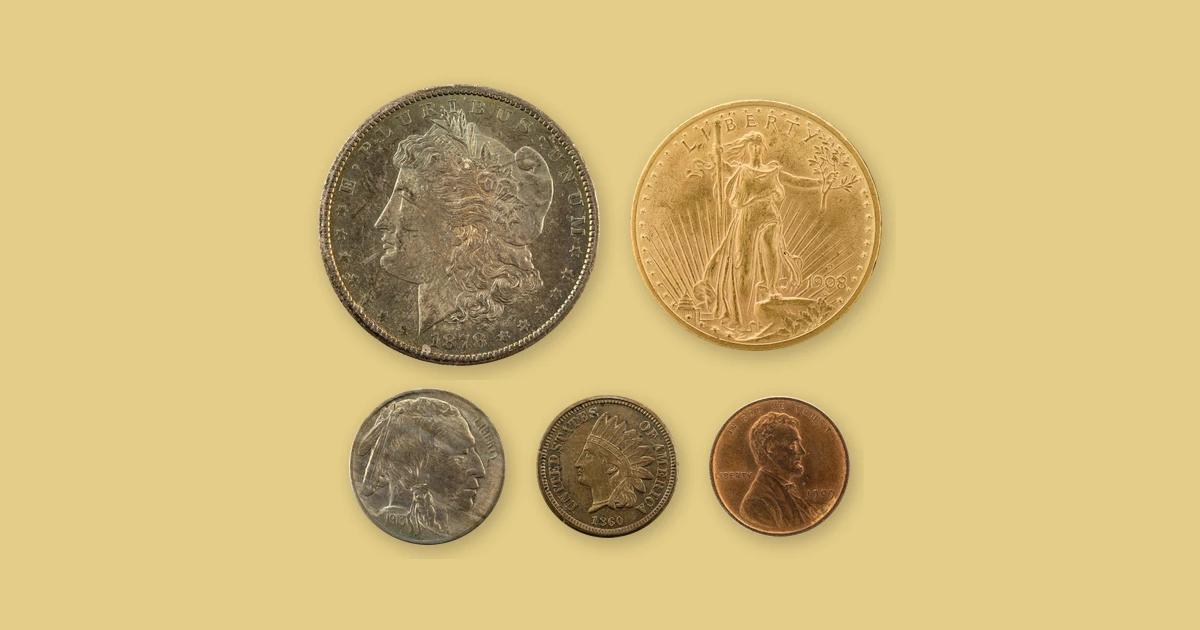
How to Sell Inherited Coins, a guide from American Rarities. Coin photos: National Numismatic Collection, National Museum of American History (Smithsonian), photographed by Jaclyn Nash, public domain (PD-USGov-SI), via Wikimedia Commons.
How to sell inherited coins without losing value: keep the collection intact, confirm who can sell, understand date-of-death value, sort bullion from rare coins, compare appraisals and get paid immediately.