
You are currently viewing How to Sell Inherited Coins: A Step-by-Step Guide for Families and Executors
How to Sell Inherited Coins, a guide from American Rarities. Coin photos: National Numismatic Collection, National Museum of American History (Smithsonian), photographed by Jaclyn Nash, public domain (PD-USGov-SI), via Wikimedia Commons.

How to Sell Inherited Coins: A Step-by-Step Guide for Families and Executors

  • Post published:
  • Post category:Articles
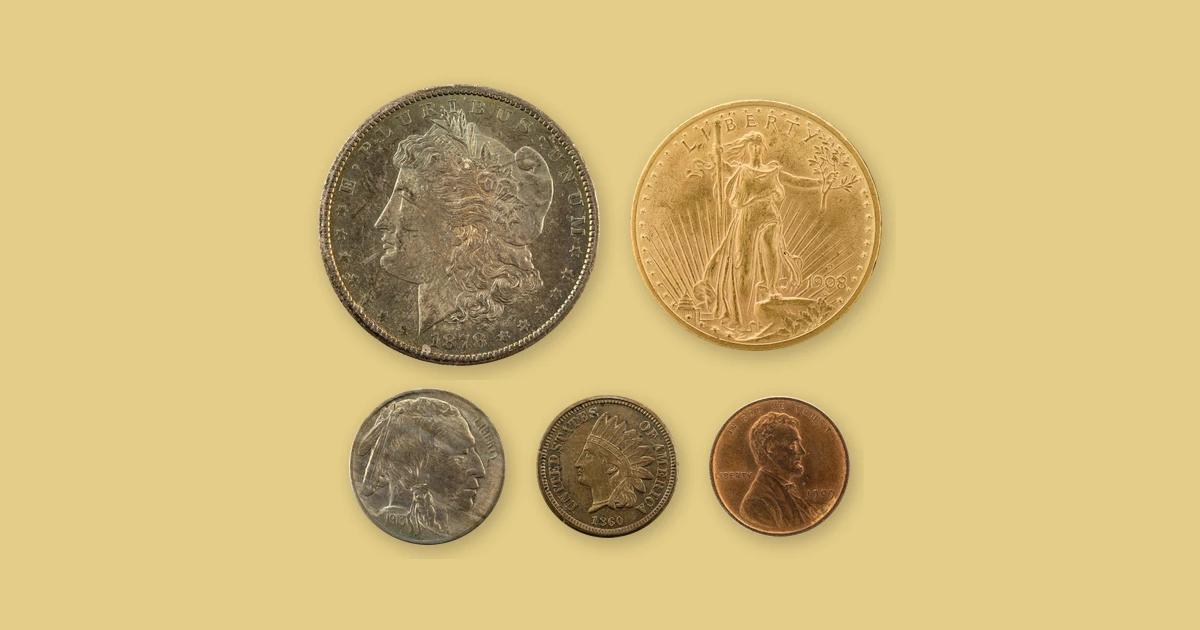
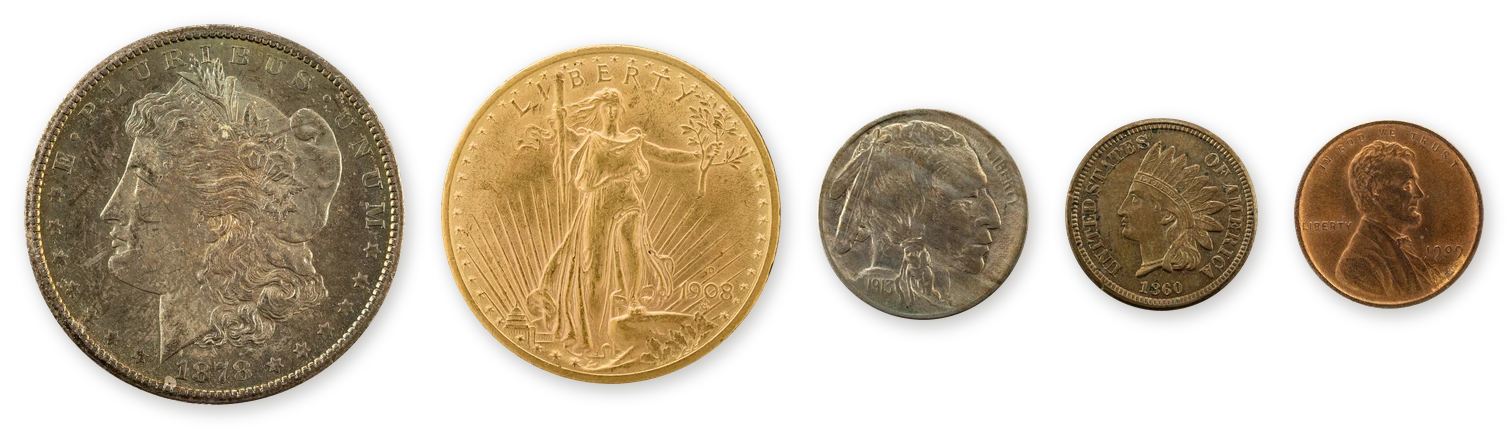
Five U.S. coins often found in inherited collections, shown at true relative size: an 1878-CC Morgan dollar, a 1908-D Saint-Gaudens $20 gold double eagle, a 1913 Buffalo nickel, an 1860 Indian Head cent and a 1909 Lincoln cent

Inherited Coins: Where to Begin

Maybe a parent left behind a safe full of coin albums, a grandparent kept rolls of old silver in a dresser drawer, or you are the executor of an estate with boxes of mint sets, a few gold pieces and some old paper money nobody has looked at in decades. Inherited coins usually arrive at a hard time, and the people handling them are rarely collectors. Knowing how to sell inherited coins the right way protects their value, keeps the family on the same page and helps you avoid the buyers who count on heirs not knowing what they have.

Founded in 1990, American Rarities has purchased more than $400 million in rare coins and collectibles, and much of that has come from estates. This guide walks through the steps we recommend to every family: protecting the collection, confirming who has the authority to sell, understanding value for estate purposes, sorting what you have, getting more than one opinion and getting paid safely. Our earlier article on how to sell an inherited coin collection gives a short overview, and our guide to understanding your inherited estate covers what to look for in more depth. If the estate holds a mix of coins, sets and currency, our step-by-step guide on how to sell a coin collection explains how to sort and value each type. If you have only just found the coins, our guide on what to do with old coins found in an estate covers the first steps, from securing the coins to documenting them for the executor.

Decorative gold separator bar
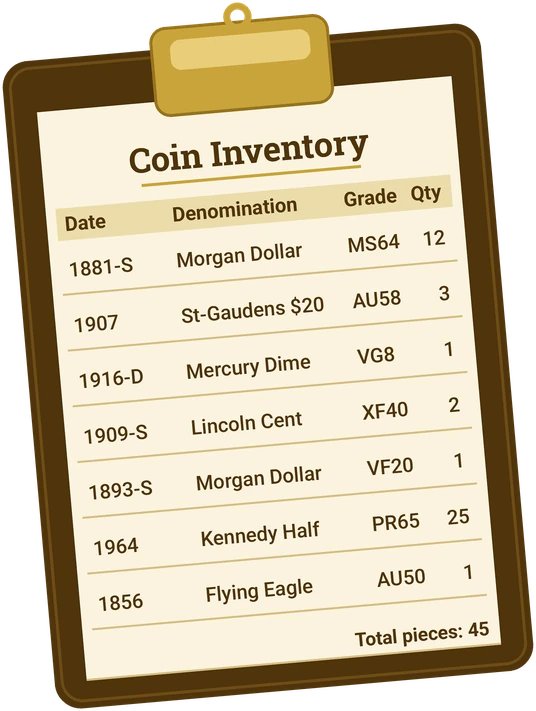
Clipboard with a coin inventory list showing date, denomination, grade and quantity columns for Morgan dollars, a Saint-Gaudens $20 and other U.S. coins, on a transparent background

Step 1: Secure the Collection and Leave It As Is

The first few weeks matter more than most families realize. Nothing about the coins needs to be decided right away, but a few early mistakes cannot be undone.

  • Do not clean anything. Polishing, dipping or scrubbing leaves fine hairlines and strips original surfaces, and a cleaned coin can lose much of its collector value. Read why cleaning your coins is not recommended.
  • Do not split it up yet. Resist dividing coins among relatives or letting anyone take a few favorites before the collection is appraised. Groups are easier to value as a whole, and a fair split is far simpler once everyone knows what each piece is worth.
  • Keep everything in its original holder. Leave coins in their albums, flips, rolls, tubes, government boxes and certified holders, and keep the receipts, invoices and notes the collector left behind.
  • Secure it. Move the collection to a safe, a safe deposit box or another locked place, limit who has access and check that it is insured while the estate is settled.

Make a simple inventory. You do not need to be an expert. Count the albums, boxes and rolls, note anything in a certified holder and take a few photos. A rough list protects everyone, and it is the starting point for every appraisal that follows.

Decorative gold separator bar

Step 2: Confirm Who Has the Authority to Sell

Coins are part of the estate, just like a house or a bank account, so only the person with legal authority should sell them. Usually that is the executor named in the will, a court-appointed administrator or the trustee of a living trust. If the estate is in probate, the court may have its own rules about when assets can be sold and how sales are reported. Keep copies of your letters testamentary, letters of administration or trust documents handy, because a reputable buyer may ask to see them.

If several heirs share the collection, talk early about whether to sell everything, keep some pieces or divide the coins in kind. Our page for probate and estate lawyers explains how we work with attorneys and executors, and our estate appraisals and liquidation team can help with the details.

Decorative gold separator bar

Step 3: Understand Date-of-Death Value and Basis
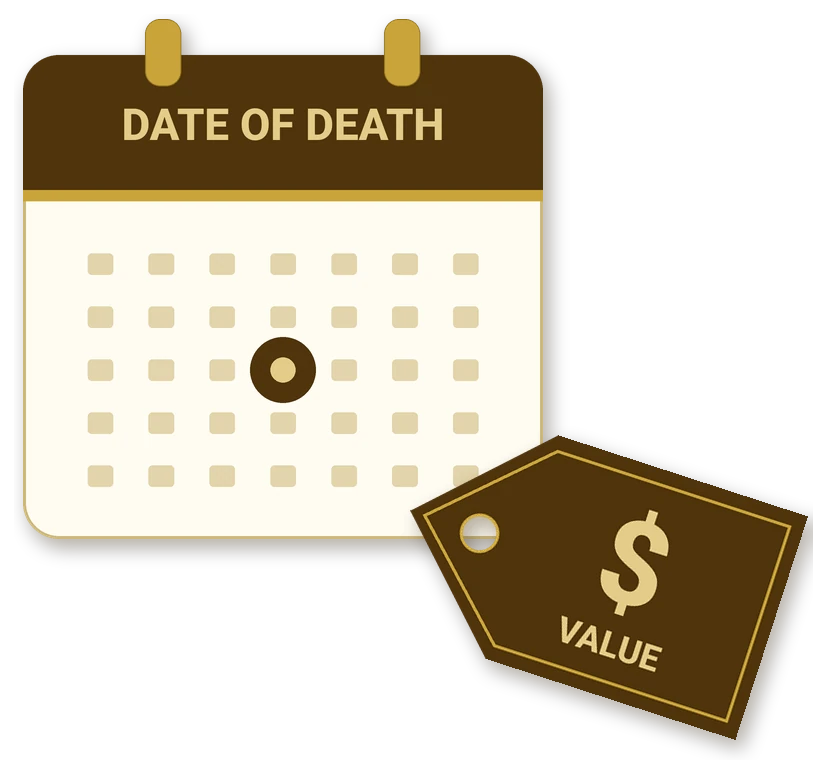
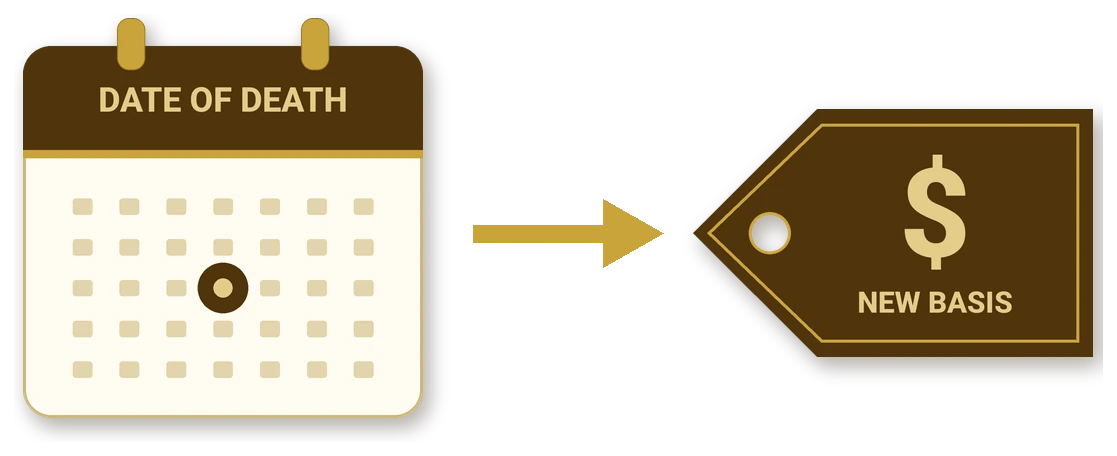
A calendar marked Date of Death with one day circled, beside a brown price tag with a dollar sign labeled ValueA Date of Death calendar with an arrow pointing to a value tag labeled New Basis

For estate purposes, inherited property is generally valued as of the date of death. That value often matters twice: once for the estate itself and again for the heirs. In many cases, heirs receive what is called a step-up in basis, meaning their cost basis becomes the value on the date of death rather than what the original collector paid decades ago. That can reduce or even eliminate the taxable gain when the coins are later sold. Our guide to the tax implications of liquidating bullion vs. rare coins in an estate explains how that basis, the collectibles tax rate and dealer reporting apply when an estate or its heirs sell. If your CPA is handling the estate, our CPA guide to step-up in basis and date-of-death values is written for them.

Coins and precious metals can be treated differently from stocks and other assets, and every estate is different, so this guide is general information, not tax or legal advice. Before you sell, talk with a CPA or an estate attorney about valuation, reporting and how the sale fits the rest of the estate. If they need a written valuation, ask about our IRS-compliant numismatic appraisals.

Decorative gold separator bar

Step 4: Sort Bullion, Rare Coins, Sets and Paper Money

Most inherited collections are a mix, and each part is valued a different way. Sorting into a few broad groups helps you understand what you have and spot the buyer who treats everything alike.

Bullion and Common Silver

A Heraeus 10 oz .9999 fine silver bar standing upright with a Credit Suisse 1 oz fine gold bar in front of it, at true relative sizeA Heraeus 10 oz silver bar lying sideways next to a smaller Credit Suisse 1 oz gold bar, at true relative size

Gold and silver bars, rounds and modern bullion coins such as American Eagles are priced mainly by their weight and purity, which are stamped on each piece along with the refiner’s name. Bars from well-known refiners such as Credit Suisse, PAMP, Johnson Matthey and Heraeus are easy to value, so keep any assay cards and original packaging with them. Our page to sell gold and silver bullion covers bars and rounds, and our guide on how to sell gold coins explains how metal value and collector premium work together.
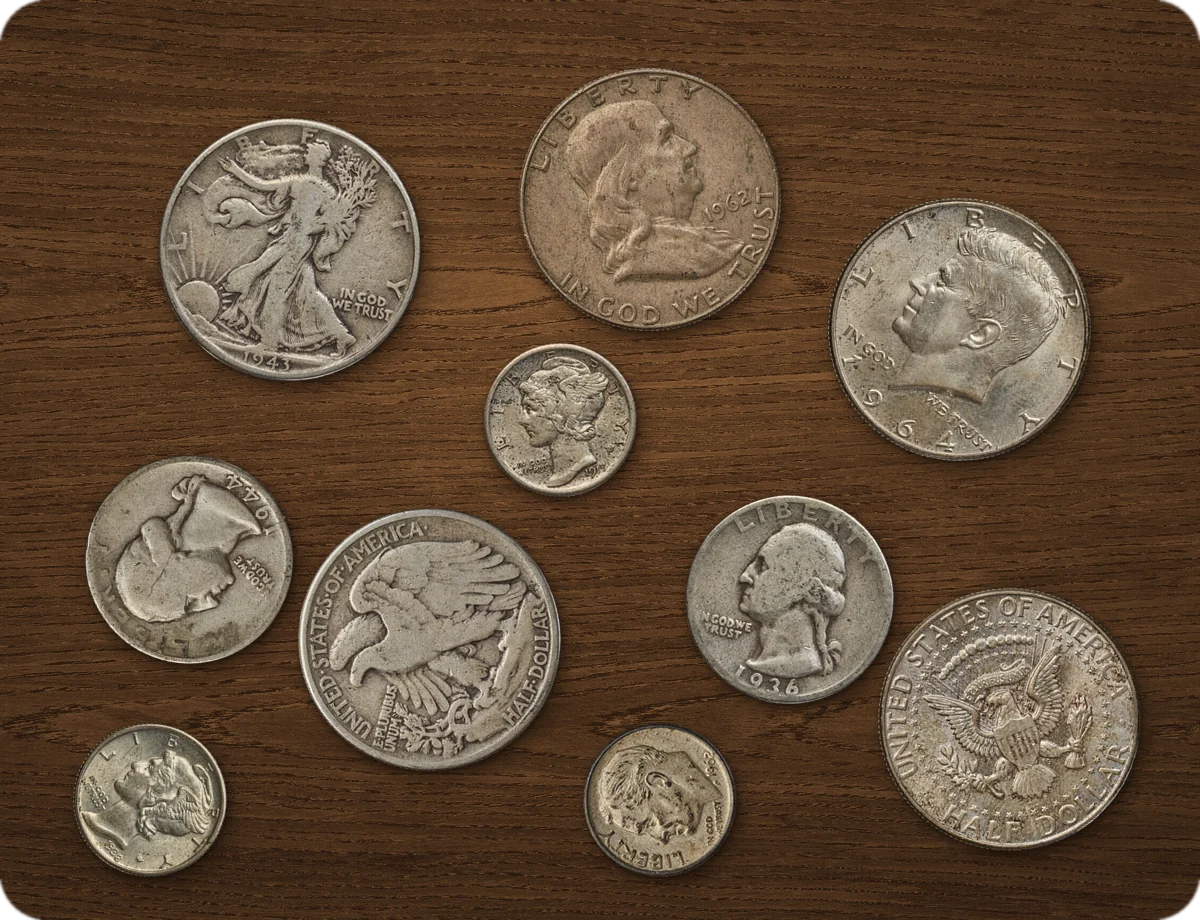
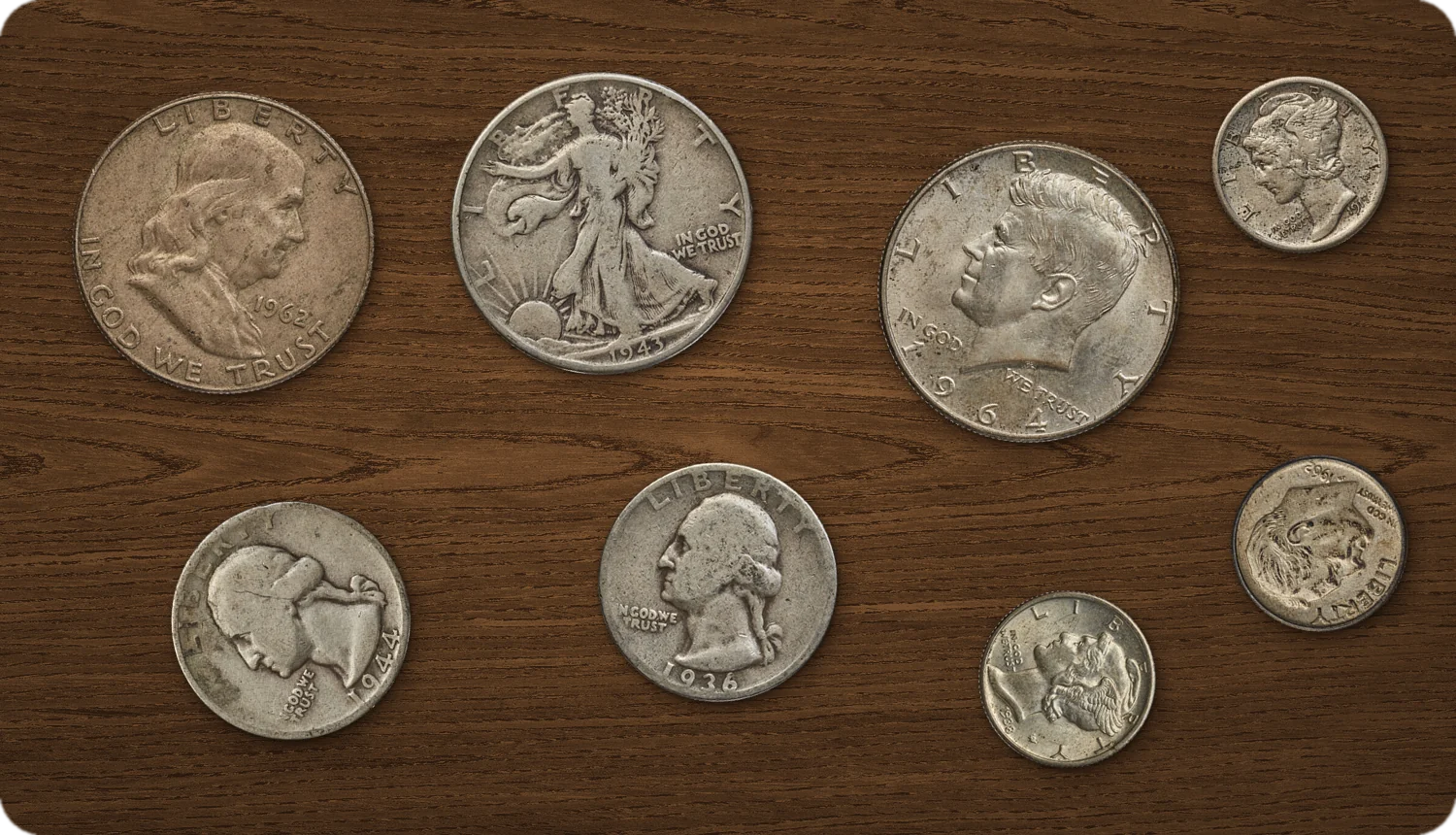
Pre-1965 90 percent silver coins laid flat on a walnut table, seen from above: Walking Liberty, Franklin and 1964 Kennedy half dollars, Washington quarters, and Mercury and Roosevelt dimes at true relative sizePre-1965 silver half dollars, quarters and dimes laid flat on a walnut table, seen from above at true relative size: Franklin, Walking Liberty and Kennedy halves, Washington quarters, Mercury and Roosevelt dimes

Dimes, quarters and half dollars dated 1964 and earlier are 90% silver, and many estates have them by the roll, the jar or the bag. Mercury and Roosevelt dimes, Washington quarters, and Walking Liberty, Franklin and 1964 Kennedy halves in circulated condition, along with common silver dollars, are usually priced by their silver content. Look for key dates and better grades before anything is sold by weight. Our guide on how to sell silver dollars explains how silver dollars are valued.

Rare and Collector Coins
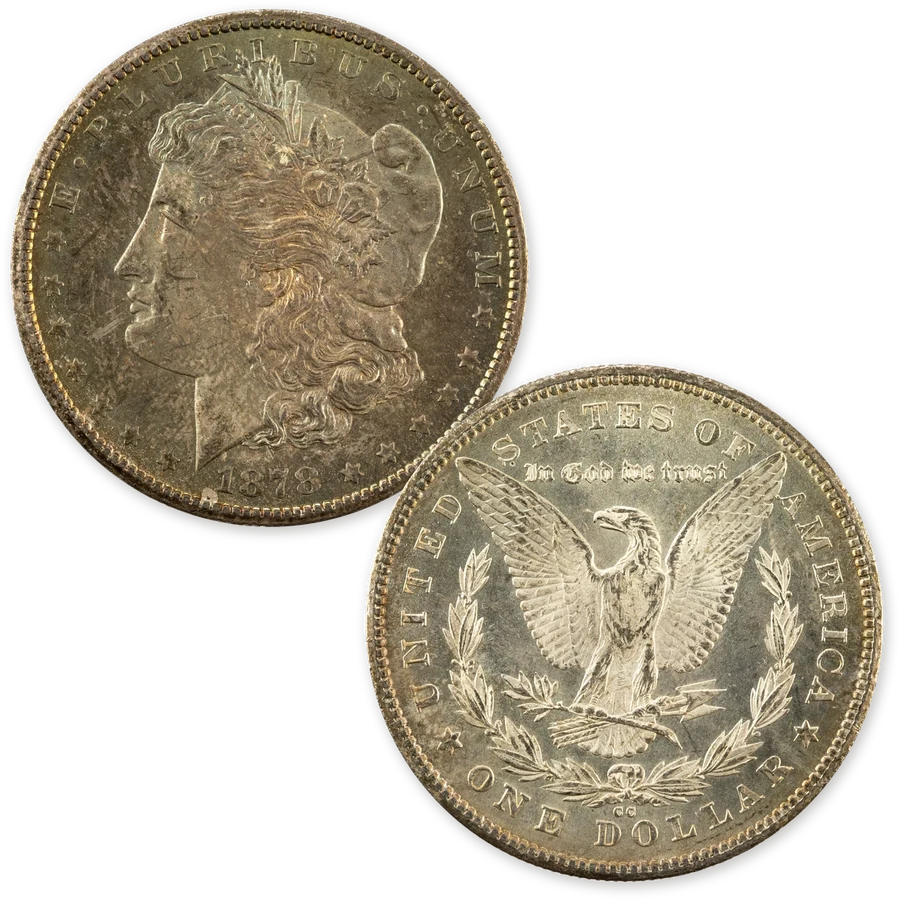
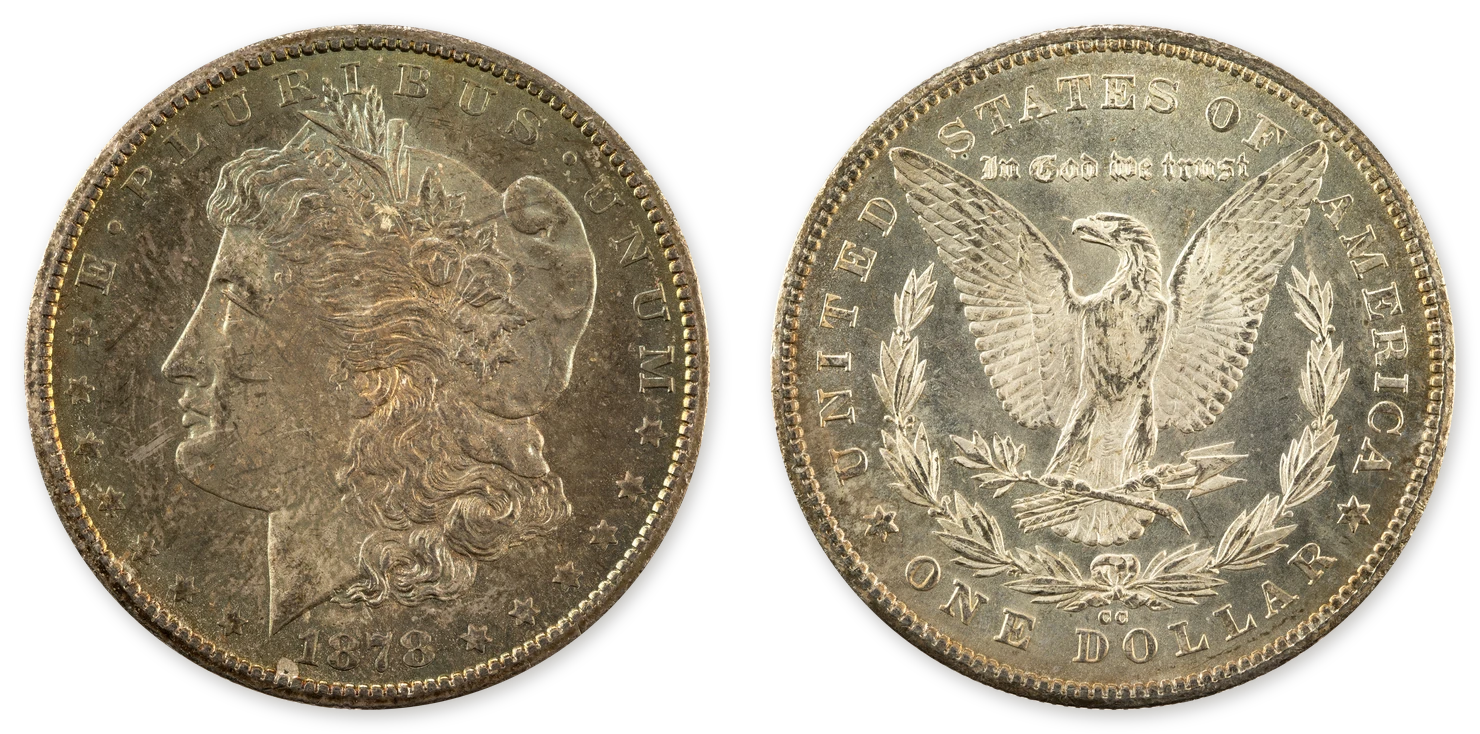
The obverse and reverse of an 1878-CC Morgan silver dollar set diagonally, showing the CC Carson City mint mark below the wreathObverse and reverse of an 1878-CC Morgan silver dollar with the CC Carson City mint mark below the wreath, at true relative size

Early copper, key-date cents and nickels, classic U.S. gold, Carson City dollars and coins in high grades are valued for scarcity and condition first. These coins are often worth well above melt, which is why they should never be sold by weight. The 1878-CC Morgan dollar shown here was struck at the Carson City Mint in Nevada; look for the small CC mint mark below the wreath on the reverse. See how we buy rare U.S. coins.

Certified Coins
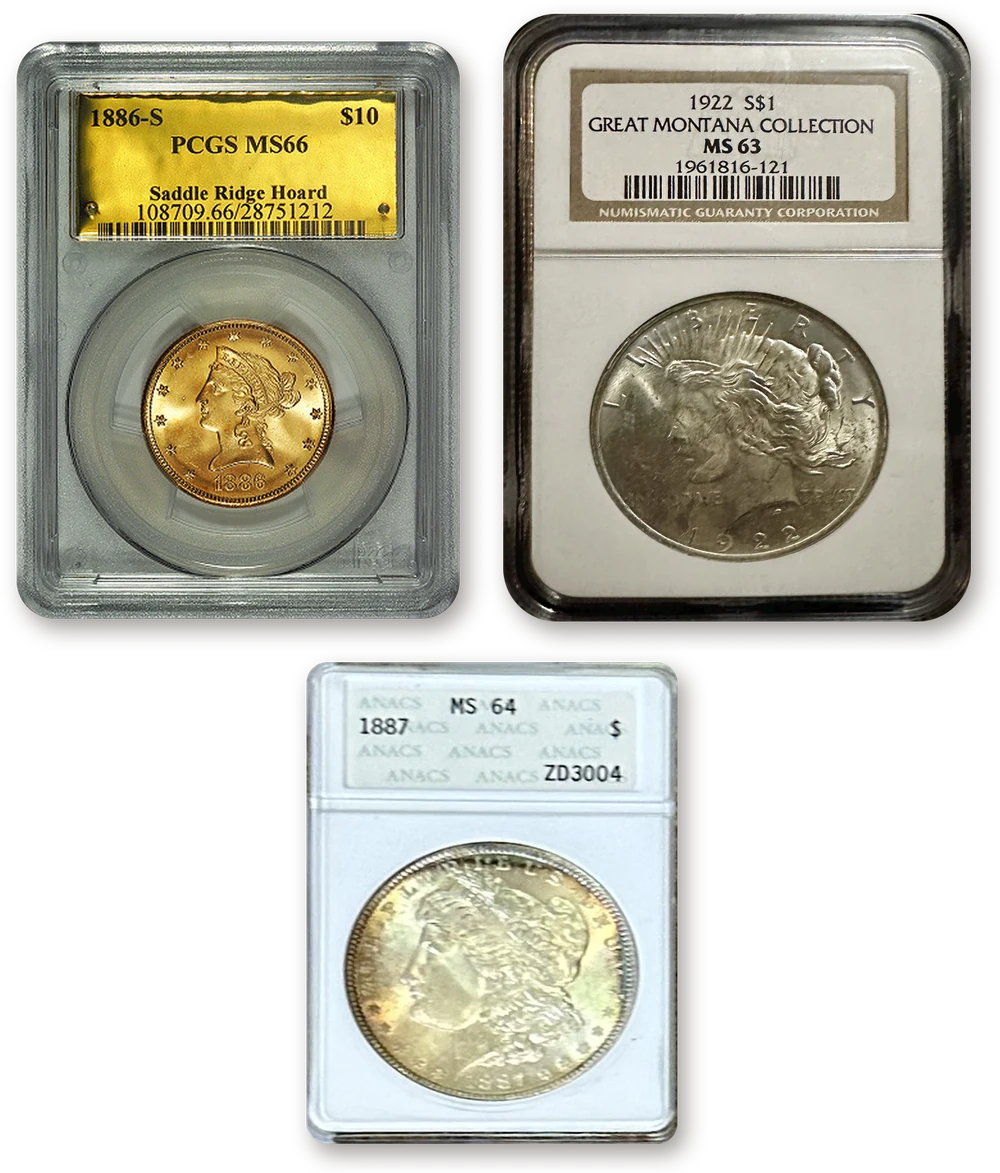
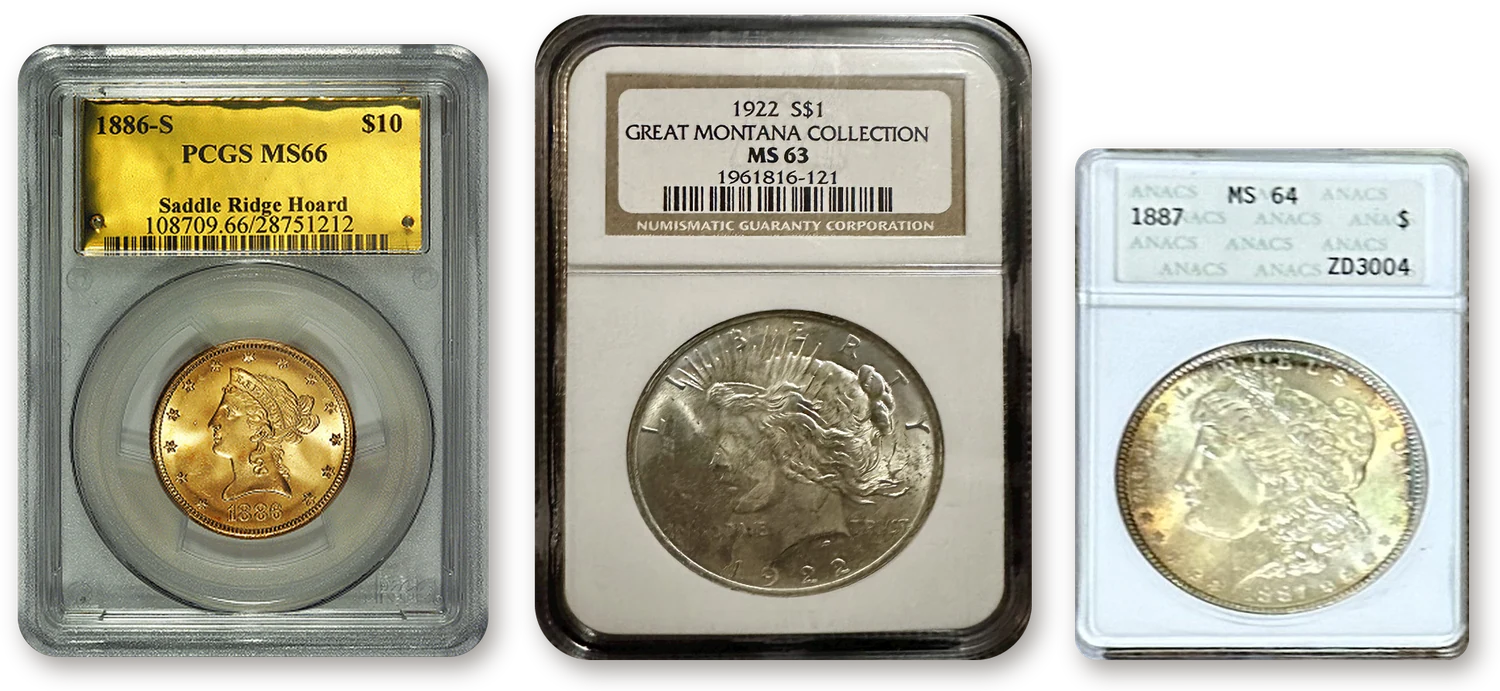
Three certified coins at true relative coin size: an 1886-S $10 Liberty gold eagle in a PCGS holder, a 1922 Peace dollar in an NGC holder and an 1887 Morgan dollar graded MS64 in an ANACS holderAn 1886-S $10 gold eagle in a PCGS holder, a 1922 Peace dollar in an NGC holder and an 1887 Morgan dollar in an ANACS MS64 holder, side by side

Coins sealed in holders from PCGS, NGC or ANACS have already been authenticated and graded, and the grade and certification number are printed on the label. Leave them in their holders, since breaking a coin out of its holder can cost far more than any grading fee. You can look up the certification number on the grading service’s website to confirm the coin, grade and holder match. Our guide to selling PCGS, NGC and ANACS coins explains more.

Mint Sets and Proof Sets
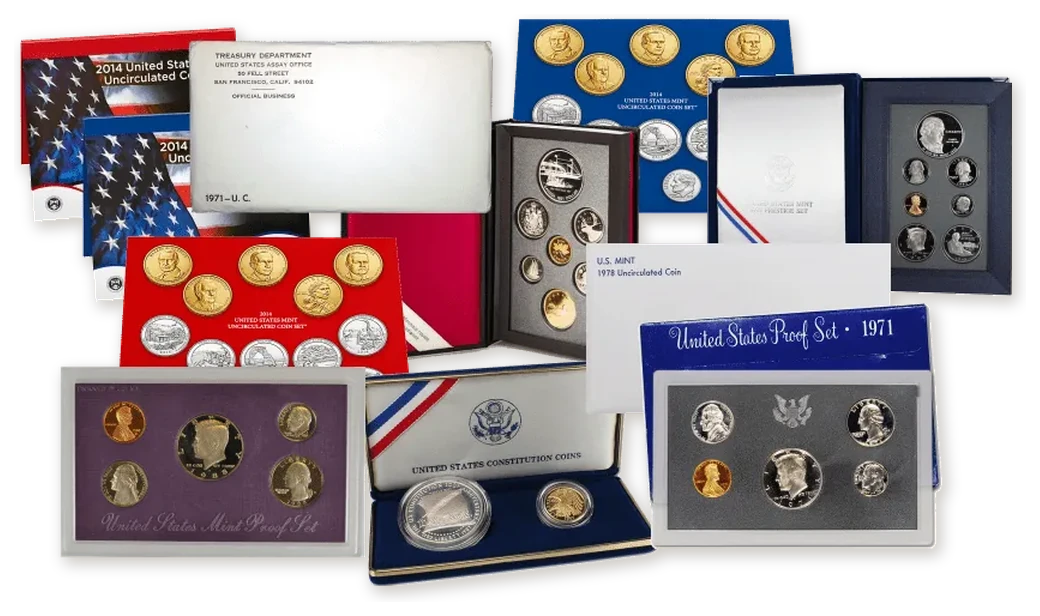
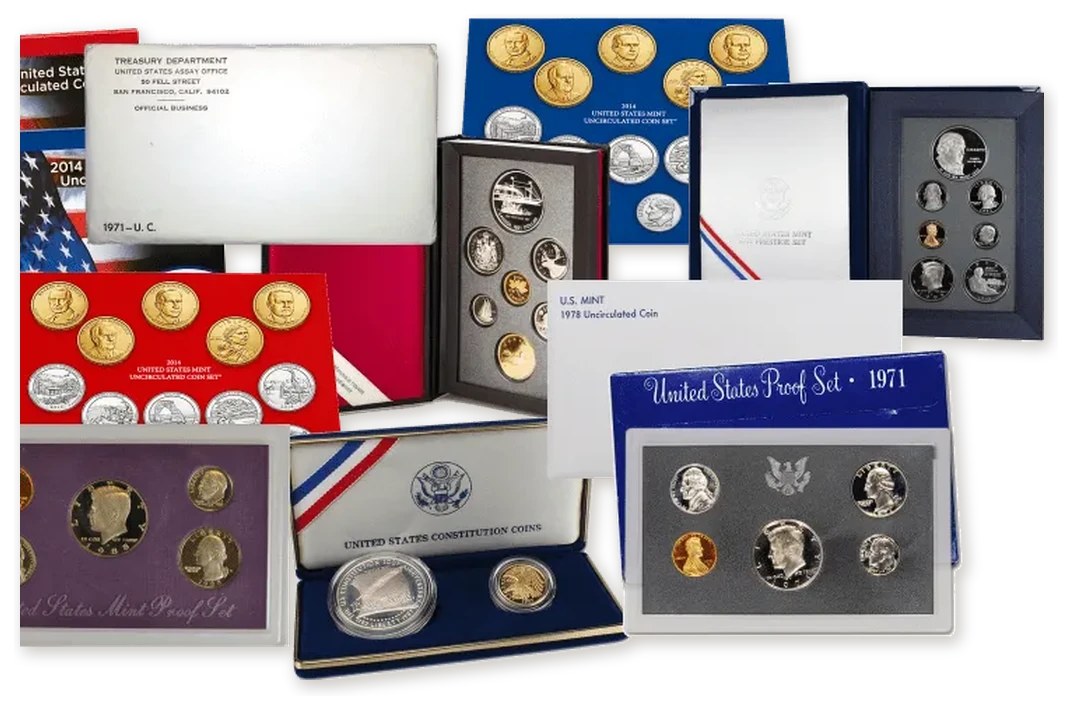
A group of U.S. Mint uncirculated sets and proof sets, including 2014 mint sets, a 1971 proof set, a Prestige proof set and a Constitution commemorative setU.S. Mint uncirculated sets and proof sets, including a 1971 proof set, a Prestige proof set and a Constitution commemorative set

Many collections include years of government mint and proof sets. Most modern sets trade at modest prices, while older silver sets and a few scarce years bring more. Keep them in their original government boxes, envelopes and lenses, with any certificates of authenticity, and see our page to sell proof sets and mint sets, or read our step-by-step guide on how to sell proof and mint sets.

Paper Currency
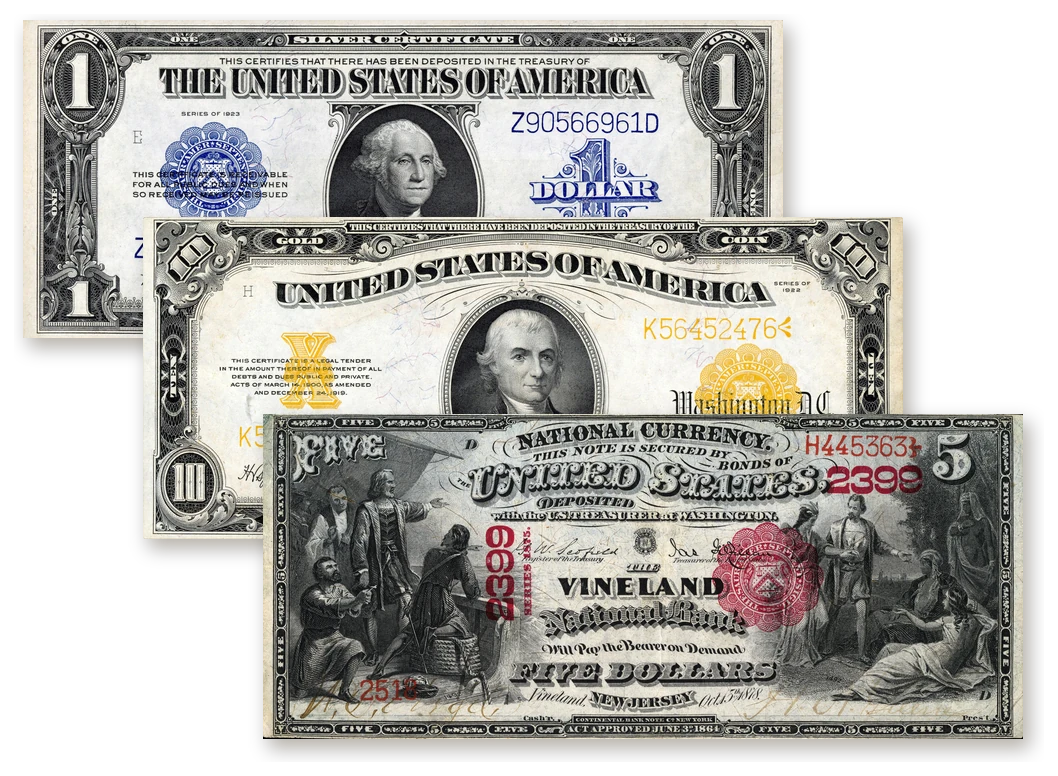
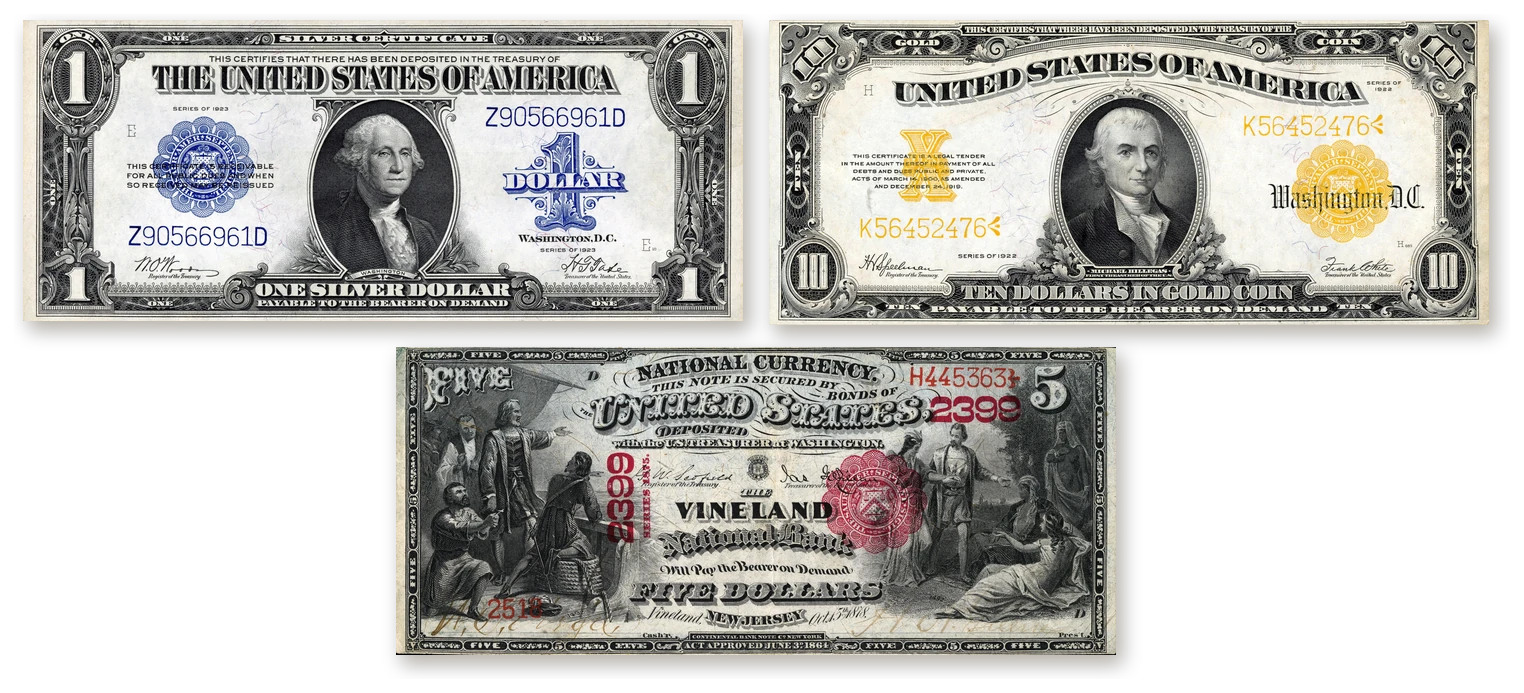
Three large-size U.S. notes overlapping at the same scale: a Series 1923 $1 silver certificate, a Series 1922 $10 gold certificate and an 1875 $5 National Bank NoteA 1923 $1 silver certificate and a 1922 $10 gold certificate side by side above an 1875 $5 National Bank Note, at the same scale

Old silver certificates, gold certificates, large-size notes and National Bank notes can be worth far more than face value, especially in crisp condition or with low serial numbers. Do not flatten, tape or press them. Learn more on our page to sell paper currency, or read our step-by-step guide on how to sell paper currency.

Decorative gold separator bar

Step 5: Compare Written, Itemized Offers

Getting two or three appraisals is normal, and a good dealer will welcome the comparison. The offers worth comparing are in writing and list each coin or group with its grade and price. An itemized offer shows that the buyer looked at every piece, and it lets you compare offers line by line. You can see a sample of our written offer in the steps below.

Use this checklist when the offers come in:

CheckA good offerA reason to keep comparing
The offerIn writing, itemized by coin or group, with gradesOne lump-sum number, or a verbal offer only
What it pays forDate, mint mark and grade, plus metal valueWeight or melt value only
The buyerLong track record, strong reviews, authorized PCGS, NGC and ANACS dealerLittle history, few reviews, no ties to the grading services
PaymentClear about how and when the estate will be paidVague about payment, or fees taken out of the offer
TimingGives you time to compare and decidePushes you to decide on the spot

American Rarities checks every box. We hold a 4.7-star Google rating and an A+ rating with the BBB, we are ANA Life Members, and we are an authorized PCGS, NGC and ANACS dealer. Read what other families say on our customer testimonials page, and see our article on mistakes to avoid when selling rare coins.

Decorative gold separator bar

Ready to Sell Your Inherited Coins?

Whether you inherited a single coin or an entire estate collection, we have helped families, executors and attorneys since 1990, and we would be glad to help you. For a big estate, we can review the whole collection at once, so the heirs do not need to sort it first.

How to Sell Your Inherited Coins to American Rarities
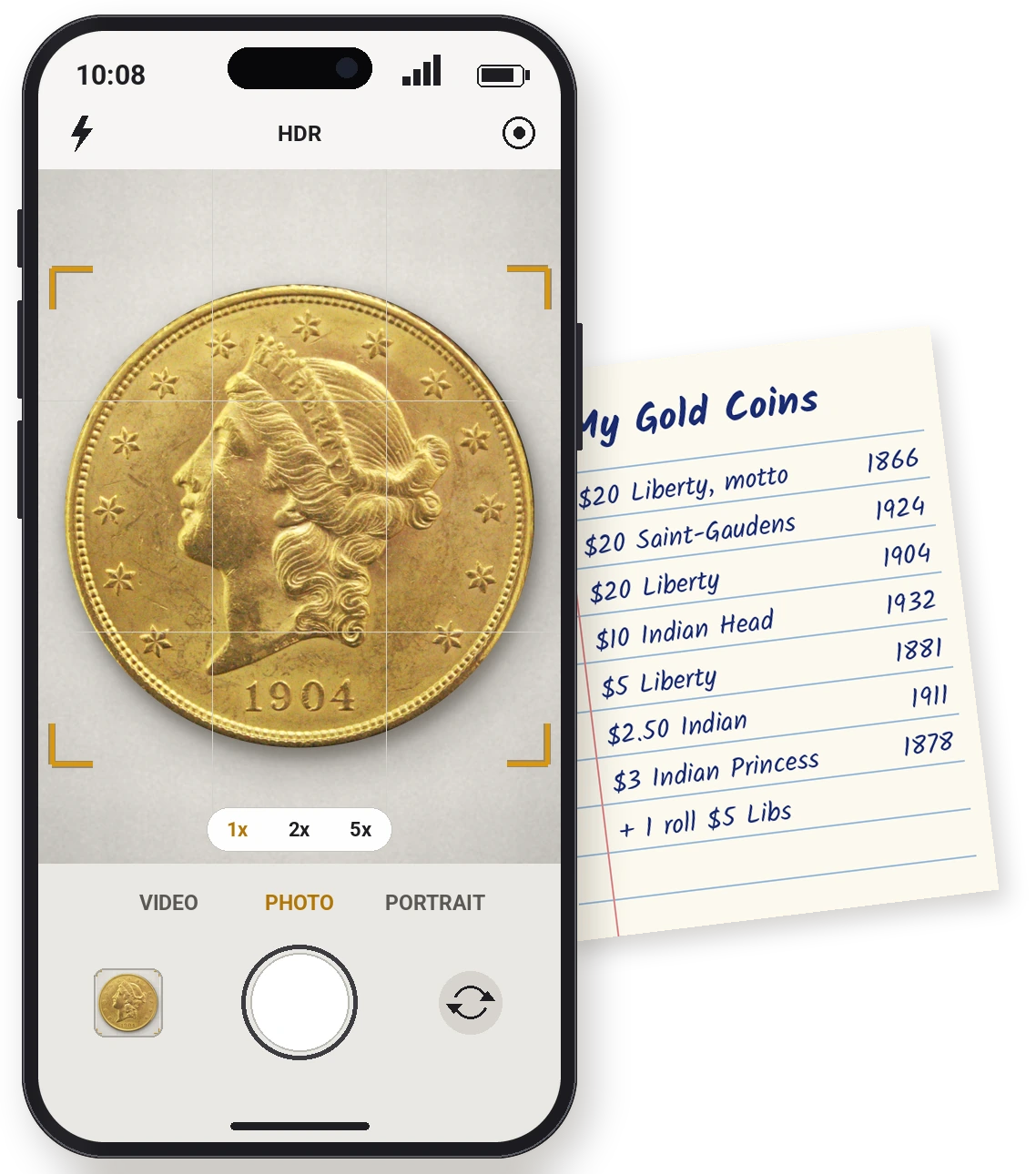
Smartphone with a light camera screen photographing a 1904 Liberty Head $20 gold double eagle, a regular business strike, in front of a handwritten list of gold coins to sellHandwritten list of gold coins to sell beside a smartphone with a light camera screen showing a 1904 Liberty Head $20 double eagle, a regular business strike
1

Send Photos and/or a List

Photograph the front and back of the coins you think matter most, in good light. For a large estate, an inventory list with a few photos of the albums, boxes and holders is enough to start. Text them to 720-600-4740, email staff@americanrarities.com or use the form further down this page. Our tips on what photos to take can help.

A sample American Rarities written appraisal and offer sheet for an estate collection, itemized by item, grade and offer, with an Eschenbach 5X loupeA sample American Rarities written appraisal and offer listing each item with its grade and offer, and a total offer
2

Get Your Free Written Offer

We send you a free, no-obligation written offer that lists each coin or group with its grade and our price, like this sample (the figures are for illustration only). Appraisals are usually done within 24 hours, and you are welcome to compare our offer with others.
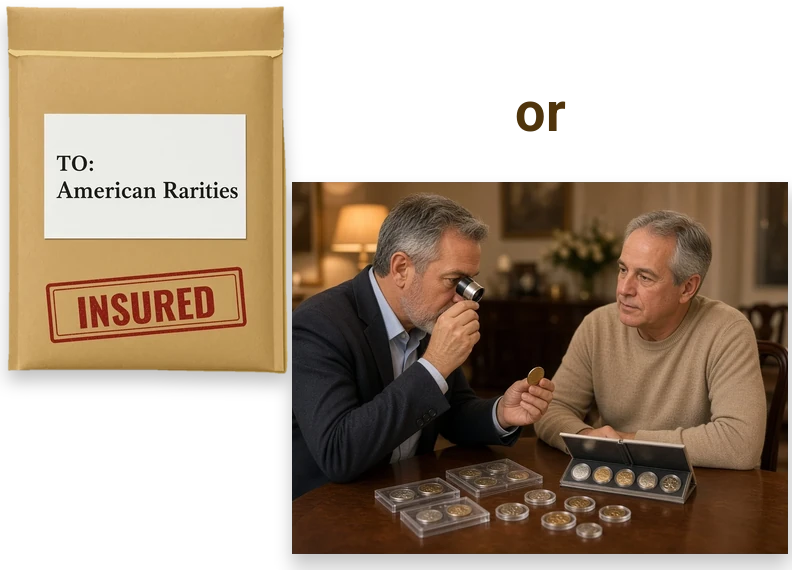
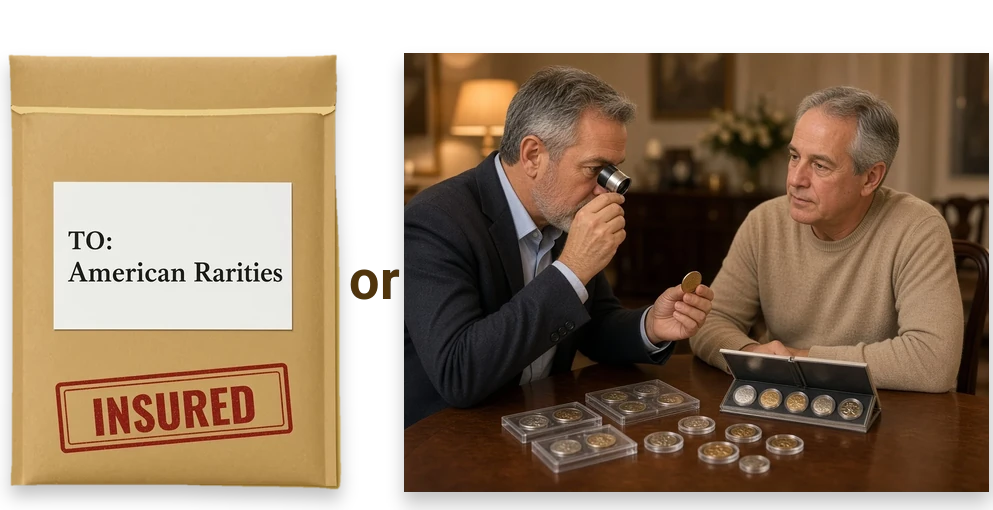
Insured padded mailer addressed to American Rarities, the word or, and a full rectangular photo of an American Rarities buyer examining a coin with a loupe at a seller's dining room tableInsured padded mailer addressed to American Rarities beside a full rectangular photo of an American Rarities buyer examining a coin with a loupe at a seller's dining room table
3

Ship Your Coins or Meet in Person

Ship your coins to us fully insured at our expense, or for larger estates we can meet you at your bank. If you decline our offer, we return your items fully insured.

A banded stack of $100 bills, an American Rarities check, and two bank icons labeled ACH and Wire, showing the ways we pay for inherited coinsA banded stack of $100 bills, an American Rarities check and two bank icons labeled ACH and Wire, in a row
4

Get Paid

When you accept our offer, we pay you immediately by cash, check, ACH or wire, whichever you prefer. There is never a fee for our appraisal.

You can also call 800-622-5680. Calls go to our answering service, so leave a message and we will call you back. Or visit our contact a rare coin buyer page.
Decorative gold separator bar

How to Sell Inherited Coins: Frequently Asked Questions

What should I do first with inherited coins?

Leave the coins as they are. Do not clean them, do not split them up among relatives and keep them in their original holders. Store the collection somewhere secure, make a simple inventory and then get a professional appraisal.

Who can sell coins from an estate?

Usually the executor named in the will, a court-appointed administrator or the trustee of a living trust. If the estate is in probate, check with the estate attorney before selling.

Do I pay taxes when I sell inherited coins?

It depends. Inherited property often receives a step-up in basis to its value on the date of death, which can reduce the taxable gain, but coins and precious metals can be treated differently. This is general information, not tax advice, so talk with a CPA or estate attorney.

Are inherited coins worth more than melt value?

Often, yes. Common silver and bullion are priced mainly by metal content, but rare dates, classic gold, certified coins and high-grade pieces are frequently worth well above melt. Every coin should be looked at individually.

Should I get more than one appraisal?

Yes. Comparing offers from two or three reputable buyers is the best way to know the estate is being paid fairly, and a good dealer will never pressure you to decide on the spot.

Do you buy mint sets, proof sets and paper money?

Yes. We buy U.S. mint and proof sets, silver and gold certificates, large-size notes and National Bank notes, along with coins and bullion. Keep everything in its original packaging.

How do you pay when we sell an inherited collection?

Right away. Payment is immediate once you accept, and the estate chooses the method: cash, check, ACH or wire.

How should heirs split the proceeds?

Selling the collection as one group and dividing the money is often the simplest and fairest way. An itemized written offer gives every heir the same information.

Decorative gold separator bar

Free Inherited Coin Appraisal and Offer

Email, Text, or Use This Form To Send Us Your Inventory List or Pictures


Upload clear photos of fronts and backs and we'll reply with a free appraisal.

    Decorative gold separator bar