
The Short Answer
A probate inventory of coins is part of a larger job: in most states, the executor or personal representative must prepare an inventory of the estate’s assets, valued as of the date of death, and file it with the court or give it to the heirs within a deadline set by state law. Coins are personal property, and they belong on that inventory at fair market value.
A written appraisal is the usual way to support those values. If the estate must file Form 706, the same values feed the return and set the heirs’ basis, so it pays to get the inventory right the first time.
Not tax or legal advice. This guide is general information about federal rules as of November 2026. Tax law changes and every situation is different, so confirm the details with your CPA, tax attorney or estate attorney before you file, sign or transfer anything.
Six Steps to a Probate Inventory of Coins
- Secure the coins. Change locks or move the collection to a safe place, limit access and check that insurance is still in force. Safe deposit box rules after a death vary by state and bank.
- Make a working list. Count and photograph albums, rolls, proof and mint sets, certified coins and loose coins. Do not clean coins or remove them from holders.
- Separate the types. Note bullion, rare coins, paper money and any coins that are only worth face value. They are valued in different ways.
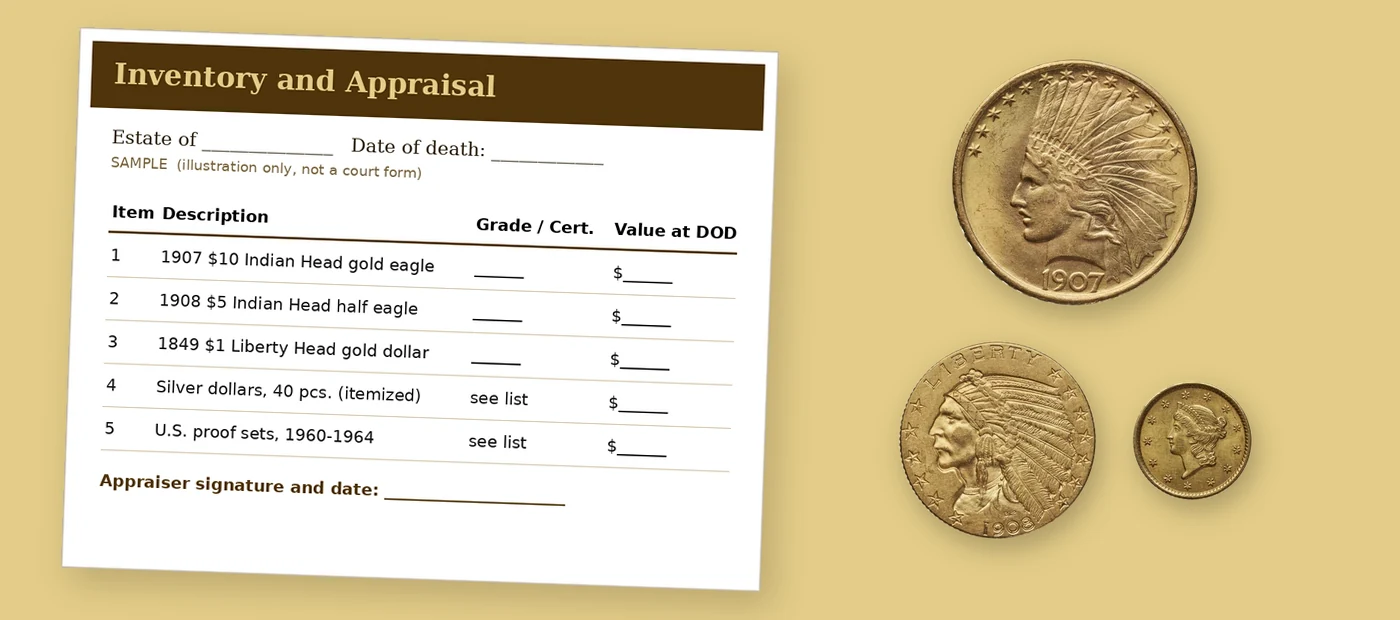
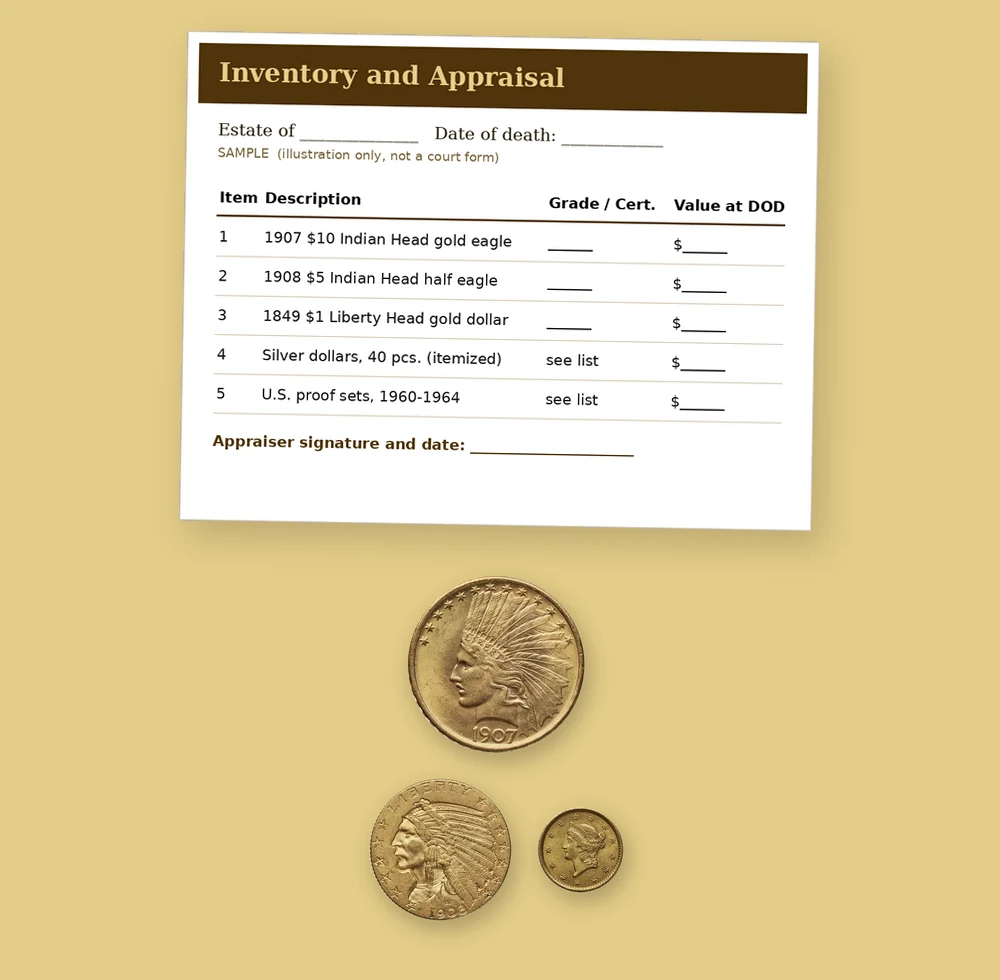
- Get a date-of-death appraisal. Ask for an itemized written report with the date of death as its effective date.
- Complete the inventory. Follow your court’s form and rules. Some courts accept a category total with the appraisal attached; others want each item listed.
- Keep the file. If more coins turn up later, most states provide for a supplemental or amended inventory.
Our guide to old coins found in an estate has more on the first three steps.
Date-of-Death Value
Coins are valued at fair market value on the date of death: the price a willing buyer and a willing seller would agree on, both reasonably informed. Bullion is tied to spot prices on that date. Rare coins depend on date, mint mark, grade, certification and recent comparable sales, and a price guide or asking price is not the same thing. An executor who files Form 706 may elect the alternate valuation date six months after death, if that lowers both the gross estate and the tax.
A professional appraisal protects the executor, who owes the heirs a duty of care. Our red flags checklist shows what a weak appraisal looks like.
What the Court Needs and What the IRS Needs
| Court inventory | IRS Form 706 (if required) | |
|---|---|---|
| Who requires it | State probate law and the court | Estates above the federal filing threshold |
| Value | Date-of-death fair market value | Date-of-death value, or the alternate valuation date |
| Detail | Varies; some courts accept category totals | Itemized on Schedule F, with an expert appraisal when collections are worth more than $3,000 |
| Who sees it | The court and the heirs, and it may be public | The IRS; beneficiaries receive basis information on Form 8971 |
Keep the court inventory, the Form 706 schedules and the heirs’ basis records consistent. Our Form 706 coin appraisal checklist covers the federal side, and the IRS estate tax overview and Publication 559 explain an executor’s federal duties.
Some states use court-appointed appraisers for non-cash assets. California, for example, uses probate referees. Small estates may qualify for a simplified affidavit process, where the value of the coins can decide which process applies. Your probate attorney will know your state’s rules. Our page for the probate and estate lawyer explains how we support counsel.
Selling Coins During Probate
Executors often sell coins to pay expenses or to avoid dividing hundreds of small items. Depending on the state and how the estate is administered, a sale may need court approval or notice to heirs. Get written offers, keep them in the file and have the payment go to the estate account. Our page on estate appraisals and liquidation and our guide how to sell inherited coins explain the process. If the heirs want to keep the coins, see dividing a coin collection among heirs.
How American Rarities Helps Executors
Founded in 1990, American Rarities has purchased over $400 million in rare coins, bullion and collectibles. We are ANA Life Members, an authorized PCGS, NGC and ANACS dealer, rated A+ by the BBB and 4.7 stars on Google. We can:
- Prepare a formal, itemized date-of-death appraisal report for any past date, for a fee when there is no sale.
- Give a free appraisal and written offer if the estate is considering a sale, and pay the estate by check, ACH or wire.
- Work with the estate’s attorney and CPA so item numbers match the inventory and the tax schedules.
To get started, text photos to 720-600-4740, email staff@americanrarities.com or use the form below.
Three Steps for an Executor

Send Photos and/or a List
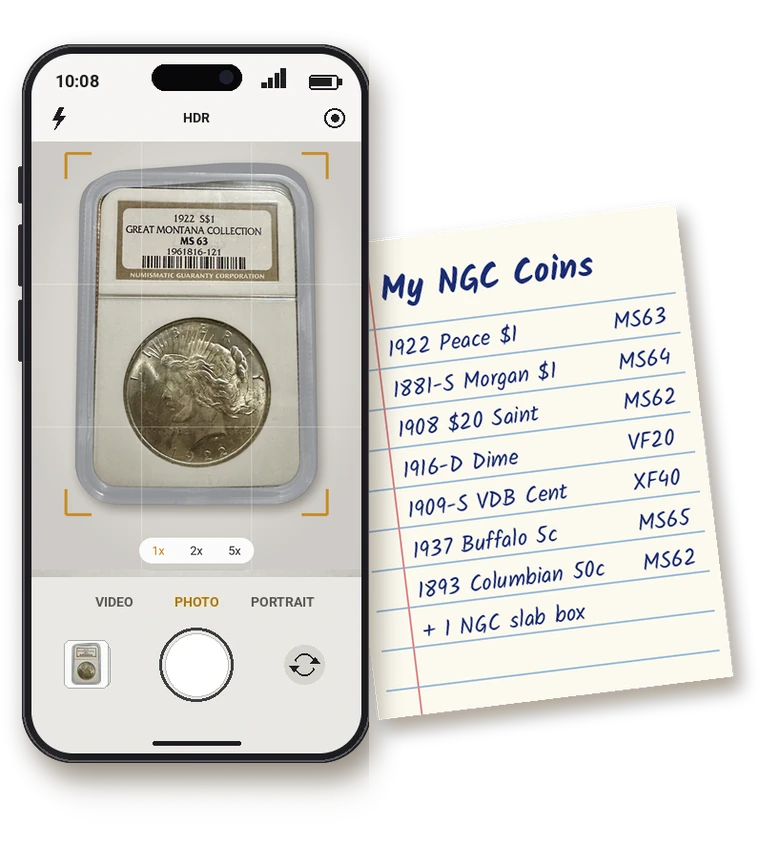
Send photos or the working list: text photos to 720-600-4740, email staff@americanrarities.com or use the form below. Tell us the date of death and whether you need a formal report, an offer or both.
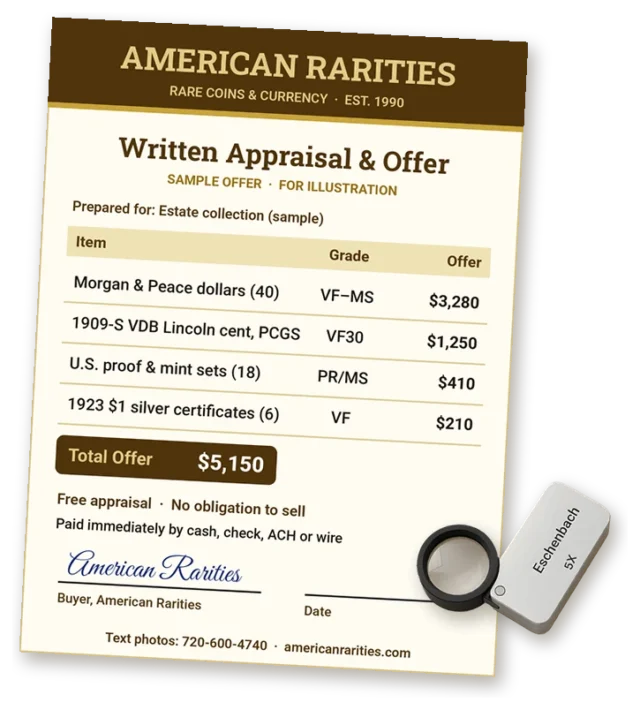

Free Appraisal and Written Offer
Appraisals are usually done within 24 hours, though larger collections may take longer. If so, we’ll let you know. A formal date-of-death report for the court and the IRS is available as a separate document.


Ship or Meet
Ship fully insured at our expense, or meet us in person. We can meet you at your bank. If you decline our offer, we return your items fully insured.
Related Guides
This guide is part of our series for CPAs, attorneys, executors and families. Every estate guide we publish is collected on our coin appraisals for CPAs and estates page.
More Guides in This Series
- Donating Coins to Charity: Form 8283 and Qualified Appraisals
- Gifting Coins: Form 709, the Annual Exclusion and Carryover Basis
- Dividing a Coin Collection in Divorce
- Gold IRA Coins: IRS Rules on Eligible Coins and Collectibles
- Dividing a Coin Collection Among Heirs
- Coin Insurance Appraisals: Replacement Value vs Fair Market Value
Related Estate and Tax Guides
Probate Inventory of Coins: Frequently Asked Questions
Does a probate inventory of coins require a professional appraiser?
It depends on the state. Some states use court-appointed appraisers, and many executors hire one to support the values. If the estate files Form 706 and the collection is worth more than $3,000, an expert appraisal is expected.
What date are coins valued on for probate?
The date of death. For Form 706, the executor may instead elect the alternate valuation date six months after death if it lowers both the gross estate and the tax.
What if more coins are found after the inventory is filed?
Most states allow a supplemental or amended inventory. Add the coins with their date-of-death value and keep the appraisal in the file.
How are bullion coins valued for the inventory?
By the market price on the date of death, based on metal content and the coin’s premium. They should still be itemized with quantities.
Should the executor clean the coins before the appraisal?
No. Cleaning can sharply reduce value. Leave coins in their original holders and packaging.
Can you appraise estate coins without buying them?
Yes. We prepare formal, itemized date-of-death appraisal reports for any historical date. When there is no plan to sell, we charge a fee; if the estate is considering a sale, our appraisal and written offer are free.
Free Appraisal for Estate Coins in Probate
Email, Text, or Use This Form To Send Us Your Inventory List or Pictures
Email: staff@americanrarities.com | Text: 720-600-4740