
What Form 706 Requires for a Coin Collection
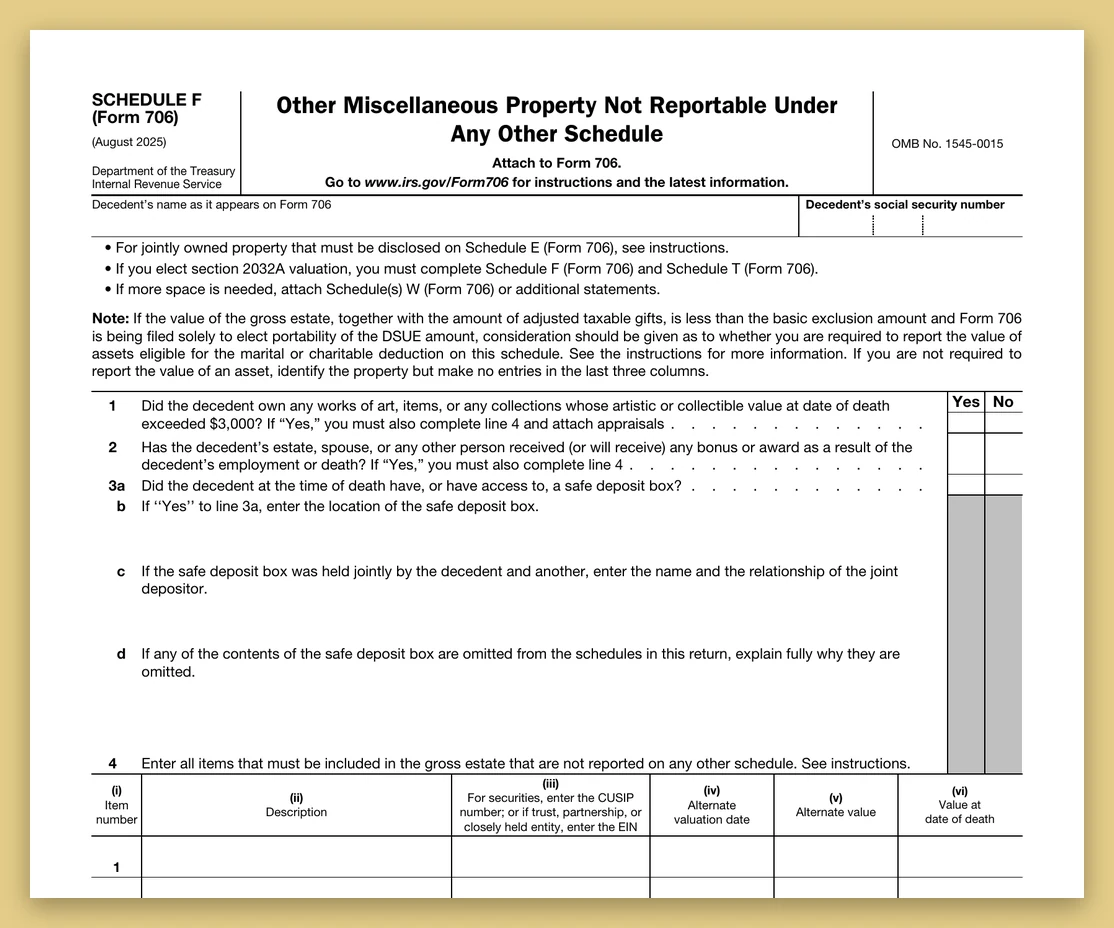
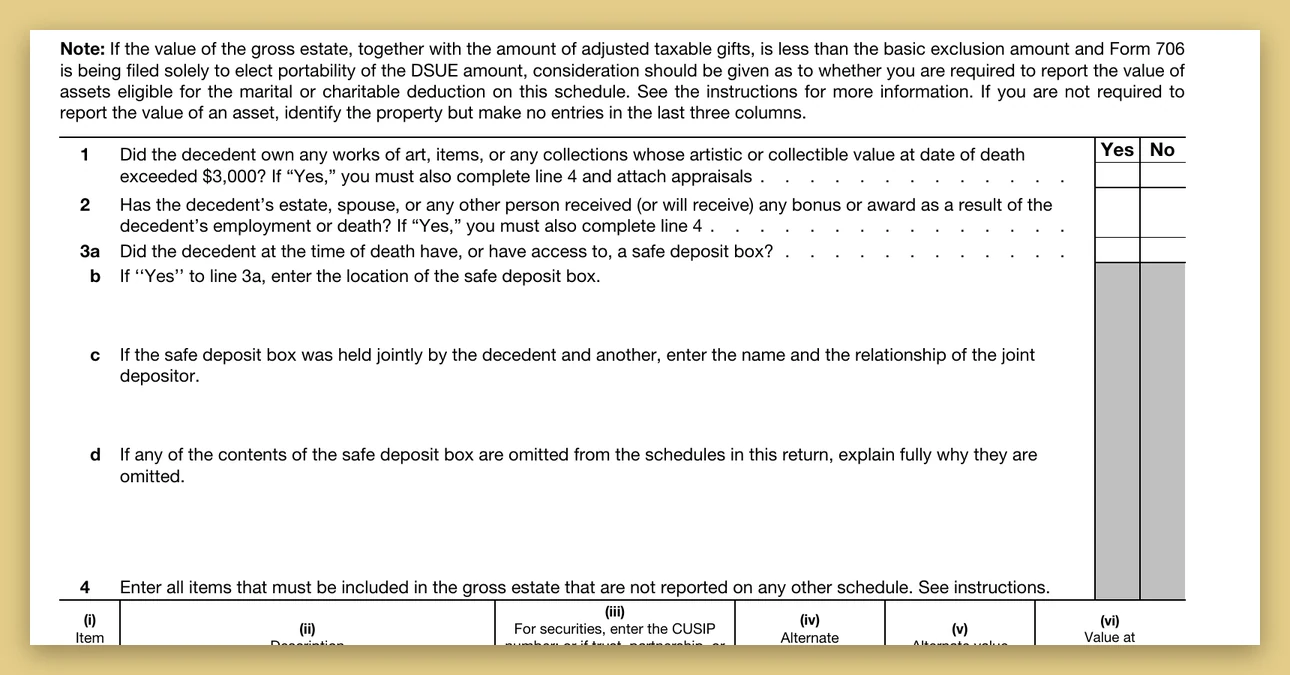
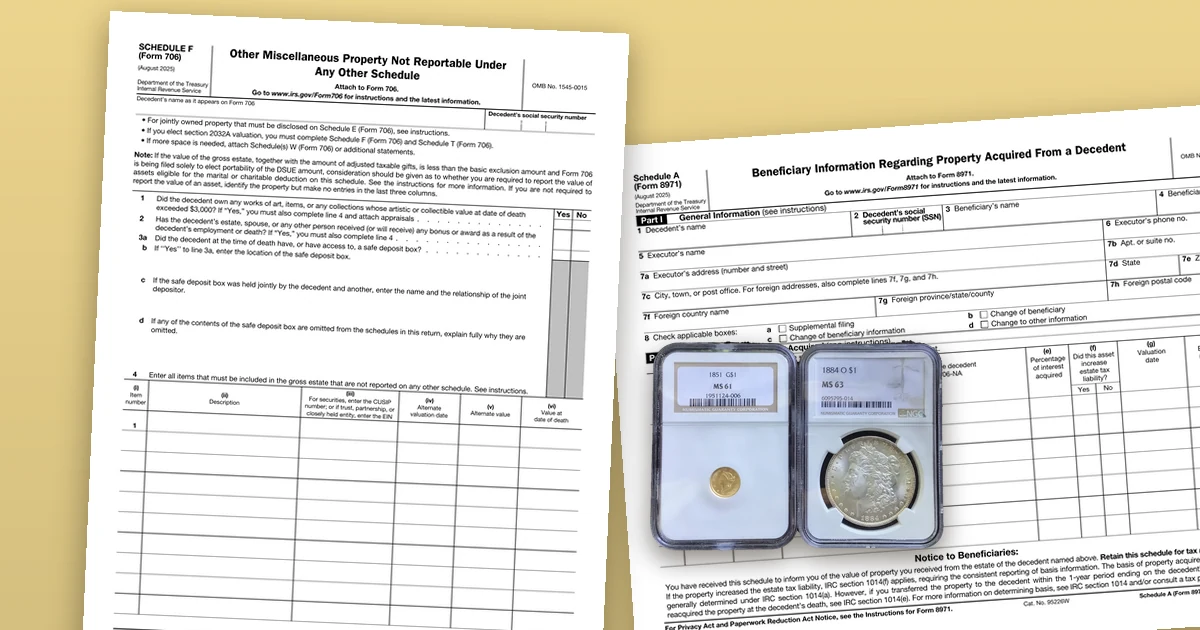
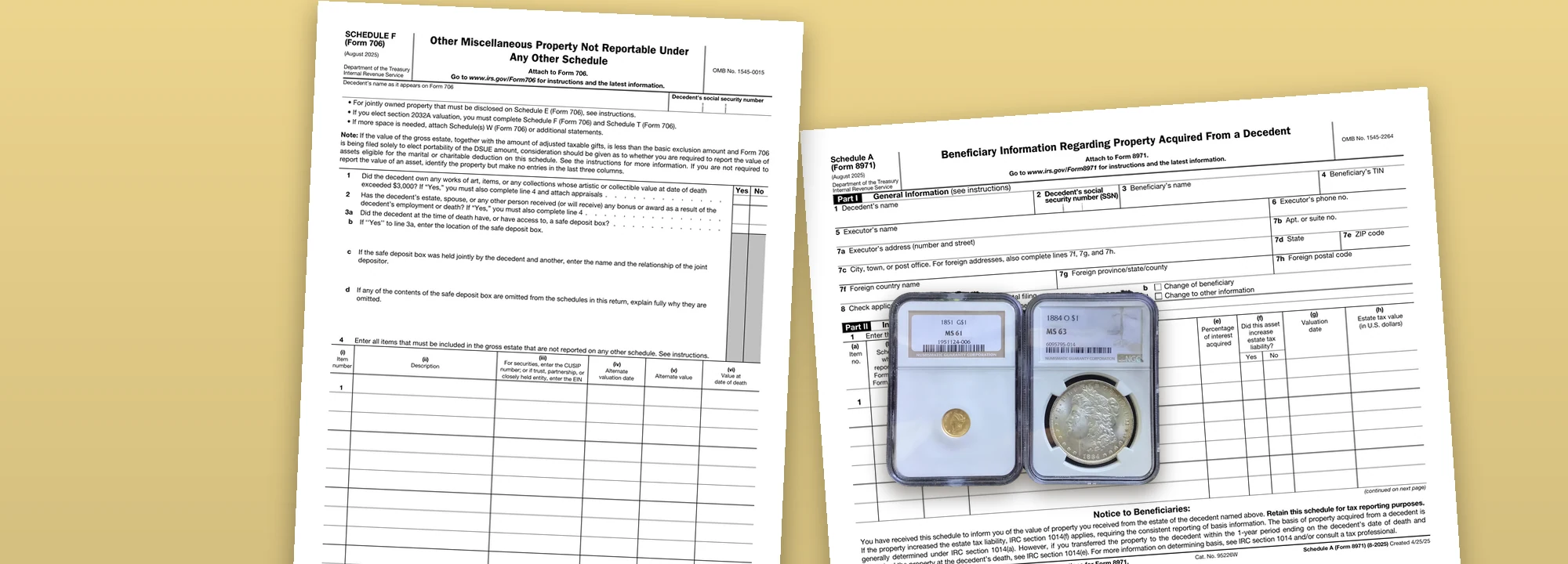
Coins are usually reported on Schedule F (Form 706), Other Miscellaneous Property. Three parts of the August 2025 revision matter most for a collection:
- Line 1. Did the decedent own any works of art, items or collections whose artistic or collectible value at death exceeded $3,000? If yes, complete line 4 and attach appraisals.
- Line 3. Did the decedent have a safe deposit box, or access to one? If any contents are left off the return, the estate has to explain why. Coins in a bank box are a common gap.
- Line 4. Each item is listed with a description, the alternate valuation date and value if elected, and the value at date of death.
Treasury Regulation 20.2031-6 adds the detail. Personal effects should be itemized, and articles in the same room worth no more than $100 each may be grouped. When articles of marked artistic or intrinsic value, which the regulation says include coin or stamp collections, total more than $3,000, the appraisal of an expert or experts, under oath, must be filed with the return. The executor also signs a statement under penalties of perjury about the completeness of the list and the disinterested character and qualifications of the appraiser. To sell or distribute coins before an IRS review, paragraph (c) calls for notice to the IRS with an appraisal under oath.
If the family is still finding coins, our guide on what to do with old coins found in an estate helps them sort and list them.
Fair Market Value, Valuation Dates and Coin Type
Under Treasury Regulation 20.2031-1(b), fair market value is the price at which property would change hands between a willing buyer and a willing seller, neither under compulsion and both with reasonable knowledge of the facts. It is not a forced-sale price, and it is set in the market where the item is most commonly sold to the public. Our CPA guide to step-up in basis and date-of-death values covers the retail versus wholesale question in depth.
Date of Death or Alternate Valuation Date
Under IRC section 2032 and Treasury Regulation 20.2032-1, the executor may elect to value the gross estate six months after death. Coins sold, distributed or otherwise disposed of within those six months are valued as of that date. The election must reduce both the gross estate and the estate and generation-skipping transfer tax, and it covers all estate property. Ask for both values when a taxable estate holds a lot of bullion.
Bullion Versus Collectible Coins
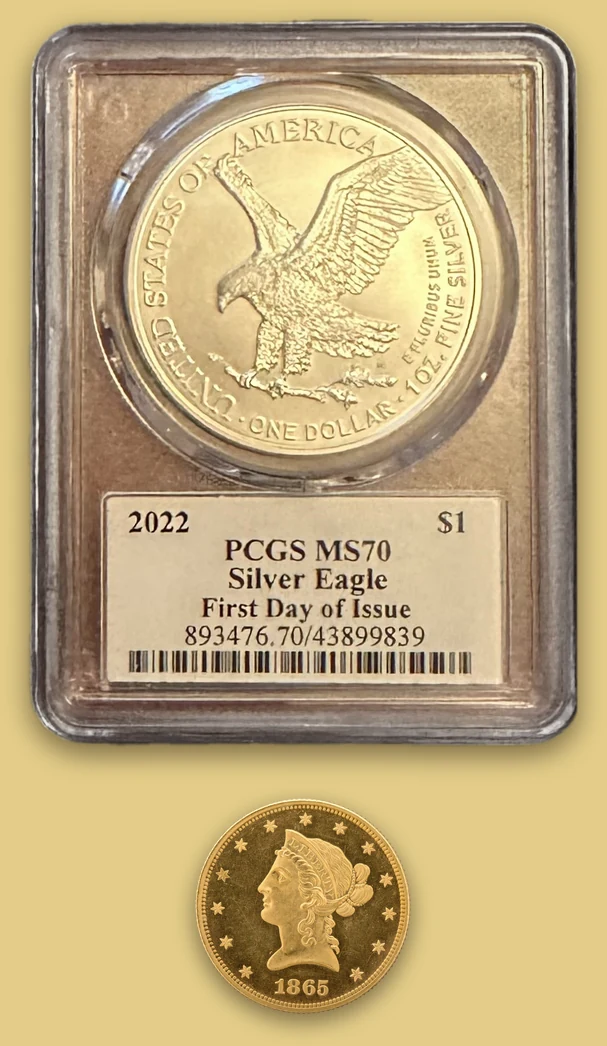
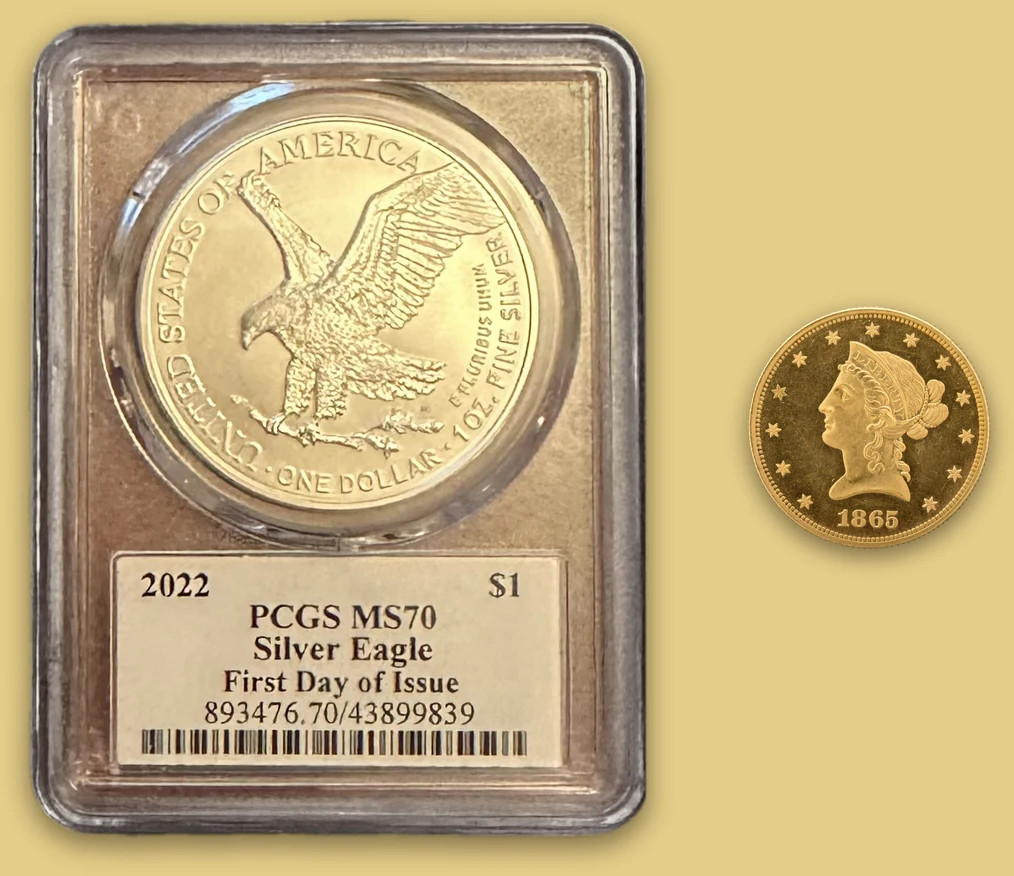
The appraisal should sort the inventory first, because the method depends on the coin:
- Bullion. Bars, rounds and modern bullion coins are valued mainly by fine metal content: weight times the metal price on the valuation date, plus or minus the premium at which that product trades. The report should name the price source.
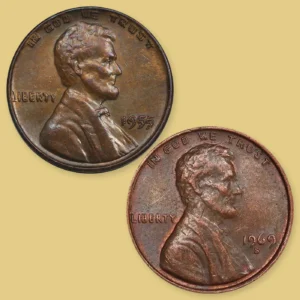
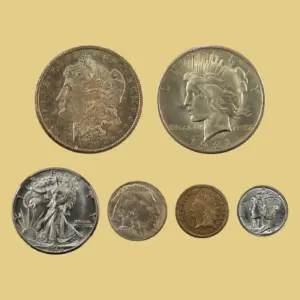
- Collectible coins. Rare coins are valued by date, mint mark, variety, grade, certification and demand, using comparable sales. Metal value says little about them.
For heirs, see our guide to the tax implications of liquidating bullion vs. rare coins in an estate.
Cost Basis, Step-Up in Basis and Form 8971
Under IRC section 1014(a), the basis of inherited coins is generally their fair market value at death, or on the alternate valuation date if elected. One exception is section 1014(e): coins an heir gave the decedent within one year of death and got back keep the decedent’s basis.
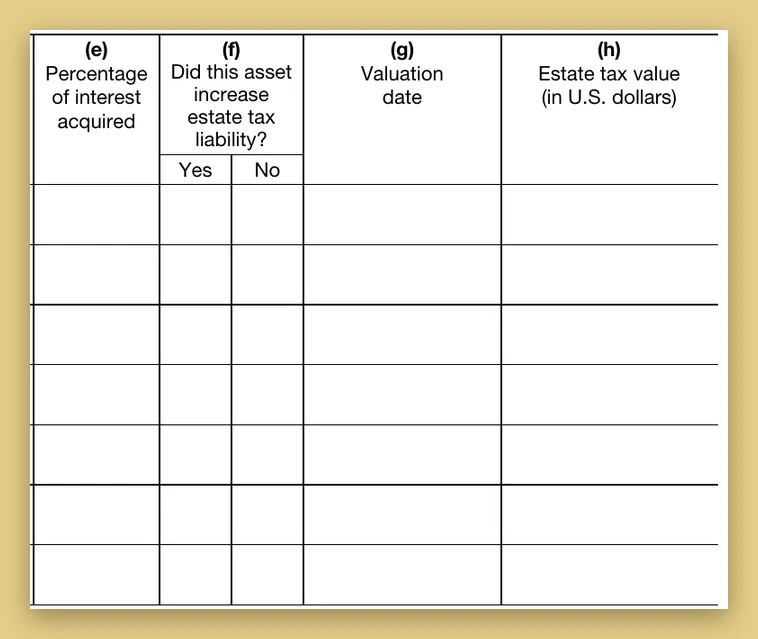
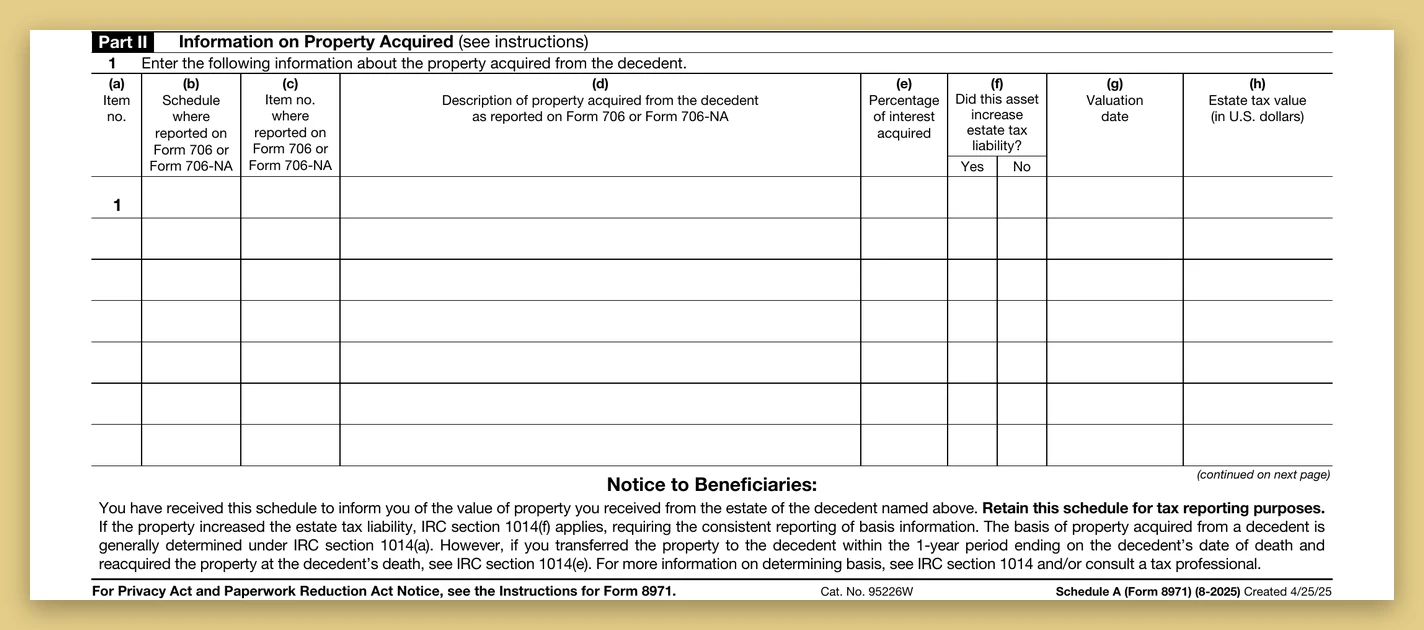
Section 1014(f) adds a consistency rule. When the coins’ inclusion increased the estate tax, the heir’s basis cannot exceed the final estate tax value. Under section 6035 and the Form 8971 instructions, the executor files Form 8971 with the IRS and gives each beneficiary a Schedule A listing each asset, its valuation date, its estate tax value and whether it increased the estate tax. The due date is 30 days after Form 706 is due, including extensions, or 30 days after it is filed, whichever comes first.
- Rare coins are reportable. Treasury Regulation 1.1014-10 treats U.S. dollars as excepted property, but only bills and coins worth face value. Coins with numismatic value are not excepted.
- Match the item numbers. Use the same descriptions and item numbers on the appraisal, Schedule F and Schedule A.
- No Form 706, still appraise. For decedents dying in 2026, the IRS lists a basic exclusion amount of $15,000,000 (see what’s new for estate and gift tax). Most estates file no Form 706 and no Form 8971, but the heirs still need date-of-death values to support basis.
When heirs later sell, gain on coins is generally collectibles gain, which IRS Tax Topic 409 says is taxed at a maximum 28% rate.
How American Rarities Helps Your Client
Founded in 1990, American Rarities has purchased over $400 million in rare coins, bullion and collectibles. We can:
- Prepare a formal, itemized date-of-death appraisal for any historical date, with photos, grades, certification numbers, the method and the comparable sales used.
- Work with the executor and keep you copied, so item numbers match your schedules.
When there is no plan to sell, the formal report is a fee-based engagement. If the estate is considering a sale, our appraisal and written offer are free. See our page on IRS-compliant numismatic appraisals for CPAs, or send heirs to how to sell inherited coins. Every estate guide we publish is collected on our coin appraisals for CPAs and estates page.
Four Steps for an Estate
- 1
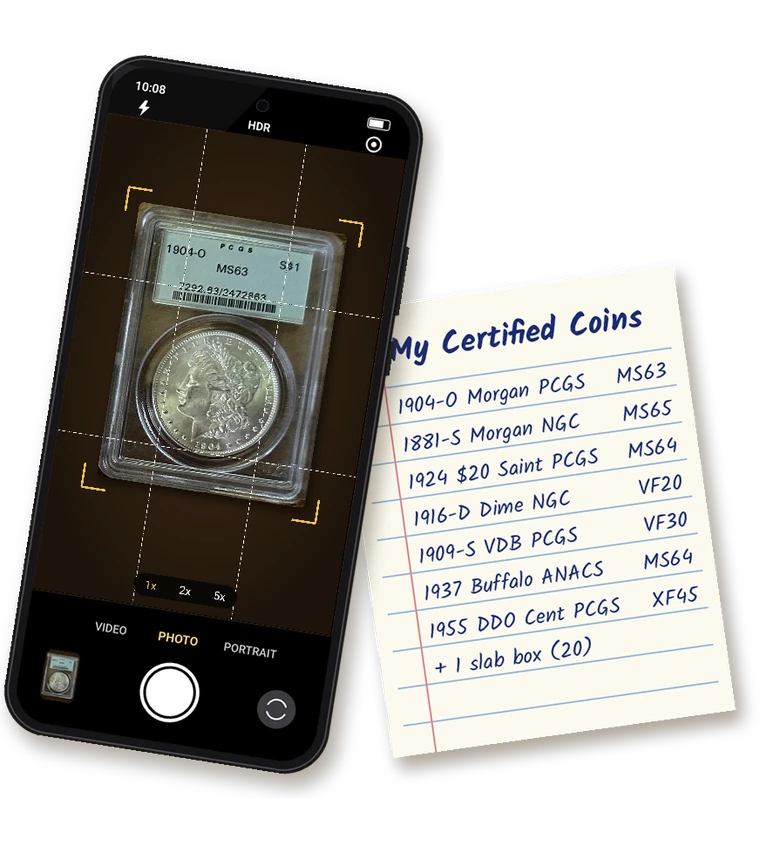
Send Photos and/or a List
Send photos or an inventory with the form below, by text to 720-600-4740 or by email. Tell us the date of death and whether you need a formal report, an offer or both.
- 2
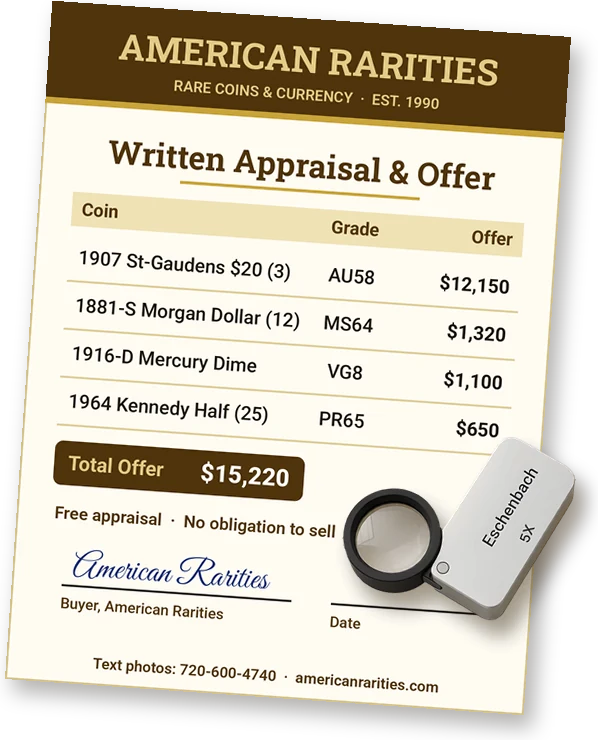
Free Appraisal and Written Offer
Appraisals are usually done within 24 hours. A formal, itemized date-of-death report is available on request, separate from any offer to buy.
- 3
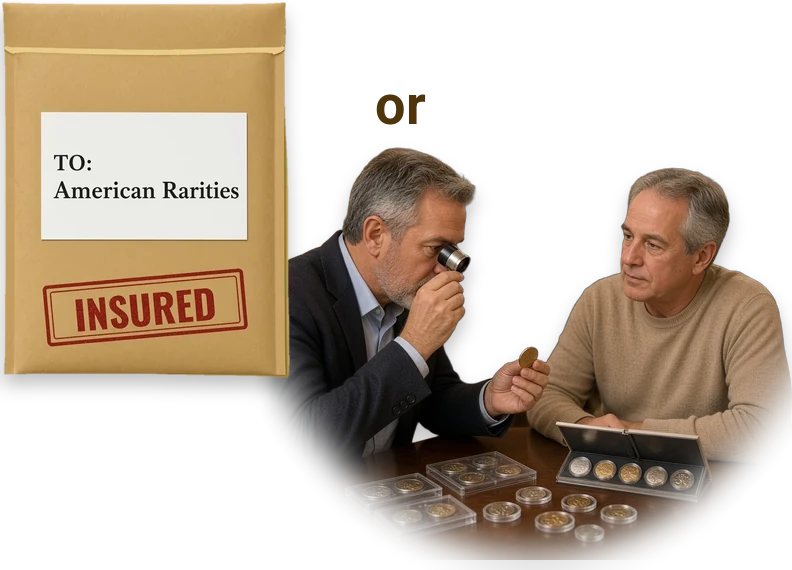
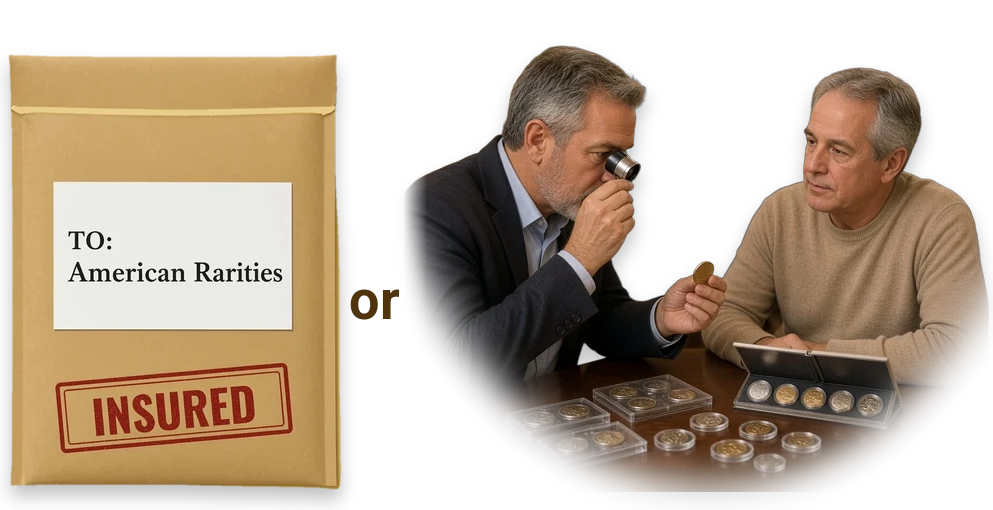
Ship Insured or Meet in Person
Ship fully insured, or meet us in person for larger estates anywhere in the country.
- 4


Get Paid
If the executor accepts, we pay immediately by cash, check, ACH or wire, with an itemized bill of sale for the estate file.
American Rarities holds a 4.7-star Google rating and an A+ rating with the BBB, we are ANA Life Members, and we are an authorized PCGS, NGC and ANACS dealer.
You can also call 800-622-5680. Calls go to our answering service, so leave a message and we will call you back. Or visit our contact a rare coin buyer page.