
You are currently viewing How to Safely Ship High-Value Collections for an Appraisal
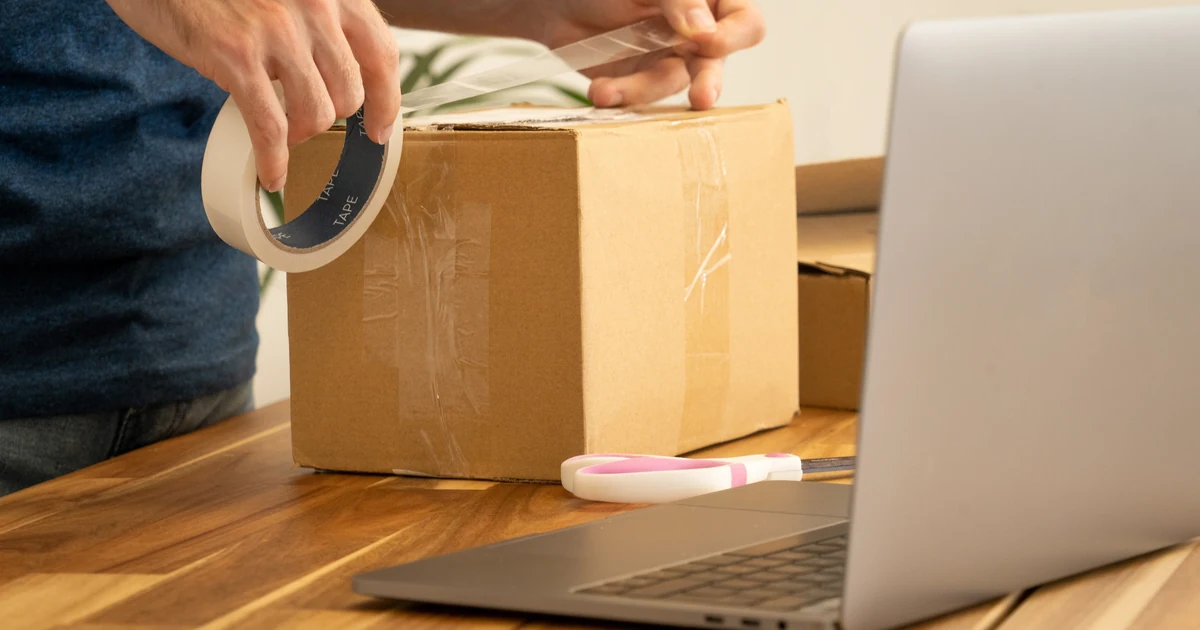
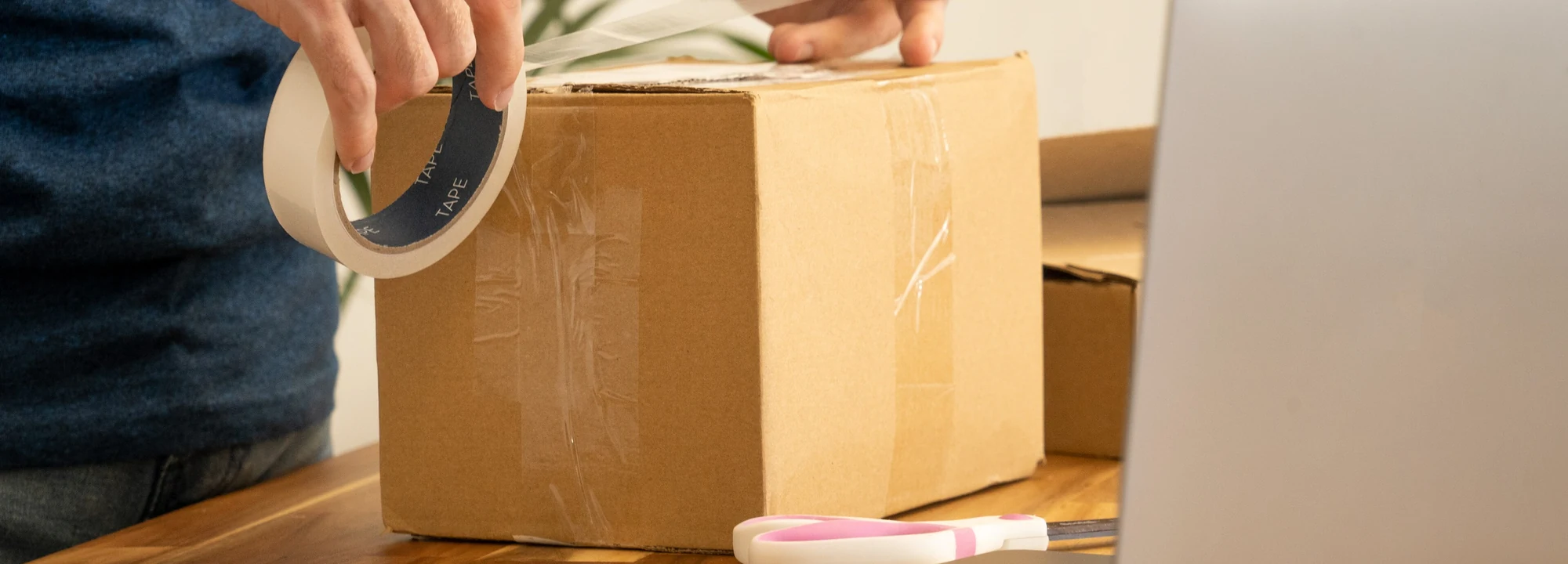
Photo by Meanwell Packaging, CC BY 2.0, via Wikimedia Commons (File:Sealing a parcel while booking shipping on a laptop.jpg), cropped by American Rarities.

How to Safely Ship High-Value Collections for an Appraisal

  • Post published:
  • Post category:Articles
Hands sealing a cardboard parcel with packing tape beside a laptop

How to Ship a Coin Collection Safely for an Appraisal

Mailing a coin collection to an appraiser can feel risky, but valuable coins and paper money travel safely through the mail every day. Knowing how to ship a coin collection safely comes down to a few habits: a written inventory and photos before anything is sealed, coins left in their holders, a plain double box with nothing loose inside, the right carrier with the full value declared, a signature on delivery, and a buyer who insures the trip.

This guide walks you through each step, with the carrier rules checked against the official USPS, FedEx and UPS terms. If you are still deciding whether to sell, start with our guide on how to sell a coin collection or our top 10 tips for selling a coin collection.

Decorative gold separator bar

Before You Ship

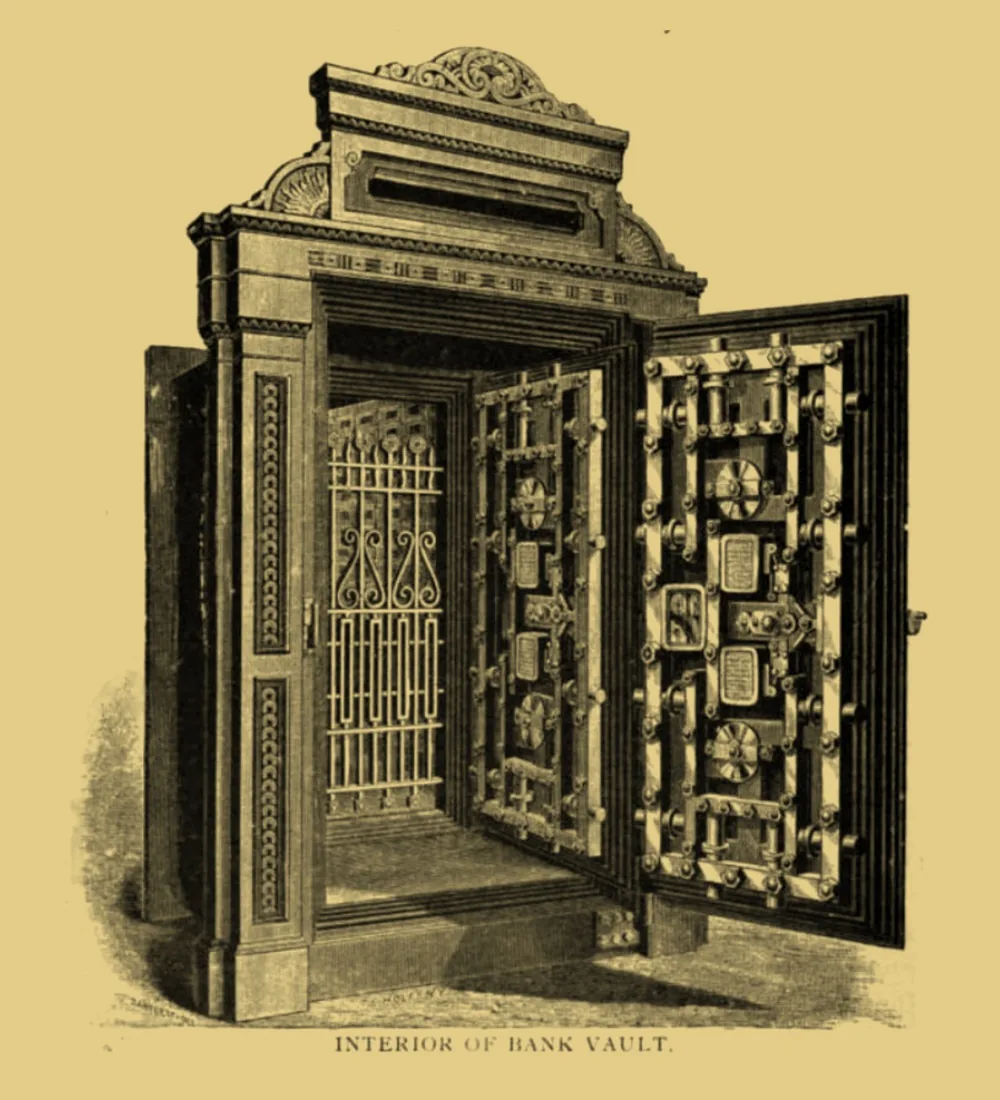
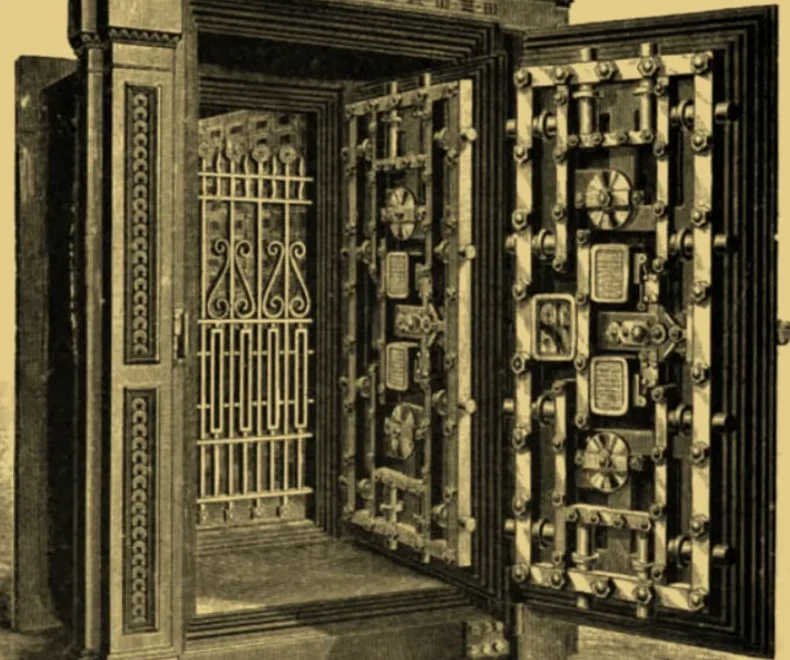
19th-century engraving of an open bank vault door at Ocean National Bank, on a gold background19th-century engraving of an open bank vault door

Decide: Ship, Meet in Person or Have Us Visit

Shipping is not always the best choice. A shoebox of coins, a few certified coins in PCGS, NGC or ANACS holders or a small group of notes usually ships easily. A large collection, a whole estate or a safe deposit box full of gold is a different matter. The more a shipment is worth, the more it costs to insure, the more boxes it takes and the more there is to go wrong.

For larger collections, we can meet you in person, including at your bank, so the coins never have to leave the building where they are stored. Our page to sell a large coin collection explains how in-person visits work, and our estate appraisals and liquidation page covers estates. If you are not sure which way to go, send us photos or a list first and we will suggest the safest option for what you have.
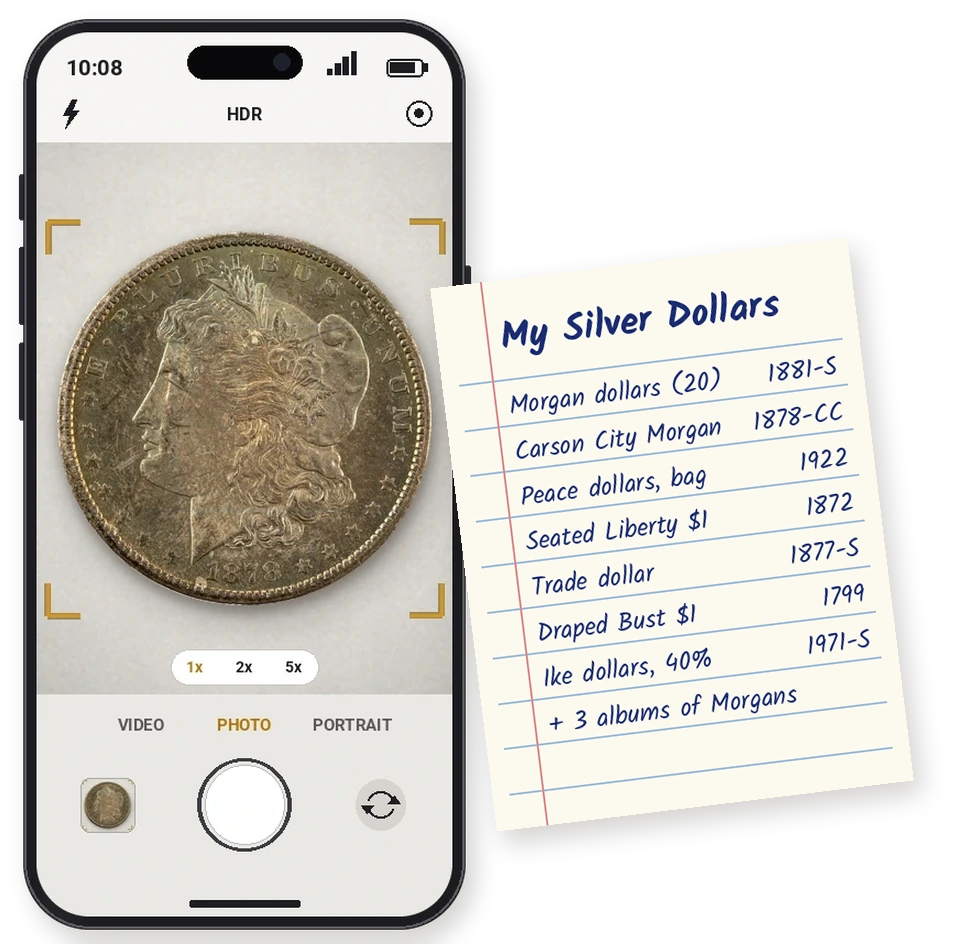
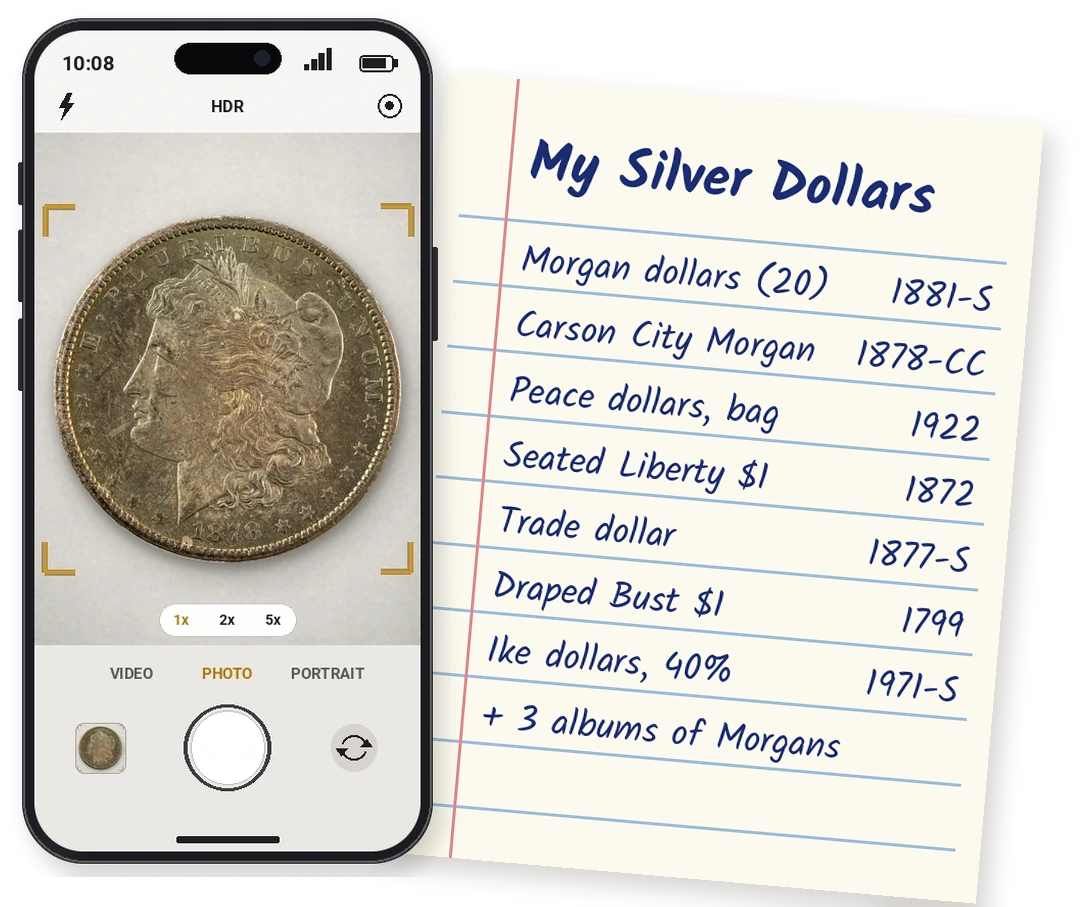
A smartphone photographing an 1878-CC Morgan dollar beside a handwritten list of silver dollars to sell, including Morgan, Peace, Seated Liberty, Trade, Draped Bust and Ike dollarsA handwritten list of silver dollars behind a smartphone photographing an 1878-CC Morgan dollar

Make an Inventory and Take Photos

Before anything goes in a box, make a simple written list of what you are sending. It does not need to be expert: “3 silver dollars in plastic holders,” “blue folder of Lincoln cents,” “1964 proof set in its envelope” is plenty. Count the coins, note any dates or labels you can read and record the certification number on every slab.

Then photograph everything with your phone: each item or group, both sides of any coin that looks old, gold or unusual, and the open box once it is packed. Keep one copy of the list and put another inside the package. Your list and photos are your record if anything is ever questioned, and they are often enough for us to give you a free online coin appraisal before you ship anything at all.

Decorative gold separator bar

How to Pack Coins for Shipping

Good packing does two jobs. It keeps the coins from being scratched or knocked together, and it keeps the box from attracting attention. Most damage in the mail comes from coins sliding around inside a package, so the goal is a box that does not rattle and does not reveal what is inside.
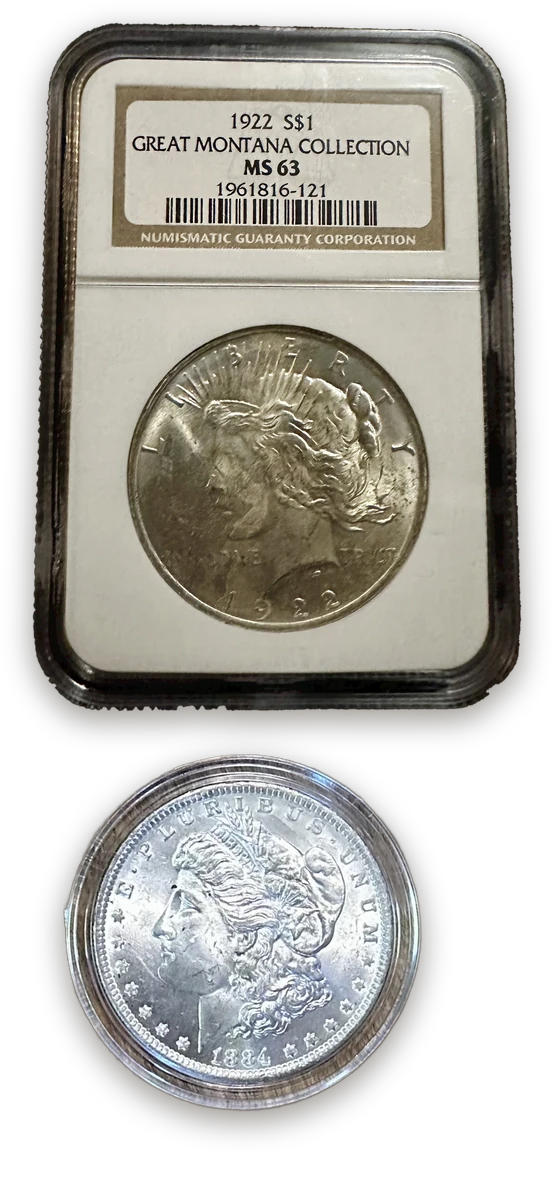
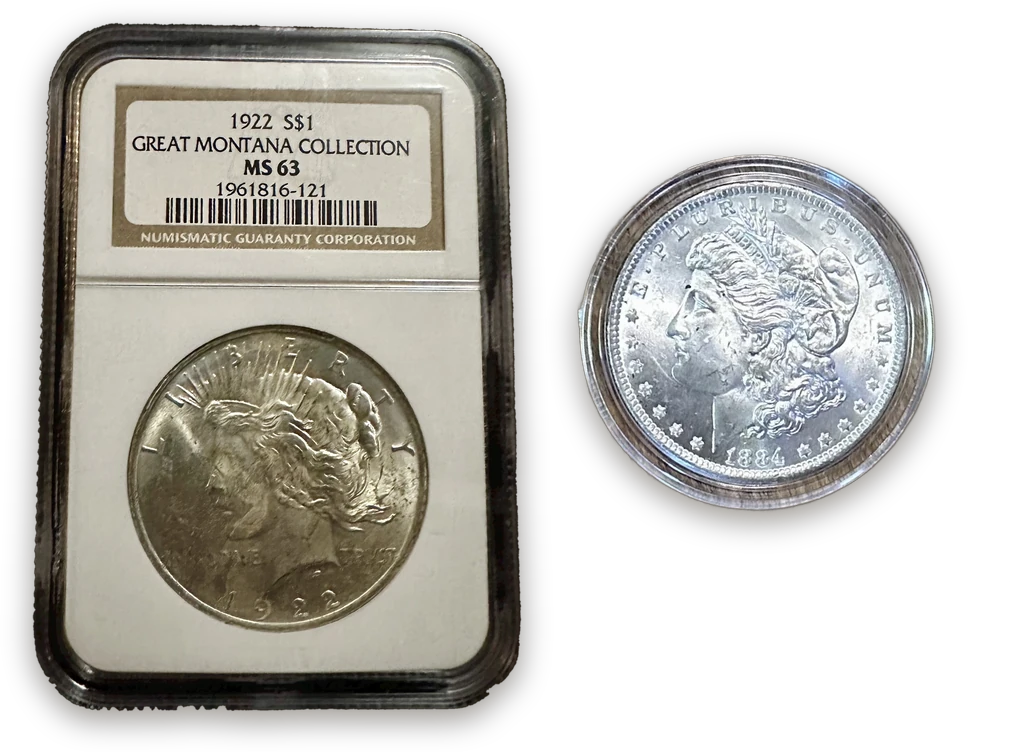
A 1922 Peace dollar in an NGC holder above an 1884 Morgan dollar in a clear capsule, at true relative sizeA 1922 Peace dollar in an NGC holder beside an 1884 Morgan dollar in a clear capsule, at true relative size

Pack Coins in Their Holders

Leave every coin in the holder it is already in. Never pry open a grading-service slab, and keep proof and mint sets in their original government packaging. Loose coins should go into individual holders before they travel: hard plastic capsules, 2×2 cardboard holders or soft flips for single coins, and coin tubes or paper rolls for groups of the same size. Do not tape coins directly, and do not clean them first. As our article on why you should not clean your coins explains, cleaning lowers value.

Fill each tube completely or pad the end so the coins cannot slide, and band or bag small holders together in groups. Wrap slabs, tubes and boxed sets in bubble wrap or soft paper. Coin folders and albums should be closed and wrapped flat. The slab and capsule shown here hold two different silver dollars at their true relative size, so you can see how much room a holder adds.
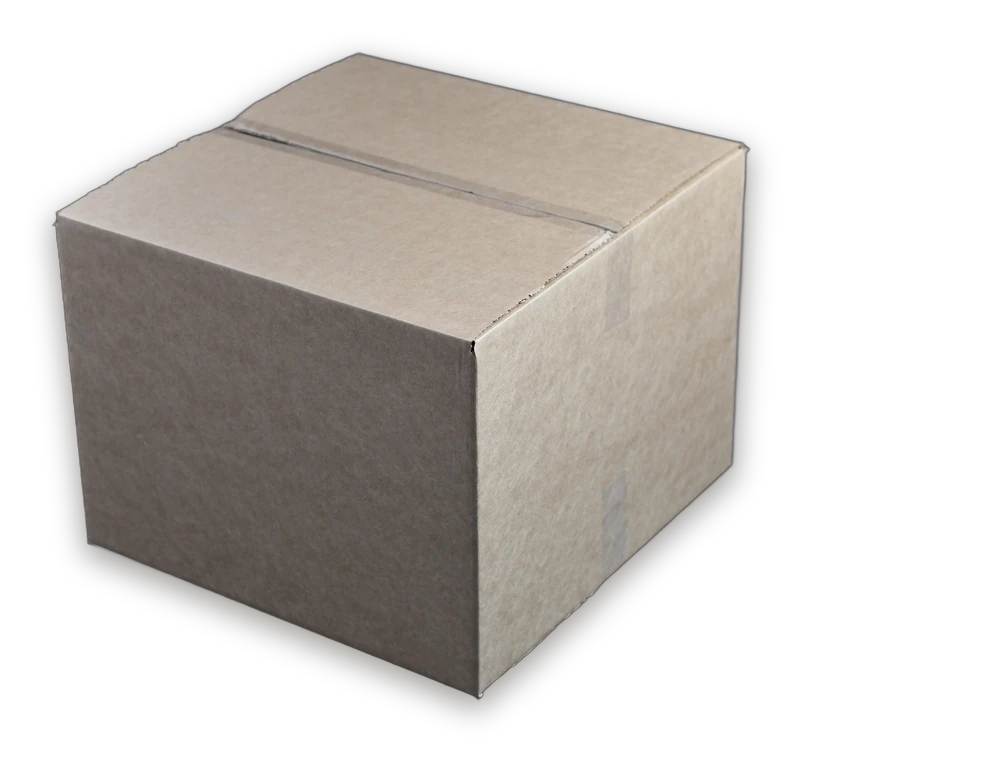
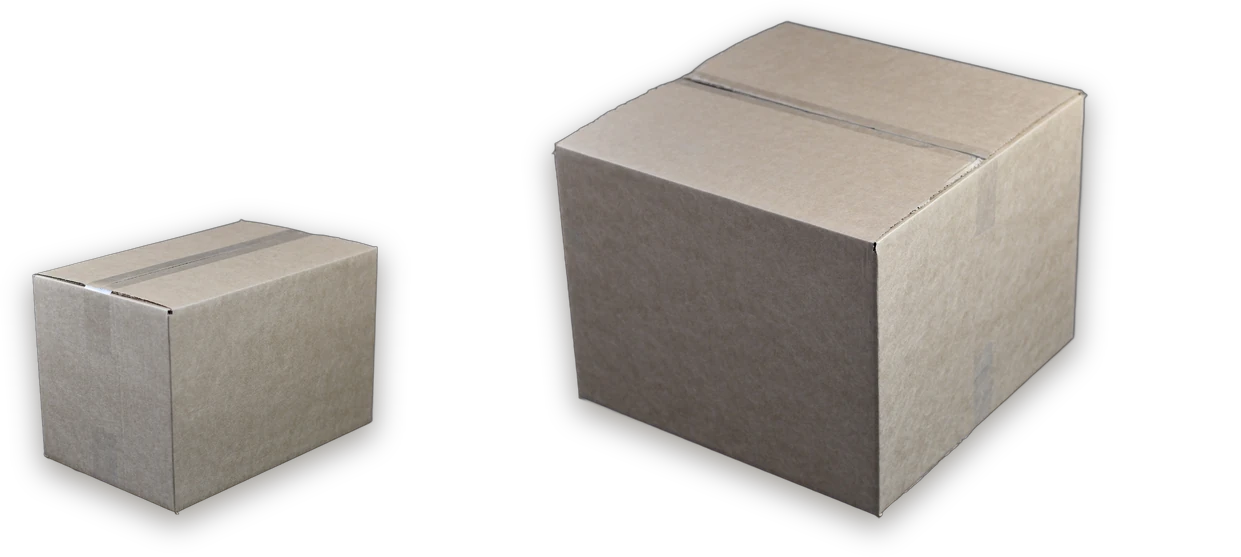
A plain cardboard box taped closed with no labelsA small cardboard box beside a larger plain cardboard box, both taped closed

Double Box It, With Nothing Loose

Use a sturdy box, not an envelope. Pack the wrapped holders tightly into a small inner box, fill every gap with padding and tape it closed. Then set that box inside a larger outer box with at least a couple of inches of padding on every side. Shake it gently: if anything moves or rattles, add more padding. Seal every seam of the outer box with strong tape. If you are using Registered Mail, use paper tape or another tape that absorbs ink, because USPS stamps the seams.

Keep the outside plain. Never write “coins,” “gold,” “rare,” “valuable” or a dealer name that suggests coins on the box, and do not reuse a carton printed with a coin or bullion company’s logo. Address the package to the name we give you. Put your packing list inside the inner box, not taped to the outside. Please note that American Rarities does not provide shipping materials, so you will need a box and padding of your own.

Packing Checklist
  • Written list and photos made
  • Coins left in their holders
  • Loose coins in capsules, 2x2s, flips or tubes
  • Tubes filled or padded
  • Inner box packed tight
  • Outer box with padding on all sides
  • No rattle when shaken
  • No words on the box that reveal the contents
Decorative gold separator bar

Choose the Right Carrier and Insurance

Not every carrier will cover coins. FedEx and UPS are fine for many things, but their published terms limit or refuse coins and currency, so a claim on a lost box of coins could be denied or capped. For most collections, USPS Registered Mail is the safest way to ship. Here is what each carrier’s own terms say:

Carrier and serviceWhat the official terms sayGood for coins?
USPS Registered MailThe most secure USPS service, with a signature and record at each step. Insurance is included up to a maximum of $50,000, and you must declare the full value at a post office counter (DMM 503.2). It is slower than other mail.Yes. The usual choice for valuable coins and paper money.
USPS Priority Mail and Priority Mail ExpressInclude $100 of insurance. Extra insurance can be bought up to $5,000, and items insured for more than $500 need a signature on delivery (DMM 503.4). Cash, currency and bullion are limited to $15 of coverage except by Registered Mail (USPS FAQ).Only for modest, non-bullion coins.
FedExDefault liability is $100. The declared value for collector’s items such as coins, and for precious metals including bullion, is limited to $1,000, and FedEx states that it does not provide insurance coverage of any kind (FedEx Service Guide 2026).No, beyond $1,000.
UPSThe UPS terms list coins, cash and currency among the items UPS does not accept, and cap declared value at $50,000 per package for items it does accept (UPS Terms and Conditions of Service).No.

Always declare the true value, not a lower one to save on fees. A carrier will not pay more than the value you declared, and some may refuse a claim if the contents were misdescribed. Keep your receipt with the declared value and the tracking number.

Carrier coverage has limits, so many collectors also check their own insurance. A homeowner’s policy rider or a dedicated collectibles policy may cover items in transit; ask your agent before you ship. When you ship to American Rarities, contact us first. Your shipment is fully insured at our expense, and we send you shipping instructions before you mail anything.

Decorative gold separator bar

Delivery, Paper Money and Arrival

The brown paper package in which the Hope Diamond was mailed by registered mail in 1958The Hope Diamond registered mail package from 1958, close crop

Require a Signature, Track It and Split Large Shipments

Use a service that requires a signature on delivery, so the package is never left on a porch or in a mailbox. Registered Mail always requires one. Write down the tracking number before you leave the counter, send it to the buyer and follow the package until it is signed for.

If a collection is worth more than one package can carry, split it into several smaller boxes with separate tracking numbers, and send them on different days so no single loss is catastrophic. Number the boxes and list what is in each one. For collections that would take many boxes, meeting in person is usually simpler.

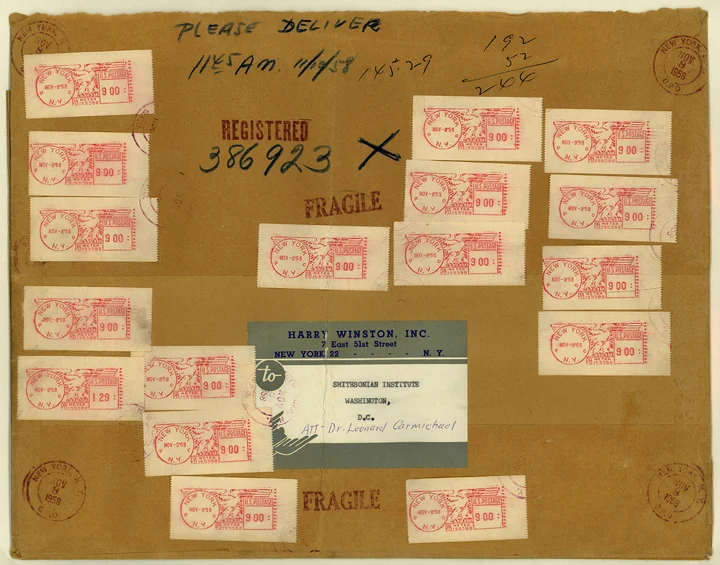
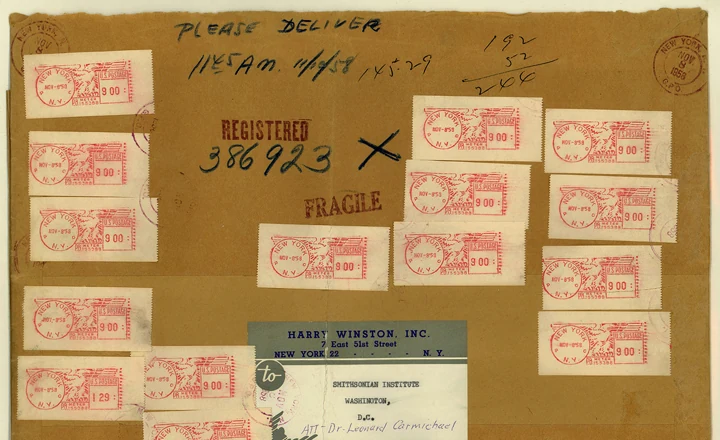
Registered Mail has a famous track record. In 1958 jeweler Harry Winston mailed the Hope Diamond to the Smithsonian by registered first-class mail. The Smithsonian’s National Postal Museum says Winston called registered mail “the safest way to ship gems,” and the packageand the wrapper shown here is now in its collection.#8217;s wrapper is now in the Smithsonian collection.
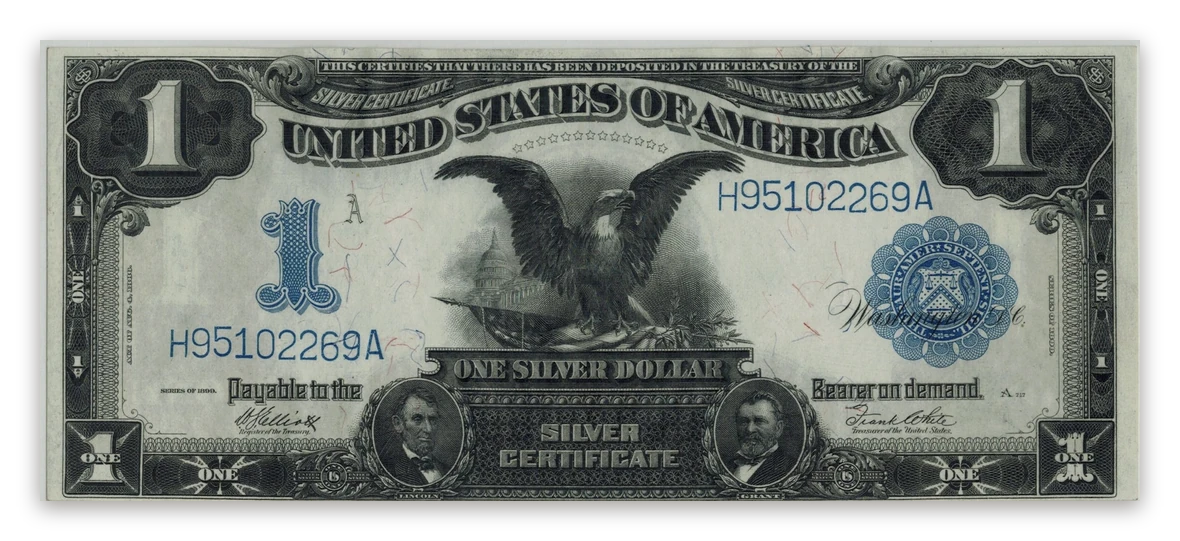
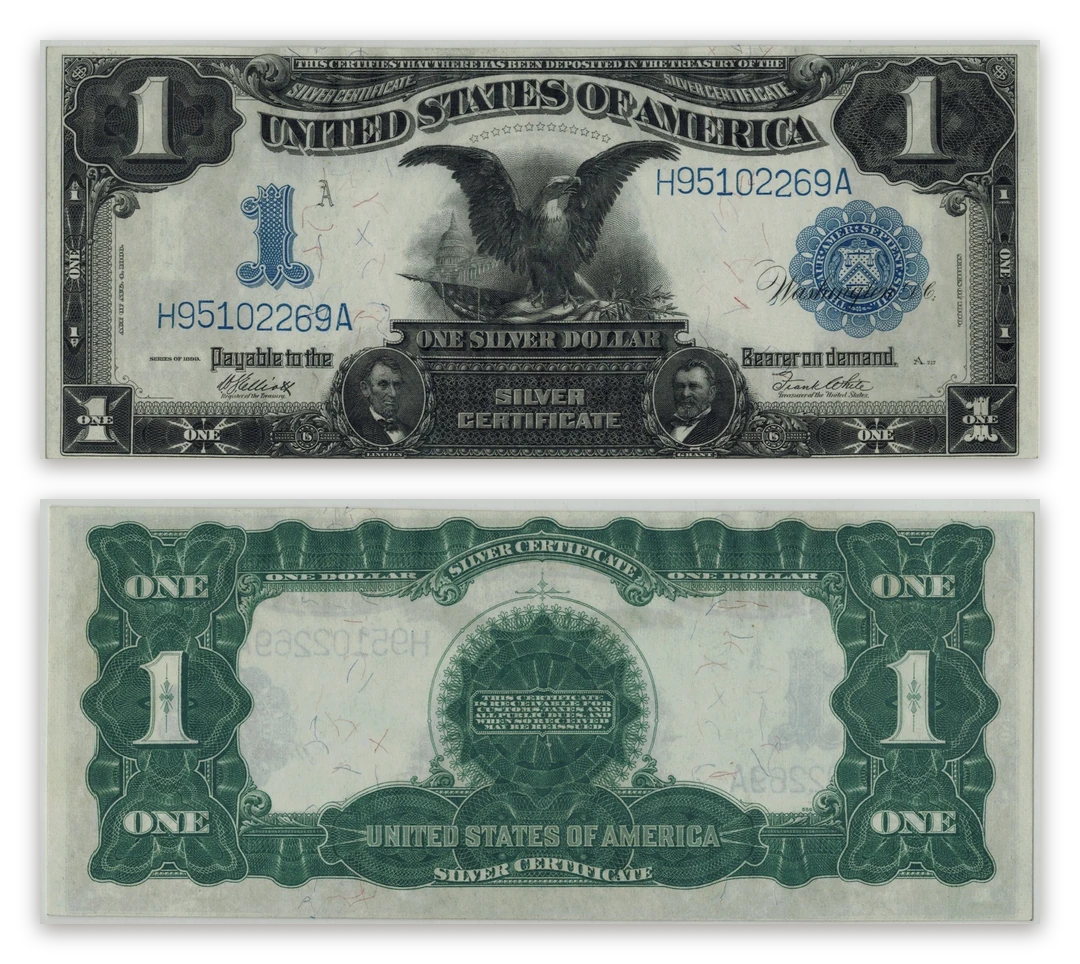
A Series 1899 one dollar Black Eagle silver certificateThe front and back of a Series 1899 one dollar Black Eagle silver certificate

Shipping Paper Money

Paper money needs a little extra care. Put each note in an archival currency sleeve that is larger than the note, and never fold, tape, clip or staple it. Keep notes already in PMG or PCGS Banknote holders in those holders. Sandwich the sleeved notes flat between two pieces of stiff cardboard, bag them against moisture, and pack that bundle in the inner box like any other item.

Insurance is the other difference. Outside Registered Mail, USPS limits coverage on currency to $15, and FedEx and UPS will not carry cash or currency, so Registered Mail is the way to ship notes. Our guide on how to sell paper currency and our page to sell paper money explain what makes old notes valuable.

Eschenbach 5X folding loupe with its lens swung open, the magnifier our coin buyers use for a free appraisal, cut out on a transparent backgroundEschenbach 5X folding loupe with its lens swung open, the magnifier our coin buyers use for a free appraisal, cut out on a transparent background

What Happens When Your Package Arrives

Once your package is signed for, our numismatists check what arrived against your list and value your collection item by item. Appraisals are usually done within 24 hours, and you receive a free, written offer with no obligation to sell. Our coin collection appraisal page explains how we value collections.

If you accept, we pay you immediately by cash, check, ACH or wire. If you decline, we return your items fully insured. Either way, you can follow your coins at every step.

Decorative gold separator bar

Ready to Ship Your Coins for a Free Appraisal?

Whether you have a few coins or a lifetime collection, getting a free, no-obligation appraisal takes three steps.
1
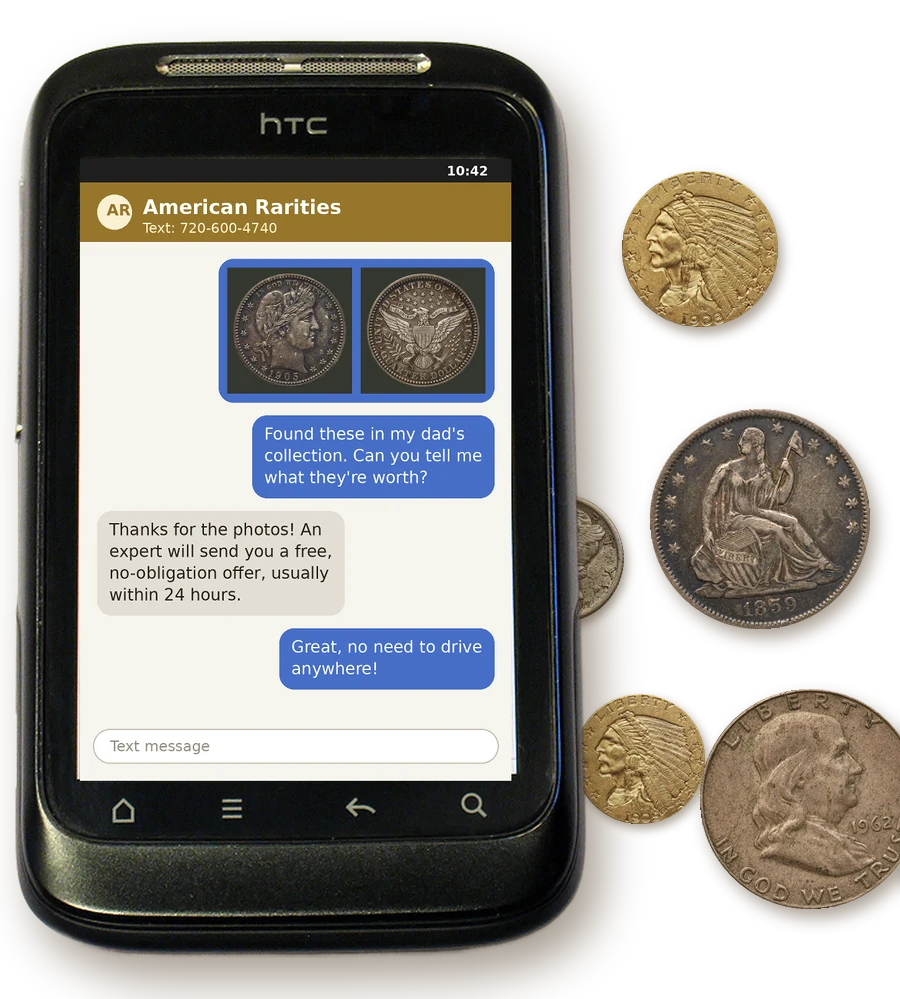
Smartphone text conversation sending photos of both sides of a Barber quarter to American Rarities for a free offer, beside Indian Head gold, a Seated Liberty half, a Franklin half and a Mercury dimeSmartphone text conversation sending photos of both sides of a Barber quarter to American Rarities for a free offer, beside Indian Head gold, a Seated Liberty half, a Franklin half and a Mercury dime

Send Photos and/or a List

Text photos to 720-600-4740, email them to staff@americanrarities.com or use the form below. We’ll tell you whether to ship or meet in person. Appraisals are usually done within 24 hours.
2
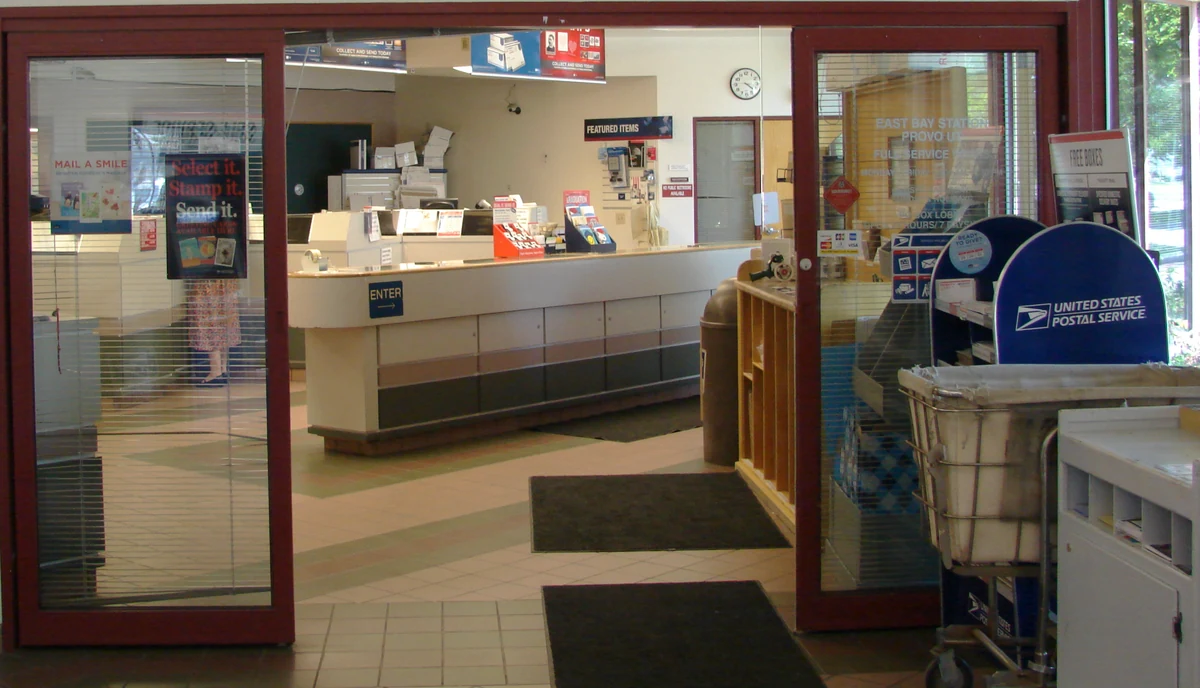
A U.S. Post Office service counter where Registered Mail is sentA U.S. Post Office service counter, close crop

Ship Insured or Meet in Person

Mail-in shipments are fully insured at our expense, and we send you shipping instructions first. For larger collections, we can meet you in person, including at your bank.

3
A banded stack of $100 bills, an American Rarities check, and two bank icons labeled ACH and Wire, showing the ways we pay for inherited coinsA banded stack of $100 bills, an American Rarities check and two bank icons labeled ACH and Wire, in a row

Get Paid Immediately

Accept our free, no-obligation offer and we pay you immediately by cash, check, ACH or wire. If you decline, we return your items fully insured.

Founded in 1990, American Rarities has purchased over $400 million in rare coins, bullion and collectibles. We hold a 4.7-star Google rating and an A+ rating with the BBB, we are ANA Life Members, and we are an authorized PCGS, NGC and ANACS dealer.

More guides for sellers: how to sell a coin collection, top 10 tips for selling a coin collection, how to sell inherited coins, what to do with old coins found in an estate, how to sell gold coins, how to sell proof and mint sets, how to sell paper currency, a guide for CPAs on step-up in basis, a what to do first guide for professional organizers and mistakes to avoid when selling rare coins.

You can also call 800-622-5680. Calls go to our answering service, so leave a message and we will call you back. Or visit our contact a rare coin buyer page.
Decorative gold separator bar

How to Ship a Coin Collection Safely: Frequently Asked Questions

What is the safest way to ship a coin collection?

For most collections, USPS Registered Mail is the safest way. It requires a signature at every step and on delivery, and it includes insurance up to $50,000 when you declare the full value at a post office counter. Pack the coins in their holders, double box them with nothing loose, and keep the outside of the box plain.

Can I ship coins with FedEx or UPS?

Their published terms make it a poor choice. The FedEx Service Guide limits the declared value of coins and precious metals to $1,000 and says FedEx does not provide insurance, and the UPS terms list coins, cash and currency among the items UPS does not accept.

How much insurance does USPS Registered Mail include?

Registered Mail includes insurance up to a maximum of $50,000, based on the full value you declare at the counter. For a collection worth more than that, split it into several packages or arrange to meet in person.

How should I pack coins so they don’t rattle?

Leave coins in their holders, put loose coins into capsules, 2x2s, flips or tubes, and fill or pad every tube. Pack the wrapped holders tightly into a small inner box, then put that box inside a larger outer box with padding on all sides. Shake it gently; if anything moves, add more padding.

Should I write “coins” or “insured” on the box?

No. Keep the outside of the package plain, with no words or logos that suggest coins, gold or anything valuable. Put your packing list inside the inner box.

How do I ship paper money safely?

Put each note flat in an archival sleeve, keep graded notes in their holders, sandwich them between stiff cardboard and pack them inside the inner box. Ship by Registered Mail, because USPS limits coverage on currency to $15 on other services and FedEx and UPS do not carry currency.

Who pays for shipping when I send coins to American Rarities?

Contact us before you ship. Mail-in shipments to American Rarities are fully insured at our expense, and we send you shipping instructions first. We do not provide shipping materials. If you decline our offer, we return your items fully insured.

Do I have to ship my coins to get an appraisal?

No. You can text photos to 720-600-4740, email staff@americanrarities.com or use the form on this page. Appraisals are usually done within 24 hours, and for larger collections we can meet you in person, including at your bank.

Decorative gold separator bar

Free Appraisal Before You Ship

Email, Text, or Use This Form To Send Us Your Inventory List or Pictures


Upload clear photos of fronts and backs and we'll reply with a free appraisal.

    Decorative gold separator bar

    Leave a Reply