
You are currently viewing A “What to Do First” Guide for Professional Organizers and Downsizing Experts
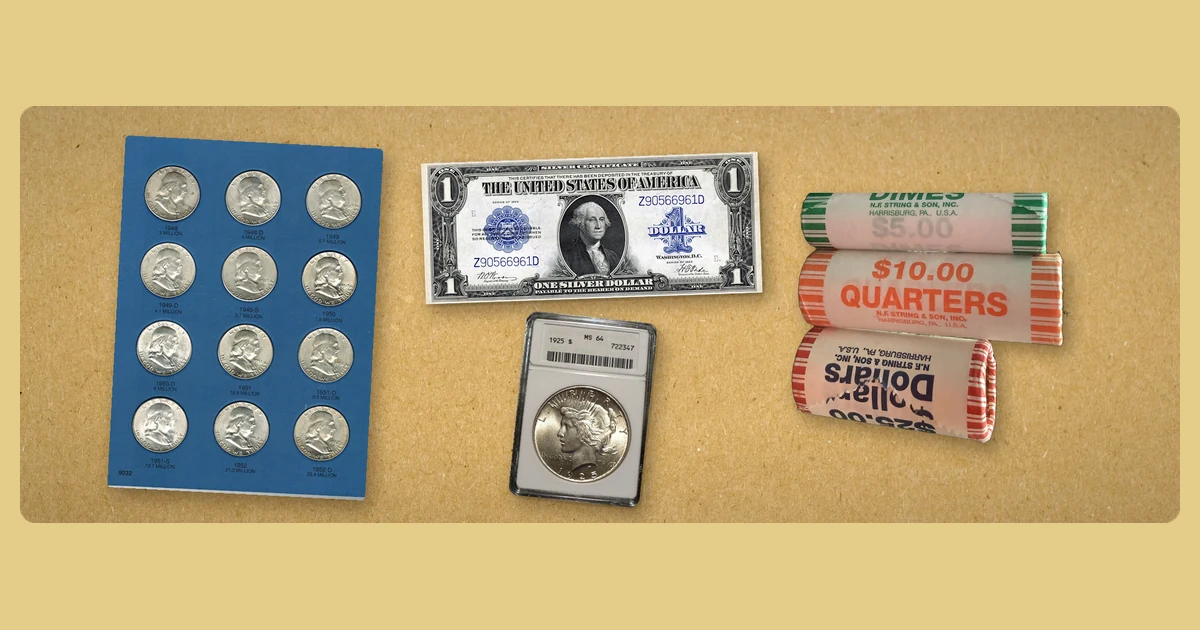
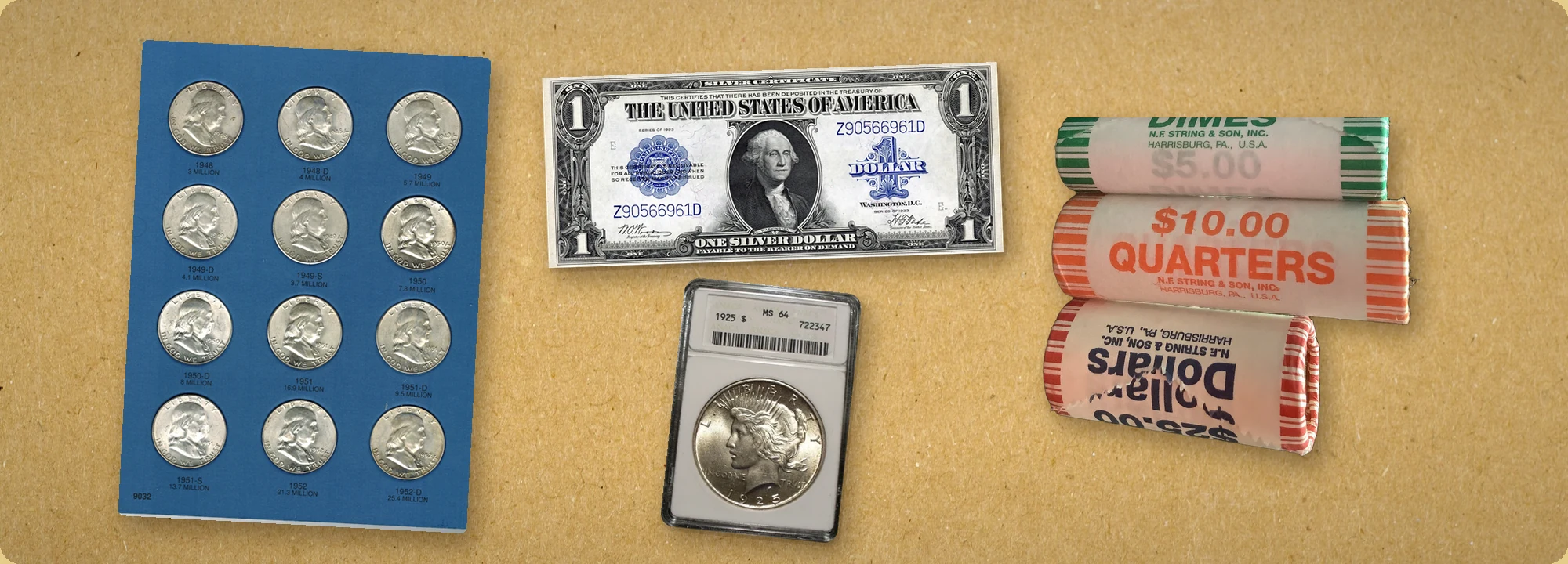
A “What to Do First” Guide for Professional Organizers and Downsizing Experts, from American Rarities. Whitman Franklin half dollar folder page: photo by Bruxton, public domain, via Wikimedia Commons (File:Franklin half dollar Whitman coin folder first page.jpg). Series 1923 $1 silver certificate: National Numismatic Collection, Smithsonian, image by Godot13 via Wikimedia Commons; public domain design (PD-USGov-money, PD-Art), scan licensed CC BY-SA 4.0 outside the U.S.; background removed. 1925 Peace dollar ANACS MS64 holder: photo by American Rarities. Dime, quarter and dollar coin rolls: cropped from a photo by Protobowladdict, CC BY 4.0, via Wikimedia Commons (File:UscoInrolls.jpg), background removed and rotated. Items cut out and shown at true relative size by American Rarities. Cardboard background: photo by Humusak, CC0, via Wikimedia Commons (File:Cardboard-546867.jpg).

A “What to Do First” Guide for Professional Organizers and Downsizing Experts

  • Post published:
  • Post category:Articles
Coins found while downsizing on a cardboard flat lay at true relative size: a Whitman coin folder page of Franklin half dollars, a Series 1923 $1 silver certificate, a 1925 Peace silver dollar in an ANACS holder, and wrapped rolls of dimes, quarters and dollar coins

Coins Found While Downsizing: What to Do in the First Hour

Professional organizers, senior move managers, downsizing specialists and estate sale companies are often the first people to open the “mystery box” at the back of a closet. It might be a cigar box of old silver dimes, a coin folder of half dollars, a sock drawer full of coin rolls, a stack of plastic-cased coins, or a few old bills tucked inside a book. What you do in the next hour can protect a family’s inheritance, or cost it a great deal.

This guide is for professionals working in someone else’s home. It covers what to do the moment you find coins, bullion or paper money, where they tend to hide, how to recognize what matters, how to keep a clean chain of custody, who has the authority to sell, and how to get the family a free appraisal. If you are a family member or an executor, our guide on what to do with old coins found in an estate is written for you.

This guide is general information for professionals who clear and downsize homes. It is not legal advice. Who may sell estate property depends on the documents and on state law, so the family’s attorney or the executor should confirm authority before anything is sold.

Decorative gold separator bar

The First Hour: Stop, Secure and Leave Everything As Found

The most valuable thing you can do is very little. Coins lose value when they are cleaned, handled, sorted or separated from their packaging, and a found collection is easiest to document before anyone has moved it.

  1. Stop and secure. Pause the job in that spot. Keep the items in the room where you found them, out of sight of helpers, movers and visitors, and tell your client or the family contact right away.
  2. Don’t clean anything. Never wipe, polish, rinse or dip a coin, and don’t flatten, tape or smooth a bill. Cleaning can wipe out most of a rare coin’s value in seconds, and it cannot be undone. Old coins are supposed to look old.
  3. Don’t sort into piles. Resist the urge to group coins by size or color, or to pull out “the good ones.” How a collection was stored, labeled and grouped is part of the record, and a pile of loose coins is harder to inventory and easier to lose from.
  4. Don’t break up sets, rolls or holders. Leave coin folders and albums closed and intact, leave rolls wrapped, and leave proof and mint sets sealed. Never pry open a sealed plastic grading holder, or “slab,” from PCGS, NGC or ANACS. A broken-up set or an opened holder is usually worth less than the same coins left together.
  5. Keep the original packaging. The Mint boxes, envelopes, certificates of authenticity, receipts, cardboard flips with handwriting, bank bags and even the old cigar box belong with the coins. Notes in a collector’s handwriting often record what the coins are and when they were bought.
  6. Photograph everything in place. Before anything moves, take wide photos of the spot, then closer photos of each container, with the room and the date in the record. Your phone’s timestamp is useful evidence later.
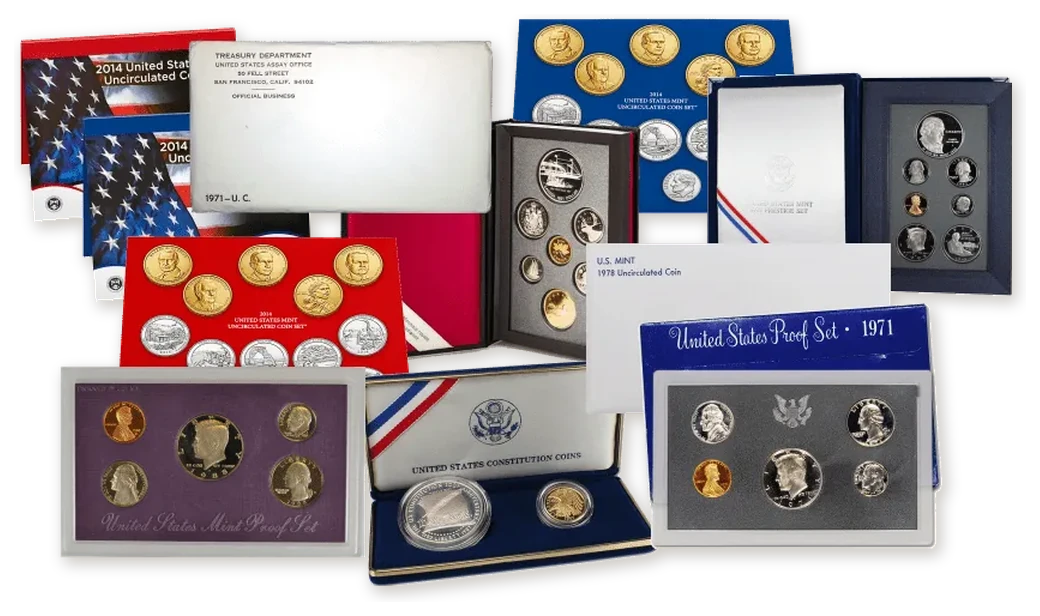
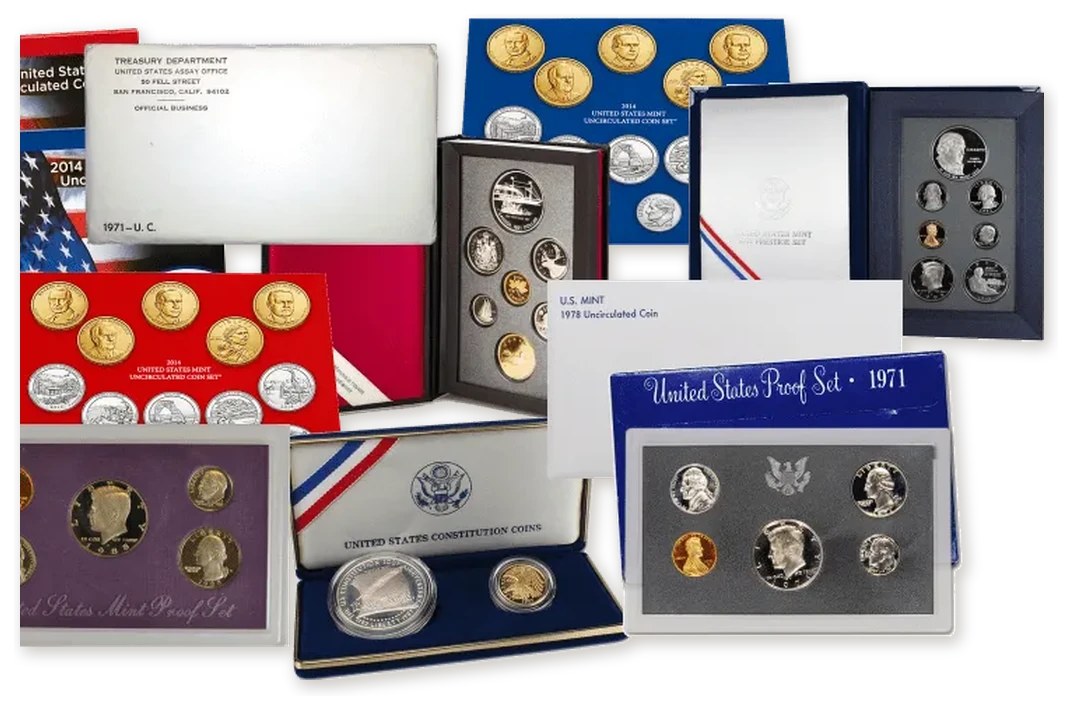
A group of U.S. Mint uncirculated sets and proof sets, including 2014 mint sets, a 1971 proof set, a Prestige proof set and a Constitution commemorative setU.S. Mint uncirculated sets and proof sets, including a 1971 proof set, a Prestige proof set and a Constitution commemorative set

Handle as Little as Possible

If something must be moved for safety, lift the whole container, not the coins. Hold a loose coin by its edge, over a soft surface, never by its face. Keep sets in their boxes and holders upright and flat so nothing shifts inside.

Mint sets and proof sets like these are common finds in downsizing. They are worth the most in their original government packaging, so the boxes, lenses and envelopes should stay together. Our guide on how to sell proof and mint sets explains why.

Decorative gold separator bar

Where Coins Hide in a Home

Collectors and savers rarely keep everything in one place. When you find one stash, it is worth checking the usual hiding spots before the home is cleared, so nothing goes to donation, the dumpster or an estate sale table by mistake.

  • Closet shelves. Shoe boxes, cigar boxes, tins and the classic mystery box behind the sweaters.
  • Dressers and jewelry boxes. Rolls and small envelopes in sock and underwear drawers, and gold coins mixed in with jewelry.
  • Desks and file cabinets. Coin folders, envelopes marked with dates or amounts, U.S. Mint order boxes, and receipts or appraisals that point to holdings elsewhere.
  • Pockets and bags. Coat and suit pockets, purses, luggage and briefcases.
  • Books and papers. Old bills pressed between pages of books, Bibles, photo albums and stamp albums.
  • Kitchens and freezers. Canisters, coffee cans, the back of the freezer and the top of the cabinets.
  • Garages, basements and attics. Jars and cans on workbenches, toolboxes, and boxes that have not been opened in years.
  • Safes and hidden spots. Home safes, gun safes, false-bottom drawers, under carpets and floorboards, and inside furniture.
  • Keys and paperwork. A small flat key or a bank statement can point to a safe deposit box. Opening one usually takes the executor or another authorized person, so give it to your client rather than following up yourself.

Unopened Mint packages, heavy small boxes and anything labeled “silver” or “gold” deserve a second look. Rolls that feel heavy for their size may hold older silver coins.

Decorative gold separator bar

Quick Recognition: What Might Be Valuable

You don’t need to be a coin expert, and you should never try to price anything yourself. The goal is to recognize what should be set aside for an appraisal instead of sold, donated or spent. These are the groups that turn up most often.
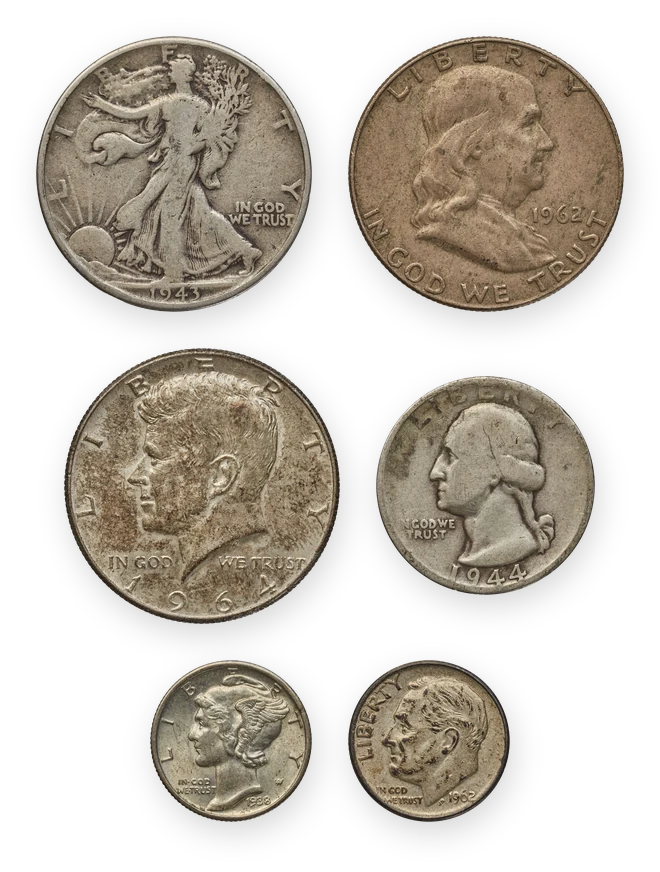
Six U.S. 90% silver coins in pairs at true relative size: a 1943 Walking Liberty half dollar, a 1962 Franklin half dollar, a 1964 Kennedy half dollar, a 1944-S Washington quarter, a 1938-S Mercury dime and a 1962 Roosevelt dimeThree silver half dollars above a silver quarter and two silver dimes at true relative size: a 1943 Walking Liberty half dollar, a 1962 Franklin half dollar, a 1964 Kennedy half dollar, a 1944-S Washington quarter, a 1938-S Mercury dime and a 1962 Roosevelt dime

Pre-1965 Silver Coins

U.S. dimes, quarters and half dollars dated 1964 and earlier are 90% silver, and so are silver dollars dated 1935 and earlier. Kennedy half dollars from 1965 to 1970 are 40% silver. Even common dates are worth well over face value, and some dates and mint marks are rare. See our pages to sell 90% silver coins and our silver dollar buyer page.
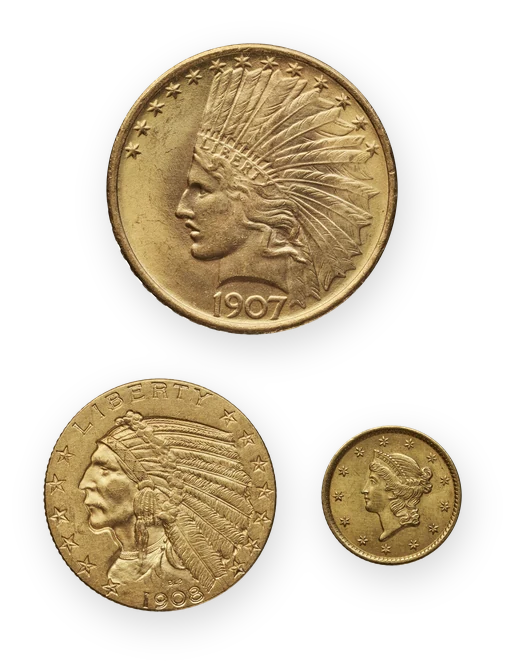
A 1907 Indian Head $10 gold eagle above a 1908 Indian Head $5 gold coin and a tiny 1849 gold dollar, at true relative sizeA row of U.S. gold coins at true relative size: an 1849 gold dollar, a 1908 Indian Head $5 and a 1907 Indian Head $10

U.S. Gold Coins

U.S. gold coins were made in denominations from $1 to $20 until 1933. They are small for their value, heavy and bright yellow, and they rarely tarnish. Older U.S. gold coins usually carry a collector premium above their gold content. Learn more on our sell U.S. gold coins page and our guide on how to sell gold coins.

A Heraeus 10 oz .9999 fine silver bar standing upright with a Credit Suisse 1 oz fine gold bar in front of it, at true relative sizeA Heraeus 10 oz silver bar lying sideways next to a smaller Credit Suisse 1 oz gold bar, at true relative size

Gold and Silver Bullion

Bars, rounds and bullion coins such as American Eagles, Canadian Maple Leafs and South African Krugerrands are usually stamped with their weight and fineness, such as “1 oz .999 fine silver.” Bullion is valued mainly by its metal content, so it should be counted and kept with any assay cards or tubes. See our page to sell gold and silver bullion.

Certified Coins in Plastic Holders

A coin sealed in a hard plastic holder with a printed label has been graded by a third-party grading service. Labels from PCGS, NGC and ANACS are the most common. Keep the holders unopened and together, because the label and certification number are part of the coin’s value. Our page to sell PCGS, NGC and ANACS coins explains, and holders from other graders are covered on our page about off-brand slabbed coins.

Proof Sets and Mint Sets

Proof sets come in hard plastic lenses or boxes, and mint sets in flat cello packs or folders, often still in the Mint’s envelope or box. Many are common, but some contain silver coins or scarce years, so keep each set whole. See our page to sell mint sets and proof sets.
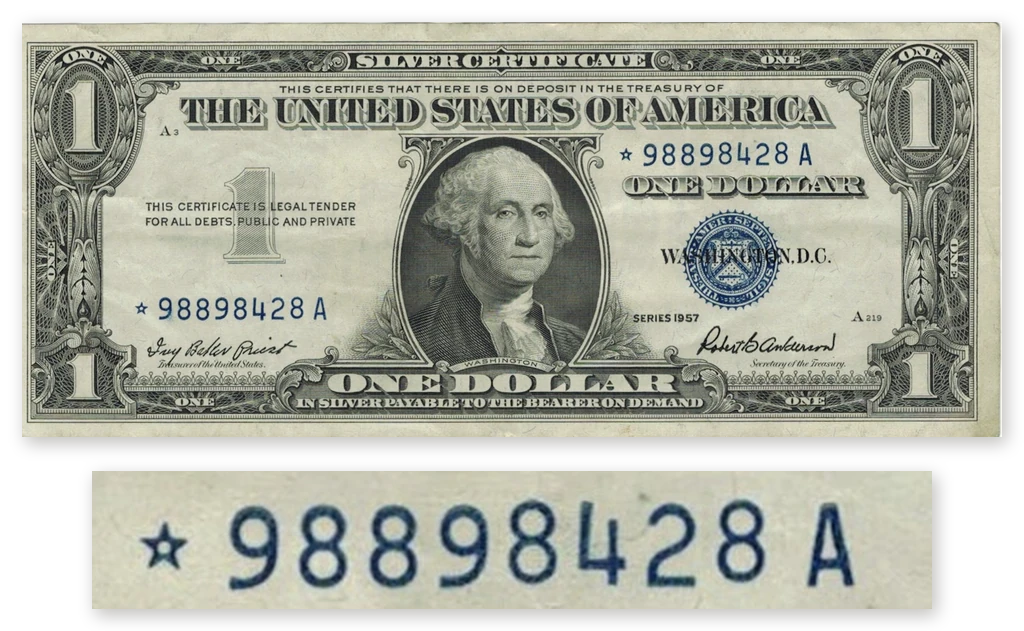
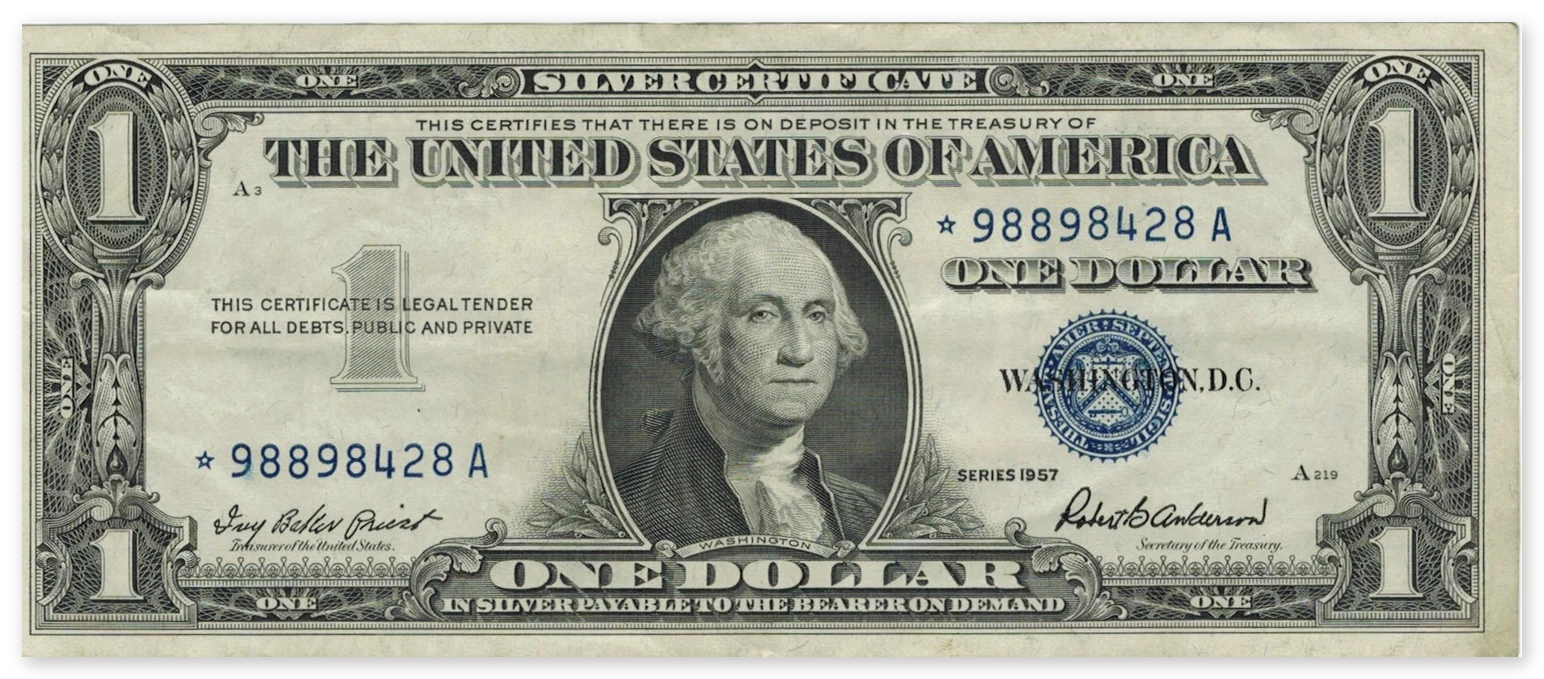
A Series 1957 $1 silver certificate star note with George Washington and a blue seal, above an enlarged close-up of the star before its serial numberA Series 1957 $1 silver certificate star note with a star before each serial number and a blue seal

Old Paper Money

Silver certificates with blue seals, gold certificates with gold seals, red-seal notes, large-size notes from before 1929 and National Bank Notes can be worth far more than face value. So can “star notes,” like the one above, and notes with unusual serial numbers. Never flatten, tape, clean or iron a bill. Our page to sell U.S. paper currency and our guide on how to sell paper currency explain more.

A large 1838 Hard Times token with a kneeling woman in chains above a smaller 1863 Our Little Monitor Civil War token, at true relative sizeAn 1838 Hard Times token beside an 1863 Our Little Monitor Civil War token, at true relative size

Tokens and Medals

Hard Times tokens from the 1830s and 1840s, Civil War tokens from the 1860s, store tokens and old medals are often mistaken for foreign coins or junk. Some are quite collectible, so set them aside with the coins. Real foreign coins and ancient coins should be kept too.

If you aren’t sure, set it aside. A free appraisal costs the family nothing, while a coin sold for face value or melt value at an estate sale is gone for good.

Decorative gold separator bar

Chain of Custody: Documentation for the Family or Executor

When valuables turn up in a home you are clearing, a simple written record protects everyone: the family, the executor and you. Banks and trust departments call it the chain of custody, meaning who found the items, where they went, and who has had them since. Our page for bank trust and estate departments describes the same discipline at the institutional level.
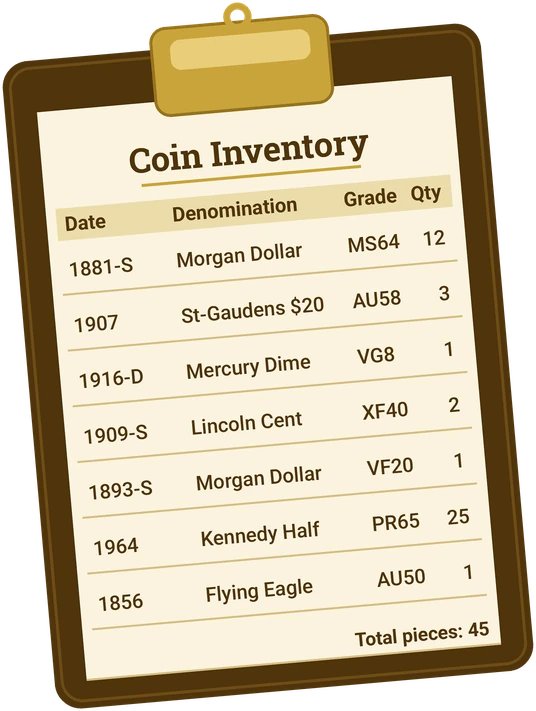
Clipboard with a coin inventory list showing date, denomination, grade and quantity columns for Morgan dollars, a Saint-Gaudens $20 and other U.S. coins, on a transparent backgroundClipboard with a coin inventory list showing date, denomination, grade and quantity columns for Morgan dollars, a Saint-Gaudens $20 and other U.S. coins, on a transparent background
  • Work in pairs. When possible, have two people present when a container is opened or moved, and note both names.
  • Seal and label. Put each container, as found, into a bag or box. Seal it with tape, sign or initial across the seal, and label it with where it was found and the date.
  • Log every hand-off. If the items leave the room, write down who took them, where and when, and have the person receiving them sign.
  • Hand over to the right person. Give the items to the owner, the executor or whoever your client designates, against a signed receipt. Don’t take coins to your office or vehicle unless your contract and your client clearly say so.
  • Share copies. Send your photos and the inventory to your client so the estate file is complete.

A Simple Inventory Sheet

You don’t need to identify or value anything. Describe what you see, by container, the way it is labeled. A sheet like this is enough:

ItemWhere FoundWhat It Looks LikeCountPhotosHanded To, Date
1Bedroom closet, top shelfCigar box, coins in paper envelopes with handwriting1 box1–6J. Smith (executor), 10/31
2Dresser, top drawerWrapped coin rolls, labeled “halves”4 rolls7–9
3Desk, file drawerBlue coin folder, partly filled1 folder10–11
4Den bookcaseOld bills inside a book, left in place3 bills12–13
5Home safeCoins in plastic holders with labels, Mint boxes12 holders, 5 boxes14–20

Count containers and pieces, not dollars. Never write a value on the sheet. The coin collection appraisal will do that, item by item.

Decorative gold separator bar

Who Decides and Who Can Sell

Finding the coins doesn’t give anyone the right to sell them, and that includes you, the family member who happens to be on site, and the estate sale company running the sale. Only the person with legal authority over the property should accept an offer. Depending on the situation, that is usually:

  • The owner, if they are living and making their own decisions, as in many downsizing moves.
  • An agent under a power of attorney, if the document gives that power and the owner is still living.
  • The executor or personal representative, once appointed, if the owner has died.
  • The trustee, if the coins belong to a trust.

When several heirs are involved, the collection should be appraised before it is divided or sold, so everyone works from the same numbers. Our guide on how to sell inherited coins covers authority and dividing a collection among heirs. If you aren’t sure who has authority, ask your client to check with the estate attorney. Our page for the probate and estate lawyer explains how we work with attorneys.

Don’t Let Estate Sale Shoppers or Scrap Buyers Cherry-Pick

Coins attract the most experienced buyers at any sale. Early-bird shoppers, pickers and “we buy gold” scrap buyers know exactly what to look for, and a family that doesn’t know what it has is at a disadvantage.

  • Pull coins, bullion and paper money before the sale opens. Remove them from the home, or lock them away, before any preview or walk-through.
  • Don’t price coins by face value or by weight. A scrap buyer pays for melt at best and never for rarity. Rare dates, proof coins and certified coins are worth far more than their metal.
  • Watch for “the whole box” offers. A quick cash offer for an unsorted box, before anyone has had it appraised, usually favors the buyer.
  • Don’t let a buyer pick out the best pieces. When the best coins leave first, the rest of the collection is often worth less as a group.

Fiduciaries often see the same problem in a different form. Our fiduciary’s audit checklist lists the red flags of an informal estate appraisal.

Decorative gold separator bar

Getting a Free Appraisal

Once the coins are secure and documented, the owner or executor can get a free, no-obligation appraisal. You can contact us yourself on your client’s behalf, with their permission, or give them our contact details.

  • Send photos and a list. Photos of the containers, and of both sides of a few coins or bills, plus your inventory sheet, are enough to start. Text 720-600-4740, email staff@americanrarities.com or use the form below. Our free online appraisal page explains what to send.
  • Don’t remove coins to photograph them. Photograph sets, rolls and holders as they are. We can see enough to know what we’re looking at.
  • Ask for an itemized written offer. It lists each coin or group, so the family and the executor know what is valuable and can compare it with any other offer.
  • Formal appraisal reports. When an estate needs an itemized appraisal report for its records, we provide one. Our estate appraisals and liquidation page explains the service.

How We Work With Organizers and Downsizing Professionals

Founded in 1990, American Rarities has purchased over $400 million in rare coins, bullion and collectibles. When you bring us into a job, we work directly with the owner or executor and keep you in the loop if they like.

  • We meet in person for larger collections, at the home or at the family’s bank, anywhere in the country. Our page to sell a large coin collection describes how.
  • Smaller collections ship fully insured, at our expense. If the owner declines our offer, we return the items fully insured.
  • Every offer is written and itemized, so the owner, the family and the executor can all see what each item is worth.
  • Payment goes to the seller, meaning the owner or the estate, by cash, check, ACH or wire, with an itemized bill of sale for the estate file.

We also work with the other professionals around an estate. See our pages for estate planners and on IRS-compliant numismatic appraisals for CPAs, and our guide for CPAs on step-up in basis.

Decorative gold separator bar

Printable Checklist: Coins Found While Downsizing

Print this page, or keep this checklist on your phone, for the next time you open a mystery box.

What to Do First
  • Stop work in that spot and tell your client or the family contact.
  • Don’t clean, polish, flatten or tape anything.
  • Don’t sort into piles or pull out “the good ones.”
  • Leave folders, albums, rolls, sets and plastic holders intact.
  • Keep boxes, envelopes, certificates, receipts and handwritten notes.
  • Photograph each spot and container in place, before anything moves.
  • Check the other usual hiding places before the home is cleared.
  • Seal, label and initial each container, and log every hand-off.
  • Fill in the inventory sheet: where found, what it looks like, count, photos.
  • Hand the items to the owner or executor against a signed receipt.
  • Confirm who has authority to sell before any offer is accepted.
  • Pull coins, bullion and paper money before any estate sale opens.
  • Send photos and the list for a free appraisal and written offer.
Free appraisal: text 720-600-4740 or email staff@americanrarities.com
Decorative gold separator bar

Ready to Sell: Helping Your Client Get a Free Appraisal

When you find coins, bullion or paper money on a job, you can send your client to us or contact us on their behalf. The process is the same for a single box of coins or a houseful of collections.

Four Steps for the Owner or Executor
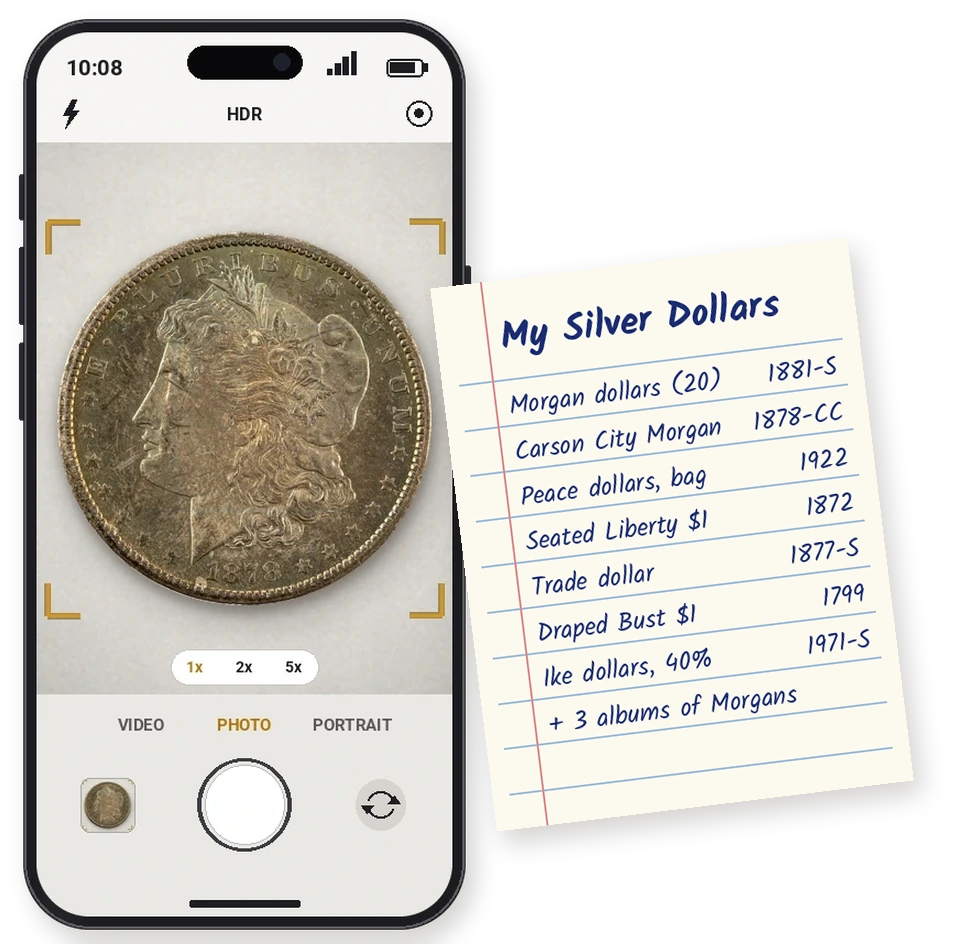
A smartphone photographing an 1878-CC Morgan dollar beside a handwritten list of silver dollars to sell, including Morgan, Peace, Seated Liberty, Trade, Draped Bust and Ike dollarsA smartphone photographing an 1878-CC Morgan dollar beside a handwritten list of silver dollars to sell, including Morgan, Peace, Seated Liberty, Trade, Draped Bust and Ike dollars
Step 1

Send Photos and a List

Text 720-600-4740, email us or use the form below. Include your inventory sheet if you have one.
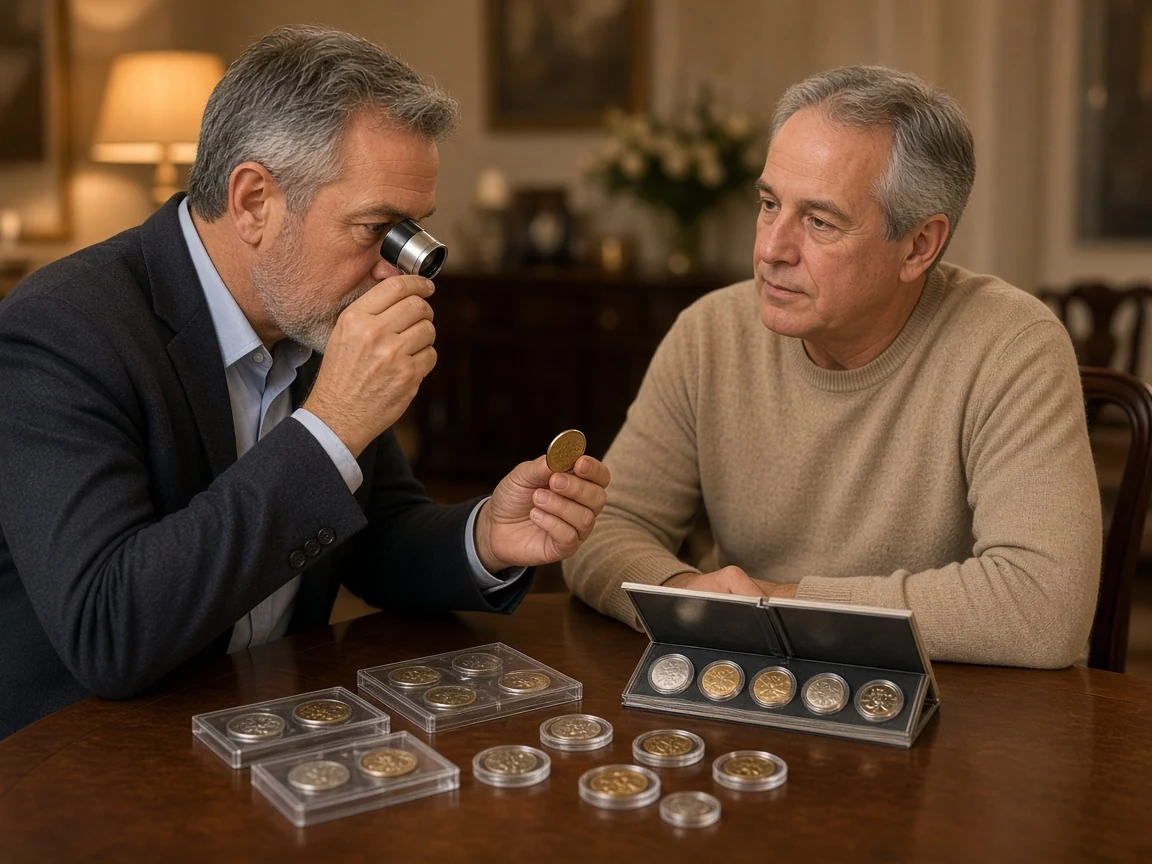
American Rarities coin appraiser examining a gold coin with a loupe during a personal visit at a seller's dining room table with proof sets and coin capsulesAmerican Rarities coin appraiser examining a gold coin with a loupe during a personal visit at a seller's dining room table with proof sets and coin capsules
Step 2

Free Appraisal and Written Offer

Appraisals are usually done within 24 hours. The owner or executor gets an itemized written offer, with no obligation.

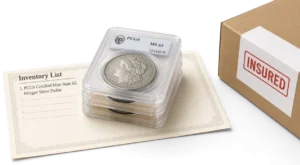
Taped American Rarities carton of paper money and graded coins with a FULLY INSURED shipping label addressed to American RaritiesTaped American Rarities carton of paper money and graded coins with a FULLY INSURED shipping label addressed to American Rarities
Step 3

Meet in Person or Ship Insured

For larger collections we meet at the home or at a bank. Smaller ones ship fully insured, at our expense.

A banded stack of $100 bills labeled Cash and an American Rarities check labeled Check, above two bank buildings joined by an arrow labeled ACH or WireA banded stack of $100 bills labeled Cash and an American Rarities check labeled Check, above two bank buildings joined by an arrow labeled ACH or Wire
Step 4

Get Paid

When the owner or executor accepts, we pay you immediately by cash, check, ACH or wire.

American Rarities holds a 4.7-star Google rating and an A+ rating with the BBB, we are ANA Life Members, and we are an authorized PCGS, NGC and ANACS dealer. For more on selling, see our guides on how to sell a coin collection, top 10 tips for selling a coin collection, how to ship a coin collection safely, how to sell inherited coins, how to sell silver dollars and the tax implications of liquidating bullion vs. rare coins in an estate.

You can also call 800-622-5680. Calls go to our answering service, so leave a message and we will call you back. Or visit our contact a rare coin buyer page.
Decorative gold separator bar

Coins Found While Downsizing: Frequently Asked Questions for Organizers

What should a professional organizer do first after finding coins in a client’s home?

Stop work in that spot, keep the coins where they are, and tell your client or the family contact. Don’t clean, sort or open anything. Photograph the items in place, then seal and label each container and record it on an inventory sheet.

Should I clean old coins before an appraisal?

No. Cleaning, polishing or rinsing a coin can destroy most of its collector value, and the damage cannot be undone. Old bills should not be flattened, taped or ironed either. Leave everything as found.

Is it all right to take coins out of folders, rolls or plastic holders?

No. Leave coin folders and albums intact, rolls wrapped, proof and mint sets in their original packaging, and sealed grading holders from PCGS, NGC or ANACS unopened. Sets and certified holders are usually worth more kept together.

How can I tell if coins are silver or gold?

U.S. dimes, quarters and half dollars dated 1964 and earlier are 90% silver, as are silver dollars dated 1935 and earlier. U.S. gold coins are small, heavy and bright yellow. Bullion bars and rounds are usually stamped with weight and fineness. When in doubt, set it aside for an appraisal.

Who has the authority to sell coins found while downsizing?

The owner, if living and making their own decisions; an agent under a power of attorney that grants the power; the executor or personal representative after death; or the trustee for trust property. Organizers, estate sale staff and family members without authority should not accept offers.

Should coins be sold at the estate sale?

Usually not before they are appraised. Pull coins, bullion and paper money before the sale opens, so early-bird shoppers and scrap buyers can’t cherry-pick them at face value or melt value.

What information should the inventory sheet include?

For each container: where it was found, what it looks like as labeled, a count, the photo numbers and who it was handed to and when. Don’t write values on the sheet. That is the appraiser’s job.

How does a family get a free appraisal from American Rarities?

Text photos to 720-600-4740, email staff@americanrarities.com or use the form on this page. Appraisals are usually done within 24 hours, and the owner or executor receives an itemized written offer with no obligation.

Will American Rarities meet us at the home or at a bank?

Yes, for larger collections we meet in person at the home or at the family’s bank, anywhere in the country. Smaller collections can ship fully insured at our expense, and if the owner declines our offer, we return the items fully insured.

Decorative gold separator bar

Free Appraisal for Coins Found on the Job

Email, Text, or Use This Form To Send Us Your Inventory List or Pictures


Upload clear photos of fronts and backs and we'll reply with a free appraisal.

    Decorative gold separator bar

    Leave a Reply