
Selling a Coin Collection: Where to Begin
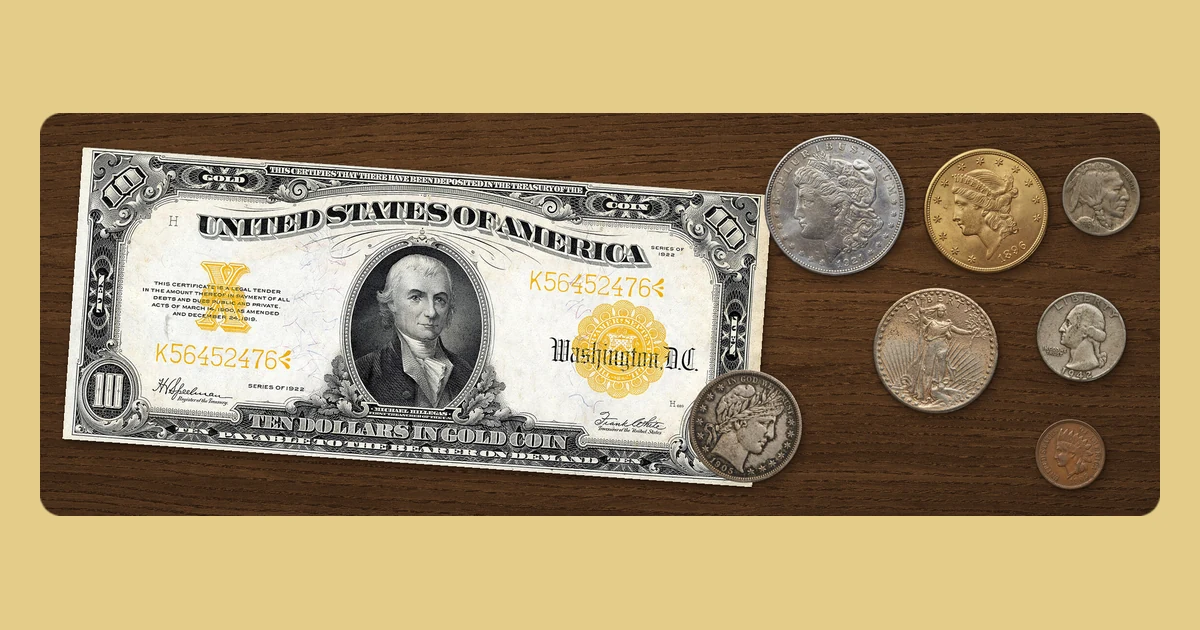
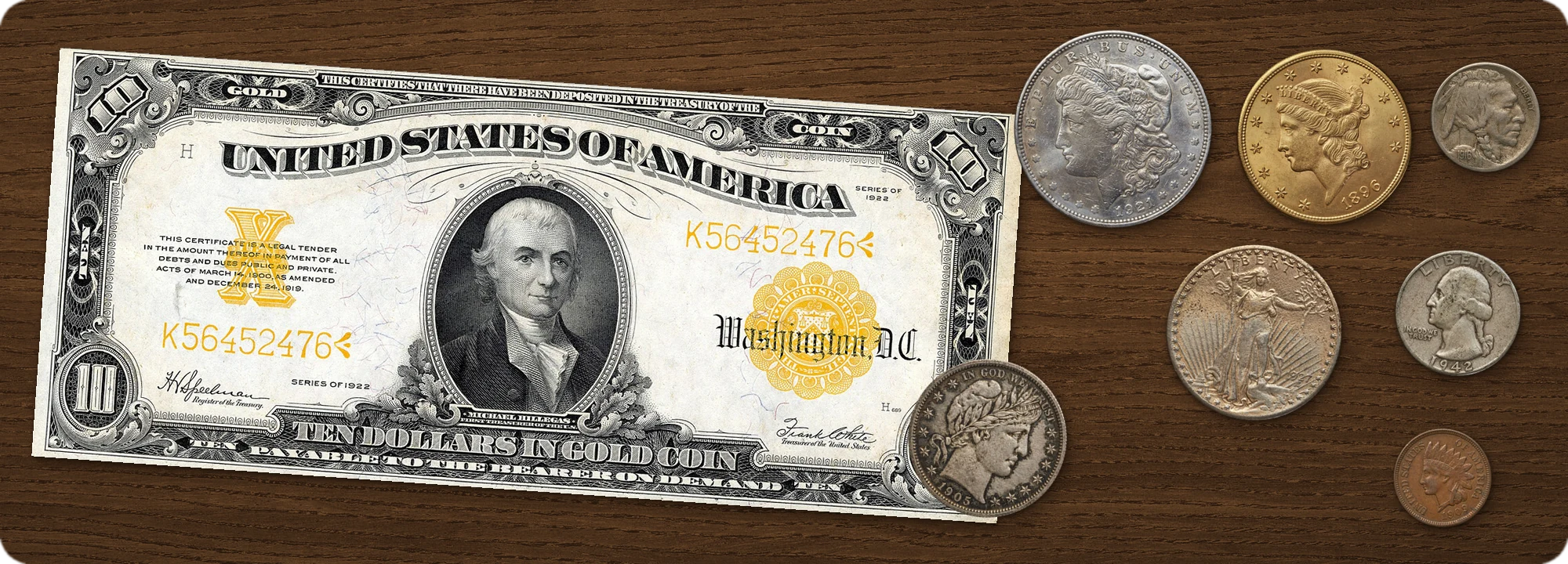
Most coin collections are a mix. A typical one holds some silver dollars and old dimes, a few gold coins, a stack of proof sets, some certified coins in plastic holders, a little old paper money and a handful of foreign coins from someone’s travels. Each of those groups has its own market, and a few coins in a collection are often worth far more than the rest. Knowing how to sell a coin collection the right way helps you find those coins, avoid costly mistakes and get a fair price for everything.
Founded in 1990, American Rarities has purchased over $400 million in rare coins, paper currency and collectibles, and we buy collections of every size every day. This guide walks through the seven steps we recommend: taking inventory, sorting the collection by type, leaving the coins uncleaned, getting it valued, deciding whether to sell it all at once, comparing written offers and avoiding common mistakes. Along the way, it links to our other step-by-step guides on how to sell gold coins, how to sell silver dollars, how to sell proof and mint sets, how to sell paper currency and how to sell inherited coins. If you have just found old coins while settling an estate, start with our guide on what to do with old coins found in an estate, and if you are a professional organizer or downsizing specialist, see our what to do first guide for organizers and downsizing experts. At the end, you will find how to get a free appraisal.
Step 1: Take Inventory of Your Collection
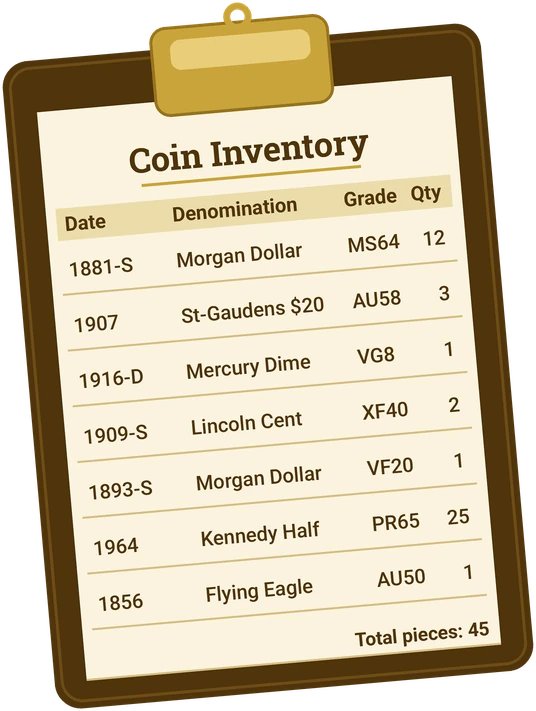
Before you show your coins to anyone, take stock of what you have. A simple inventory makes every later step easier: it helps you see what kinds of coins are in the collection, it speeds up an appraisal, and it lets you check every offer against your own list.
You do not need to be an expert. Work through the collection one box, album or bag at a time, and write down what you see. If you cannot tell what a coin is, a description and a photo are enough. Keep the coins in the holders, albums and envelopes they came in while you work.
- The basics. For each coin or group, note the country, the denomination, the date and the mintmark if you can see one, and how many you have.
- Groups and sets. Rolls, bags of old silver, albums and Mint sets can be listed as a group, such as “one roll of 1964 quarters” or “twenty proof sets, 1968 to 1990.”
- Certified coins. Copy the grading service, the grade and the certification number printed on each holder.
- Paperwork. Keep receipts, old appraisals, certificates of authenticity and any notes the collector left. They can help show what the coins are and where they came from.
If the collection came from a family member, our guide on how to sell inherited coins covers the extra steps for an estate, and our page on coin collection appraisal explains what an appraiser looks for.
Step 2: Sort the Collection by Type
Once you have a list, sort the coins into groups. Each group is valued in its own way, so sorting helps you see where the value is likely to be and which of our guides to read next. Most collections fall into these groups:

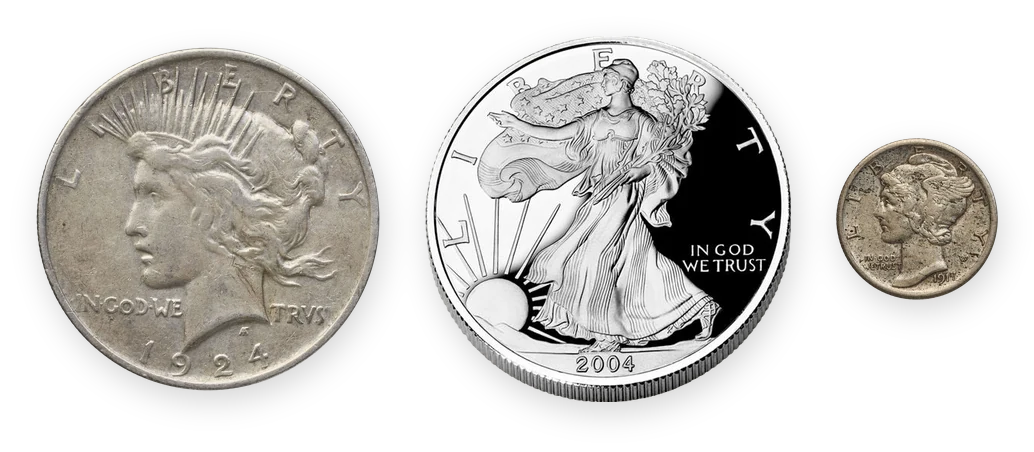
Silver Coins and Bullion
U.S. dimes, quarters and half dollars dated 1964 and earlier are 90% silver, as are Morgan and Peace silver dollars. Kennedy half dollars from 1965 to 1970 are 40% silver, and wartime nickels from 1942 to 1945 hold 35% silver. Silver bullion includes American Silver Eagles, struck since 1986 with one ounce of fine silver, along with silver rounds and bars.
Common circulated silver coins are usually valued for their silver, but better dates and coins in high grades are worth more. Silver dollars in particular should be looked at one by one. Our guide on how to sell silver dollars covers them in detail, and our page on 90% silver coins value explains how silver content is valued.
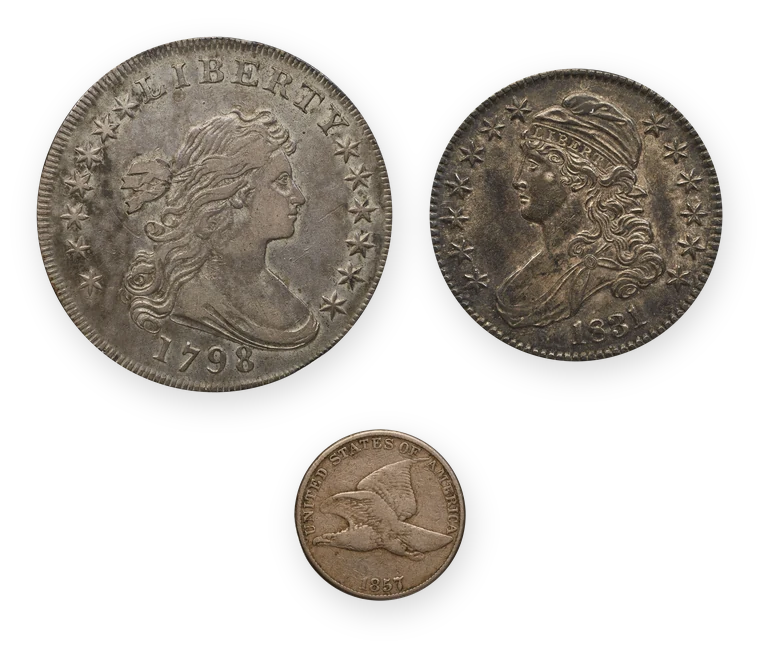
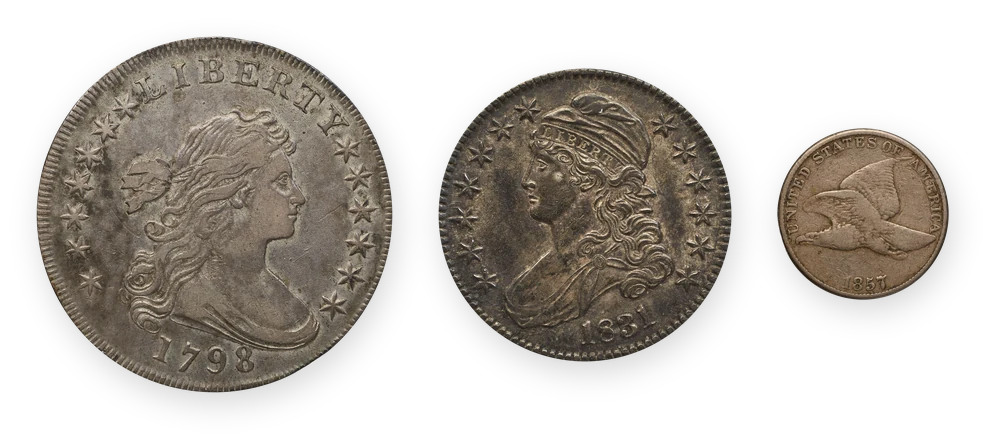
Classic U.S. Rare Coins
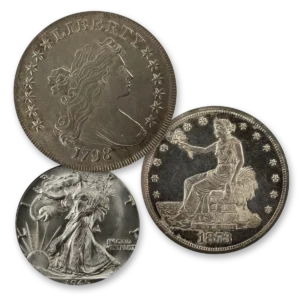
Early and classic U.S. coins, such as Draped Bust and Capped Bust silver, Flying Eagle and Indian Head cents, Seated Liberty and Barber coins and early copper, are valued for their rarity, date, grade and eye appeal rather than their metal. A worn coin can still be valuable, and two coins that look alike to most people can differ greatly in value because of a date, a mintmark or a small difference in condition.
These are the coins most worth a careful appraisal. Our guide on how to sell old coins for cash has more on older coins, and our guide on how to sell inherited coins covers the classic coins often found in family collections.

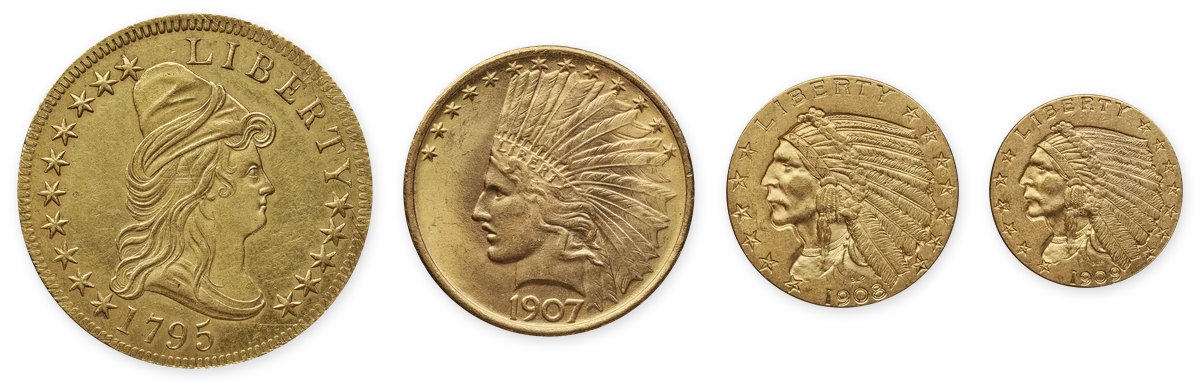
Gold Coins
U.S. gold coins were struck for circulation until 1933 in denominations from one dollar to twenty dollars, including the Liberty Head and Saint-Gaudens double eagles. Modern gold includes American Gold Eagles and other bullion coins. Every gold coin is worth at least the value of its gold, and many older gold coins carry a collector premium on top of that because of their date, mint or grade.
Our guide on how to sell gold coins explains how to tell bullion from collector gold and what to check before you sell.

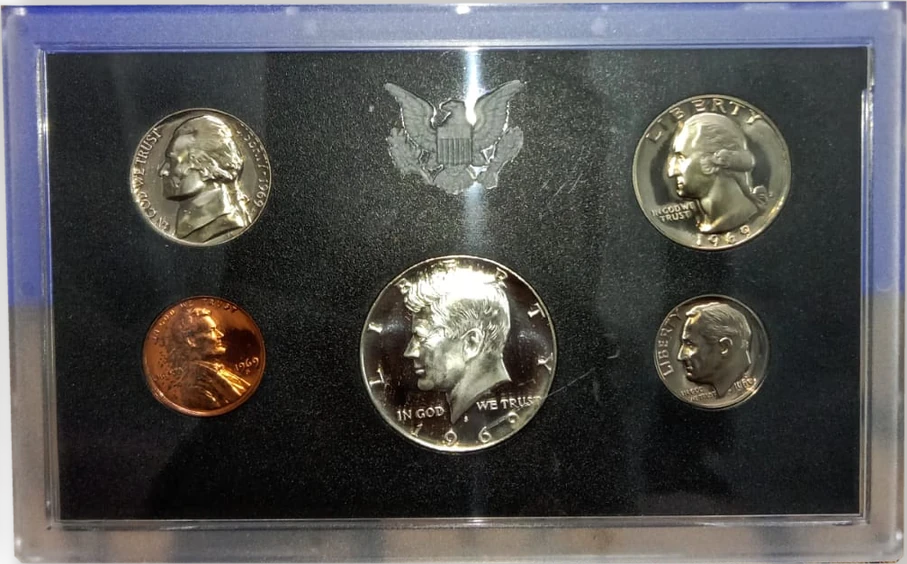
Proof Sets and Mint Sets
Proof sets and mint sets bought from the U.S. Mint turn up in most collections, often in large numbers. Older sets and many silver sets carry a premium, and a few sets hold rare varieties, while many modern sets are worth about face value or their silver value. Keep each set in its original box or envelope with its certificate.
Our guide on how to sell proof and mint sets shows how to find the silver sets and the valuable varieties.

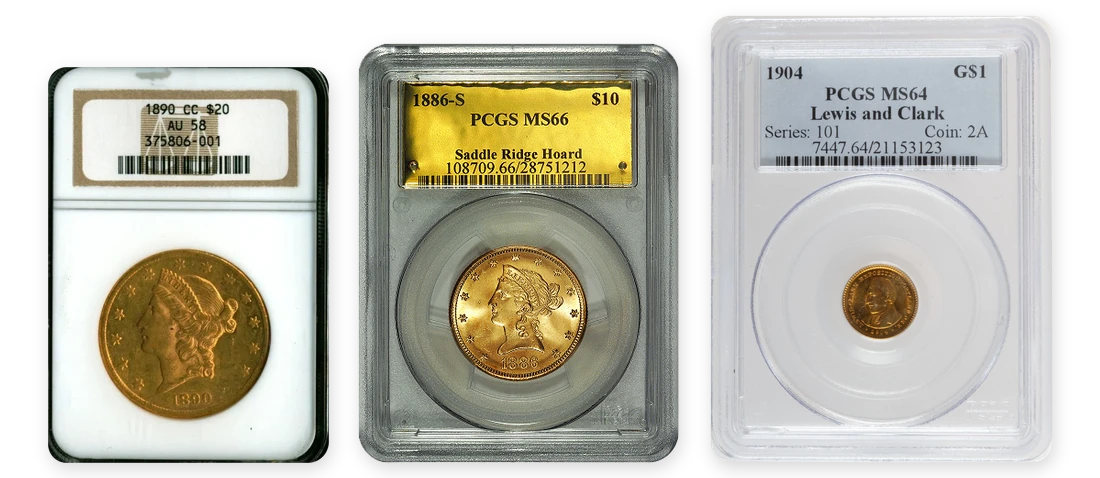
Certified Coins
Certified coins have been authenticated and graded by a third-party service such as PCGS, NGC or ANACS and sealed in a tamper-evident plastic holder. The grade on the holder plays a large part in the value, and many collectors pay more for coins certified by the leading services.
Never open a certified holder. Keep the coins exactly as they are, and list the certification numbers in your inventory. Learn more on our page to sell PCGS, NGC and ANACS coins.
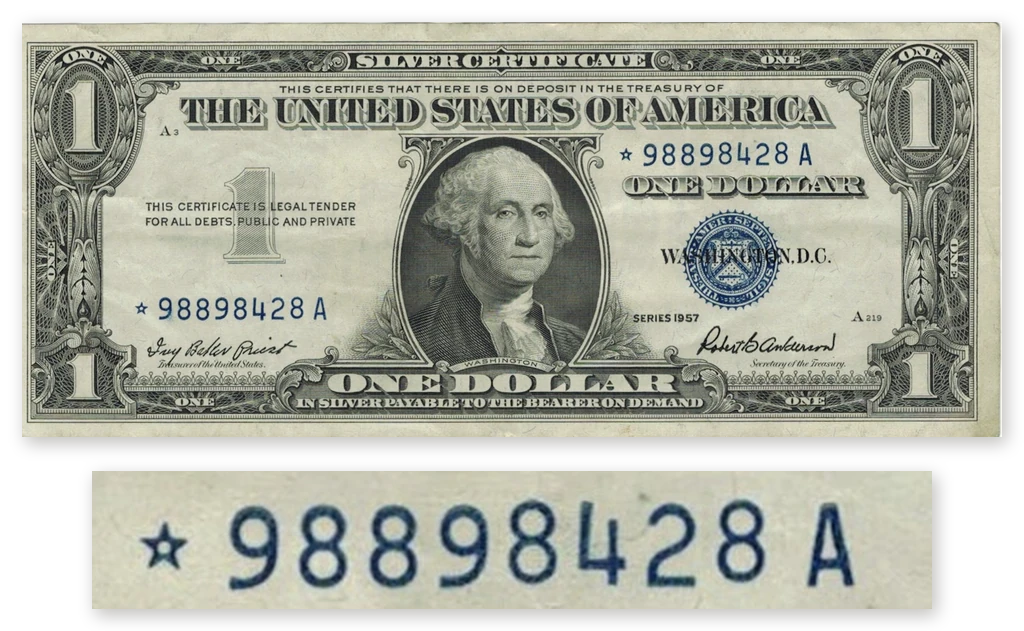
Paper Money
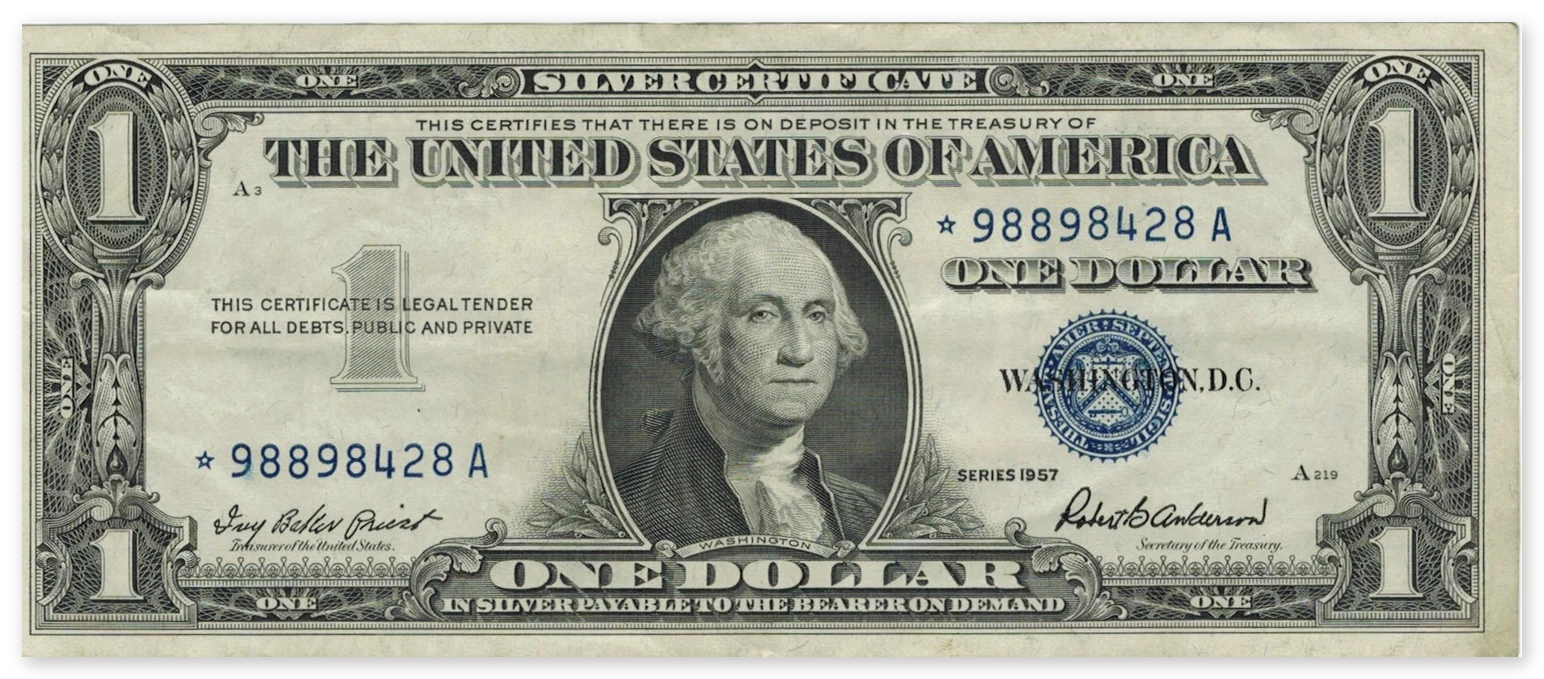
Old U.S. paper money is often tucked into coin collections. Large-size notes from before 1929, gold certificates, silver certificates, Federal Reserve Bank notes and star notes can all be worth more than face value, depending on their series, rarity and condition, and fancy serial numbers can add value too. Keep notes flat, and do not fold, press or repair them.
Our guide on how to sell paper currency explains what to look for.

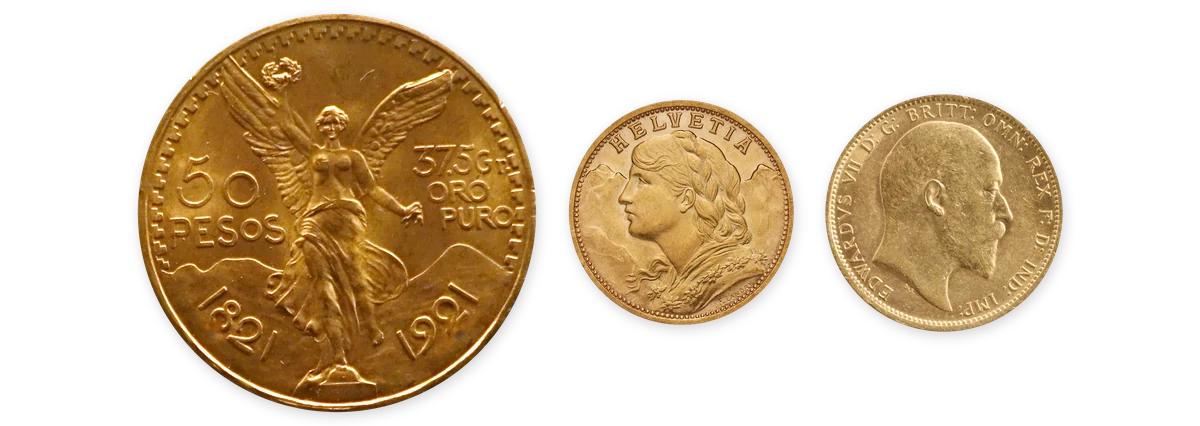
Foreign Coins
Foreign coins range from pocket change brought home from a trip to valuable world gold and silver. Gold coins such as British sovereigns, Swiss 20 francs and Mexican 50 pesos are valued at least for their gold, and many older foreign silver coins hold silver as well. Some older and scarcer foreign coins are prized by collectors in their home countries.
Keep foreign coins together, sorted by country if you can. Our pages on foreign coin collections and foreign coins value have more information.
Step 3: Do Not Clean Your Coins
This is the most important rule in this guide, and the one most often broken by people trying to help. Cleaning a coin almost always lowers its value, often by a great deal, and it cannot be undone.
- Cleaning leaves damage. Polishing, rubbing, dipping and even gentle wiping leave fine scratches, called hairlines, and strip away the original surface that collectors value. Experienced buyers can spot a cleaned coin right away.
- Grading services flag cleaned coins. PCGS, NGC and ANACS describe cleaned coins with a details grade instead of a regular numeric grade, and those coins usually sell for much less.
- Toning is not dirt. The natural color that silver and copper coins pick up over decades, called toning, is part of the coin’s history, and attractive toning can even add value.
Handle coins as little as possible and only by their edges, and leave them in their albums, holders, flips and sets. If a coin has residue, corrosion or green spots from an old plastic holder, leave it as it is and let an appraiser advise you. Our articles on the coin cleaning mistake that can destroy your collection’s value and why cleaning your coins is not recommended explain more.
Step 4: Get Your Collection Valued
A coin collection can be worth much more, or sometimes much less, than people expect. The key is understanding the two kinds of value a coin can have:
- Melt value. The value of the gold or silver in a coin, based on its weight, its purity and the current price of the metal. Common silver and gold coins and bullion are priced mainly on melt value plus a small premium.
- Collector value. What collectors will pay for a coin because of its rarity, date, mintmark, grade, eye appeal and demand. For scarce and high-grade coins, collector value can be many times melt value, and it has nothing to do with the coin’s face value.
| Type of Coin | What Usually Sets the Value |
|---|---|
| Common circulated 90% silver coins | Silver content (melt value) |
| Silver and gold bullion coins and bars | Metal content plus a small premium |
| Common-date gold coins | Gold content plus a premium for date, mint and grade |
| Key dates, rare dates and high-grade coins | Collector value: rarity, grade, eye appeal and demand |
| Certified coins | The grade on the holder, the grading service and demand |
| Proof sets and mint sets | Silver content, scarce years and varieties |
| Paper money | Series, rarity, condition and serial number |
Price guides and online listings can give you a rough idea, but asking prices are not what coins actually sell for, and grading a coin from a photo is hard even for experts. A professional appraisal from an experienced dealer is the most reliable way to learn what your collection is worth. Our article on how to determine the value of your rare coins walks through the factors, and our page on coin collection appraisal explains how an appraisal works.
Is Grading Worth It?
Most coins in a collection should be sold as they are. Grading by PCGS, NGC or ANACS costs money and takes time, so it makes sense only for coins where the grade makes a real difference to the value. As an authorized PCGS, NGC and ANACS dealer, we can tell you during a free appraisal whether any of your coins are worth grading.
Step 5: Decide Whether to Sell All at Once or in Pieces
Many sellers wonder whether to sell a coin collection as a whole or to split it up and sell the coins one at a time. Both can work, but each has trade-offs.
- Selling all at once. One appraisal, one transaction and one payment. It is the simplest and fastest way to sell, especially for a large collection or an estate, and a buyer who wants the whole collection will pay for the common coins as well as the best ones.
- Selling in pieces. Selling coins one by one through auctions or online can sometimes bring more for a few rare coins, but it takes far more time, and fees, photos, shipping, returns and waiting add up. Sellers who sell the best coins first are often left with common coins that are harder to sell.
A good middle path is to have the whole collection appraised together, then decide. An itemized offer shows what each coin or group is worth, so you can sell everything, sell part of the collection or keep any coins with special meaning for your family. If the collection is large, our page on how to sell a large coin collection explains how we handle big collections, including meeting you at your bank. If several heirs are involved, have the collection appraised before it is divided, as our guide on how to sell inherited coins explains.
Step 6: Compare Written, Itemized Offers
Before you sell, get offers in writing. A written offer protects you, and an itemized offer, one that lists each coin or group with its own price, shows you exactly what you are being paid for.
- Ask for an itemized offer. A single lump-sum number for a whole collection makes it hard to tell whether the best coins were noticed. With an itemized offer, you can see how each coin was valued and compare it line by line.
- Compare offers on the same coins. If you get more than one offer, make sure each covers the same coins, and compare the totals as well as the items that matter most.
- Ask about fees and payment. Find out whether there are any fees for the appraisal, shipping or insurance, how you will be paid and how quickly.
- Check the buyer. Look for a long history, strong reviews, a good BBB rating and membership in groups like the American Numismatic Association.
A reputable buyer will be glad to put an offer in writing and will never pressure you to decide on the spot. Our pages on coin collection buyers and the best place to sell a coin collection explain more about choosing a buyer.
Step 7: Avoid These Common Mistakes
Most of the money people lose when they sell a coin collection comes from a few avoidable mistakes:
- Cleaning the coins. As Step 3 explains, cleaning almost always lowers the value.
- Selling before you know what you have. Spending old silver coins, melting gold or giving away a jar of old cents before anyone has looked at them can throw away real value.
- Taking the first offer. Selling to the first buyer, especially for a single lump-sum price, without comparing written offers.
- Breaking up sets and holders. Removing coins from certified holders, proof set lenses or original packaging usually lowers their value.
- Selling the best coins on their own first. This can leave you with a group of common coins that is harder to sell and worth less.
- Trusting asking prices. Online listings show what sellers hope to get, not what coins actually sell for.
- Dividing an estate before an appraisal. Splitting a collection among heirs before it is valued makes it hard to divide it fairly.
Our article on mistakes to avoid when selling rare coins covers more of the pitfalls. For a quick checklist, see our top 10 tips for selling a coin collection. If you plan to mail your coins, read how to ship a coin collection safely.
Ready to Sell Your Coin Collection?
Whether you have a single album of old coins or a lifetime collection of gold, silver, sets and currency, the steps are the same: take inventory, sort the collection, leave the coins uncleaned, learn what it is worth, decide how you want to sell, compare written offers and avoid the common mistakes. We have bought coin collections from collectors, families and estates since 1990, and we would be glad to help you.
How We Buy Coin Collections
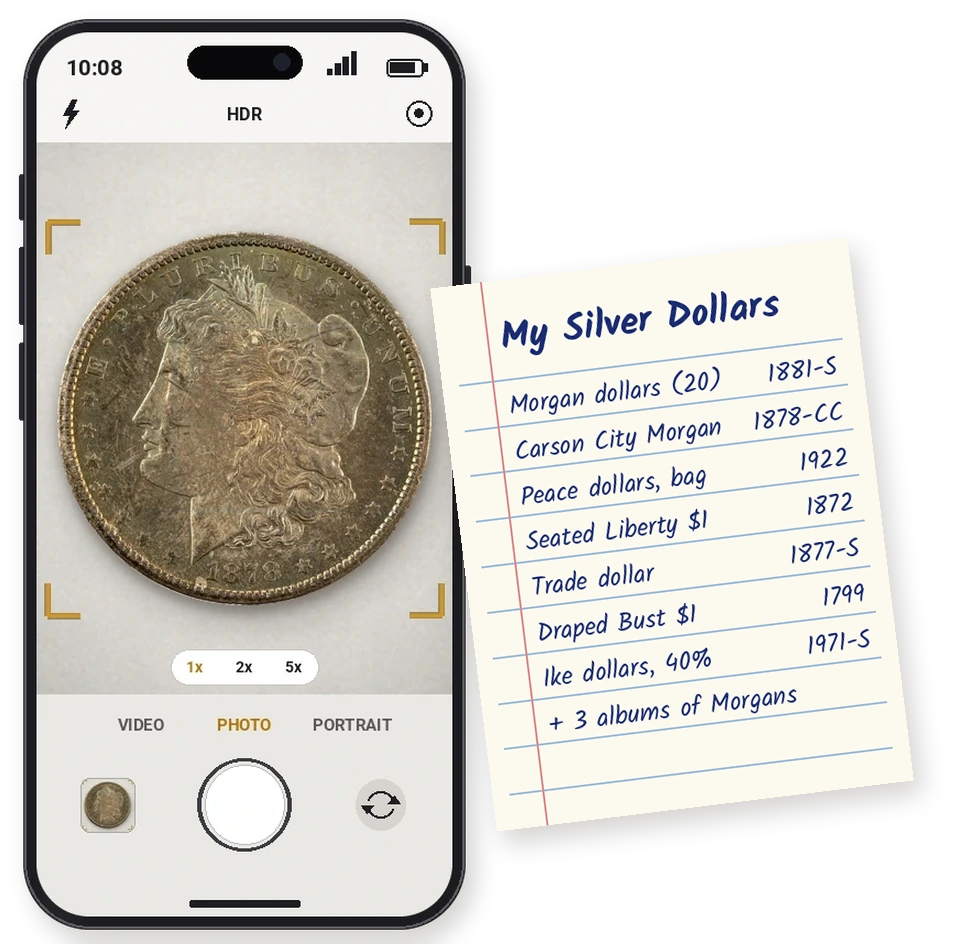
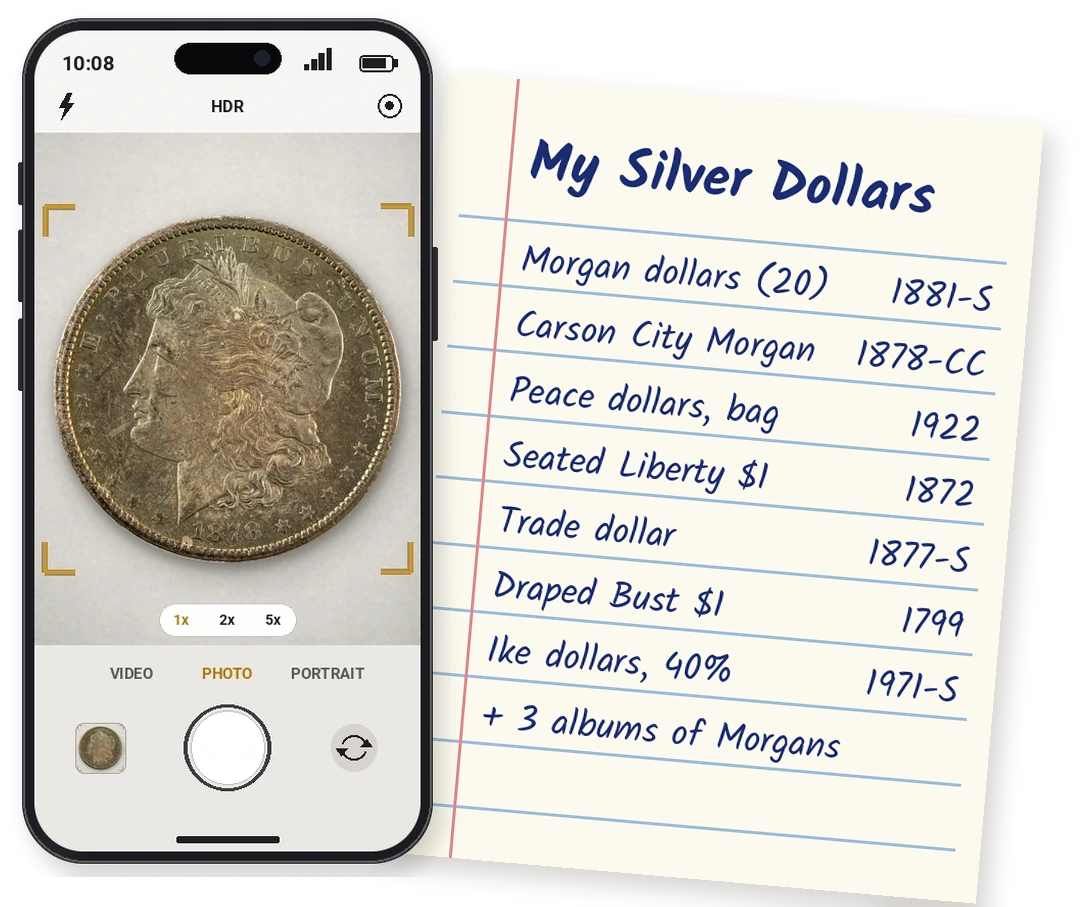
Send Photos and/or a List
Send us your inventory list, photos of the coins, or both. For a large collection, a list and photos of the better pieces are enough to start. Text them to 720-600-4740, email staff@americanrarities.com or use the form further down this page.
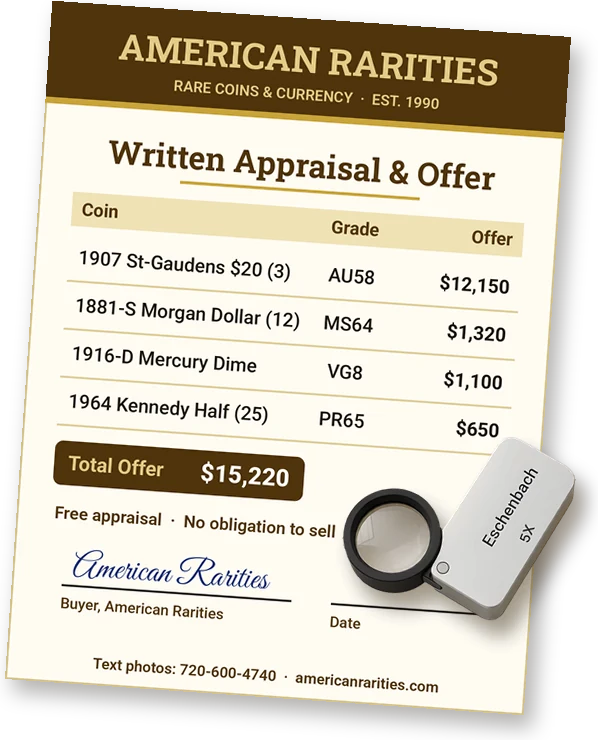

Get Your Free Written Offer
We send you a free, no-obligation written offer that lists each coin or group with our price, like this sample (the figures are for illustration only). Appraisals are usually done within 24 hours, and you are welcome to compare our offer with others.
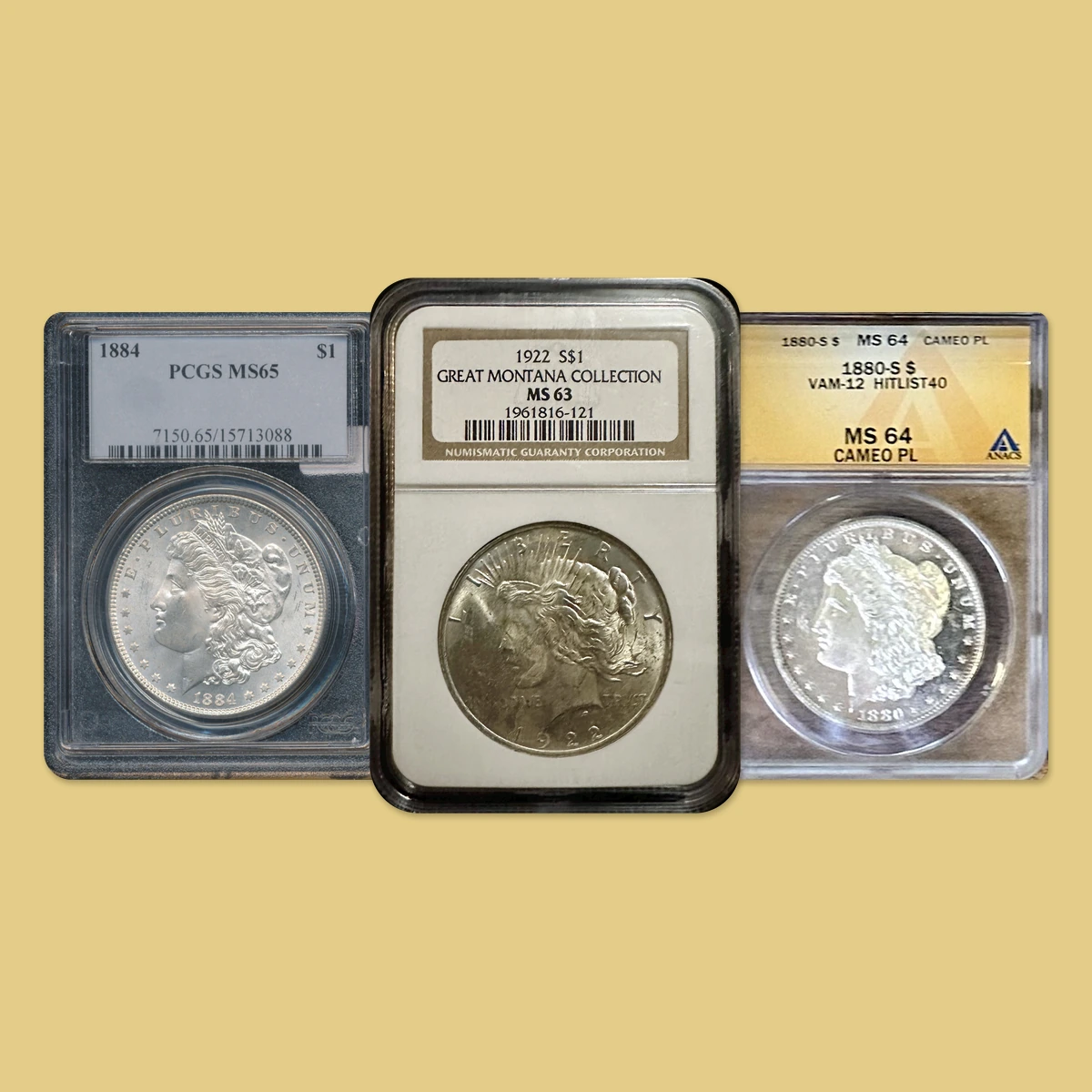

Get a Free Grading Opinion
As an authorized PCGS, NGC and ANACS dealer, we tell you which coins, if any, are worth certifying and which are best sold as they are, at no charge.
Ship Your Coins or Meet in Person
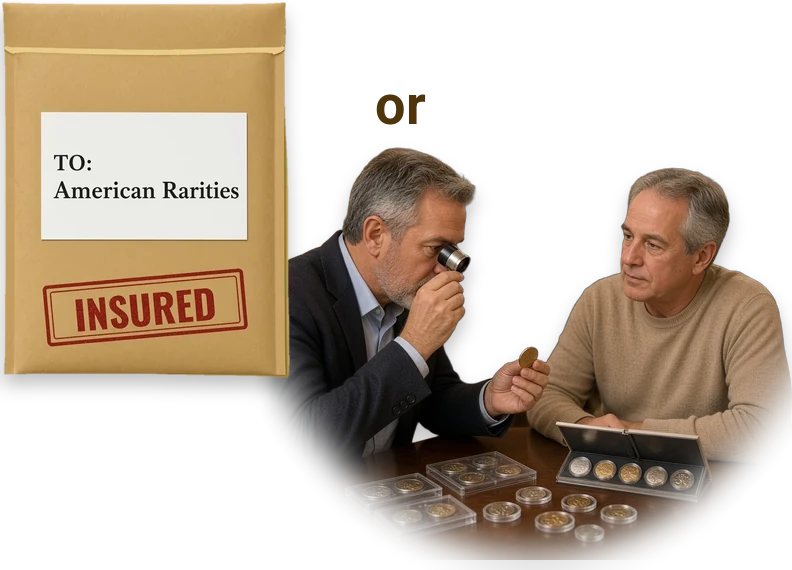
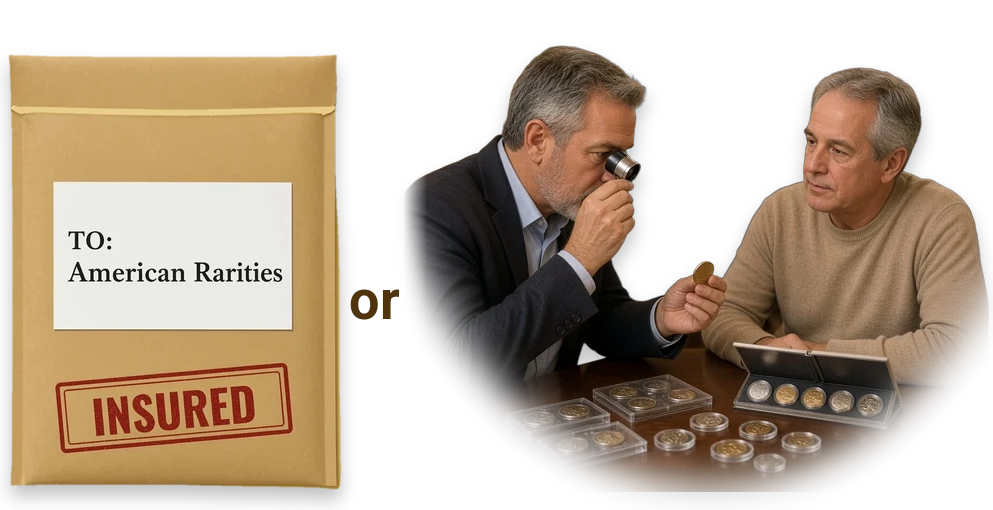
Ship your collection to us fully insured at our expense, or for larger collections we can meet you at your bank. If you decline our offer, we return your items fully insured.


Get Paid
When you accept our offer, we pay you immediately by cash, check, ACH or wire, whichever you prefer. There is never a fee for our appraisal.
American Rarities holds a 4.7-star Google rating and an A+ rating with the BBB, we are ANA Life Members, and we are an authorized PCGS, NGC and ANACS dealer. Learn more on our pages for coin collection buyers and to sell a large coin collection.
You can also call 800-622-5680. Calls go to our answering service, so leave a message and we will call you back. Or visit our contact a rare coin buyer page.
How to Sell a Coin Collection: Frequently Asked Questions
What is the best way to sell a coin collection?
Start by taking an inventory and sorting the coins by type, and do not clean them. Then get a professional appraisal and a written, itemized offer from an experienced dealer, and compare offers if you like. Selling the whole collection to one reputable buyer is usually the simplest and safest way, especially for a large collection or an estate.
How do I find out what my coin collection is worth?
A professional appraisal is the most reliable way. Price guides and online listings give only a rough idea, because asking prices are not selling prices and a coin’s grade makes a big difference. An experienced dealer can identify the key dates, varieties and better grades in your collection and tell you which coins are valued for their metal and which for their collector value.
Should I clean my coins before I sell them?
No. Cleaning almost always lowers a coin’s value, sometimes by a great deal. It leaves fine scratches and removes the original surface, and grading services give cleaned coins a details grade instead of a regular grade. Leave your coins exactly as they are.
Is it better to sell a coin collection all at once or piece by piece?
Selling all at once is simpler and faster, and a buyer who wants the whole collection pays for the common coins as well as the best ones. Selling piece by piece can bring more for a few rare coins but takes much more time and costs more in fees. A good approach is to have the whole collection appraised together with an itemized offer, then decide what to sell and what to keep.
What is the difference between melt value and collector value?
Melt value is the worth of the gold or silver in a coin, based on its weight, purity and the current metal price. Collector value is what collectors will pay because of a coin’s rarity, date, mintmark, grade and demand. Common silver and gold coins sell close to melt value, while scarce and high-grade coins can be worth many times more.
Do I need to get my coins graded before selling them?
Usually not. Most coins in a collection are best sold as they are. Grading by PCGS, NGC or ANACS makes sense only for coins where the grade makes a real difference to the value, and we can tell you during a free appraisal whether any of your coins are worth grading.
Do you buy paper money and foreign coins along with the collection?
Yes. We buy U.S. coins, gold and silver, proof and mint sets, certified coins, old U.S. paper money and foreign coins, so you can sell the whole collection in one transaction.
How do you pay when I sell my coin collection?
When you accept our offer, we pay you immediately by cash, check, ACH or wire, whichever you prefer. Appraisals are usually done within 24 hours, there is never a fee for our appraisal, and if you decline, we return your items fully insured.
Free Coin Collection Appraisal and Offer
Email, Text, or Use This Form To Send Us Your Inventory List or Pictures
Email: staff@americanrarities.com | Text: 720-600-4740