Articles Tagged: Inherited Collection
Inheriting a collection of coins, currency, or bullion can be an overwhelming experience. You may have questions like “What is this worth?” and “What do I do next?”
You are not alone in this, and we are here to help. The articles in this section are designed to be a helpful, stress-free guide. We’ll walk you through the first steps to take, the common (and costly) mistakes to avoid, and how to get a professional appraisal to understand the true value of what you have.
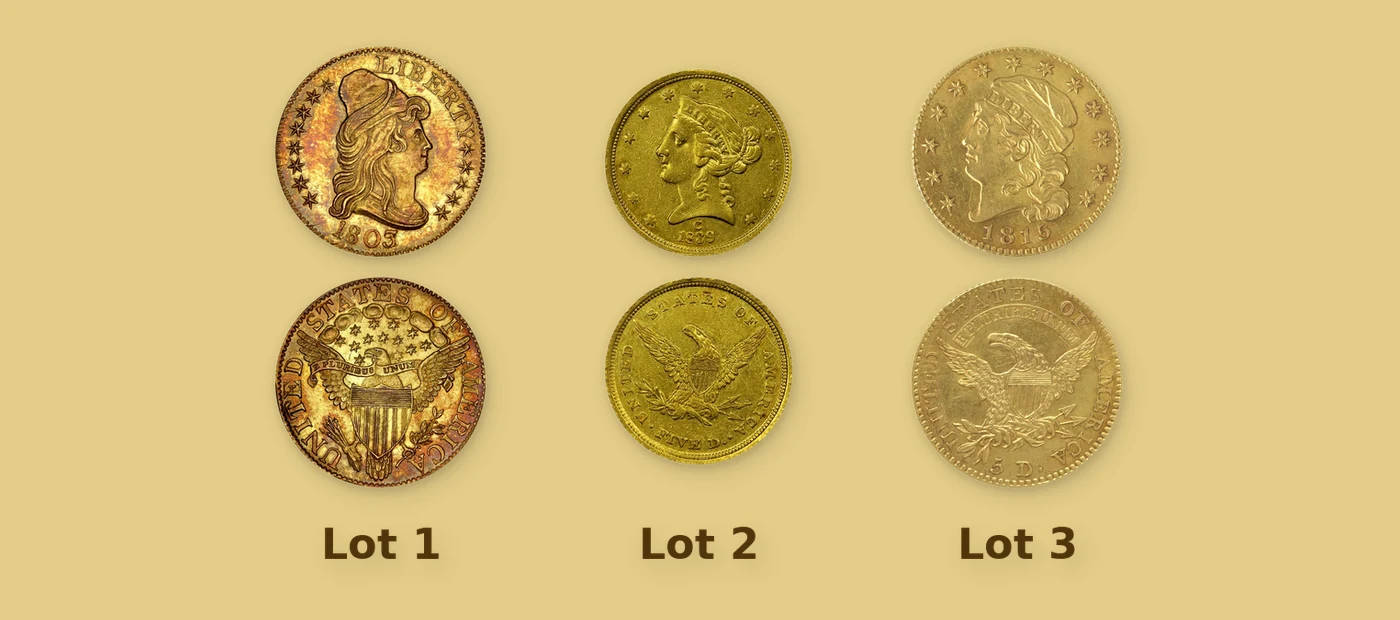
1803 and 1815 half eagles: National Numismatic Collection, National Museum of American History, Smithsonian Open Access, CC0. 1839-C half eagle: Eric P. Newman Numismatic Education Society, Newman Numismatic Portal, CC0, via Wikimedia Commons (library media 42935, 42937 and 42939).
How executors, trustees and families divide a coin collection among heirs: securing and inventorying the coins, a fair market value appraisal, equal-value lots, rotation picks and buyouts, the sell or keep decision and the basis each heir takes.
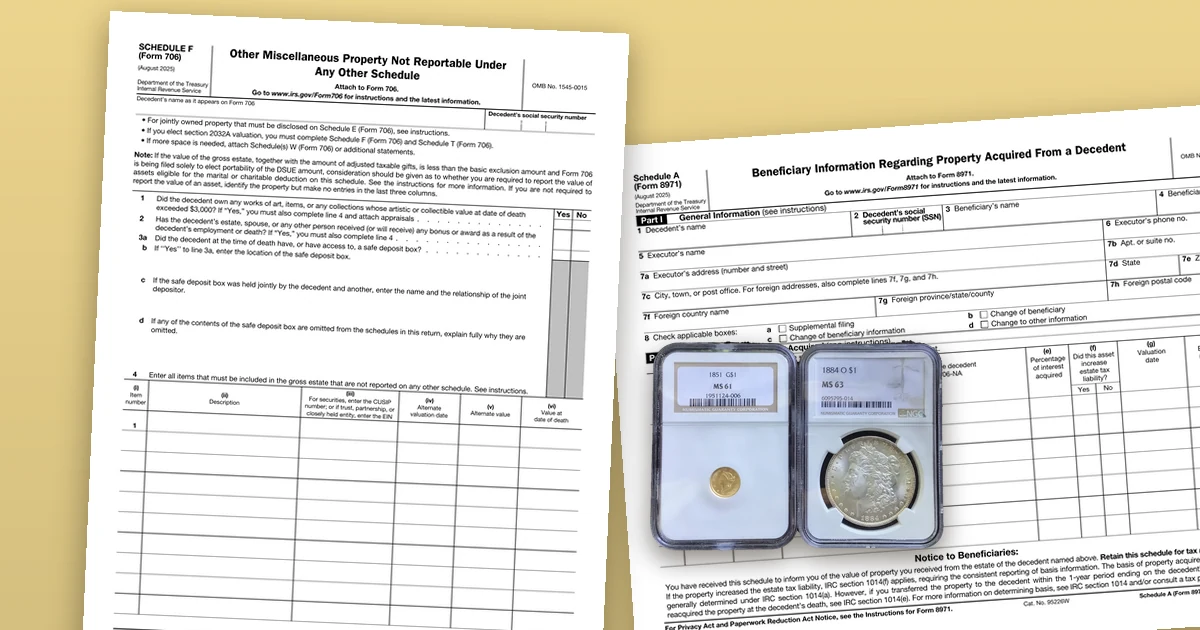
Coin Appraisal for Estate Tax: An IRS Documentation Checklist for CPAs, from American Rarities. IRS form images: Schedule F (Form 706) and Schedule A (Form 8971), August 2025 revisions, from
irs.gov; U.S. government works, public domain. NGC-certified 1851 gold dollar and 1884-O Morgan dollar: photo by BrayLockBoy,
CC BY-SA 4.0, via Wikimedia Commons (
File:NGC Slabbed 1851-P Gold and 1884-O Morgan Dollar side by side.jpg); background removed and shadow added by American Rarities, shared under the same license.
A checklist for CPAs and tax preparers on coin appraisal for estate tax: Form 706 and Schedule F requirements, the expert appraisal under oath, fair market value and the alternate valuation date, bullion versus collectible coins, step-up in basis and Form 8971 consistency, valuation penalties and the records that hold up on examination.
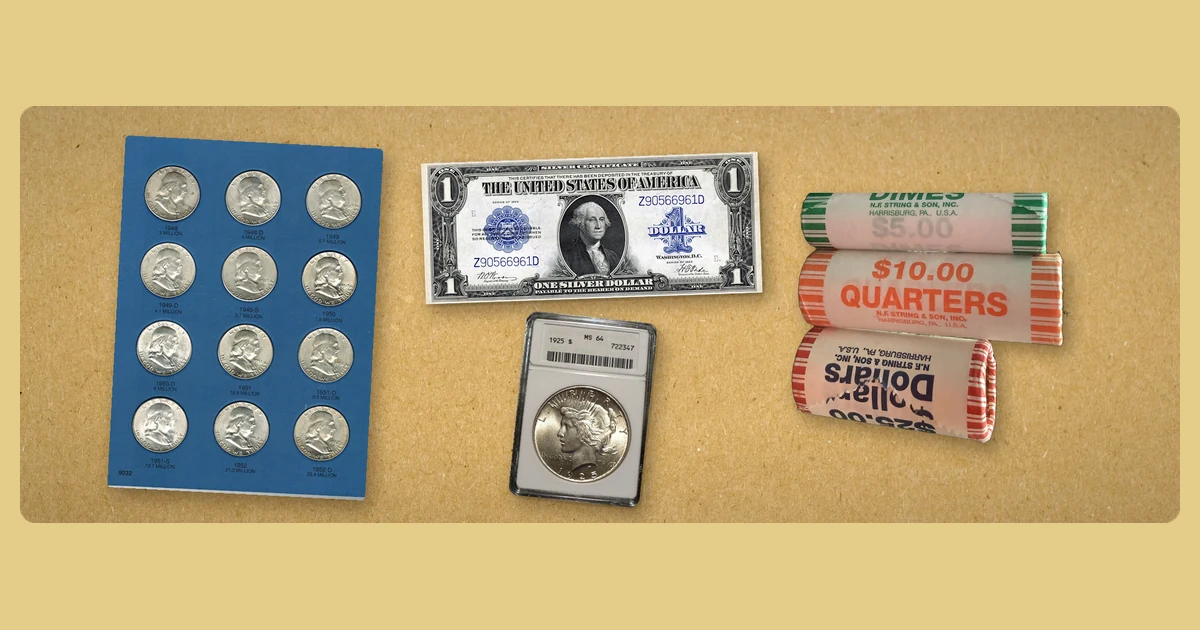
A “What to Do First” Guide for Professional Organizers and Downsizing Experts, from American Rarities. Whitman Franklin half dollar folder page: photo by Bruxton, public domain, via Wikimedia Commons (
File:Franklin half dollar Whitman coin folder first page.jpg). Series 1923 $1 silver certificate: National Numismatic Collection, Smithsonian, image by Godot13 via Wikimedia Commons; public domain design (PD-USGov-money, PD-Art), scan licensed CC BY-SA 4.0 outside the U.S.; background removed. 1925 Peace dollar ANACS MS64 holder: photo by American Rarities. Dime, quarter and dollar coin rolls: cropped from a photo by Protobowladdict,
CC BY 4.0, via Wikimedia Commons (
File:UscoInrolls.jpg), background removed and rotated. Items cut out and shown at true relative size by American Rarities. Cardboard background: photo by Humusak,
CC0, via Wikimedia Commons (
File:Cardboard-546867.jpg).
A “what to do first” guide for professional organizers, senior move managers, downsizing specialists and estate sale companies who find coins, bullion or paper money while clearing a home: the first hour, where coins hide, quick recognition, chain of custody and an inventory sheet, who can sell, keeping cherry-pickers away, a free appraisal and a printable checklist.
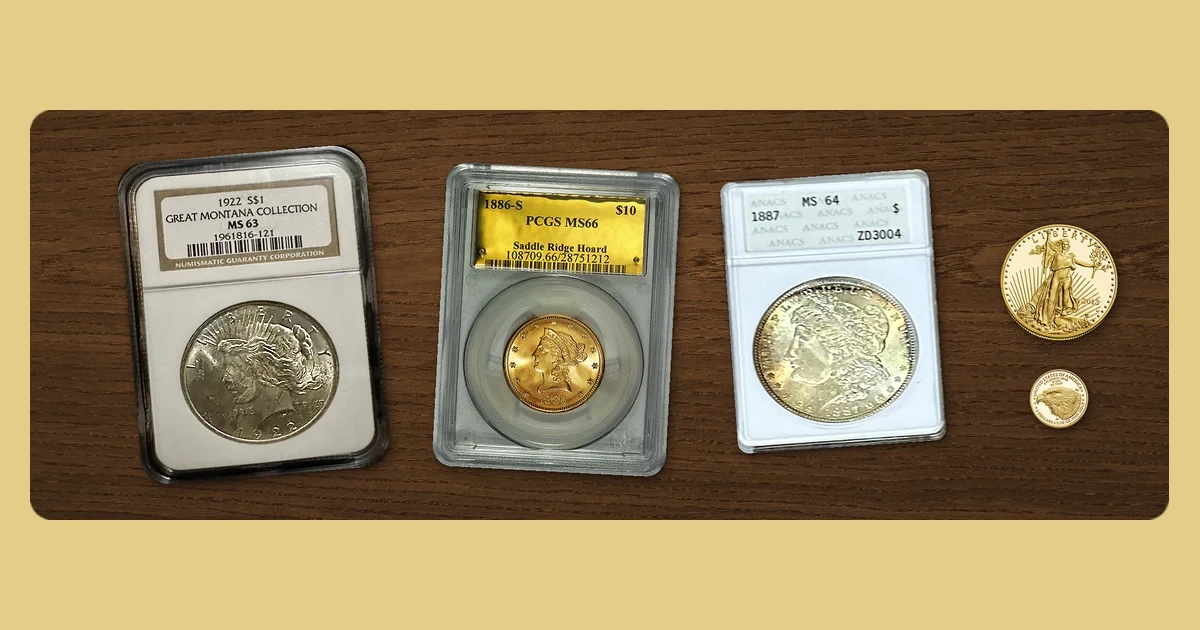
A Guide for CPAs and Tax Pros on Step-Up in Basis and Date-of-Death Values, from American Rarities. PCGS 1886-S $10 holder (Saddle Ridge Hoard): photo courtesy of Kagin’s, Inc.,
CC BY-SA 3.0, via Wikimedia Commons (
File:Saddle Ridge Hoard 1886-S 10 dollar slab.gif). NGC 1922 Peace dollar holder: lightly sharpened from a photo by Bruxton,
CC0, via Wikimedia Commons (
File:1922 Peace dollar from the Great Montana Collection graded and slabbed by NGC.jpg). ANACS 1887 Morgan dollar holder: cropped and lightly sharpened from a photo by Bruxton,
CC BY-SA 4.0, via Wikimedia Commons (
File:Variety of coin slabs.jpg). American Gold Eagles (1 oz and 1/10 oz): United States Mint, public domain, via Wikimedia Commons (
File:Liberty $50 Obverse.png,
File:One Tenth Ounce American Gold Eagle reverse.jpg). Coin designs: public domain. Holders cut out and coins shown at true relative size by American Rarities; holder sizes as photographed. Walnut tabletop: “American walnut veneer” scan by Poly Haven, CC0.
A professional guide for CPAs and tax preparers on step-up in basis for inherited coins, bullion and collectibles: the date-of-death fair market value standard, retail versus wholesale, bullion versus numismatic valuation, appraisal documentation, the alternate valuation date, consistent basis and Form 8971, the 28% collectibles rate, the NIIT, holding period, reporting, community property and common mistakes.
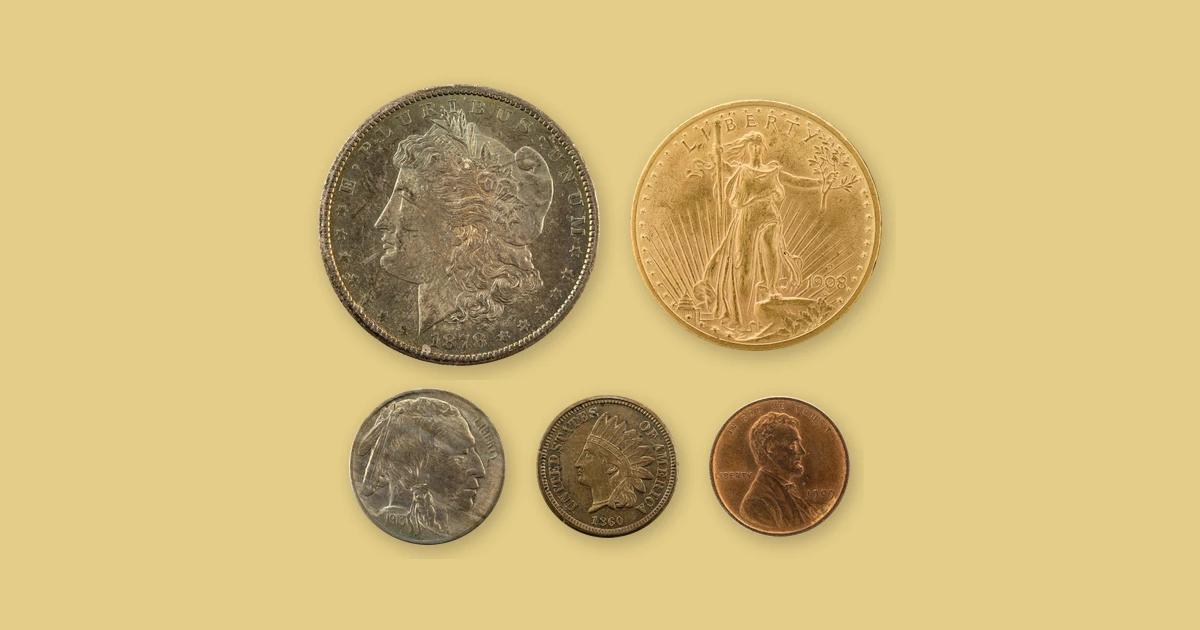
How to Sell Inherited Coins, a guide from American Rarities. Coin photos: National Numismatic Collection, National Museum of American History (Smithsonian), photographed by Jaclyn Nash, public domain (PD-USGov-SI), via Wikimedia Commons.
How to sell inherited coins without losing value: keep the collection intact, confirm who can sell, understand date-of-death value, sort bullion from rare coins, compare appraisals and get paid immediately.