The Enigmatic World of U.S. Pattern Coinage

1879 Flowing Hair and 1880 Coiled Hair $4 Stella patterns. Photos: Smithsonian National Museum of American History, National Numismatic Collection (public domain).

U.S. pattern coins are trial pieces struck by the United States Mint to test a proposed design, metal or denomination that was never adopted for regular coinage, at least not in that form. They are also called experimental or trial pieces. Most date from the Mint’s first century, many were struck in tiny numbers, and some survive as only a handful of examples, which is why they rank among the most prized American coins.
This guide explains what pattern coins are, highlights some of the most famous examples, shows how Judd numbers and the pattern rarity scale work, and explains what makes a pattern valuable. American Rarities has bought and appraised rare U.S. coins since 1990. For a free, no-obligation appraisal of a pattern coin, use the form on this page or text 720-600-4740.
What Are U.S. Pattern Coins?
A pattern is a coin struck to show what a proposed coin would look like. Mint officials used patterns to evaluate new designs, try new metals and alloys, and show Congress and the Treasury Department what a new denomination would look like. A few patterns were later adopted with small changes; most were not. Catalogers usually sort these pieces into a few groups:
- Patterns: coins with a design, denomination or metal that differs from the regular coinage of the time, such as the $4 Stella or the 1877 $50 half union.
- Trial pieces and off-metal strikes: coins struck from regular or pattern dies in a different metal, such as copper, aluminum or nickel, often to test the dies.
- Transitional pieces: coins with a design that was later adopted, struck before it officially went into use. The 1856 Flying Eagle cent is the best known.
- Restrikes and fantasy pieces: some patterns were struck again in later years, and some die combinations were made mainly for sale to collectors.
Pattern coins are not mint errors: they were made on purpose. For a general overview, see pattern coin on Wikipedia.
A Short History of U.S. Pattern Coinage
The story of U.S. patterns begins with the Mint itself. In 1792, the year the Coinage Act established the Mint, pieces such as the silver center cent were struck to test ideas for the nation’s first coins. Throughout the 19th century the Mint made patterns whenever it considered a change: the smaller copper-nickel cent of the 1850s, the two-cent piece of the 1860s, the trade dollar of the 1870s and the designs that led to the Morgan silver dollar in 1878.
Patterns were meant to stay inside the Mint, but in the 1860s and 1870s Mint officials struck many pieces, including off-metal strikes and restrikes, for sale to collectors. That is why some patterns from those decades are more available than their purpose would suggest. The practice ended in the 1880s, and far fewer later patterns reached collectors. Many of the most important patterns are now in the Smithsonian’s National Numismatic Collection, which holds the coins of the Mint’s own historic collection.
Notable Examples of U.S. Pattern Coins
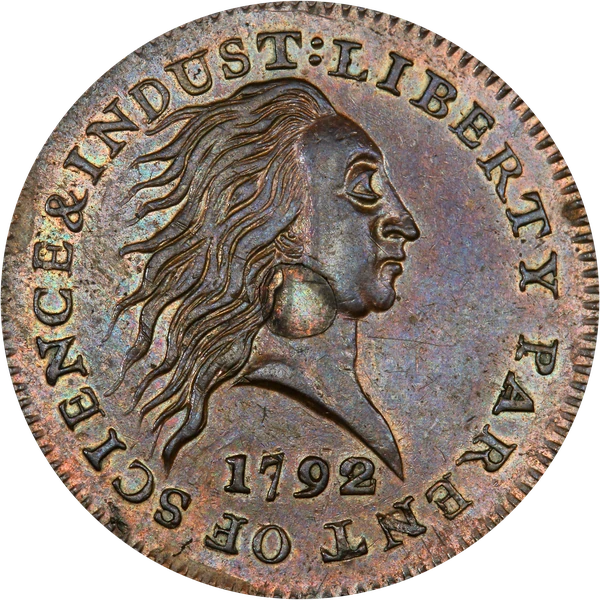
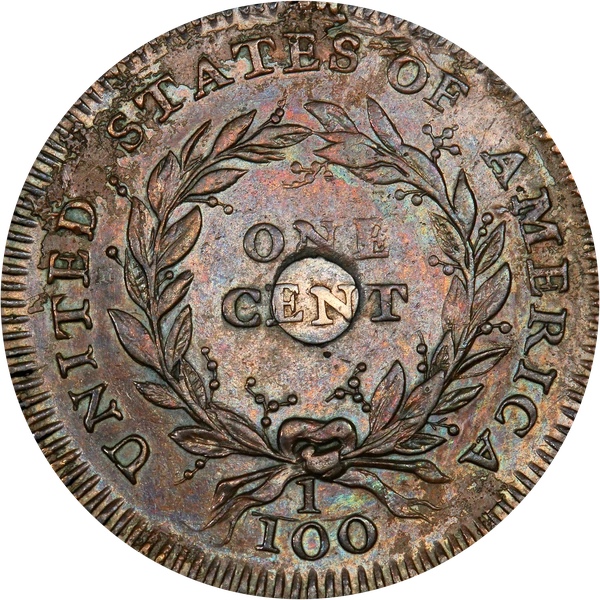
1792 silver center cent: one of the first U.S. pattern coins. A cent of pure copper would have needed to be very heavy to hold a cent’s worth of metal, so the Mint’s chief coiner, Henry Voigt, set a small silver plug into a smaller copper planchet. Only about 12 original examples are known, and one is in the Smithsonian. The idea was dropped, and the large cents struck from 1793 were pure copper. Learn more about the silver center cent.
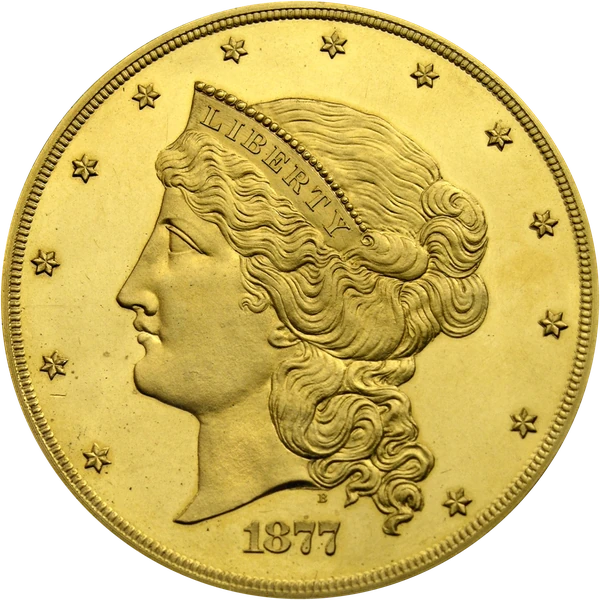
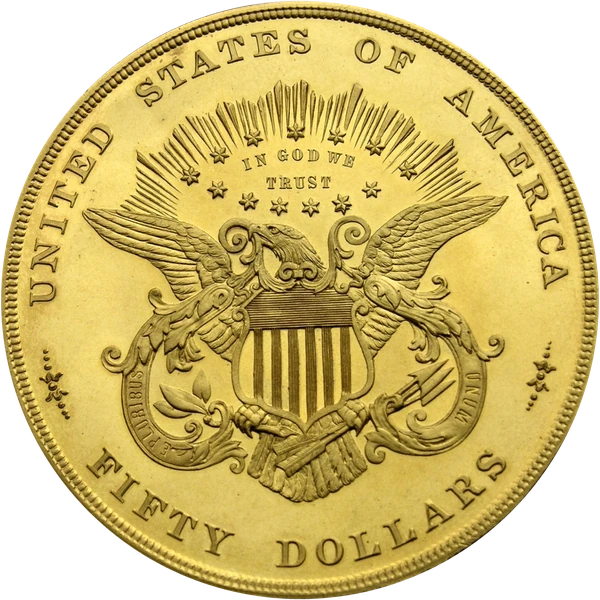
1877 $50 half union: Chief Engraver William Barber prepared patterns for a fifty-dollar gold coin, twice the face value of the double eagle. Only two were struck in gold, one with a small head of Liberty and one with a large head, and both are in the Smithsonian. Other examples were struck in copper, some of them gilt. Congress never approved the denomination. Read more about the half union.
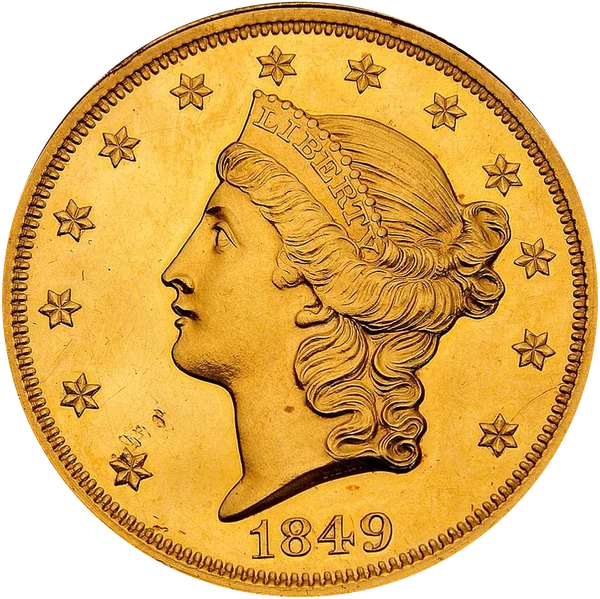
1849 $20 double eagle (pictured above): after the California Gold Rush, Congress authorized a twenty-dollar gold coin in 1849. Chief Engraver James B. Longacre’s pattern dated 1849 is unique; the example kept in the Mint’s collection is now in the Smithsonian. A second piece reportedly went to Treasury Secretary William M. Meredith, but no one knows where it is today. Regular double eagles were struck from 1850.
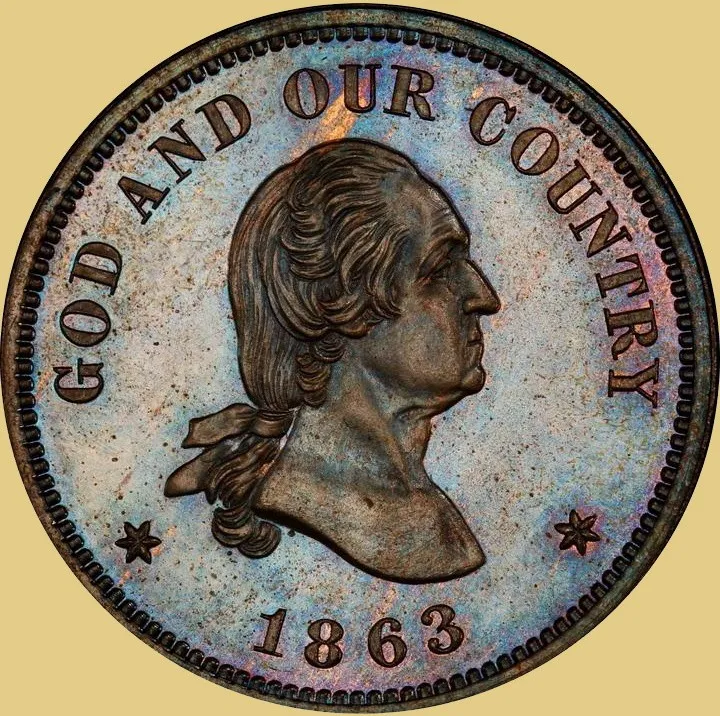
1863 two-cent piece with Washington (pictured near the top of this page): on December 8, 1863, Mint Director James Pollock wrote to Treasury Secretary Salmon P. Chase proposing a two-cent piece and enclosed patterns. Some 1863 patterns show George Washington with the motto GOD AND OUR COUNTRY. The two-cent piece issued in 1864 used a shield design instead and was the first U.S. coin to carry IN GOD WE TRUST.
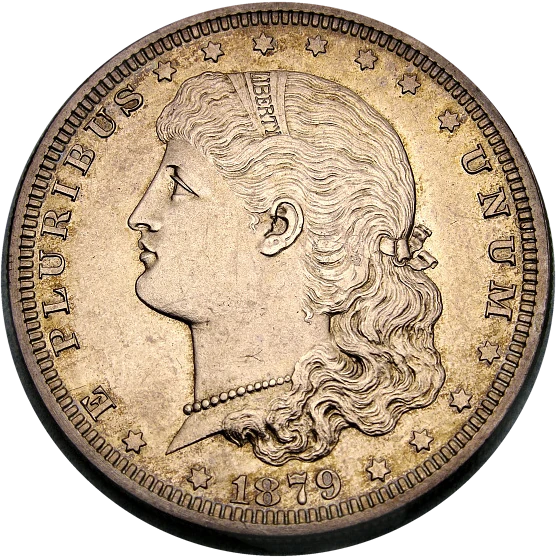
1879 Schoolgirl dollar (pictured near the top): George T. Morgan’s pattern silver dollar showing Liberty as a young girl. About 15 are known in silver and 13 in copper, with a single lead piece, and four of the silver examples are in museum collections. Its reverse eagle was later used on the 1915 Panama-Pacific quarter eagle. See the Schoolgirl dollar.
1879 and 1880 $4 Stella (pictured at the top): a four-dollar gold coin meant to match the coins of the Latin Monetary Union, produced at the urging of John A. Kasson, a former chairman of the House Committee on Coinage, Weights, and Measures. Charles E. Barber designed the Flowing Hair version and George T. Morgan the Coiled Hair version. The obverse gives the coin’s composition in grams, and the reverse reads ONE STELLA 400 CENTS. Congress rejected the coin, but not before several hundred Flowing Hair Stellas were struck and sold to members of Congress, so that type is the one most often seen. Coiled Hair Stellas are much rarer. Read more about the Stella.
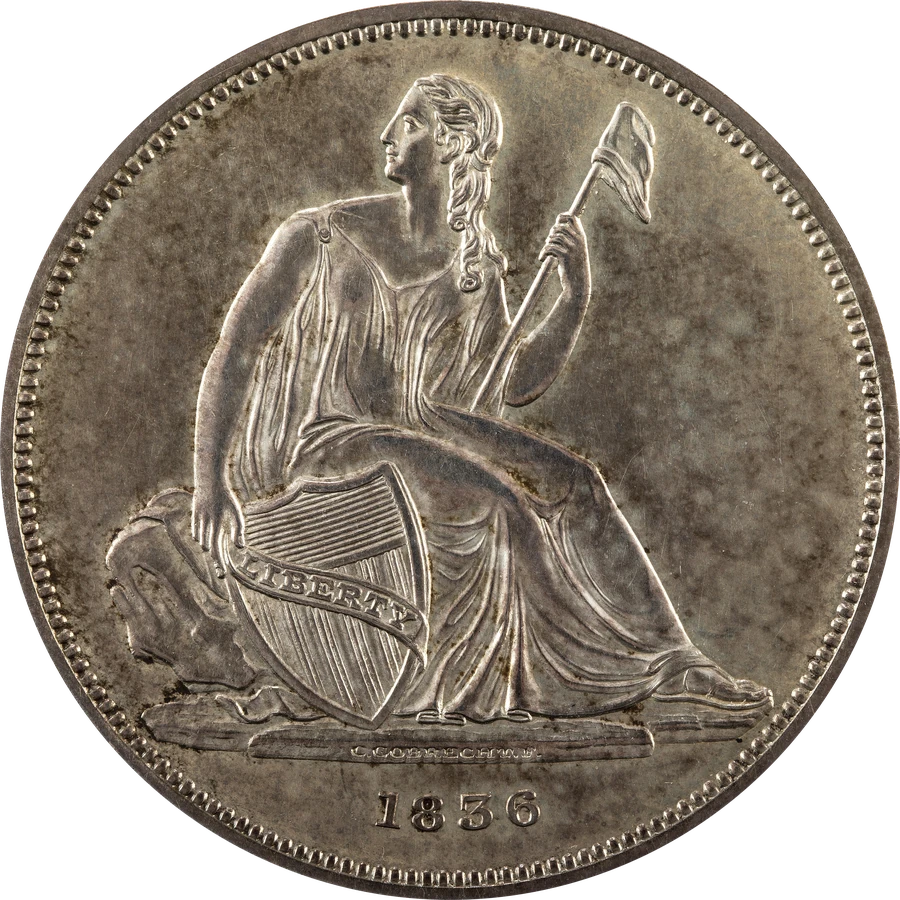
1856 Flying Eagle cent: struck before the small cent was authorized in 1857 to show officials the new, smaller copper-nickel cent. Strictly speaking it is a pattern, but it is listed in standard price guides and collected alongside the regular Flying Eagle cents of 1857 and 1858.
Coin photographs on this page, except the 1863 two-cent piece and the book covers: Smithsonian National Museum of American History, National Numismatic Collection (public domain).
Judd Numbers and the Pattern Rarity Scale
Patterns are identified by catalog number rather than by date alone. The standard system comes from J. Hewitt Judd, M.D., whose book United States Pattern, Experimental and Trial Pieces was first published in 1959. Each variety, including each metal and edge type, has its own Judd number (written J- or Judd-), listed in date order. For example, the 1792 silver center cent is J-1, the 1863 Washington two-cent pattern in copper is J-305 and the 1879 Schoolgirl dollar in silver is J-1608. Andrew W. Pollock III’s 1994 book added a second system, Pollock numbers (P-), and dealers often list both.
Judd’s book also introduced a rarity scale based on the estimated number of pieces known for each variety:
| Rarity rating | Estimated number known |
|---|---|
| R-1 | Over 1,250 |
| R-2 | 501 to 1,250 |
| R-3 | 201 to 500 |
| R-4 | 76 to 200 |
| R-5 | 31 to 75 |
| Low R-6 | 21 to 30 |
| High R-6 | 13 to 20 |
| Low R-7 | 7 to 12 |
| High R-7 | 4 to 6 |
| R-8 | 2 or 3 |
| Unique | 1 |
Most U.S. patterns rate R-6 to R-8, meaning about 30 or fewer are known of each variety. When PCGS or NGC certifies a pattern, the Judd number goes on the holder label, which makes the coin easier to identify and sell.
What Makes a Pattern Coin Valuable?
Collectors love pattern coins because they are rare and historically important, and because each one records an idea the Mint tried and set aside. Values vary enormously, from modest sums for some common off-metal strikes to record prices for famous gold rarities. The main factors are:
- Rarity: the Judd rarity rating and the number of examples that actually come to market.
- Metal: a design struck in gold is usually worth far more than the same design in copper or aluminum.
- Design and demand: famous types such as the Stella and the Schoolgirl dollar draw strong demand.
- Condition: most patterns were struck as proofs, so marks, wear and especially cleaning can lower the value considerably.
- Certification and pedigree: coins graded by PCGS or NGC, and coins from well-known collections, are easier to sell.
- Authenticity: famous patterns such as the Stella have been counterfeited, so an expert check is essential.
Because so few of each variety trade, there is no simple price list. Past auction records and the price guides at PCGS and NGC are a starting point, but an expert appraisal is the best way to learn what your coin is worth.
Major Pattern Coin Reference Books
Pattern specialists rely on a short shelf of books. The first comprehensive catalog was United States Pattern, Trial and Experimental Pieces by Edgar H. Adams and William H. Woodin (1913), the standard reference until 1959. Today collectors and dealers use these three:
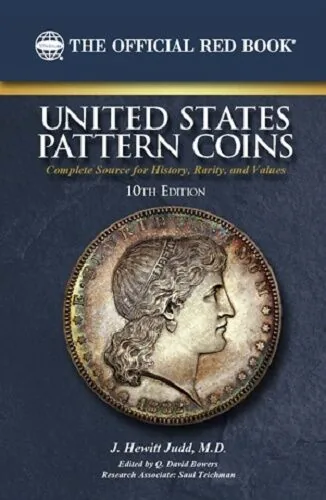
United States Pattern Coins, 10th Edition
by J. Hewitt Judd, M.D., edited by Q. David Bowers
The “Judd book.” Dr. Judd first published United States Pattern, Experimental and Trial Pieces in 1959, and it replaced Adams‑Woodin as the standard reference. Each variety gets its own Judd number, and the book’s rarity scale is the one shown above. Later editions, published by Whitman in its Official Red Book series and edited by Q. David Bowers, keep Judd’s numbering.
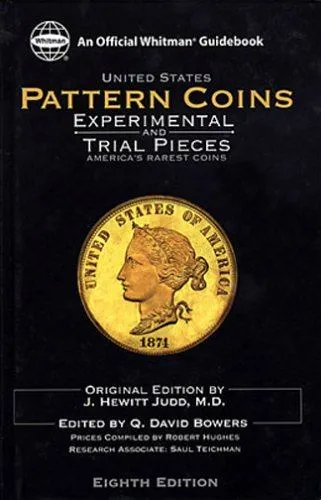
United States Pattern Coins: Experimental and Trial Pieces, 8th Edition
by J. Hewitt Judd, M.D., edited by Q. David Bowers
An earlier Whitman Guidebook edition of the Judd book. It uses the same Judd numbers, and older editions like this one are still handy for comparing how listings and pedigrees have been updated over time.
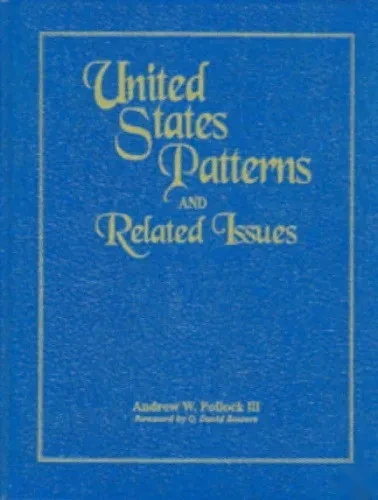
United States Patterns and Related Issues (1994)
by Andrew W. Pollock III
The source of Pollock numbers (P-), with broad coverage of related pieces. Dealers often list a pattern’s Pollock number beside its Judd number.
To see patterns in person, the Harry W. Bass Jr. collection is displayed at the American Numismatic Association’s Money Museum in Colorado Springs, and the Smithsonian holds many of the rarest examples.
Sell or Appraise U.S. Pattern Coins with American Rarities
Pattern coins require specialist knowledge. Our experts confirm the Judd variety, metal and authenticity, using XRF metal analysis and digital microscopy when needed, so you are paid for exactly what you have. American Rarities has bought and sold rare coins since 1990 and has purchased more than $400 million in coins and collections. We are ANA Life Members, a PCGS and NGC authorized dealer and ANACS submission center, and we hold an A+ rating from the BBB.
- Free appraisals, usually within 24 hours, though larger collections may take longer. If so, we’ll let you know. With no obligation to sell
- Fully insured mail-in shipping with no deductible
- Immediate payment by company check, wire transfer or ACH deposit
- Home visits for significant collections
- IRS-compliant written appraisals for estates, donations and insurance through our coin collection appraisal and estate appraisal services
We also buy the rest of your collection, from rare U.S. coins and U.S. gold coins to PCGS, NGC and ANACS certified coins.
To learn more about selling, visit our We Buy United States Pattern Coins page, or use the form below to ask about selling or appraising a U.S. pattern coin.
How to Sell or Appraise a U.S. Pattern Coin in 4 Steps

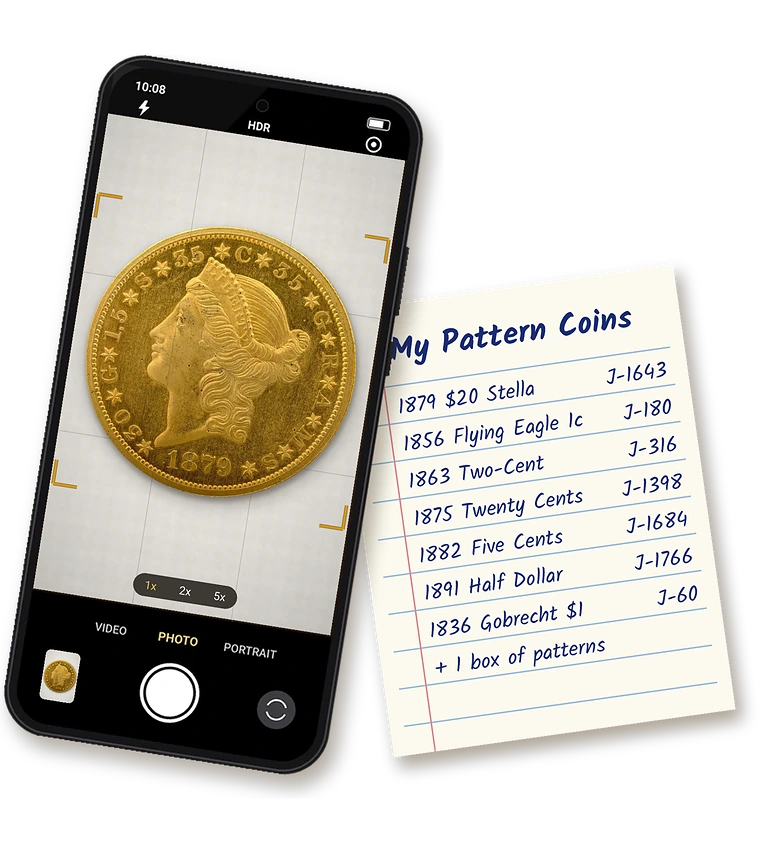
Send photos and details: use the form on this page or text 720-600-4740. Include clear photos of both sides, the Judd number if you know it, and the holder label if the coin is certified. A simple list is fine if you have several coins.
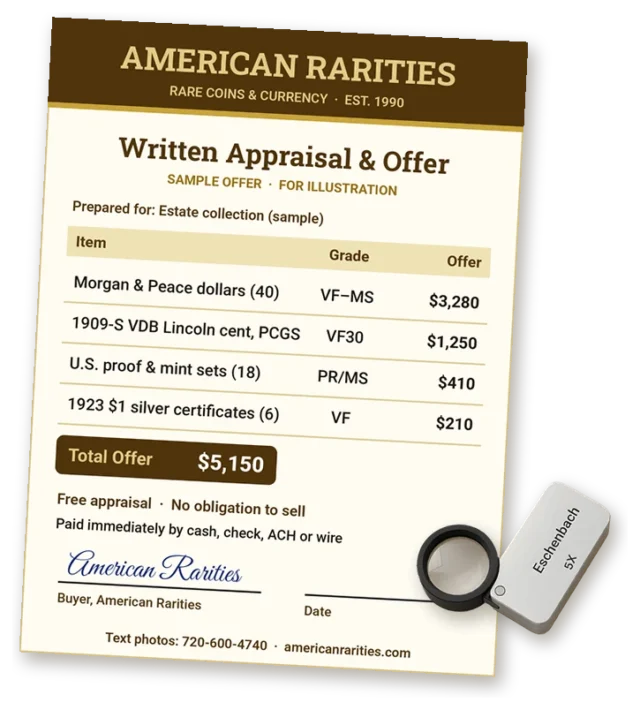
Free appraisal and offer: a specialist identifies the variety, checks recent sales of comparable pieces and sends you a written, no-obligation offer, usually within 24 hours, though larger collections may take longer. If so, we’ll let you know.

Ship fully insured: send the coin in its holder or original packaging, fully insured with no deductible. For important collections, we may be able to visit you in person.
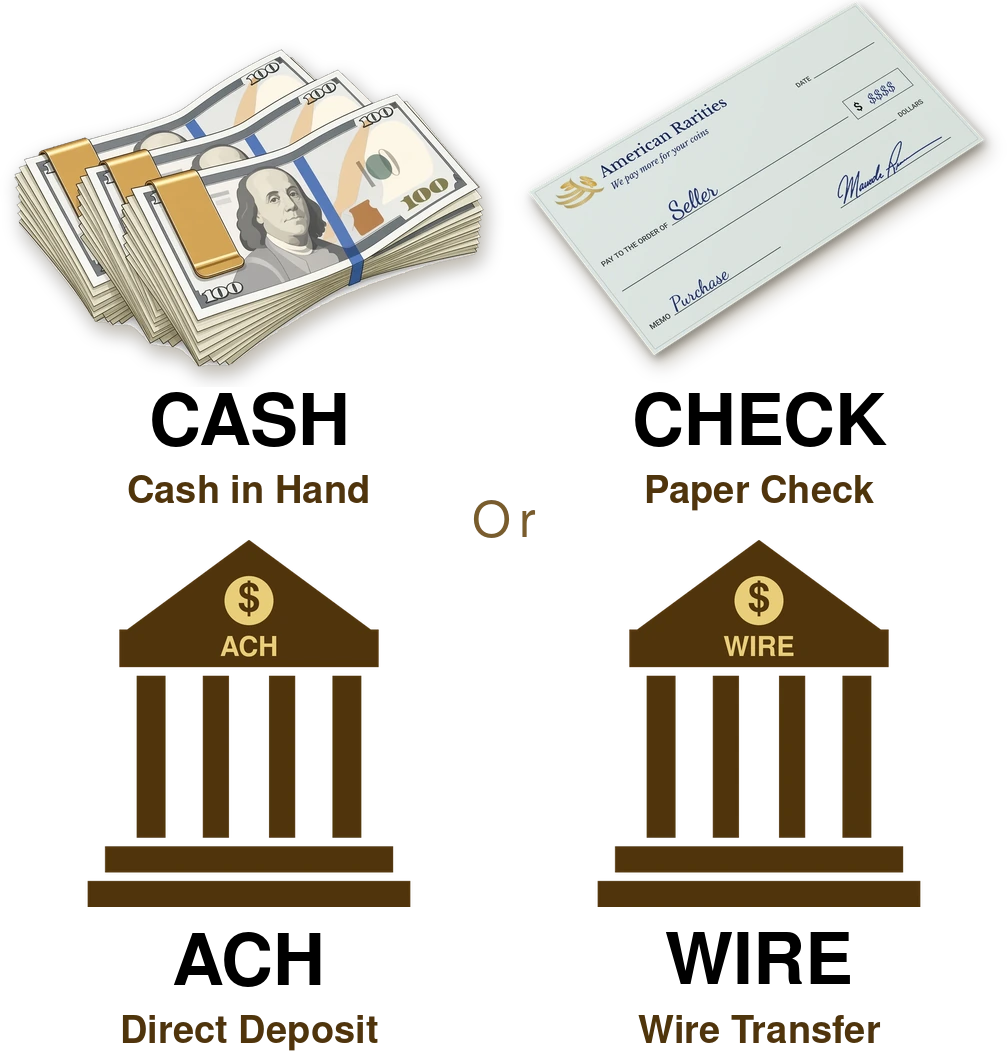
Get paid: once we receive and verify your coin, we pay you right away by company check, wire transfer or ACH deposit.
Need help with photos? Follow our coin photography instructions.

More Free Tools and Guides
- We Buy United States Pattern Coins: how we buy patterns, trial pieces and Judd-listed coins
- Free Online Coin Appraisal: send photos and get an expert opinion
- Coin Authentication: how we check whether a rare coin is genuine
- Coin Grading, Varieties and Error Coins: find out your coin’s grade and variety
- Coin Value Finder: look up what your coins may be worth
- Rare Coins Value List: valuable U.S. coins to look for
- U.S. Gold Coin Information: a guide to American gold coins
- U.S. Silver Dollar Values: from early dollars to Morgans and Peace dollars
Quick Answers: U.S. Pattern Coins
How do I know if my coin is a U.S. pattern?
A pattern usually has a design, denomination or metal that does not match any regular U.S. coin of its date, such as a Stella, a half union or a regular design struck in aluminum. Certified patterns show a Judd number on the holder label. If you are not sure, send us clear photos of both sides for a free opinion.
What does a Judd number mean?
A Judd number is the catalog number for a pattern variety in J. Hewitt Judd’s reference, United States Pattern Coins. Each combination of design, metal and edge has its own number, such as J-1 for the 1792 silver center cent, and the book also gives each variety a rarity rating from R-1 to R-8.
Are pattern coins worth more than regular coins?
Usually, because most patterns are very rare, but values vary widely. A gold pattern or a famous design can bring a very high price, while some common off-metal strikes and restrikes sell for much less. Rarity, metal, condition and authenticity all matter, which is why an expert appraisal is the best way to value one.
Contact Us to Get a Free Appraisal for U.S. Pattern Coins
Email, Text, or Use This Form To Send Us Your Inventory List or Pictures
Email: staff@americanrarities.com | Text: 720-600-4740
Professional Associations