

Identify Your Coin Before Looking Up Its Value
A coin value only means something once you know exactly which coin you have. The date, a tiny mint mark, the metal and the condition can each change a coin’s value many times over. Follow the same order a professional does: identify first, then look up the value.
Use the worksheet and steps below. When you’ve named the exact issue, go to the matching series guide, or ask us for a free expert opinion.
Your Identification Worksheet
Copy this into a notebook and fill it in as you go:
| Detail | Your coin |
|---|---|
| Denomination and design type | |
| Full date | |
| Mint mark (or none) | |
| Metal (as far as you can tell) | |
| Visible condition | |
| Possible variety or error | |
| Holder or slab details |
Example: A Filled-In Identification Worksheet
Illustrative example. Here is the same worksheet filled in for one coin, so you can see the level of detail that helps. It is an example of the method, not a value.
| Detail | Example coin |
|---|---|
| Denomination and design type | Silver dollar, Peace design (Liberty head with a radiate crown; eagle on a rock on the reverse) |
| Full date | 1923 |
| Mint mark (or none) | D, on the reverse at the lower left, beside the tip of the eagle’s wing (Denver) |
| Metal (as far as you can tell) | 90% silver: all Peace dollars dated 1921 to 1935 are (not tested at home) |
| Visible condition | Circulated: light wear on the hair above the ear and on the eagle’s wing; no scratches, rim dings or signs of cleaning seen |
| Possible variety or error | None seen under a 5X loupe |
| Holder or slab details | Raw (not in a grading holder) |
Summary line: “1923-D Peace dollar, circulated, raw, no visible problems.”
What happens next: take the summary line to the U.S. silver dollar values guide (or find the matching U.S. series for other coins), read the entry with our guide to reading a coin price guide, then check dated sold records for the same date, mint mark and grade.
Seven Steps to Identify Your Coin
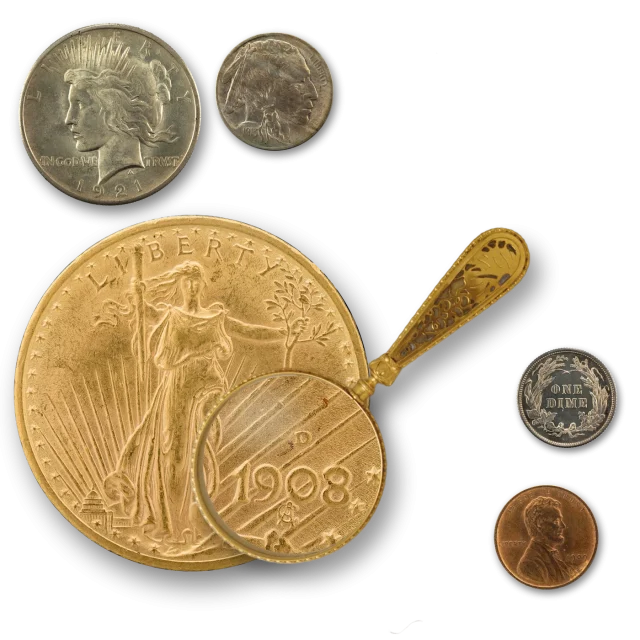
- Name the type. Denomination and design, such as Morgan dollar, Buffalo nickel or Lincoln cent.
- Read the full date. Some dates are much scarcer than the years around them.
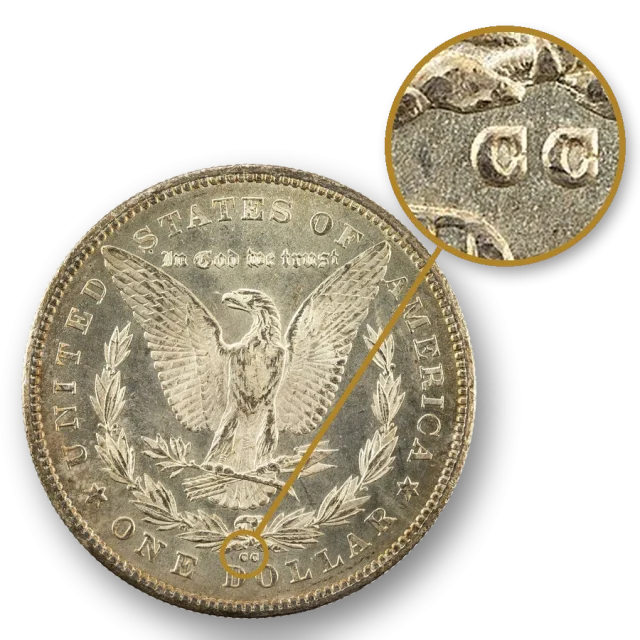
- Find the mint mark. A small letter showing where the coin was struck (see below).
- Note the metal. U.S. dimes, quarters and half dollars dated 1964 and earlier are 90% silver. Don’t scratch, file or use acid to test metal.
- Look at the condition. Check the high points for wear, and look for scratches, rim damage or signs of cleaning. Do not clean the coin.
- Check for varieties and errors. Doubled dies, repunched mint marks and off-center strikes can matter. See our error coins and die varieties page.
- Write the summary. For example: “1923-D Peace dollar, circulated, no visible problems.”
These are identification steps, not a selling process.
Where to Find the Mint Mark

- P Philadelphia: used on wartime nickels (1942–1945) and on most coins from 1979–1980 on. Many Philadelphia coins, including older issues and today’s cents, have no mint mark.
- D Denver: 1906 to present.
- D Dahlonega, Georgia: 1838–1861, gold coins only. Same letter, different mint; the date tells you which.
- S San Francisco: 1854 to present.
- O New Orleans; CC Carson City; C Charlotte (gold only).
- W West Point: 1984 to present.
There is no single rule for where the mint mark sits. On a Morgan dollar it is on the reverse, below the wreath. On coins from 1968 on, it is usually on the obverse. No mint marks were used from 1965 to 1967.
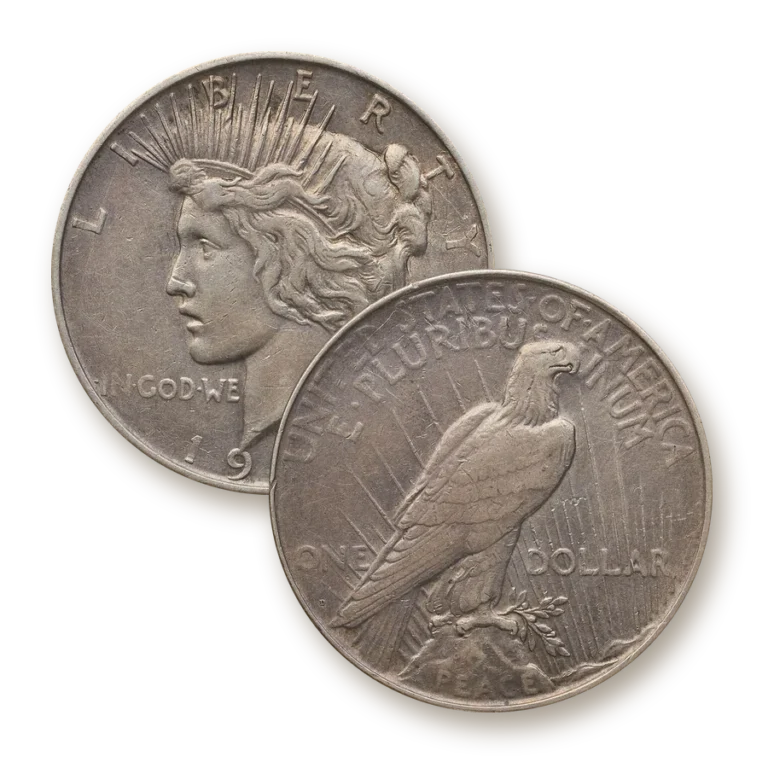
Here, the D on a 1923-D Peace dollar sits on the reverse, at the lower left, beside the tip of the eagle’s wing. Compare positions in a series-specific reference before deciding your coin has no mint mark.

Unknown, Worn or Foreign Coins
If the date is worn away, the design is unfamiliar or the coin is from another country, write down what you can see and stop there. Guessing leads to the wrong value. Photograph both sides and ask for a review instead. For foreign coins, see our foreign coin values page.
Then Look Up the Value
Once you have a named issue, go to its series guide: find the matching U.S. series. To understand what the figures mean, learn to read a price-guide entry, then check comparable online records.
Or skip ahead: send photos of both sides to 720-600-4740, staff@americanrarities.com or the form below for a free appraisal, usually done within 24 hours, though larger collections may take longer. If so, we’ll let you know. Selling a few coins? See selling a small group of old coins.
Your Coin Value Research Path
Work through these pages in order, from a rough value to a free written offer. Your next step from here: Find Your Series Guide.
Approximate values and melt values for common U.S. coins and paper money in one place.
Pin down the type, date, mint mark, metal and condition.
Red Book, Blue Book, Greysheet, PCGS and NGC entries, grades and designations.
Identifying Your Coin: Quick Answers
Where is the mint mark on my coin?
It depends on the series and the date. On Morgan dollars it is on the reverse below the wreath; since 1968 it is usually on the obverse. No mint marks were used from 1965 to 1967.
Is a D always Denver?
No. On gold coins from 1838 to 1861, D stands for the Dahlonega, Georgia mint.
Which U.S. coins are silver?
Dimes, quarters and half dollars dated 1964 and earlier are 90% silver, as are older silver dollars.
Can I test the metal at home?
Please don’t scratch, file or use acid. Expert testing is non-destructive.
Free Values for Your Coins and Coin Collections
Email, Text, or Use This Form To Send Us Your Inventory List or Pictures
Email: staff@americanrarities.com | Text: 720-600-4740
Guides to Selling Your Coins
Sort and handle unfamiliar coins before making selling decisions.
Move from identifying what you own to a safe online sale.
Choose the right appraisal and prepare useful photos and information.
Companion Resource
Once your coin is identified: the Red Book, Blue Book, Greysheet, PCGS and NGC price guides, CCE, Coin World and Numismatic News explained, with grade and designation definitions and a worked example of reading one entry.
Your Next Step
Approximate values for U.S. coins and paper money, with melt values, in one place.
Step-by-step guides to selling coins, whole collections and inherited coins.
Send photos or a list for a free, no-obligation appraisal and written offer. Appraisals are usually done within 24 hours, though larger collections may take longer. If so, we'll let you know.
Why Clients Trust American Rarities
Read our Google reviews.
See our Better Business Bureau profile.
Our American Numismatic Association dealer listing.
Professional Coin Grading Service.
Numismatic Guaranty Company.
ANACS coin grading and authentication.
Professional Associations
