

Price guides are the first stop for most people. Keep in mind that each guide measures something a little different: retail asking prices, dealer wholesale prices, or a mix.
- PCGS CoinFacts: a free online encyclopedia of U.S. coins, with photos, mintages, varieties and history for almost every date and mint mark. It is the best place to confirm exactly which coin you have.
- PCGS Price Guide: retail values for U.S. coins by grade, from well-worn to gem. It is most useful for coins graded by PCGS, but it gives a good sense of how much grade changes value for any coin.
- NGC Price Guide: NGC’s free retail price guide for U.S. coins, organized by series and grade. Its NGC Coin Explorer adds photos, specifications and mintage data for U.S. and world coins.
- Greysheet (CDN Publishing): the wholesale price guide many dealers use for dealer-to-dealer trading. Wholesale prices are often closer to what a coin will actually bring than retail guide prices are. Full access requires a subscription.
- Whitman and the Red Book: Whitman publishes A Guide Book of United States Coins, the annual “Red Book,” along with many specialized references. A current Red Book is still the best printed overview of U.S. coins for a beginner.
Our own guides cover the series we are asked about most, including our price guide for U.S. coins, the Morgan silver dollar price guide, our list of rare Morgan silver dollars and our rare coin value guide.
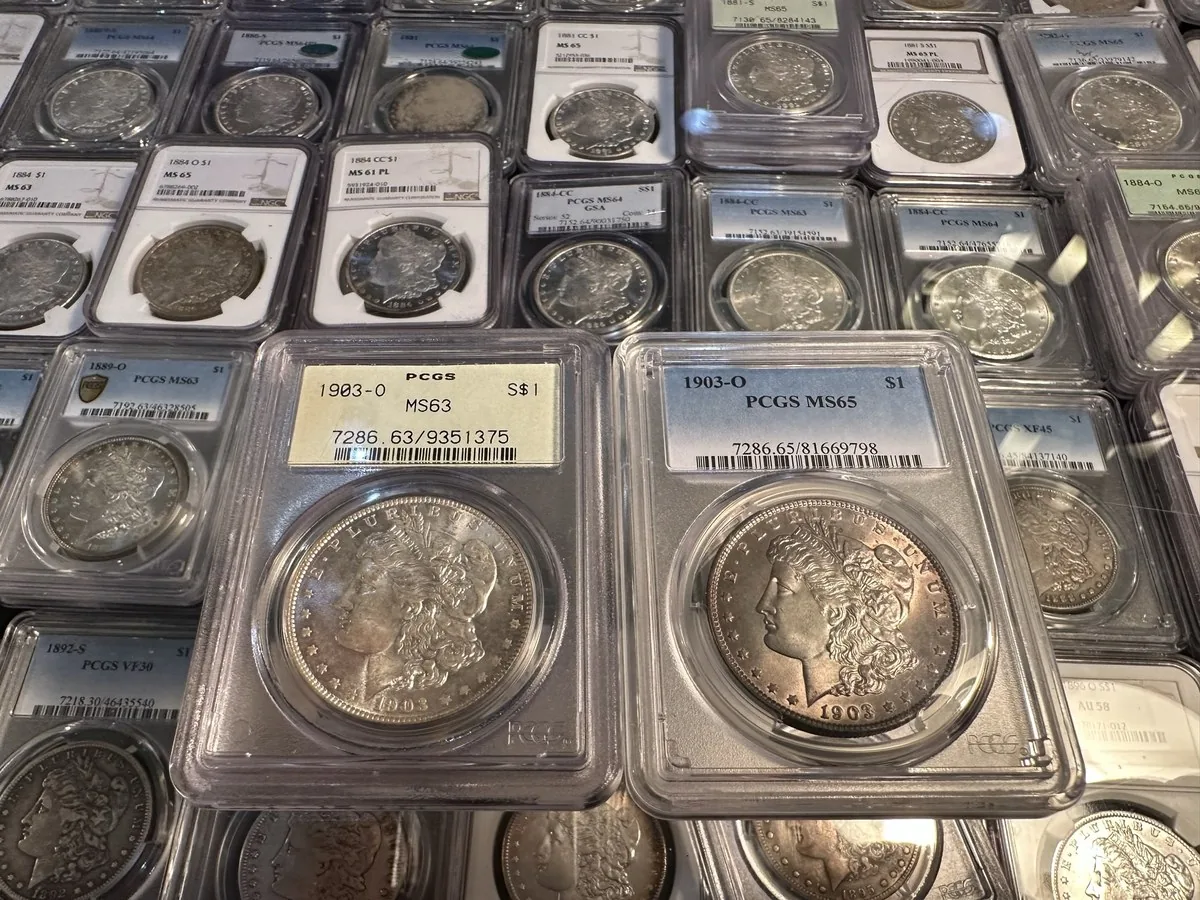
A coin’s grade can change its value from a few dollars to thousands. If your coin is in a sealed plastic holder (a “slab”), always check the certification number on the grading service’s own website before you buy, sell or insure it.
- PCGS: use PCGS Cert Verification to look up any PCGS certification number and see the coin’s grade and, for many coins, photos. The PCGS Population Report shows how many coins of each date have been graded at each level, which is how collectors judge rarity in high grades.
- NGC: NGC Certification Lookup works the same way for NGC holders, and the NGC Census is NGC’s population report.
- CAC: CAC places a sticker on PCGS and NGC coins it judges to be solid for the grade, and it now grades coins itself. Coins with a CAC sticker often sell for more.
- ANACS: the oldest of the major grading services. Its website has certification lookup and population data for ANACS holders.
To learn how the services differ, read PCGS, NGC and ANACS: the three major grading services, and see our page on coin and paper money grading services. We can also help with coin grading, authenticity and error attribution before you pay for grading.
Forums and catalog sites are where collectors help each other identify coins and share knowledge. They are good for learning, but remember that a stranger’s opinion of value on a forum is not an appraisal.
- CoinTalk: one of the largest free coin forums, with active sections for U.S., world and ancient coins, errors and coin identification. Post clear photos of both sides and you will usually get answers fast.
- Numista: a huge, collector-built catalog of world coins and banknotes. It is the best free website for identifying foreign coins, and you can use it to catalog your own collection and trade with other members.
- PCGS Forums (Collectors Universe): long-running message boards with many experienced collectors and dealers. Good for advanced questions about grading, varieties and the market.
- Reddit r/coins: a busy community with quick identification help and a friendly attitude toward beginners. Treat value guesses there as a starting point only.
If you inherited coins and are trying to sort through them, our guide to selling an inherited coin collection walks through the process step by step.
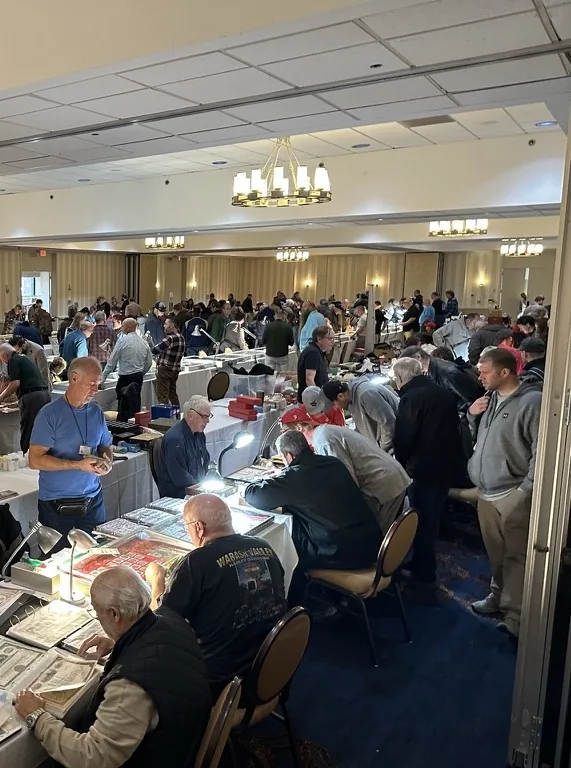
A price guide tells you what a coin should be worth. Auction records show what coins actually sold for. For better coins, past auction results are the most reliable research you can do. Use these sites for research only: listing prices are not sale prices, and condition matters enormously.
- PCGS Auction Prices Realized: past auction results for PCGS-graded coins, searchable by coin and grade.
- NGC Auction Central: past auction results for U.S. coins from major auction houses, searchable by coin and grade.
- Newman Numismatic Portal: a free digital library of historical auction catalogs and numismatic references, hosted by Washington University in St. Louis.
- eBay sold listings: for common coins, filter eBay searches to “sold” items to see real recent prices. Ignore unsold asking prices, which are often far too high.
Auctions charge buyer’s and seller’s fees, take time, and offer no guarantee a coin will sell. If you want to compare auction with a direct sale, read our guides to the best place to sell coins online and the best place to sell rare coins.
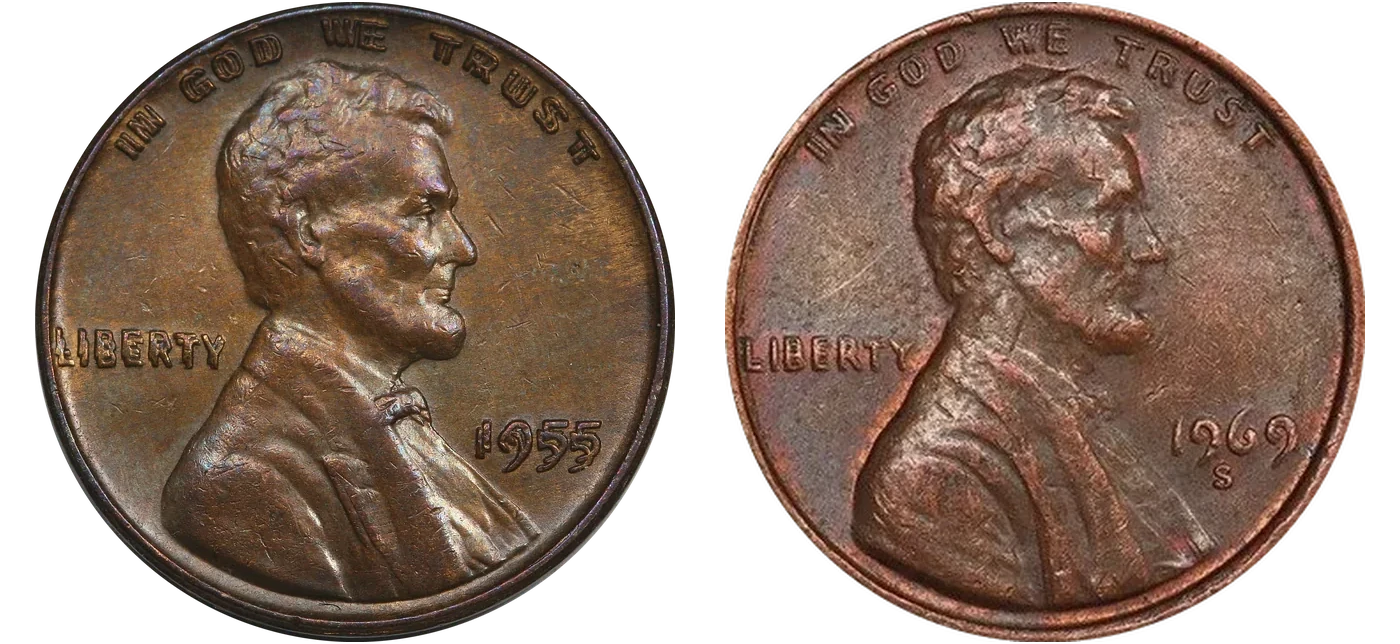
Error coins and die varieties are among the most searched coin topics online, and among the most misunderstood. Most “errors” found in pocket change are damage or normal wear. These specialist sites help you tell the difference.
- CONECA: the Combined Organizations of Numismatic Error Collectors of America. It publishes variety listings, education and an attribution service for errors and die varieties.
- Error-Ref: a large illustrated reference that explains how different mint errors happen, with photos of each type. It is very helpful for learning the difference between a real error and post-mint damage.
Our own error coin articles include a collector’s guide to error coins and die varieties, do you have an error coin?, the famous 1955 doubled die Lincoln cent and our page on error coins and variety coins.
No single website will give you an accurate value. Used together, they will get you close:
- Identify the coin exactly. Find the date, mint mark and any variety on PCGS CoinFacts, NGC Coin Explorer or, for world coins, Numista.
- Estimate the grade honestly. Wear, scratches, cleaning and damage all lower value. If you are unsure, assume a lower grade. Never clean a coin; here is why cleaning your coins is not recommended.
- Check retail price guides. Look up the coin in the PCGS and NGC price guides or the Red Book for a retail range at your estimated grade.
- Check real sales. Compare with auction records and eBay sold listings for the same coin in the same grade.
- Verify any slab. For certified coins, look up the certification number and check the population report.
- Know the difference between retail and what you will be paid. Retail guide prices are what dealers sell for. Selling prices depend on demand, grade and the metal market.
- Get an expert appraisal for anything valuable. For large collections, rare coins or estates, a professional appraisal is worth far more than any website. See also our page on coin collection appraisals.
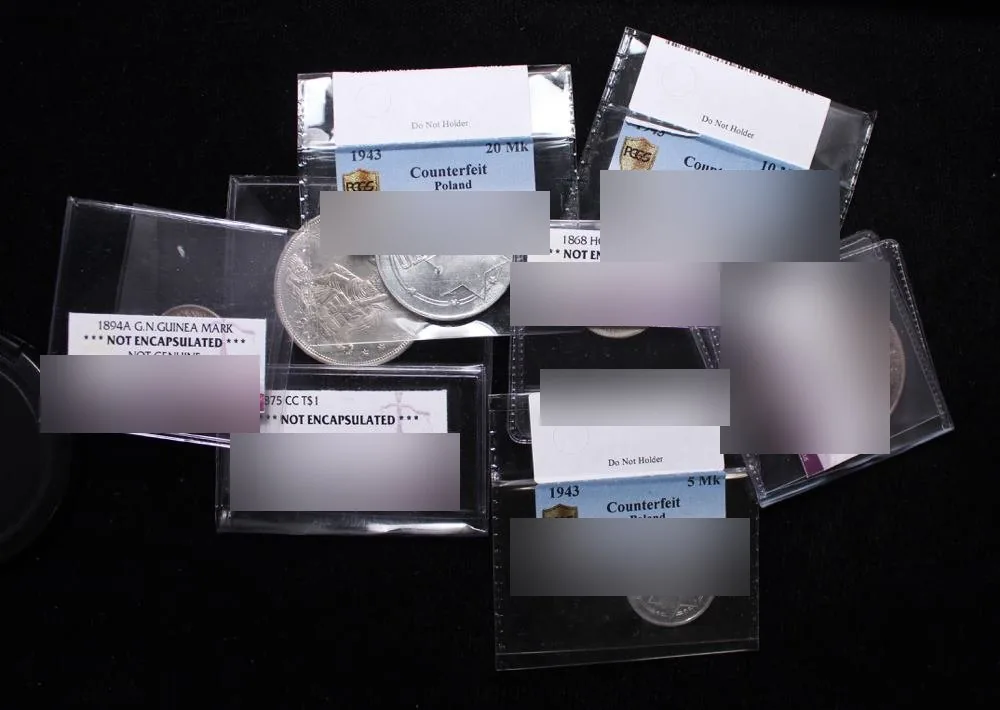
Coin collecting websites and online marketplaces are full of counterfeits, especially Morgan dollars, gold coins, trade dollars and famous error coins. Fake grading holders with real-looking labels are common too. Protect yourself with a few simple rules:
- Verify every certification number on the grading service’s own website, and compare the coin and label in the photo with the database.
- Be wary of prices that are too good to be true, sellers who ship from overseas, and listings that use stock photos or say “copy” in small print.
- Do not trust value claims in viral videos and social media posts about pennies or quarters worth millions. Almost all of those coins are worth face value.
- Learn what fakes look like. NGC’s counterfeit detection resource and our fake coin pictures page show real examples. Read more about fake, counterfeit and altered coins and our fake certified coin case study.
- Report fraud. If you were scammed, report it to the Federal Trade Commission at ReportFraud.ftc.gov.
Not sure whether a coin is genuine? Send us clear photos of both sides for a free coin authentication opinion.