
Find the Right U.S. Coin Value Guide by Series
U.S. coins are valued series by series. A cent, a silver dollar and a gold eagle each have their own key dates, grading details and value drivers. Use this directory to find the guide that matches your coin.
Not sure what you have? Identify your coin first. New to price guides? Learn how to read a guide entry.

Cents and Nickels

Indian Head and Lincoln cents, Shield, Liberty, Buffalo and Jefferson nickels. Key dates and varieties drive value here, and many famous varieties are counterfeited. See error coins and die varieties and the 1943 steel and copper cents.
Dimes and Quarters

Barber, Mercury and Roosevelt dimes; Barber, Standing Liberty and Washington quarters. Dimes and quarters dated 1964 and earlier are 90% silver: see 90% silver coin values.
Half Dollars and Silver Dollars
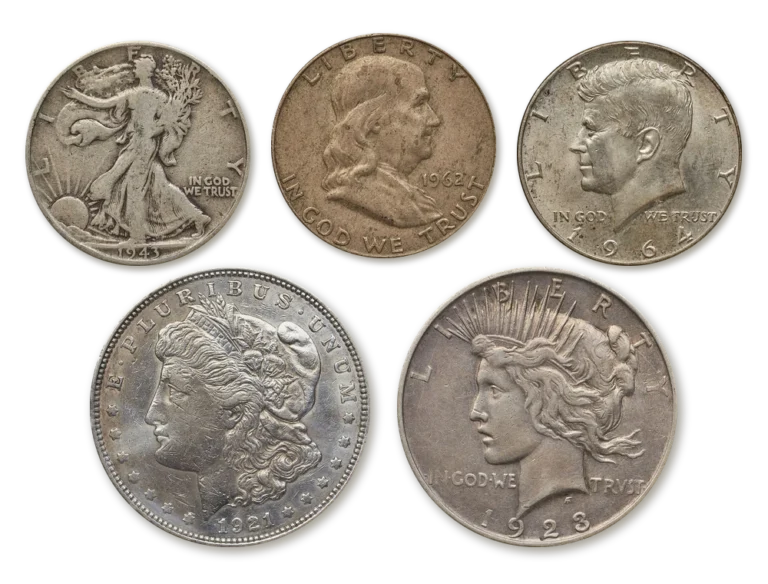
Walking Liberty, Franklin and Kennedy half dollars (1964 and earlier are 90% silver), plus Morgan and Peace dollars and earlier types. See Morgan silver dollar values and U.S. silver dollar values.
U.S. Gold Coins
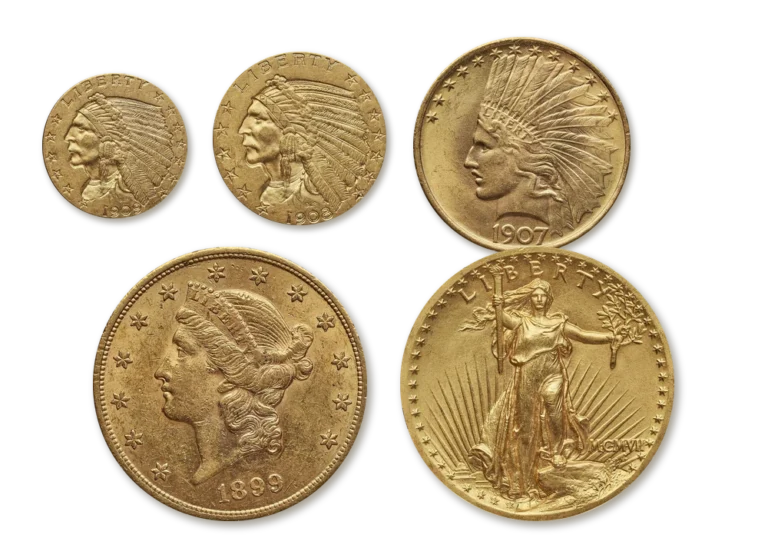
Gold dollars through $20 double eagles, including Liberty Head and Saint-Gaudens issues. See U.S. gold coin values.
Commemoratives, Proof Sets and Foreign Coins
- Commemorative coin values, classic and modern
- U.S. proof set values and coin proof sets value
- Foreign coin values
- U.S. paper money values
For a general overview, see our rare coin value guide.
Published Price Guides
This page is a directory of American Rarities’ own series guides. Published price guides such as the Red Book, the Blue Book, the Greysheet and the PCGS and NGC price guides each measure something different, so a figure from one is not interchangeable with a figure from another.
For who publishes each guide, what kind of price it shows, how often it is updated and how to read its entries, see How to Read a Coin Price Guide. For approximate values of common coins and paper money in one place, see our rare coin value guide.
Before You Rely on Any Number
Guide figures assume a specific issue, variety and grade. Check dated sold evidence for your exact coin, and remember that a famous rarity calls for authentication first: see famous rarities and authentication.
For a free expert opinion. All appraisal requests are reviewed in the order they are received. Some appraisals take minutes, while larger, more complex collections can take a few days. Either way, you’ll get a response from us. Text photos to 720-600-4740, email staff@americanrarities.com or use the form below.
Your Coin Value Research Path
Work through these pages in order, from a rough value to a free written offer. Your next step from here: Read a Price Guide.
Approximate values and melt values for common U.S. coins and paper money in one place.
Go to the value guide for your coin’s series.
Red Book, Blue Book, Greysheet, PCGS and NGC entries, grades and designations.
U.S. Coin Value Guides: Quick Answers
Which guide should I use for my coin?
Use the guide for its series, since each series has its own key dates and value drivers. If you are not sure of the series, identify the coin first using our coin value finder: note the denomination, design, date and mint mark. Then match the coin’s condition to the grade columns in the guide. For gold and silver coins, check the metal value too, since it sets a floor.
Are guide values what a dealer will pay?
No. Most published guide values are retail estimates, roughly what a collector might pay a dealer, so a dealer’s buy price will be lower. Guides can also lag behind fast-moving markets and assume a problem-free coin in a specific grade. An offer depends on your coin’s exact grade, eye appeal and the current market. Use guides as a range, and get a written offer for an actual price.
What do grade abbreviations like VF, XF and MS mean?
They describe how much wear a coin has. G (Good) and VG (Very Good) are heavily worn; F (Fine) and VF (Very Fine) show moderate wear with clear details; XF or EF (Extremely Fine) shows light wear on the highest points; AU (About Uncirculated) has only traces of wear; and MS (Mint State) means no wear, graded from MS60 to MS70. Proof coins use PR or PF. Each step up can raise value significantly.
Do you value U.S. paper money too?
Yes. See our U.S. paper money values page, or send photos of both sides for a free opinion. Paper money is valued by type, series, serial number, signatures and condition, and star notes, fancy serial numbers and large-size notes issued before 1929 can be worth far more than face value.
Free Coin Appraisal and Rare Coin Values
Email, Text, or Use This Form To Send Us Your Inventory List or Pictures
Email: staff@americanrarities.com Text: 720-600-4740
Guides to Selling Your Coins
Understand rarity, condition and the steps to a documented sale.
Separate collectible gold-coin questions from bullion value.
Prepare Morgan, Peace and earlier dollars for a buyer’s review.
Companion Resource
The Red Book, Blue Book, Greysheet, PCGS and NGC price guides, CCE, Coin World and Numismatic News explained, with grade and designation definitions and a worked example of reading one entry.
Your Next Step
Approximate values for U.S. coins and paper money, with melt values, in one place.
Step-by-step guides to selling coins, whole collections and inherited coins.
Send photos or a list for a free, no-obligation appraisal and written offer. All appraisal requests are reviewed in the order they are received. Some appraisals take minutes, while larger, more complex collections can take a few days. Either way, you'll get a response from us.
Why Clients Trust American Rarities
Read our Google reviews.
See our Better Business Bureau profile.
Our American Numismatic Association dealer listing.
Professional Coin Grading Service.
Numismatic Guaranty Company.
ANACS coin grading and authentication.
Professional Associations
