
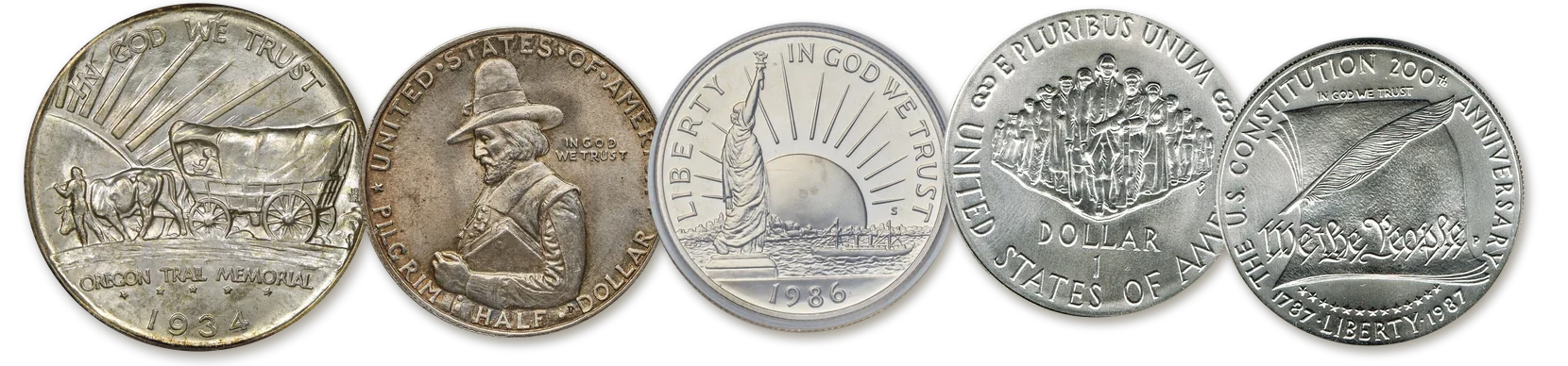

U.S. Commemorative Coin Values: A Guide to Selling Your Collection

U.S. commemorative coins are special issues struck by the Mint to honor a specific person, place, or event. From the classic silver half dollars of the late 1800s and early 1900s to the modern gold, silver and clad issues of today, these coins are a popular and accessible part of American history.

If you have a collection of US Mint commemorative coins, you may be wondering about their value. All U.S. commemoratives are legal tender, but their real worth is their collector (numismatic) value and, for silver and gold issues, their precious metal content. Both are almost always higher than face value. This guide explains the two main groups of commemoratives, what drives their value, and how to sell them.

Many commemoratives turn up alongside other Mint products, so you may also find our guides to coin proof sets value, the coin collectors price guide and our coin and paper money price guide helpful.

1. Classic Commemorative Coins (1892-1954)

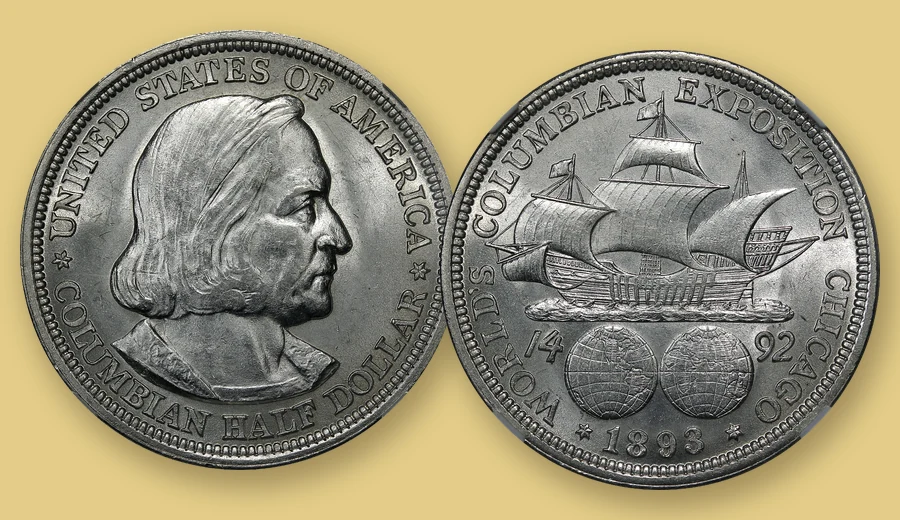
Obverse with Christopher Columbus and reverse with the Santa Maria of an 1893 Columbian Exposition commemorative half dollar

The classic commemorative series began with the 1892 Columbian Exposition half dollar, the first U.S. commemorative coin, and ended in 1954. It includes some of the most beautiful coins ever produced by the U.S. Mint. Most are 90% silver half dollars, but the series also includes the 1893 Isabella quarter, the 1900 Lafayette dollar and several gold issues, such as the 1915 Panama-Pacific coins. Many were sold at a premium to raise money for expositions, anniversaries or monuments.

  • Common examples: Columbian Exposition half dollar, Stone Mountain half dollar, Oregon Trail Memorial half dollar, and the Booker T. Washington and Carver/Washington half dollars.
  • What drives their value: collector demand, which rests on a coin’s mintage and survival rate, its condition (grade), and its eye appeal. Some types, like the Oregon Trail half, were struck in many dates and mint marks, and the scarcer dates are worth much more than the common ones.
  • Originality: cleaning, polishing or wear can sharply reduce a classic commemorative’s value. Never clean your coins before an appraisal.
  • Silver content: a classic silver half dollar contains about 0.36 troy ounce of silver, which sets a floor under even the most common, worn pieces.

Values range from little more than silver value for common, circulated coins to substantial premiums for scarce issues and high grades. For current approximate retail values by date and grade, see the NGC commemorative price guide or the PCGS Price Guide. Keep in mind that retail guide prices are not the same as what a dealer or auction will pay.
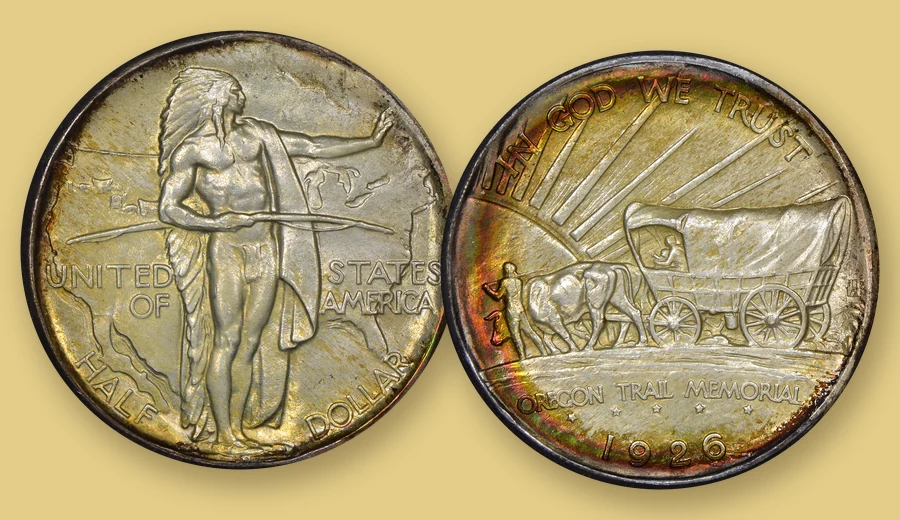
Both sides of an Oregon Trail Memorial commemorative half dollar with a Native American figure and a covered wagon

2. Modern Commemorative Coins (1982-Present)

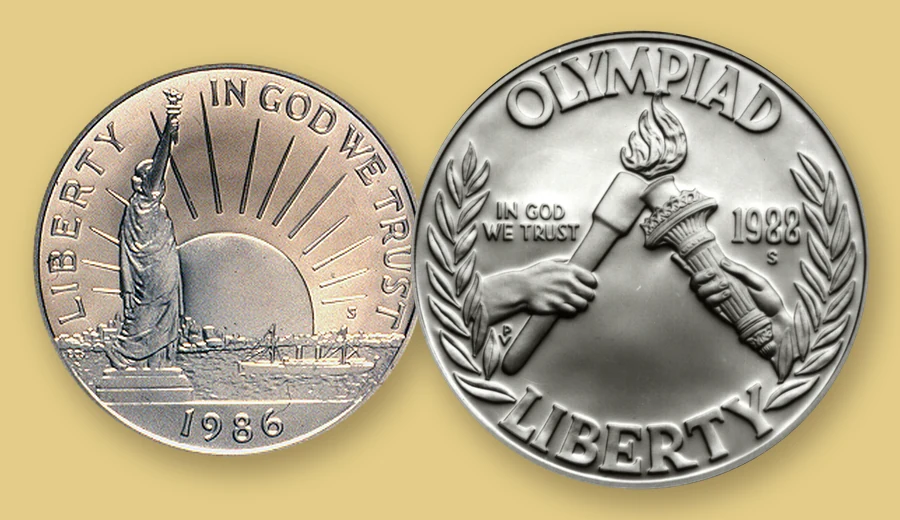
Proof 1986 Statue of Liberty commemorative half dollar and proof 1988 Seoul Olympic commemorative silver dollar

The modern commemorative program began in 1982 with the George Washington 250th Anniversary half dollar. Since then the U.S. Mint has issued a steady stream of clad half dollars, silver dollars, and $5 and $10 gold coins, usually in both proof and uncirculated versions. They are sold directly to collectors in Mint boxes or folders with a certificate of authenticity.

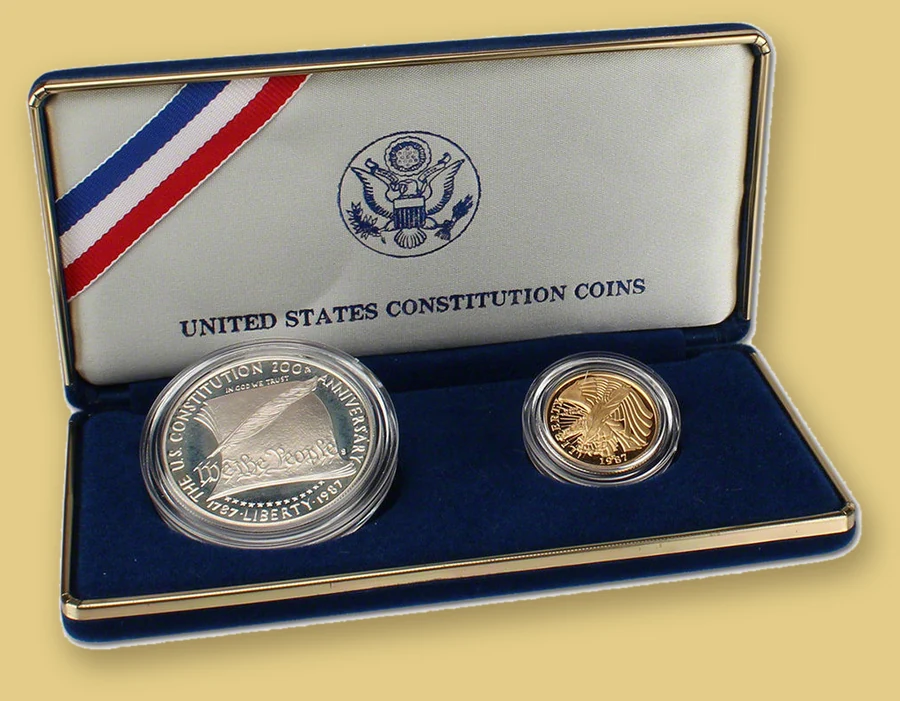
  • Common examples: the 1986 Statue of Liberty half dollar and silver dollar, the 1987 Constitution coins, the 1988 Olympic coins, and the 2014 Baseball Hall of Fame coins.
  • Precious metal content: the value of most modern commemoratives is tied to their silver or gold. Modern silver dollars contain about three-quarters of an ounce of silver or more, and $5 gold coins contain about a quarter ounce of gold. Learn more about selling silver and gold bullion and selling U.S. gold coins.
  • Collector premiums: most modern issues were made in large numbers and do not carry the numismatic premiums of the classic coins. A few low-mintage issues, and coins certified in the very highest grades, can bring more. Our article on the scarcity paradox of baseball cards and modern U.S. Mint products explains how high mintages hold down premiums.
3. The Key to Unlocking Your Coins' Value: A Professional Appraisal

These general rules are helpful, but the commemorative market is nuanced. Two coins that look alike can be worth very different amounts because of subtle differences in condition, date or mint mark, or because one has been cleaned.

American Rarities buyers have hundreds of years of combined experience, and we are Life Members of the American Numismatic Association (ANA). We are a PCGS authorized dealer, an NGC authorized dealer and an ANACS submission center, and we offer free in-house grading without encapsulation, so you can learn which of your coins may be worth certifying before you spend anything. Read more about our coin grading service. A free, no-obligation appraisal from our team will help you understand:

  • Which of your coins are classic and which are modern.
  • The current market value of each piece based on its date, mint mark and condition.
  • The difference between a coin’s metal value and its collector value.
  • Whether any of your coins should be professionally graded before you sell.

For a step-by-step look at the factors behind any coin’s price, see how to determine the value of your rare coins. If your commemoratives came with proof sets or uncirculated mint sets, see how to sell proof sets, mint sets and commemorative coins.

Why Original Packaging Matters

1987 United States Constitution commemorative proof silver dollar and five dollar gold coin in the original U.S. Mint box

Modern commemoratives were sold in Mint boxes, folders and capsules with a certificate of authenticity, and buyers expect to see that original packaging. Keep each coin with its box, capsule and certificate, leave coins in their capsules or holders, and don’t try to clean them. Classic commemoratives are often found in old holders, albums or certified slabs. Leave them as they are so we can judge their condition accurately.

How Do I Sell My Commemorative Coins?

You’ve already found the interesting coins. Let us help you with the final step. Our process is simple and transparent:
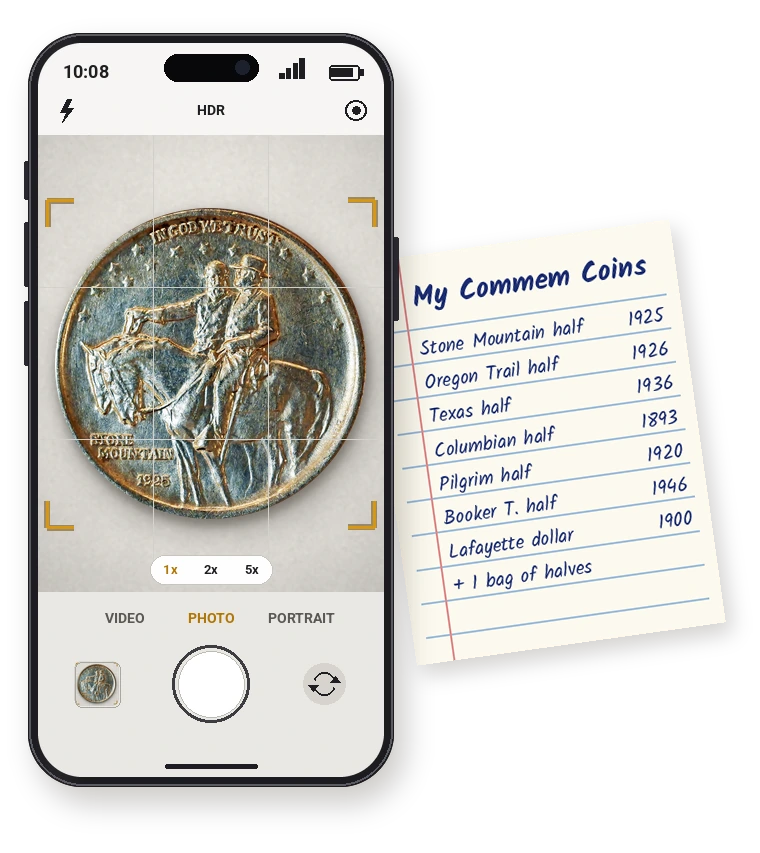
  1. Smartphone camera photographing a 1925 Stone Mountain commemorative half dollar next to a handwritten list of commemorative coins

    1Send Photos or a List

    Send an inventory list or photos of your commemorative coins with the form on this page, by text to 720-600-4740 or by email to staff@americanrarities.com.
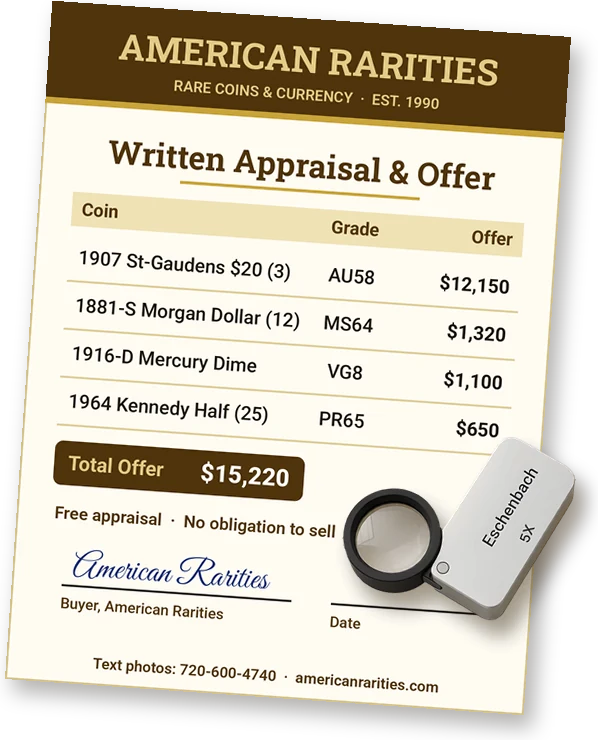
  2. Eschenbach 5X loupe on an American Rarities written appraisal and offer sheet

    2Get a Free Written Offer

    We send a free written appraisal and offer to purchase, with no obligation to sell. We reply quickly. Timing depends on the size of your list, and we review submissions in the order we receive them.
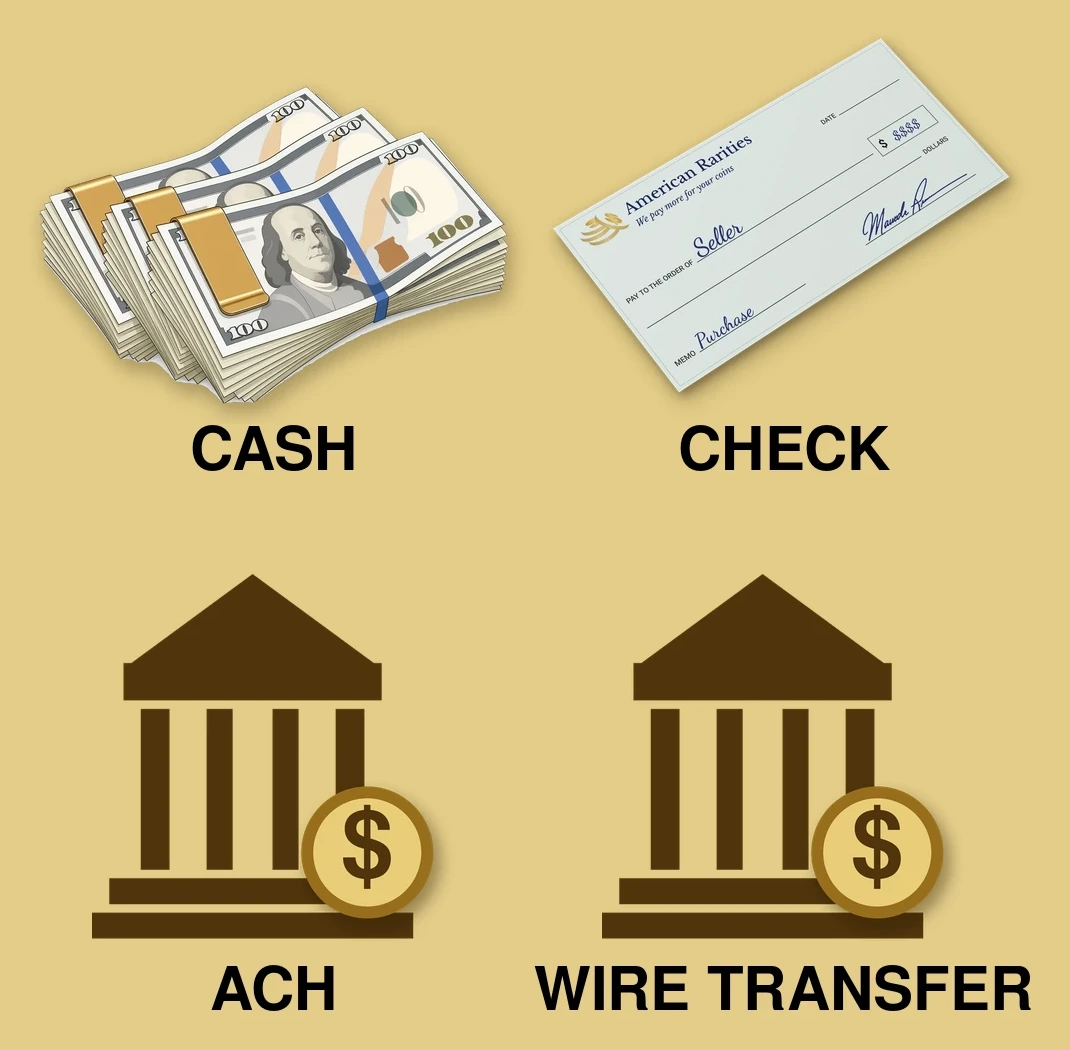
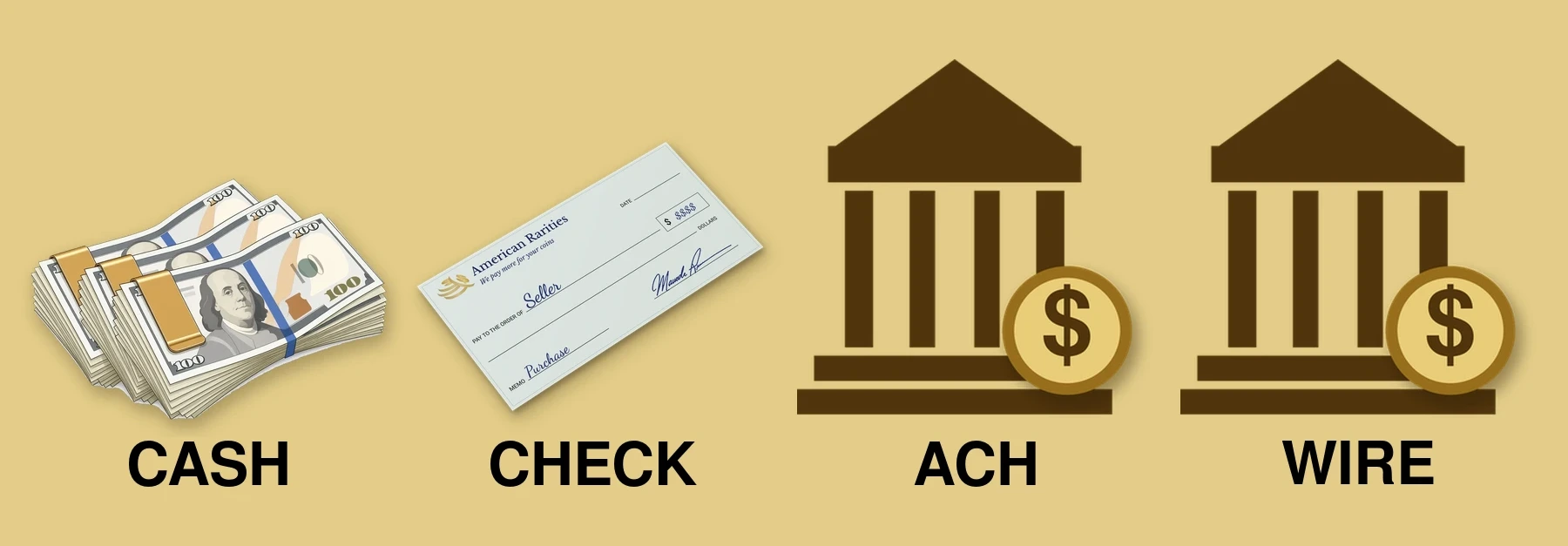
  3. Four ways to get paid for your coins, stacked two by two: stacks of $100 bills in gold money clips labeled Cash, an American Rarities check labeled Check, and two bank buildings with gold dollar coin badges labeled ACH and Wire TransferFour ways to get paid for your coins, in one row: stacks of $100 bills in gold money clips labeled Cash, an American Rarities check labeled Check, and two bank buildings with gold dollar coin badges labeled ACH and Wire Transfer

    3Ship or Meet, Then Get Paid

    If you decide to sell, a buyer can meet you at your home (we offer home visits nationwide), or use our fully insured mail-in service at our expense. Once we receive your coins, we pay you immediately by cash, check, ACH or wire.

American Rarities was founded in 1990 and has purchased over $350 million in coins and precious metals. We hold an A+ rating with the BBB and a 4.7-star Google rating. Along with U.S. commemoratives, we buy proof and mint sets, U.S. and world rare coins, and all gold and silver bullion, including bars. If a rare coin would do better at auction, we work with auction house partners at preferential fees.


Commemorative Coins Value: Quick Answers

Are U.S. commemorative coins worth more than face value?

Almost always. Their collector value, and for silver and gold issues their metal content, is nearly always above face value.

What is the difference between classic and modern commemoratives?

Classic commemoratives (1892 to 1954) are mostly 90% silver half dollars. Modern ones began in 1982 and include clad halves, silver dollars and $5 and $10 gold coins.

Should I keep the original box and certificate?

Yes. Buyers expect modern commemoratives in their original Mint boxes and capsules with the certificate of authenticity.

Decorative gold separator bar

Free Appraisal for Your Coins and Coin Collections

Email, Text, or Use This Form To Send Us Your Inventory List or Pictures

Email: staff@americanrarities.com | Text: 720-600-4740 | Or use the form below


Upload clear photos of fronts and backs and we'll reply with a free appraisal.


    Professional Associations

    American Rarities professional association logos