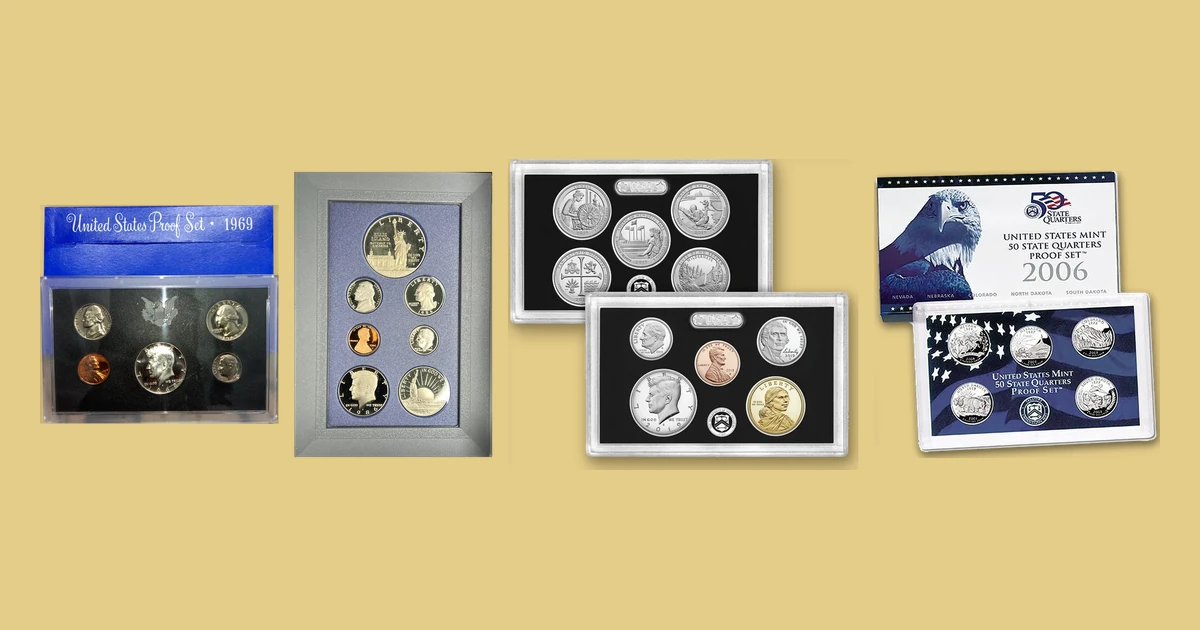
This page serves as a key resource for collectors, focusing on the popular category of the proof set. It acts as a central hub for articles and guides that explain what a proof set is, how the U.S. Mint produces these high-quality collector coins, and how to determine the value of both modern and classic sets.
By providing detailed information on these widely collected items, American Rarities demonstrates its comprehensive knowledge of the modern numismatic market. This strategy builds trust with a large segment of the collecting community, positioning the company as an expert and reliable partner for the appraisal and sale of these popular sets.
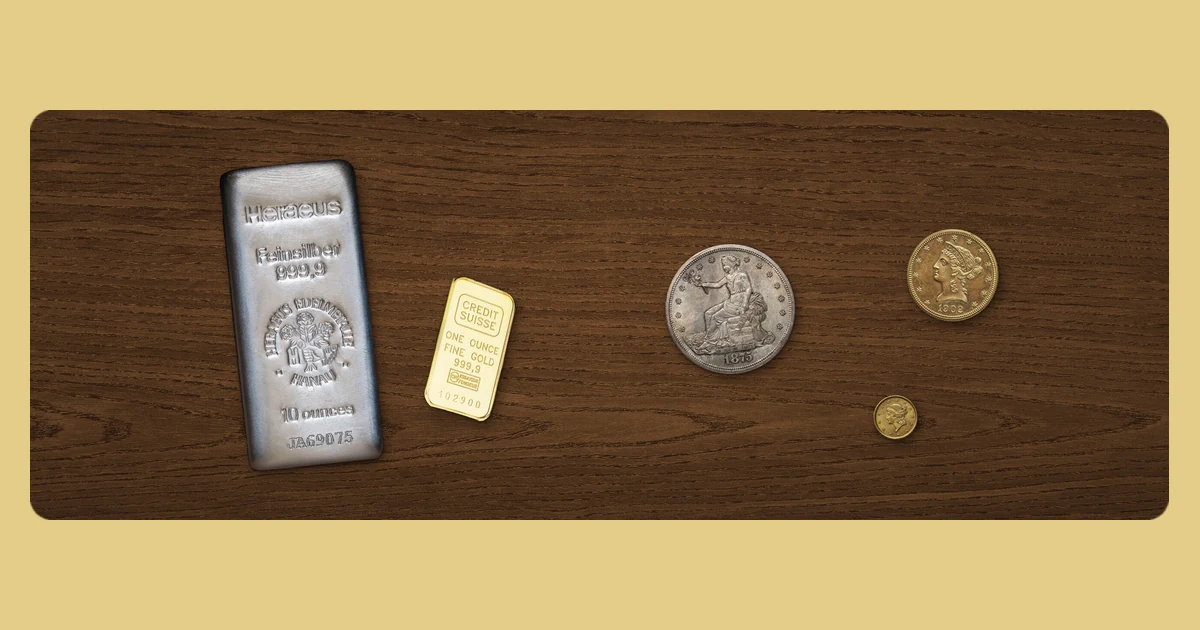
Tax Implications of Liquidating Bullion vs. Rare Coins in an Estate, a guide from American Rarities. Heraeus 10 oz silver bar: photo by Chi Ho Chan (eric2b01 on Flickr),
CC BY 2.0, via Wikimedia Commons (
File:Heraeus 10 oz 9999 fine silver bar (52202724589).jpg). Credit Suisse 1 oz gold bar: photo by Oleg Volk (olegvolk.net),
CC BY 2.5, via Wikimedia Commons (
File:Gold1oz.jpg). Backgrounds removed and shown at true relative size by American Rarities. Coin photos: Bibliothèque nationale de France, Département des Monnaies, médailles et antiques (Gallica), public domain, via Wikimedia Commons. Walnut tabletop: “American walnut veneer” scan by Poly Haven, CC0.
How federal taxes apply when an estate or its heirs sell gold and silver bullion versus rare coins: date-of-death basis, the alternate valuation date, the 28% maximum collectibles rate, automatic long-term treatment, valuation and appraisals, Form 1099-B and Form 8300, estate versus heir sales, state taxes and the records to keep.
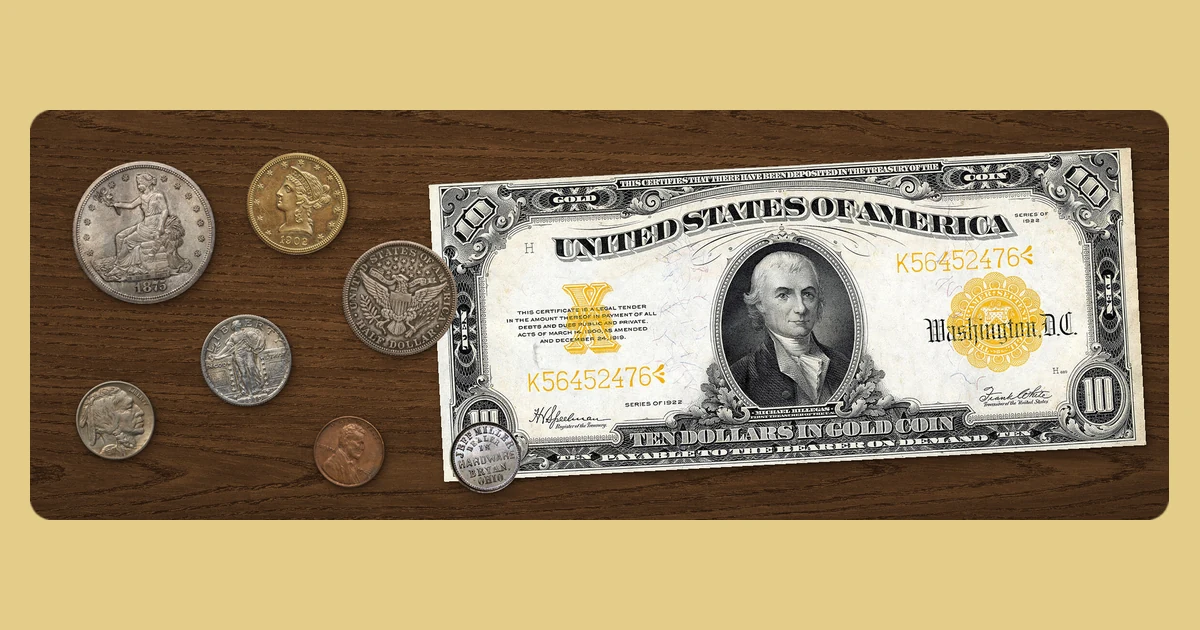
What to Do With Old Coins Found in an Estate, a guide from American Rarities. Coin photos: Bibliothèque nationale de France, Département des Monnaies, médailles et antiques (Gallica), public domain, via Wikimedia Commons. Token photos by Stevehayden via Wikimedia Commons, public domain (PD-Coin scan, PD-old). 1922 $10 gold certificate photo by Godot13 (National Numismatic Collection, National Museum of American History) via Wikimedia Commons, licensed
CC BY-SA 4.0 (
File:US-$10-GC-1922-Fr-1173.jpg); front cropped and placed on a tabletop by American Rarities, and this modified image is shared under CC BY-SA 4.0. Walnut tabletop: “American walnut veneer” scan by Poly Haven, CC0.
Found old coins while settling an estate? What to do first (secure them, do not clean them, keep them together), where to look, how to recognize silver, silver dollars, old cents and nickels, gold and tokens, which finds are common and which deserve a closer look, how to document coins for the executor, and how to get an appraisal and sell.
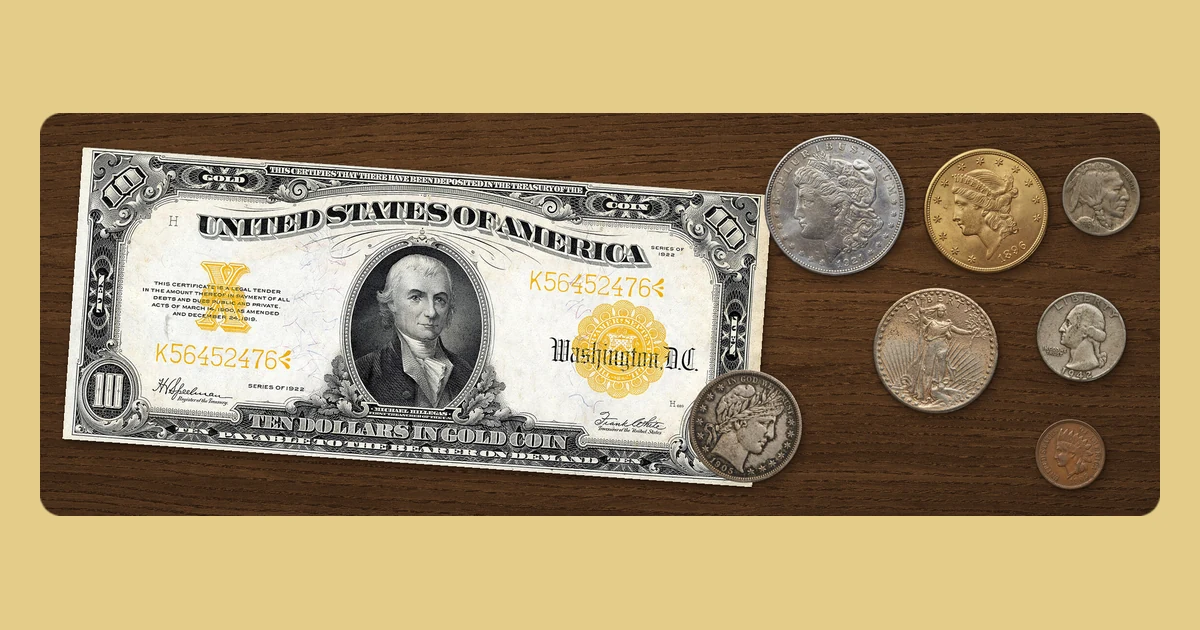
How to Sell a Coin Collection, a guide from American Rarities. Coin photos: Bibliothèque nationale de France, Département des Monnaies, médailles et antiques (Gallica), public domain, via Wikimedia Commons. 1922 $10 gold certificate photo by Godot13 (National Numismatic Collection, National Museum of American History) via Wikimedia Commons, licensed
CC BY-SA 4.0 (
File:US-$10-GC-1922-Fr-1173.jpg); front cropped and placed on a tabletop by American Rarities, and this modified image is shared under CC BY-SA 4.0. Walnut tabletop: “American walnut veneer” scan by Poly Haven, CC0.
How to sell a coin collection without losing value: take inventory, sort silver, classic rare coins, gold, proof and mint sets, certified coins, paper money and foreign coins, leave coins uncleaned, understand melt and collector value, compare written, itemized offers and avoid common mistakes.
How to sell proof and mint sets without losing value: tell proof, mint, Special Mint and Prestige sets apart, find the silver sets, check for no-S proofs and other varieties, keep sets intact, set realistic expectations for modern sets and choose where to sell.
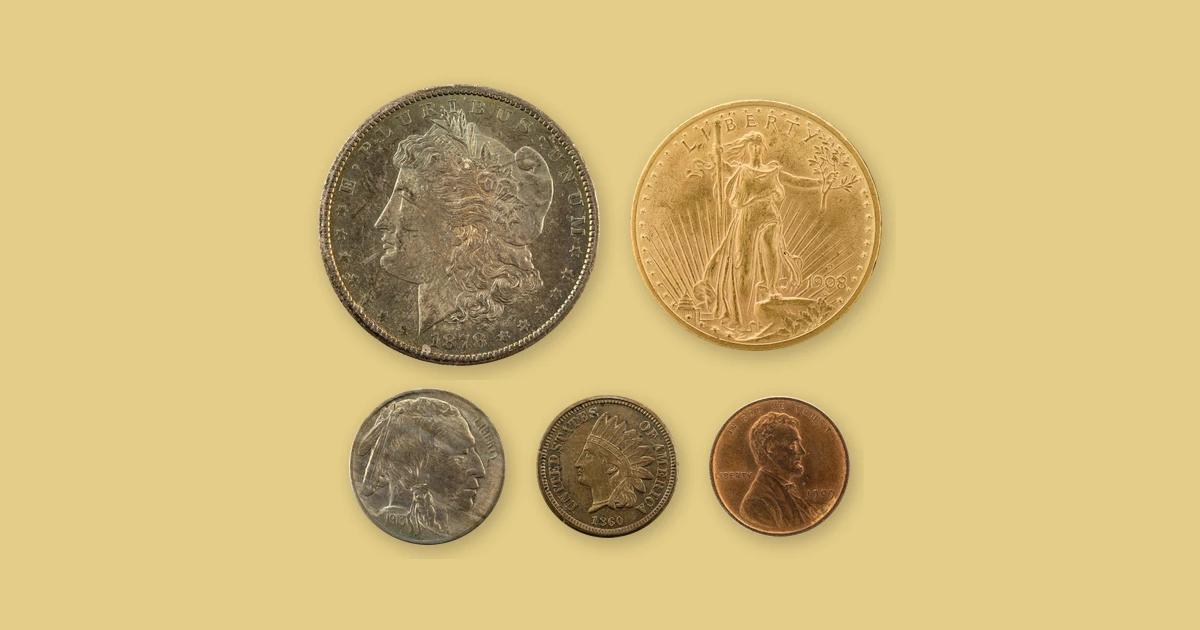
How to Sell Inherited Coins, a guide from American Rarities. Coin photos: National Numismatic Collection, National Museum of American History (Smithsonian), photographed by Jaclyn Nash, public domain (PD-USGov-SI), via Wikimedia Commons.
How to sell inherited coins without losing value: keep the collection intact, confirm who can sell, understand date-of-death value, sort bullion from rare coins, compare appraisals and get paid immediately.