
Collecting Paper Money: A Collector’s Guide to Rare U.S. Paper Money

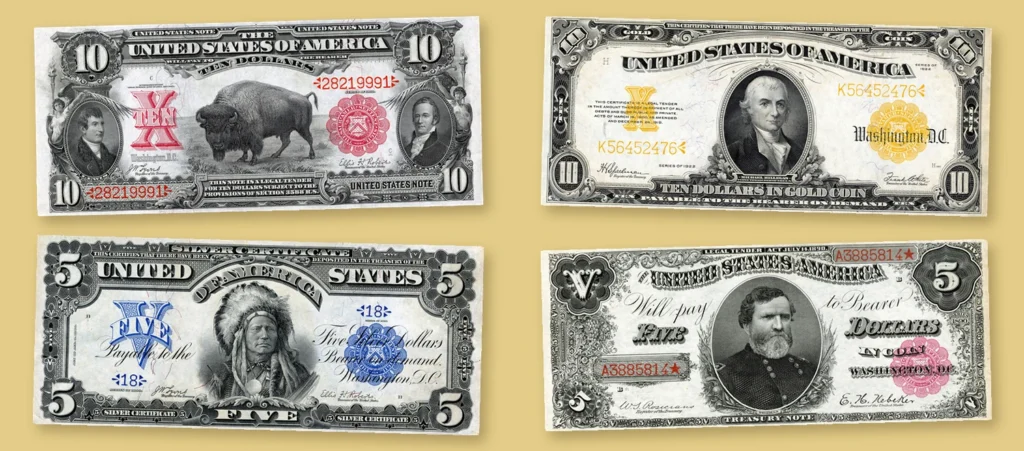
Paper money collector: four whole large-size U.S. notes, a 1901 $10 Bison Legal Tender note, 1922 $10 Gold Certificate, 1899 $5 Indian Chief Silver Certificate and 1890 $5 Treasury Note

Collecting paper money, also called notaphily, means collecting banknotes for their history, artistry and rarity. Collectors often call old notes miniature works of art, from the oversized “horse blanket” notes of the 1800s to the orange-backed Gold Certificates of the early 1900s. U.S. paper money is one of the most popular fields for any paper money collector, with series stretching from Civil War greenbacks and fractional currency to Silver and Gold Certificates, large size Federal Reserve Notes and modern star notes. Many collectors also add world notes, such as Mexican paper money from the state banks and the Mexican Revolution.

American Rarities has bought and sold rare coins and paper money since 1990. In more than 30 years we have purchased over $400 million in coins and collectibles, and our team brings hundreds of years of combined experience. We are ANA Life Members, hold an A+ rating with the BBB and have a 4.7-star Google rating. This guide covers the main types of U.S. paper money, large size vs. small size notes, what makes a note valuable, grading, condition and care, and how to sell your paper money collection.

Decorative gold separator bar

Types of U.S. Paper Money Collectors Look For

Most U.S. paper money collections are built around a handful of classic types. Each was issued under a different law and has its own seal colors, designs and rarities:

  • Legal Tender (United States) Notes, issued from 1862 to 1971. Civil War “greenbacks” and large size designs such as the 1901 $10 “Bison” note are favorites. Small size notes have red seals and serial numbers.
  • Silver Certificates, issued from 1878 to 1964 and once redeemable for silver. Highlights include the 1896 Educational Series, the 1899 $1 “Black Eagle” and the 1928 $1 “Funnyback.” Small size notes have blue seals.
  • Gold Certificates, issued from 1865 to 1933 and recognized by their gold seals and, on many large size notes, orange backs. They were recalled in 1933.
  • National Bank Notes, issued from 1863 to 1935 by local national banks and printed with the bank’s name and charter number. See our National Currency Notes guide for details.
  • Federal Reserve Notes, issued since 1914. Large size Series 1914 and 1918 notes, early small size notes and the discontinued $500 to $10,000 high denominations are especially collectible.
  • Fractional currency, small notes worth 3 to 50 cents issued from 1862 to 1876, when coins were hoarded during the Civil War.
  • Star notes, fancy serial numbers and error notes, which collectors seek in every series (see below).

We also buy obsolete bank notes, Confederate currency and colonial currency. The U.S. Currency Education Program’s history of U.S. currency is a good timeline of every major type.

Decorative gold separator bar

Large Size vs. Small Size Paper Money
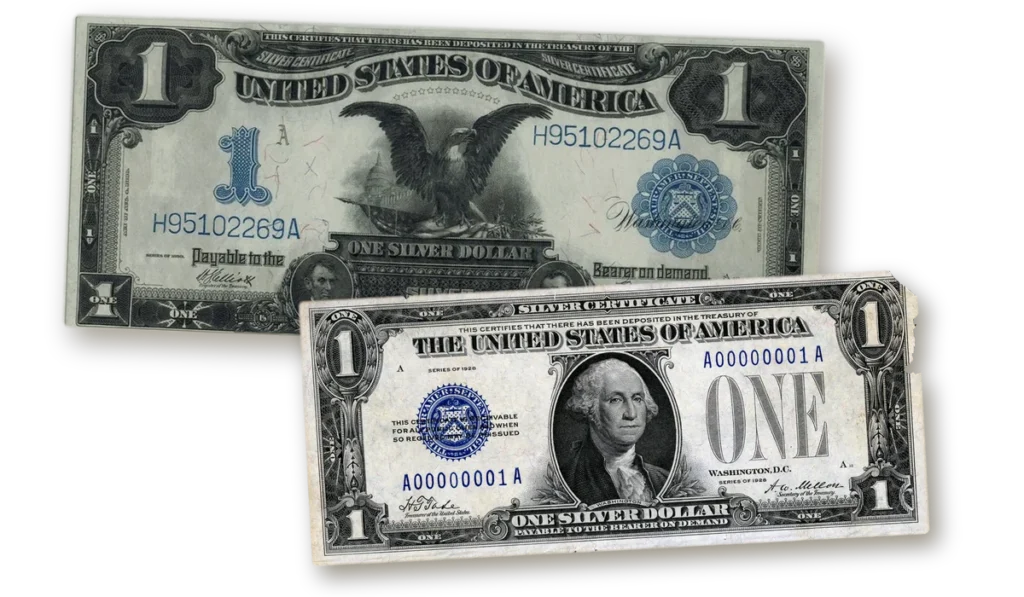
Large size vs small size U.S. paper money: 1899 $1 Black Eagle Silver Certificate above a smaller 1928 $1 Silver Certificate with serial number A00000001ACollectors split U.S. paper money into two eras. Large size notes, issued before 1929, measure about 7.375 x 3.125 inches and are often called “horse blankets.” In 1929 the Treasury made notes about 30 percent smaller, 6.14 x 2.61 inches, and standardized the designs for each denomination, according to the U.S. Currency Education Program. The first small size notes were Series 1928.

Large size notes usually carry larger premiums because fewer survive, their designs are more elaborate and many were heavily circulated. Small size notes are easier to find, but scarce series, high grades, star notes and fancy serial numbers can still be very valuable. Our U.S. paper currency information page explains more about each era.

What Makes Paper Money Valuable?

A paper money collector judges every note on a few key factors:

  • Rarity: how many notes of that type, series, signature combination and Federal Reserve district were printed and how many survive. Collectors identify notes by their Friedberg (Fr.) catalog number.
  • Condition and grade: a crisp uncirculated note can be worth many times more than a worn example of the same note. Folds, tears, stains, pinholes and repairs all lower the grade.
  • Certification: notes graded by PMG or PCGS Banknote are easier to buy and sell because their authenticity and grade are guaranteed.
  • Demand: popular designs, such as the Educational Series, Bison and Black Eagle notes, attract strong collector demand. Large size notes issued before 1929 are especially prized for their detailed vignettes and eye appeal.

For typical values of common notes, see our coin and paper money price guide. Values change with the market, so a current appraisal is the best way to price your notes.

Star Notes, Fancy Serial Numbers and Error Notes
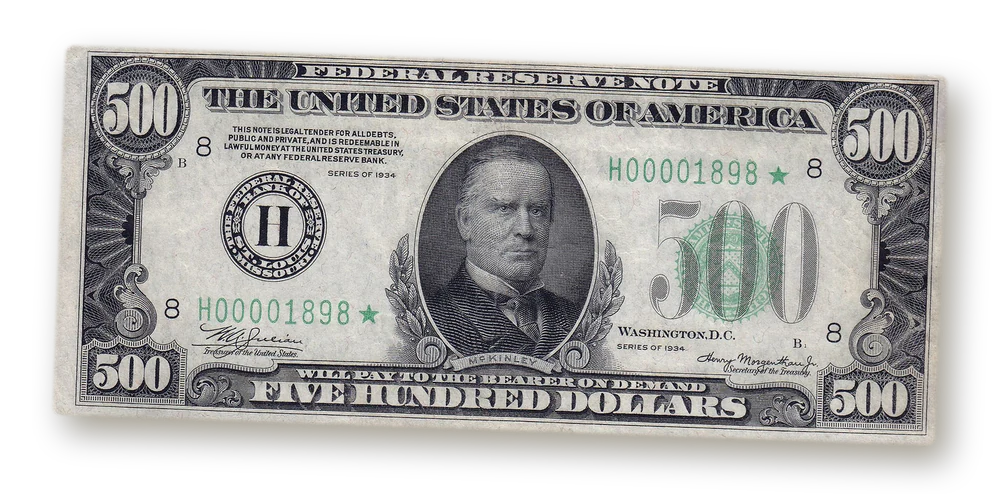
Star note with low serial number: Series 1934 $500 Federal Reserve Note from St. Louis, serial H00001898 with a star replacement symbolStar notes are replacement notes printed to replace sheets that were damaged during production. They carry a star in the serial number, and because fewer were printed, many series carry a premium.

Fancy serial numbers include very low numbers such as 00000001, solids (all the same digit), ladders (12345678), radars that read the same backwards and repeaters. Low serial and solid notes are the most sought after.

Error notes are mistakes made at the Bureau of Engraving and Printing, such as inverted backs, mismatched serial numbers, missing or shifted printing and folding or cutting errors. Major errors usually add value and can sell for strong premiums, while minor ink smears or slight misalignments add little.

Decorative gold separator bar

Paper Money Grading and Certification

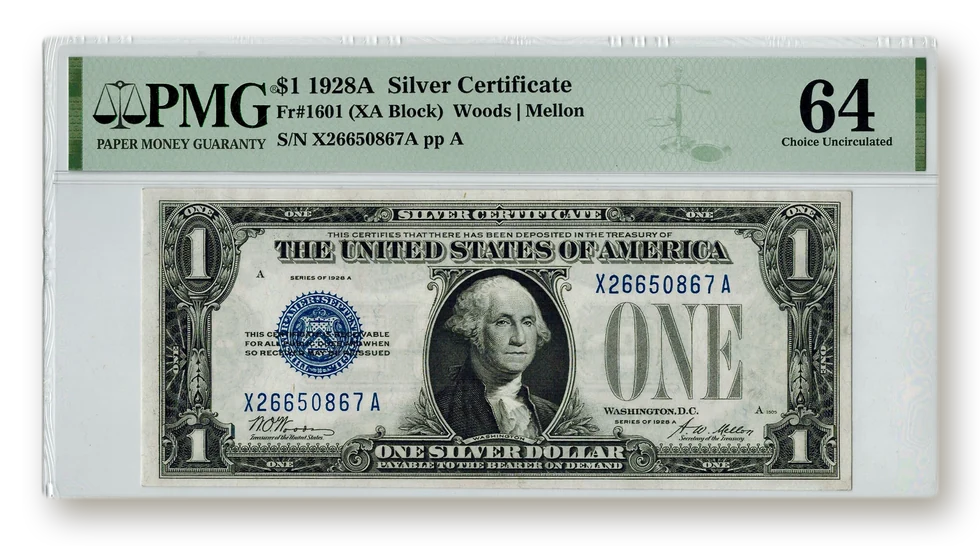
PMG certified paper money: 1928A $1 Silver Certificate Funnyback, Fr. 1601, graded PMG 64 Choice Uncirculated in a PMG holderMost collectible U.S. paper money is graded on a 70-point scale based on the Sheldon scale, from heavily worn low grades up to Gem Uncirculated 70. The two leading third-party grading services are Paper Money Guaranty (PMG) and PCGS Banknote. Each authenticates a note, assigns a grade and seals it in a protective holder. PMG adds an EPQ (Exceptional Paper Quality) designation and PCGS Banknote a PPQ (Premium Paper Quality) designation for original notes that have not been pressed, washed or repaired.

American Rarities is a PCGS and NGC authorized dealer and an ANACS submission center, and we buy paper money certified by PMG, PCGS Banknote and others. We also buy raw (ungraded) notes and can tell you whether grading is likely to add value. Learn more about coin and paper currency grading services.

Condition and Care: Protecting the Value of Your Notes

Condition matters more in paper money than in almost any other collectible. A single fold through the center can sharply lower the value of an uncirculated note, and pinholes, tears, stains and trimming lower the grade further. Collectors also pay more for originality, meaning paper that has not been pressed, washed or chemically treated.

  • Don’t fold, press or iron notes. Flattening a note to hide folds is detectable and can cost it an EPQ or PPQ designation.
  • Never clean, wash or erase a note. Cleaning damages the paper and ink and lowers its value.
  • Handle notes by the edges with clean, dry hands, and never use tape, glue or paper clips.
  • Store notes flat in archival-quality holders made of inert material such as Mylar (polyester), not soft PVC, and keep them away from heat, humidity and sunlight.
  • Leave older notes in their existing holders. Some old soft-plastic sleeves contain PVC that can damage paper over time, but pulling a note out without the right tools can tear or thin it. We can evaluate notes as they are.

For more tips, read our guide to proper storage for collectibles.
Decorative gold separator bar

How to Sell Your Paper Money Collection

Whether you collected for decades or inherited a box of old notes, selling to American Rarities is simple:

  1. Send photos and a list. Email staff@americanrarities.com, text pictures to 720-600-4740, or use the free appraisal form below.
  2. Get a free offer. Our paper money buyers review your notes and send a no-obligation appraisal and offer, usually within 24 hours. We also provide IRS-compliant appraisals for estates and donations.
  3. Ship or meet. Use our fully insured mail-in service with no deductible, with free or discounted shipping on selected collections. For larger collections we offer home visits, and our nationwide buying network, with a strong presence in California, Colorado and Arizona, can arrange an in-person appraisal.
  4. Get paid immediately. Once your notes arrive and are verified, we pay right away by company check, wire or ACH.

Trophy notes and auctions. Most collections sell best directly to us for immediate payment. For a truly exceptional note, such as a unique National Bank Note or a $500 to $10,000 high-denomination note, we can also manage consignment through our long-standing auction house partnerships, often at preferred fees.

Estates, trustees and fiduciaries. For executors, trustees and estate planners, we handle the paper money in an estate from inventory to payment, with a documented, transparent transaction and IRS-compliant appraisals when needed.

We buy entire collections and single rare notes, graded or raw. Visit our Sell Your U.S. Paper Currency page to learn more, or follow our step-by-step guide on how to sell paper currency.

Decorative gold separator bar

Collecting Paper Money: Quick Answers

What is the difference between large size and small size paper money?

Large size notes, issued before 1929, are about 7.375 by 3.125 inches. Small size notes since Series 1928 are about 30% smaller, and large notes usually bring more.

Are star notes worth more than regular notes?

Often. Star notes are replacement notes printed in smaller numbers. The premium depends on the series, quantity printed and condition.

Should I have my paper money graded by PMG or PCGS Banknote?

For scarce or high-grade notes, yes, since certification guarantees authenticity and grade. We buy both certified and raw notes.

Are old $2 bills worth more than face value?

Most modern $2 bills are common and worth face value. Red seal $2 notes and large size $2 notes issued before 1929 can carry a real premium, and we can tell you which ones you have.

Should I take my notes out of old plastic sleeves?

No. Some older sleeves contain PVC that can damage paper over time, but removing a note without the right tools can tear it. Leave it as is and we will evaluate its condition safely.

Why sell paper money to American Rarities instead of a local coin shop?

Many local shops focus on coins and treat paper money as a sideline. Our currency specialists know the series, signatures, serial numbers and star notes that drive value, so you get a fair, informed offer.

How quickly will I be paid?

Once your notes arrive and are verified, we pay you immediately by company check, wire or ACH.

Decorative gold separator bar

Paper Money Guides

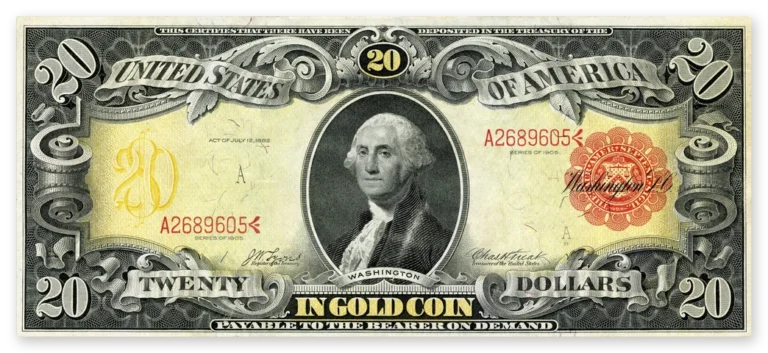
A Series 1905 $20 gold certificate with George Washington and gold and red coloring, known as the Technicolor noteSell Your U.S. Paper CurrencyFree appraisal and a cash offer for your notes
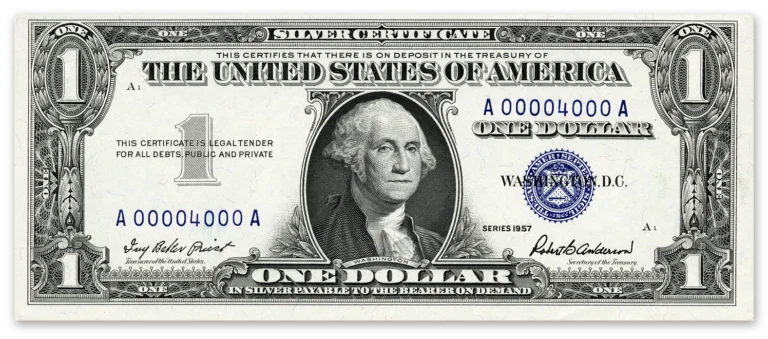
A Series 1957 $1 silver certificate with George Washington's portrait, a blue Treasury seal and blue serial numbersHow to Sell Paper CurrencyFive steps to take before you sell
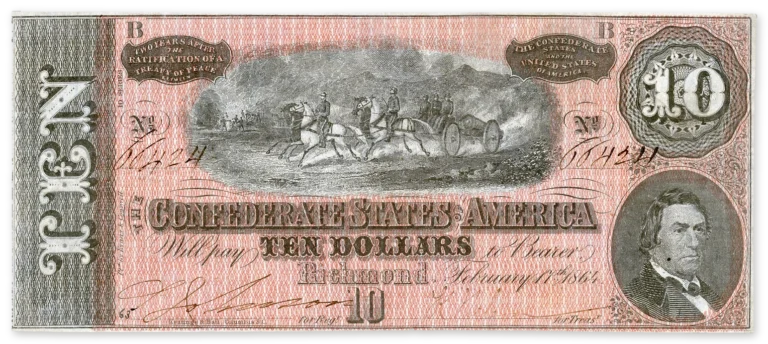
A genuine 1864 Confederate States of America $10 note, type T-68, with a horse-drawn artillery vignette and R.M.T. HunterU.S. Paper Currency InformationHistory, types and how to identify U.S. notes
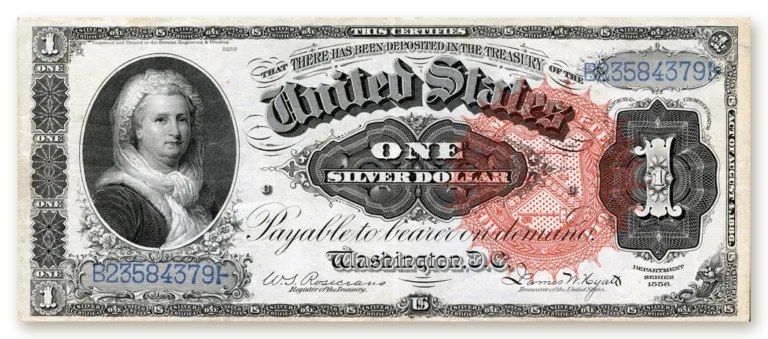
Face of a Series 1886 one dollar silver certificate large-size note with a portrait of Martha WashingtonPaper Money Price GuideApproximate values for common U.S. notes
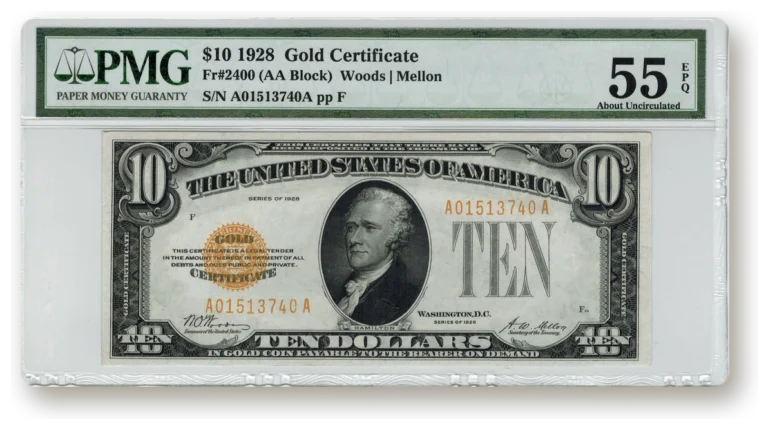
1928 ten dollar gold certificate graded About Uncirculated 55 EPQ by PMG in a sealed paper money holderPaper Currency GradingHow PMG and PCGS Banknote grade notes
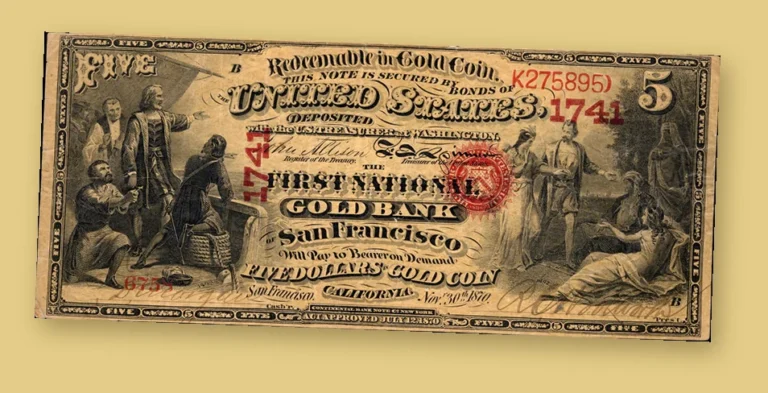
$5 National Gold Bank Note on yellow-tinted paper, First National Gold Bank of San Francisco, charter 1741National Currency Notes GuideIdentify and value National Bank Notes
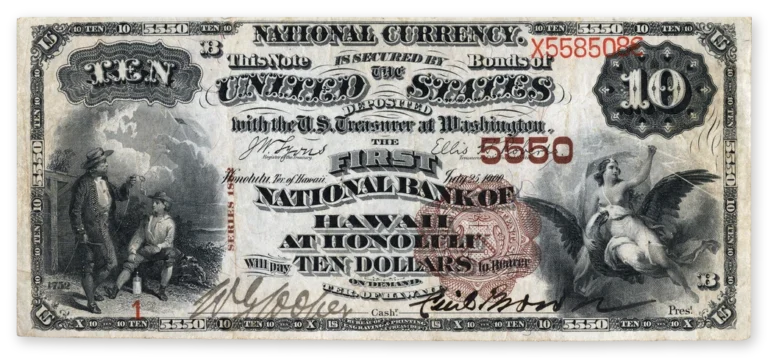
A Series 1882 $10 Brown Back National Bank Note from the First National Bank of Honolulu, charter 5550, serial number 1Sell National Currency NotesHow we appraise and buy National Bank Notes
Mexican Revolution banknote: Gobierno Provisional de México 20 pesos of 1914 with an eagle vignetteSell Mexican Paper MoneyBank, Revolution and Banco de México notes
Decorative gold separator bar

Free Paper Money Appraisal

Email, Text, or Use This Form To Send Us Your Inventory List or Pictures
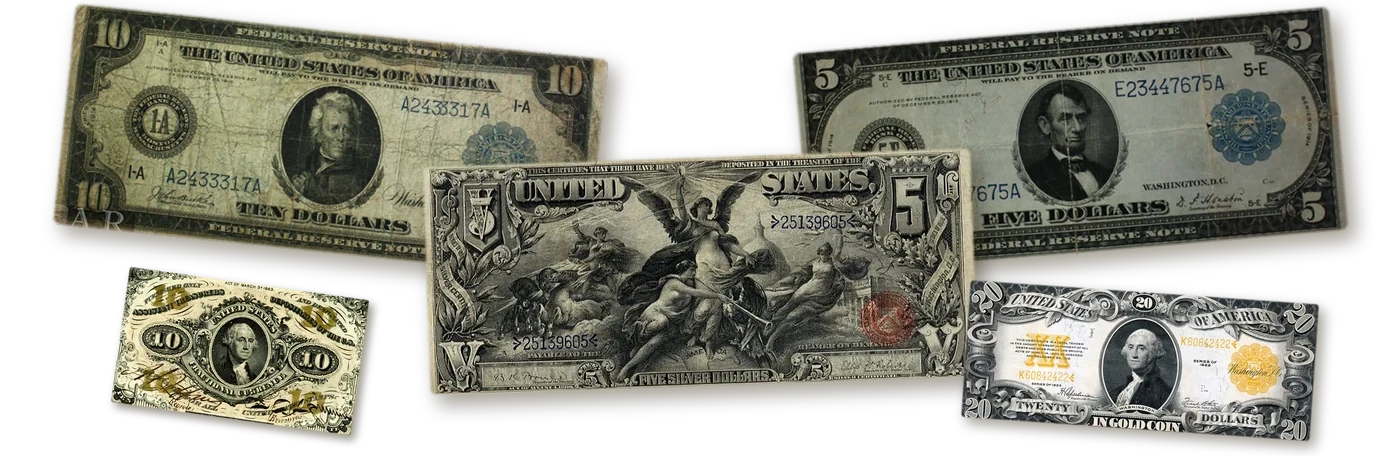
Paper money collection to sell: 1914 $10 and $5 Federal Reserve Notes, 1896 $5 Educational Silver Certificate, 1922 $20 Gold Certificate and 10-cent fractional note


Upload clear photos of fronts and backs and we'll reply with a free appraisal.

    Decorative gold separator bar

    Professional Associations

    American Rarities professional association logos