
Selling the Rarest Golden Age Comics
Golden Age comics (1938–1956) sit at the center of the vintage comic market. They are the books that introduced modern superheroes, documented wartime America on the newsstand, and later branched into crime, horror, western and romance before the Comics Code reshaped the industry in 1954–56. If you are settling an estate, clearing a long box from a relative’s attic, or deciding whether a stack of 10-cent covers is worth a professional look, this guide explains what drives value and how selling to American Rarities works.
We have bought coins and comics since 1990 and have purchased over $400 million in collectibles. For the five absolute market pinnacles—Action Comics #1, Detective Comics #27, Superman #1, Marvel Comics #1 and Captain America Comics #1—see our companion article on the Top 5 most valuable Golden Age comics. This page covers the broader Golden Age landscape and the practical path to a free appraisal.
The Golden Age Era: 1938–1956
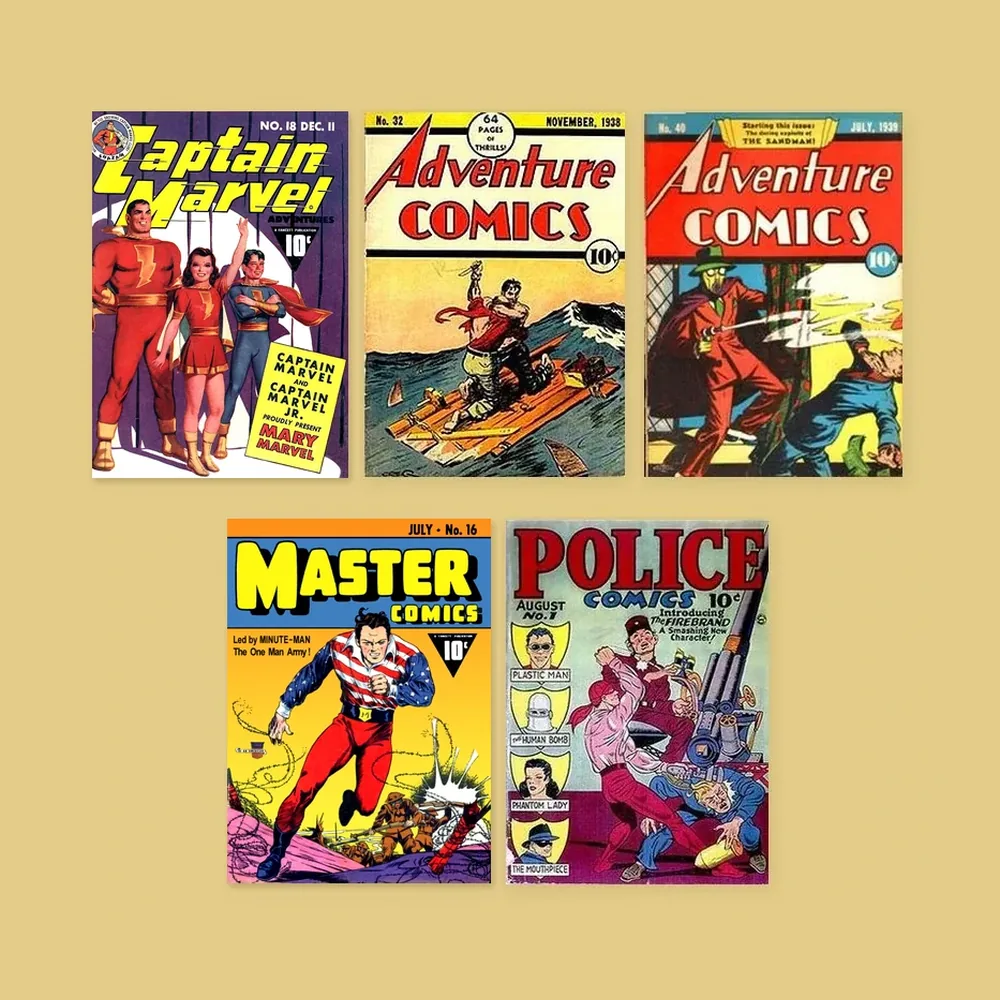
The Golden Age begins with Superman’s debut in 1938 and runs through the mid-1950s. Early years are dominated by costumed heroes from Detective Comics (later DC), Timely (later Marvel) and Fawcett, Quality and other publishers. During World War II, covers often leaned patriotic—soldiers, saboteurs and home-front themes—and those books remain historically charged today.
After the war, the market widened. Superheroes shared the racks with westerns, funny animals, romance, crime and pre-Code horror. By 1954–56 the Comics Code Authority tightened content standards, and the Golden Age as collectors define it draws to a close. American Rarities’ buying policy treats Golden Age as 1938–1956, with Platinum Age (1890s–1937) and Silver Age (1956–1970) also actively bought. Bronze Age is hit-or-miss; Copper Age has almost no value for our purposes.
What Makes Golden Age Comics Valuable
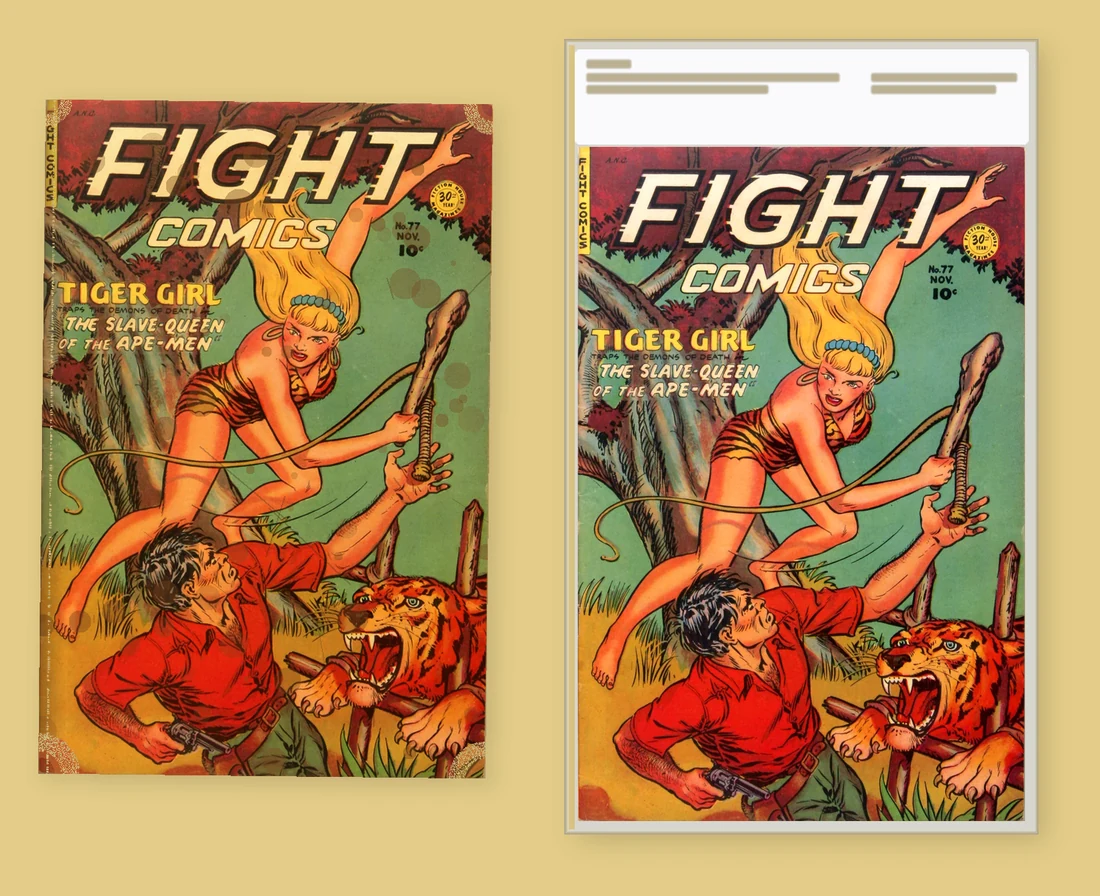
Value is rarely about age alone. Appraisers weigh several factors together:
- Key first appearances — the first time a major character or costume appears.
- Rarity and survival — wartime paper drives, acidic newsprint and childhood reading destroyed most copies.
- CGC (or CBCS) grade and page quality — a small grade jump can change the market dramatically. White or off-white pages usually outpace tan or brittle paper.
- Pedigree — known collections (for example Mile High / Edgar Church) can add a premium.
- Restoration — color touch, piece replacement or cleaned spines are disclosed on professional labels and usually reduce value versus an unrestored copy of the same grade.
- Cultural significance and cover art — iconic covers and historically important moments attract collectors beyond hardcore comic buyers.
We buy both graded and raw comics. We are not a CGC dealer; for coins we are an authorized PCGS, NGC and ANACS dealer. For comics, we use current auction results and price guides to form a written offer.
Notable Valuable Golden Age Examples Beyond the Top Five
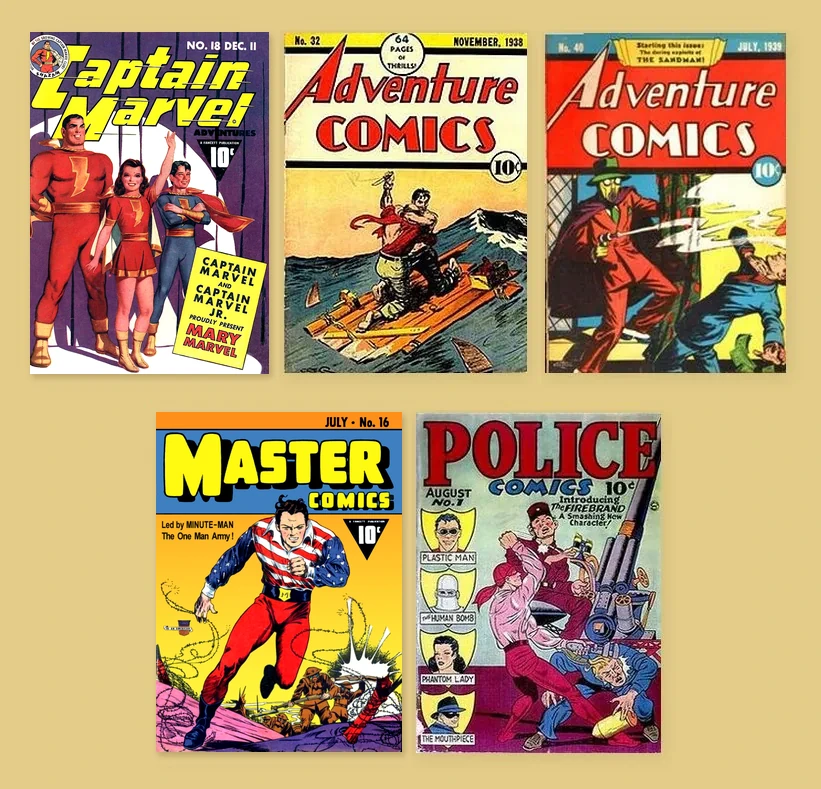
Plenty of Golden Age books matter without sitting in the absolute top five. Exact prices depend on grade, pedigree and restoration, so we describe these qualitatively here and invite you to send photos for numbers that match your copies. For the five highest-profile keys, use the Top 5 most valuable Golden Age comics article.
- Batman #1 — first solo Batman title; Joker and Catwoman introductions make it a cornerstone DC key.
- Captain America Comics #1 — covered in the Top 5 list; iconic wartime cover and first Cap/Bucky.
- All-American Comics #16 — first Green Lantern (Alan Scott).
- Detective Comics #38 — first Robin.
- Whiz Comics #2 — first Captain Marvel (Shazam); an early Fawcett landmark.
- Flash Comics #1 — first Flash (Jay Garrick) and Hawkman.
- Pep Comics #22 — first Archie; bridges superhero and teen-humor collecting.
- More Fun Comics #52 — first Green Arrow and Aquaman in the same issue for many collectors’ checklists.
- Sensation Comics #1 — early Wonder Woman lead feature after her All Star debut.
- All Star Comics #8 — first Wonder Woman appearance.
- Pre-Code horror and crime — titles from the late 1940s and early 1950s with strong covers or notorious content can bring serious money in higher grades, separate from the superhero keys.
Western, romance and funny-animal Golden Age books can also add up in bulk or when a particular cover or artist is in demand. For era context across Golden, Silver and Bronze Age collecting, see Unveiling the Marvels of Comic Book Collecting.
How Selling to American Rarities Works

- Send photos and/or a list — text clear photos to 720-600-4740, email staff@americanrarities.com, or use the form on our comic book buying page.
- Free appraisal and written offer — All appraisal requests are reviewed in the order they are received. Some appraisals take minutes, while larger, more complex collections can take a few days. Either way, you’ll get a response from us. You receive a written offer with no obligation.
- Ship fully insured or meet in person — we cover fully insured mail-in shipping (we do not provide packing materials). For larger estates we can arrange an in-person visit or bank meeting.
- Get paid — after arrival and verification, payment is by cash, check, ACH or wire.
What to expect from an appraisal: we identify key issues, note condition concerns we can see in photos, compare recent sales, and explain the offer clearly. If grading would likely raise the net result, we say so before you spend on it. If you decline, we can return items fully insured.

Buying Policy at a Glance
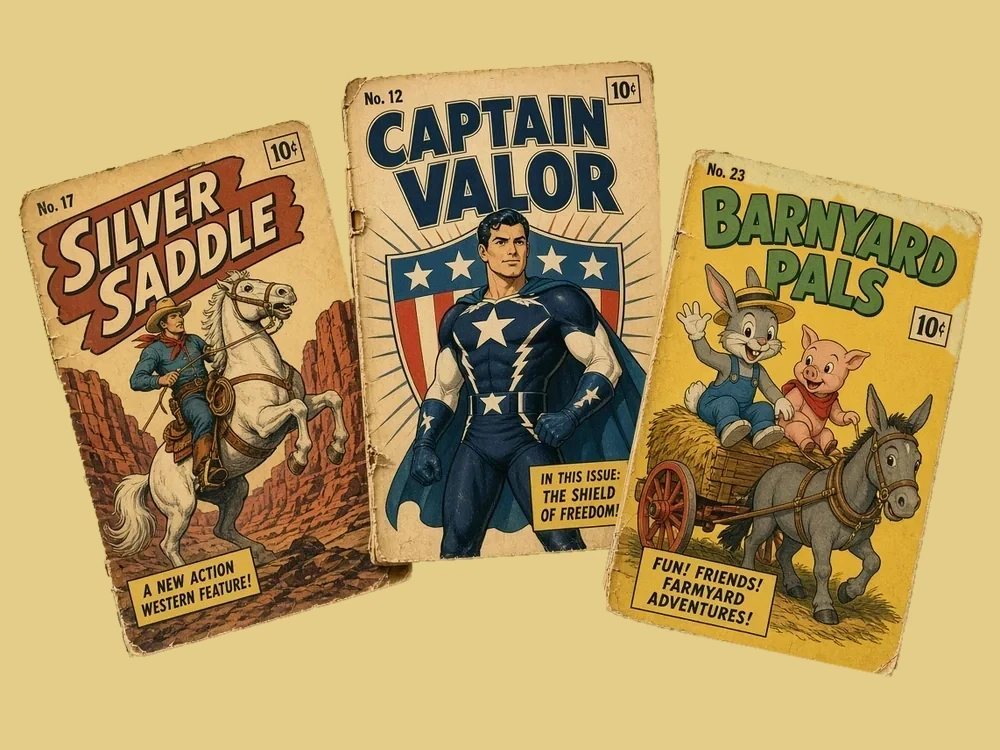
American Rarities buys Platinum Age (1890s–1937), Golden Age (1938–1956) and Silver Age (1956–1970) comics. Bronze Age is hit-or-miss. Copper Age has almost no value. We welcome single key issues and full estate collections alike.
Common Questions About Selling Golden Age Comics
Do I need to get my comics graded before contacting you?
No. Send photos first. We evaluate raw books every day and will tell you if professional grading is likely to improve your net result. Grading fees and wait times only make sense for key issues and high-grade books, so there is no need to pay for grading before you get an offer.
What if my books are restored or have tape?
Restored and taped books still sell; the offer reflects the market discount versus unrestored copies. Do not attempt further repairs before an appraisal. Graders label restored books, and we take restoration into account openly in our written offer, so you know exactly how it affects value.
Can you help with an estate or trust sale?
Yes. We work with executors, trustees and families nationwide and can provide documentation suited to probate and inventory needs. We also prepare IRS-compliant appraisals when an estate needs formal values, and we buy whole collections so heirs do not have to sell piece by piece.
Do you only buy the famous Superman and Batman keys?
No. We buy a wide range of Golden Age material, including lesser-known heroes, westerns, romance, crime and pre-Code horror when the market supports it. Many less famous Golden Age titles are scarce today, so send photos of the covers and we will tell you what you have.
How fast is the appraisal?
All appraisal requests are reviewed in the order they are received. Some appraisals take minutes, while larger, more complex collections can take a few days. Either way, you’ll get a response from us. Front covers of key issues and a list of titles and issue numbers are enough to start.
Get Your Free Golden Age Comic Appraisal
Ready when you are. Text photos to 720-600-4740, email staff@americanrarities.com, or use the secure form below. For buying details across all comic eras, visit Sell Your Comic Book Collection.